
The Hazards of Aircraft Icing: How Ice Steals Your Lift, Thrust, and Control
The hazards of aircraft icing fall into four buckets: lost lift, added weight, increased drag, and degraded control. Ice forms when supercooled water droplets strike a cold airframe, changing the wing’s shape, blocking instruments, choking the engine, and adding pounds you never planned to carry. Even a thin layer the size of coarse sandpaper can cut lift and raise stall speed enough to put an airplane on the ground. That is why icing is treated as a serious, sometimes fatal, hazard for general aviation pilots.
Here’s the part new pilots underestimate. You don’t need a glaze of clear ice an inch thick to be in trouble. The FAA and NASA wind-tunnel work both point the same direction: a layer of ice no rougher than a piece of medium-grit sandpaper, scattered along the leading edge, can cut your lift and bump your stall speed enough to matter. In a small trainer with no de-ice equipment, that’s not a maintenance issue — it’s an emergency. Let’s break down exactly how ice hurts you, where it forms, and how a Private Pilot stays out of it.
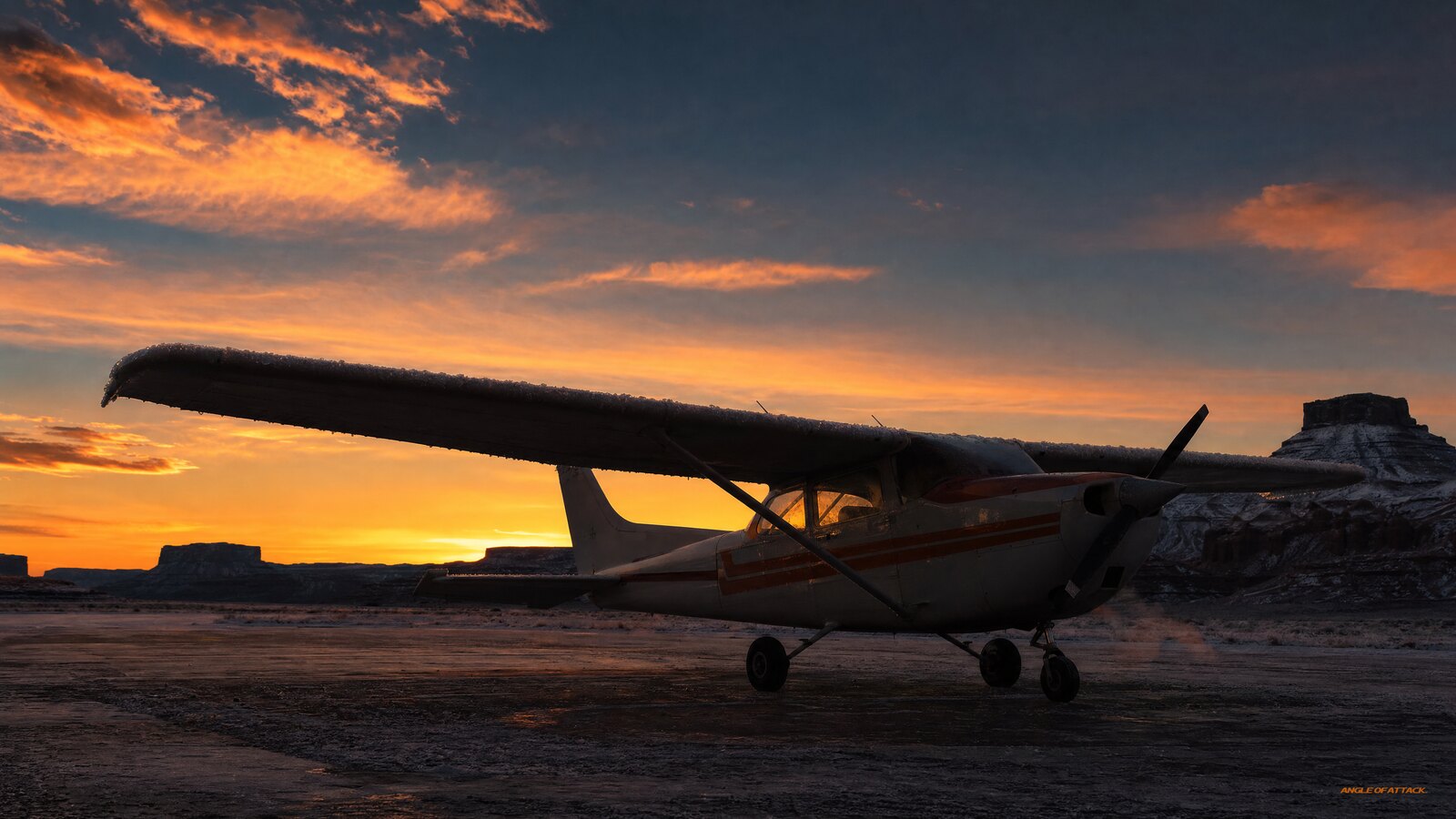
- Aircraft icing degrades performance four ways at once — it reduces lift, increases weight, increases drag, and reduces thrust and control authority, often all in the same encounter.
- Structural ice forms when supercooled liquid water droplets strike an airframe at or below 0°C (32°F) and freeze on contact — the droplets are below freezing but still liquid until something disturbs them.
- The three structural icing types are rime, clear (glaze), and mixed — rime is rough and milky, clear ice is smooth, heavy, and hard to see, and mixed ice combines both.
- A trace of ice is enough to matter — roughness comparable to coarse sandpaper on the leading edge can reduce lift and increase stall speed significantly, per FAA guidance.
- Most light trainers have no ice protection and are not certified for flight into known icing, so the only safe response to icing is to avoid it or exit it immediately.
- Induction and instrument icing are separate hazards — carburetor and induction ice can choke the engine, and ice over the pitot-static system can give you false airspeed and altitude readings.
- Aircraft icing is tested on the Private Pilot knowledge exam under PLT codes covering icing formation, hazardous weather, and the effects of icing on performance.
WHAT’S IN THIS GUIDE
- 1What Are the Hazards of Aircraft Icing?
- 2How Does Ice Actually Form on an Airplane?
- 3What Are the Types of Structural Icing?
- 4Why Is Even a Little Ice So Dangerous?
- 5What Are Induction and Instrument Icing?
- 6How Do You Avoid and Escape Icing as a Private Pilot?
- 7A Lesson From an Alaska Winter Morning
- 8PLT Study Guide
- 9Frequently Asked Questions
What Are the Hazards of Aircraft Icing?
The hazards of aircraft icing are reduced lift, increased weight, increased drag, and reduced thrust and control. Ice changes the shape of the wing and tail, so the airfoil makes less lift and stalls at a lower angle of attack. At the same time, accumulated ice adds weight, ruins the aerodynamic profile so drag climbs, and can foul the propeller, engine intake, and flight controls.
Think of the wing as a carefully sculpted shape. Engineers spent enormous effort getting that curve exactly right so air flows smoothly over the top and produces lift. Ice destroys that shape. The leading edge — the most important part of the airfoil — is the first place ice builds, and it’s the worst place to lose your clean contour.
The four hazards compound each other. You’re making less lift right as you’re carrying more weight, fighting more drag, and possibly losing engine power. Per the Pilot’s Handbook of Aeronautical Knowledge (FAA-H-8083-25), this combination can overwhelm a light airplane quickly. The airplane gets heavy, sluggish, and wants to stall at a speed well above the number painted on your airspeed indicator.
| Hazard | What Ice Does | Why It Hurts You |
|---|---|---|
| Reduced lift | Disrupts the airfoil’s smooth shape | Stall speed rises; wing makes less lift at the same AOA |
| Increased weight | Adds physical mass to the airframe | Higher stall speed, reduced climb, more power needed |
| Increased drag | Roughens the surface and adds frontal area | More power needed just to hold altitude and airspeed |
| Reduced thrust / control | Fouls prop, intake, controls, and antennas | Engine power drops; controls feel heavy or freeze |
How Does Ice Actually Form on an Airplane?
Structural ice forms when supercooled liquid water droplets strike an airframe whose surface is at or below freezing (0°C / 32°F). Supercooled water is liquid water that has been cooled below its normal freezing point but has not yet frozen — it stays liquid until it touches something. When those droplets hit your wing, they freeze almost instantly, building ice on the leading edges, windscreen, antennas, and tail.
Two conditions have to be present at the same time: visible moisture (clouds, rain, drizzle, or wet snow) and a temperature at or below freezing on the airframe. No visible moisture, no structural ice. Clear, dry air at minus 20 won’t ice your wings. But fly into a cloud at minus 5, and you’ve got both ingredients.
The size of those supercooled droplets matters. Large droplets — like in freezing rain or freezing drizzle — carry more water and can flow back behind the protected leading edge before they freeze, which is exactly why freezing rain is one of the most dangerous icing environments a light airplane can meet. The FAA addresses this in Advisory Circular AC 91-74B, Pilot Guide: Flight in Icing Conditions, the primary reference for understanding icing for general aviation.
Temperature gives you a rough idea of what you’ll get. The most active structural icing usually occurs between 0°C and about -20°C, with the heaviest accumulation often near 0°C to -10°C where liquid water content tends to be highest. Colder than that, more of the moisture is already frozen into ice crystals, which generally don’t stick to a cold airframe.
What Are the Types of Structural Icing?
There are three types of structural icing: rime, clear (also called glaze), and mixed. Rime ice is rough, milky, and opaque, formed by small droplets that freeze fast. Clear ice is smooth, glossy, heavy, and hard to see, formed by large droplets that spread before freezing. Mixed ice is a combination of the two and is the most common in real clouds.
Rime ice forms when small supercooled droplets freeze almost instantly on contact, trapping air and giving the ice a rough, white, granular look — like frost on steroids. It’s brittle and doesn’t usually run back far, but it spoils the leading-edge shape and adds drag. It’s the type you’ll most often see in stratiform (layered) clouds at colder temperatures.
Clear ice is the dangerous one. Large droplets, often near freezing, hit the wing and spread out before they finish freezing, forming a smooth, dense, glassy layer that’s heavy and tough to spot from the cockpit. It bonds hard, runs back beyond the leading edge, and can build into ugly, lift-killing shapes. Clear ice is most common in cumuliform clouds and freezing rain.
| Icing Type | Appearance | Forms From | Typical Conditions | Key Danger |
|---|---|---|---|---|
| Rime | Rough, milky, opaque white | Small droplets, freeze on contact | Stratus clouds, colder temps | Spoils airfoil shape, adds drag |
| Clear (glaze) | Smooth, glossy, clear | Large droplets, spread before freezing | Cumulus clouds, freezing rain, near 0°C | Heavy, hard to see, runs back |
| Mixed | Lumpy, layered combination | Mix of droplet sizes | Most real-world clouds | Combines both hazards, builds fast |
The takeaway for a Private Pilot is simpler than memorizing every detail: any ice is bad ice, and you cannot reliably tell from the cockpit how much you’ve got — especially with clear ice. You don’t get to wait and see.
Why Is Even a Little Ice So Dangerous?
Even a little ice is dangerous because the wing’s lift depends on a smooth, precise airfoil shape, and ice ruins that shape exactly where it matters most — the leading edge. FAA guidance is blunt about this: ice, frost, or snow roughness comparable to coarse sandpaper on the leading edge and upper wing surface can reduce lift and increase stall speed enough to be hazardous. You do not need a thick coat to be in trouble.
This is the single most important icing concept for a beginner, and it runs against intuition. We picture danger as inches of glaze weighing the airplane down. But the real killer is often the subtle roughness that disrupts airflow over the wing. That roughness makes the wing stall at a lower angle of attack — meaning your actual stall speed is now higher than the number on your airspeed indicator, and you may stall with no warning, on approach, at a speed you’ve always considered safe.
That’s also why frost matters. A coat of frost on a parked airplane is not “just frost.” The FAA’s Pilot’s Handbook warns that frost must be removed before flight because that rough surface can prevent the airplane from becoming airborne at normal takeoff speed, or cause it to settle back onto the runway. Never take off with frost, ice, or snow on the wings — clean it off first, every time.
If you’re learning weather from the ground up, that ground-up understanding is exactly what our free Total Student Pilot course is built to give you, and our complete Private Pilot Ground School walks you through icing, aviation weather, and go/no-go decision-making all the way to your written test and checkride.
What Are Induction and Instrument Icing?
Beyond structural icing on the airframe, two more icing hazards can bite you. Induction icing forms in the engine’s air intake — including carburetor ice — and can choke off the air the engine needs, causing a rough or failing engine. Instrument icing forms over the pitot-static system, blocking the ports that feed your airspeed indicator, altimeter, and vertical speed indicator, giving you false readings.
Carburetor icing is its own special trap because it can happen on a warm, humid day with no clouds in sight, at temperatures well above freezing — anywhere from about 20°F to 70°F with visible moisture or high humidity. As fuel vaporizes and air accelerates through the carburetor venturi, the temperature drops sharply and moisture freezes inside the carb, slowly strangling the engine. Carb heat is your tool here; in a fuel-injected engine the concern shifts to impact and induction icing instead, handled with carburetor heat’s cousin, alternate air.
Instrument icing is sneakier still. If the pitot tube ices over, your airspeed indicator can read wildly wrong — sometimes climbing when you’re actually slowing down. That’s why your preflight includes checking that the pitot heat works, and why a careful pilot scans for an airspeed indication that doesn’t match pitch and power. Per AIM paragraph 7-1-21 (Aircraft Icing), both induction and instrument icing are recognized aviation hazards distinct from airframe icing, and a Private Pilot is expected to understand all three.
How Do You Avoid and Escape Icing as a Private Pilot?
As a Private Pilot in a typical training airplane, your icing strategy is simple and strict: avoid it entirely. Most light trainers like the Cessna 172 have no ice protection equipment and are not certified for flight into known icing conditions, so there is no “managing” ice once you’re in it. You plan around it on the ground, and if you stumble into it, you exit immediately by changing altitude or turning back toward known clear, above-freezing air.
Avoidance starts with the weather briefing. Check the freezing level, look for AIRMET Zulu (the inflight advisory for icing and freezing levels), watch for SIGMETs warning of severe icing, and read PIREPs — a pilot report of “negative ice” or “moderate rime at 6,000” is gold because it’s a real human in real conditions. If clouds, precipitation, and freezing temperatures will overlap on your route, that’s a no-go for an airplane with no ice protection.
If you do encounter ice unexpectedly, the FAA’s guidance in AC 91-74B is to treat it as an emergency and leave the conditions promptly. Your best escape usually means descending into warmer air (if terrain and clouds allow) or climbing into colder, drier air above the moisture, plus turning back the way you came — because you know it was clear there. Don’t linger to “see how bad it gets.” Carry extra airspeed on approach if you’ve picked up ice, and avoid abrupt maneuvers that could trigger an early stall.
| Action | When | Why |
|---|---|---|
| Check freezing level + AIRMET Zulu | Preflight briefing | Know where ice is forecast before you launch |
| Read PIREPs | Preflight + en route | Real reports from pilots already up there |
| Avoid clouds at/below freezing | Always, in a non-FIKI airplane | The only reliable defense is staying out |
| Exit immediately if ice forms | The moment you see it | Climb, descend, or turn back to clear air |
| Add airspeed on approach | After any ice accumulation | Stall speed is higher than indicated with ice |
A Lesson From an Alaska Winter Morning
I’ve been in aviation education since 2006 and a CFI since 2017, and up here in Alaska, ice isn’t a chapter in a textbook — it’s most of the calendar. The first real lesson I drill into every student isn’t about flying through ice. It’s about the airplane sitting on the ramp.
One cold, clear morning I walked out to the Cessna 172 with a student who was eager to go. The sky was gorgeous, severe-clear, not a cloud anywhere. He’d already done his walkaround and was ready to hop in. I stopped him and ran my bare hand along the top of the wing. A thin, even coat of frost — the kind you could almost talk yourself into ignoring because it looked like nothing.
I had him feel it. Rough, like fine sandpaper. Then we talked about what that roughness does to a wing trying to make lift at rotation speed on a short Alaska strip with terrain off the end. We didn’t go anywhere until that wing was clean — completely clean. He grumbled a little about the delay. He doesn’t anymore.
That’s the whole mindset I want you to carry. Ice doesn’t care that the sky is blue or that you’re in a hurry. A clean wing is non-negotiable, and a non-FIKI airplane has exactly one icing procedure: don’t be there. Out here the terrain is unforgiving and the next clear air can be a long way off, so we respect ice the way we respect a loaded gun. That’s the difference between a checkride-ready pilot and a day-one-ready one — knowing the rule, and living by it when nobody’s watching.
PLT Study Guide
The FAA tags Private Pilot knowledge-test questions with PLT (Pilot Learning Statement) codes. Aircraft icing maps to a tight, predictable set. Here are the codes that genuinely apply to this topic, with the official FAA learning-statement wording translated into plain study points.
PLT274 — Recall icing: formation / characteristics. This is the core code for the topic. Know that structural ice forms when supercooled liquid water droplets strike an airframe at or below 0°C and freeze on contact, and be able to describe the three types — rime (rough, milky), clear/glaze (smooth, heavy, hard to see), and mixed. Understand that the heaviest icing tends to occur near freezing where liquid water content is highest.
PLT263 — Recall hazardous weather: fog / icing / turbulence / visibility restriction. Know where icing fits among the inflight weather hazards and how it’s reported. Connect icing to AIRMET Zulu (icing and freezing levels), SIGMETs for severe icing, and PIREPs, and recognize that freezing rain and freezing drizzle signal large supercooled droplets — an especially dangerous icing environment.
PLT128 — Recall aircraft performance: effects of icing. Be able to state the four hazards — reduced lift, increased weight, increased drag, reduced thrust and control. Know that even thin, sandpaper-rough ice increases stall speed and reduces lift, so an iced wing stalls at a higher airspeed and a lower angle of attack than a clean one.
PLT493 — Recall the dynamics of frost / ice / snow formation on an aircraft. Know that frost, ice, or snow must be removed before flight. A frost-roughened wing can prevent the airplane from reaching flying speed at the normal liftoff point, or let it settle back onto the runway — which is why a clean wing is required, not optional.
Note: the original topic hints listed PLT274 and PLT263, both of which are correct and central. PLT128 and PLT493 are added here because icing’s performance effects and frost-removal dynamics are directly tested and round out the topic.
Frequently Asked Questions
What are the four hazards of aircraft icing?
The four hazards are reduced lift, increased weight, increased drag, and reduced thrust and control. Ice changes the wing and tail shape so they make less lift and stall sooner, adds physical weight, roughens the surface to increase drag, and can foul the propeller, engine intake, and flight controls — often all at the same time.
At what temperature does aircraft icing occur?
Structural icing requires visible moisture and an airframe temperature at or below 0°C (32°F). The most active icing usually happens between 0°C and about -20°C, with the heaviest accumulation often near 0°C to -10°C, where supercooled liquid water content tends to be highest. Below about -20°C most moisture is already frozen and sticks less.
What is the difference between rime and clear ice?
Rime ice is rough, milky, and opaque, formed when small droplets freeze instantly on contact, trapping air. Clear (glaze) ice is smooth, glossy, heavy, and hard to see, formed when large droplets spread across the surface before freezing. Clear ice is more dangerous because it bonds hard, runs back past the leading edge, and is tough to spot.
Can a small amount of ice really be dangerous?
Yes. FAA guidance states that ice, frost, or snow roughness comparable to coarse sandpaper on the leading edge and upper wing can reduce lift and increase stall speed enough to be hazardous. You don’t need a thick coat — even a thin, rough layer disrupts the airflow that makes lift, so the wing can stall at a higher airspeed with little warning.
Why must frost be removed before takeoff?
Frost roughens the smooth wing surface that lift depends on. The FAA’s Pilot’s Handbook warns that frost can prevent an airplane from becoming airborne at normal takeoff speed, or cause it to settle back onto the runway after liftoff. Even though frost looks harmless, you must remove all frost, ice, and snow from the wings and tail before flight — every time.
Is a Cessna 172 certified for flight into known icing?
No. A standard Cessna 172 and most light training airplanes have no ice protection equipment and are not certified for flight into known icing (FIKI) conditions. For these airplanes there is no way to manage ice in flight — the only safe strategy is to avoid icing entirely and, if you encounter it, exit the conditions immediately.
What is carburetor icing and how is it different?
Carburetor icing is a form of induction icing that forms inside the carburetor as fuel vaporizes and air accelerates, dropping the temperature and freezing moisture — even on warm, humid days well above freezing. It chokes the engine, causing roughness or power loss. It’s separate from structural airframe icing, and you counter it with carburetor heat.
How do I find out if there’s icing on my route?
Get a standard weather briefing and check the freezing level, AIRMET Zulu (icing and freezing-level advisory), and any SIGMETs for severe icing. Read PIREPs for real reports of ice from pilots already flying your area. If clouds or precipitation will overlap with freezing temperatures on your route, treat it as a no-go in a non-FIKI airplane.
Aircraft icing is one of those topics where the FAA’s caution is fully earned. Ice attacks the one shape your wing can’t do without, it hides in plain sight, and in a light trainer you have no tools to fight it once it’s on the airframe. The good news is that the defense is entirely within your control: understand how ice forms, respect what even a little of it does, brief the weather honestly, and keep your wing clean.
Master every system on your checkride — and on day one.
The Private Pilot Ground School breaks down every FAA subject area in the same plain-English, real-world way you just read — with quizzes, scenarios, and the explanations that finally make it click.
Master the weather on the ground and you’ll make these calls with calm confidence instead of guessing at the run-up. That’s the grounded, day-one-ready airmanship we build into every pilot who trains with us — because a confident no-go is just as much a pilot skill as a smooth landing.


ON THE SAME TOPIC
IFR vs VFR: The Two Sets of Rules Every Pilot Flies By
IFR vs VFR: The Two Sets of Rules Every Pilot Flies By 19 min read Last updated June 2026 · Chris Palmer The difference between IFR and VFR is which set of rules you fly under. VFR — visual flight rules — lets you navigate by looking outside and staying clear of clouds in good […]
 Read more
ASOS vs AWOS vs ATIS: How to Pull the Right Weather Before You Fly
ASOS vs AWOS vs ATIS: How to Pull the Right Weather Before You Fly 13 min read Last updated June 2026 · Chris Palmer The difference comes down to who is talking and what the broadcast covers. ASOS and AWOS are automated, computer-generated weather observations of the conditions right at the field. ATIS is a […]
Read more 
What Is RNAV Navigation? Area Navigation for VFR Pilots
What Is RNAV Navigation? Area Navigation for VFR Pilots 17 min read Last updated June 2026 · Chris Palmer RNAV — Area Navigation — is a method that lets an aircraft fly any desired path within the coverage of ground- or space-based navigation aids, rather than being forced to fly directly to and from stations. […]
Read more 
NDB and ADF Explained: The Oldest Radio Nav System You Still Need to Understand
NDB and ADF Explained: The Oldest Radio Nav System You Still Need to Understand 16 min read Last updated June 2026 · Chris Palmer An NDB (non-directional beacon) is a ground-based radio transmitter that sends a signal in all directions, and an ADF (automatic direction finder) is the cockpit receiver whose needle points straight at […]
Read more 
Stay Connected
Be the very first to get notified when we publish new flying videos, free lessons, and special offers on our courses.
