
What Is a Ram Air Turbine? The Little Propeller That Keeps a Jet Flying
A ram air turbine (RAT) is a small wind-driven turbine that deploys into an aircraft’s slipstream to provide emergency electrical or hydraulic power when the normal engine-driven and battery sources fail. Air rushing past the airframe spins its propeller, which drives a generator or pump — giving the crew enough power to keep flying and land safely.
Most of the airplanes you’ll train in don’t have one. So why should a student pilot care about a gadget that lives on jets? Because the ram air turbine is one of the cleanest examples in aviation of a single idea you’ll use on every flight you ever make: moving air carries energy, and a well-designed airplane always has a backup. Understand the RAT and you understand redundancy, windmilling, and why airliners almost never run completely out of power. Let’s walk through it the way a good instructor would, standing next to the airplane.
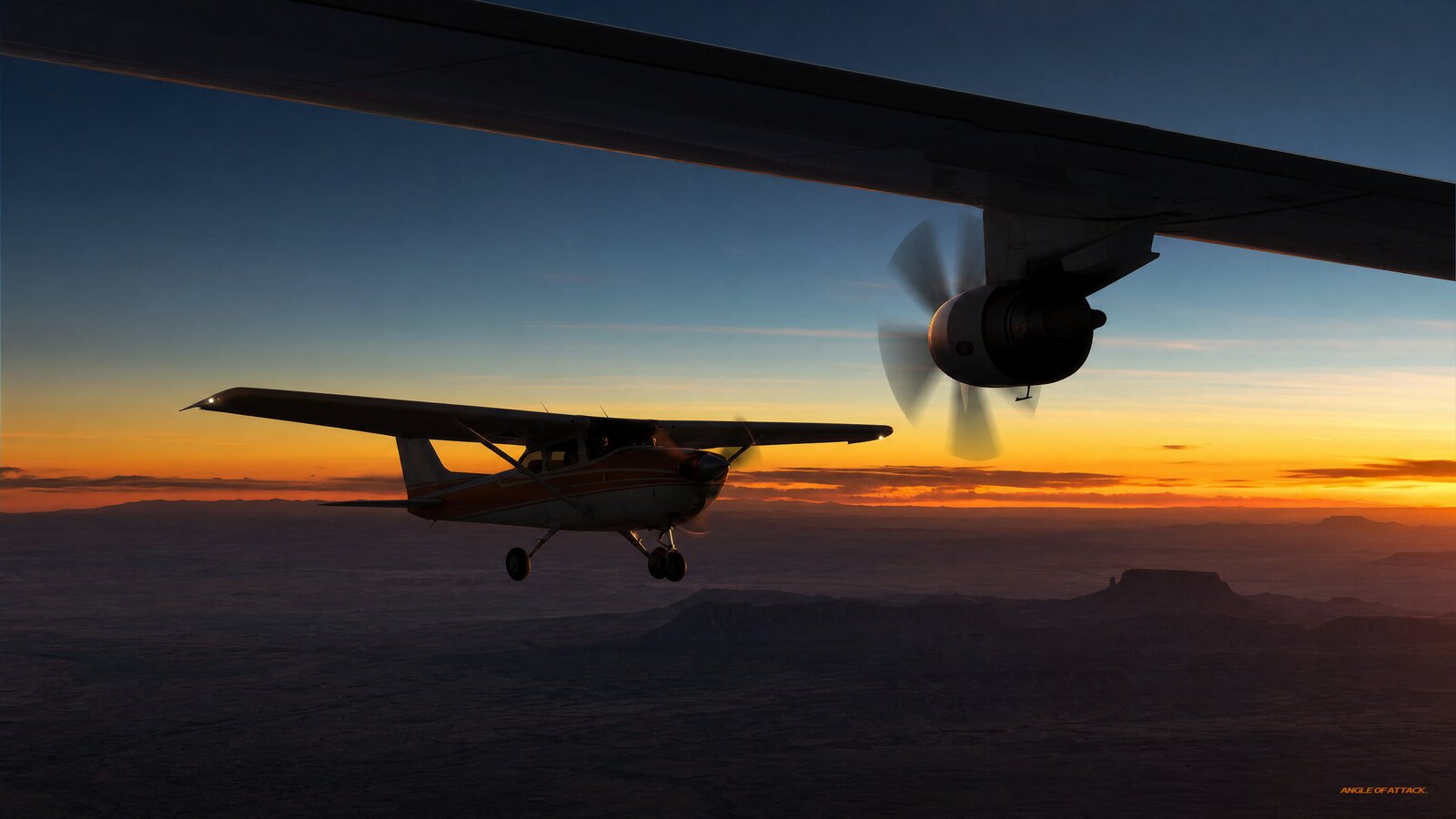
- A RAT is an emergency power source, not a normal one. It only deploys when an aircraft loses its primary electrical and hydraulic power — it is a last-resort backup, not something used in routine flight.
- It runs on the wind, not on fuel. The airplane’s forward speed pushes air through a small propeller, which spins a generator, a hydraulic pump, or both. No engine power required.
- It buys the crew control and time. A deployed RAT powers the essential flight instruments and flight controls a crew needs to fly a controlled descent and land — even with both engines out.
- You’ll find them on transport aircraft, not light trainers. Airliners and many business jets carry a RAT; your Cessna or Piper uses a battery and alternator system instead, which is the light-aircraft version of the same redundancy idea.
- The Hudson River landing made it famous. When US Airways Flight 1549 lost both engines, its Airbus A320’s RAT deployed and gave the crew the power to fly the airplane to a survivable landing.
- The principle is universal. A windmilling propeller, an emergency generator, and the RAT all prove the same point — a moving airframe can make its own power, and good design always plans for the failure of the primary system.
WHAT’S IN THIS GUIDE
- 1What is a ram air turbine?
- 2How does a ram air turbine work?
- 3When does a ram air turbine deploy?
- 4What does a ram air turbine power?
- 5Which aircraft have a ram air turbine?
- 6Why don’t light training airplanes have a RAT?
- 7The RAT in action: a dual-engine failure
- 8PLT Study Guide
- 9Frequently Asked Questions
What is a ram air turbine?
A ram air turbine is a small turbine, driven by the air flowing past a moving aircraft, that generates emergency electrical or hydraulic power. It normally sits stowed inside the fuselage or wing root and deploys — drops out into the airstream — only when the airplane loses its primary power sources. The term “ram air” simply means air forced into an opening by the aircraft’s own forward motion, the same effect that drives your pitot tube and many cabin air systems.
Think of it as a wind turbine that lives in the belly of a jet, waiting for the day it’s needed. When normal generators and pumps quit, the RAT swings into the slipstream, its little propeller spins up in the rushing air, and that rotation becomes the power the crew needs to keep flying. The clever part is what it asks for: nothing from the engines, nothing from the fuel. It only needs the airplane to be moving through the air, which a flying airplane always is.
For a student pilot, the RAT is worth knowing not because you’ll operate one soon, but because it shows two fundamentals in their clearest form: redundancy and ram air energy. Every certificated airplane is built so the failure of one system doesn’t end the flight, and the RAT is the dramatic, visible version of that idea.
How does a ram air turbine work?
A ram air turbine works by converting the kinetic energy of the airstream into mechanical rotation, then into electrical or hydraulic power. When deployed, the aircraft’s forward speed forces air through the RAT’s small two- or multi-blade propeller. The spinning propeller turns a shaft connected to an electrical generator, a hydraulic pump, or both, supplying power to the systems wired to it.
The amount of power a RAT produces depends on airspeed — faster air means more energy to harvest, exactly like a windmill in a stronger breeze. To keep its output steady across a range of speeds, many RATs use a governor or variable-pitch blades that adjust blade angle as airspeed changes, the same governing idea behind a constant-speed propeller. This keeps the generator turning at a usable rate whether the airplane is descending fast or holding a slower glide.
You’ll notice the RAT borrows physics you already study as a private pilot. A propeller turned by passing air is just a windmilling propeller — the same thing that happens to a piston engine’s prop after a failure in flight. Bernoulli’s principle and simple momentum explain why moving air pushes on the angled blades and makes them spin. The RAT takes that everyday aerodynamics and puts it to work as an emergency power plant.
When does a ram air turbine deploy?
A ram air turbine deploys when the aircraft loses its normal sources of electrical or hydraulic power — most dramatically during a dual-engine failure or a complete loss of normal generator power. On many transport aircraft the RAT deploys automatically when sensors detect that condition, and the crew can also deploy it manually with a guarded switch. Once it’s out, it stays out until the aircraft is on the ground and serviced.
The trigger is loss of the primary system, not a routine event. In normal flight, engine-driven generators supply electrical power and engine-driven pumps supply hydraulic pressure, with batteries and accumulators as the first layer of backup. The RAT is a deeper layer — it comes into play when those normal and first-backup sources can no longer do the job, which is why a typical airline pilot may go an entire career without ever seeing one deploy for real.
Because deployment is a serious, generally one-way event, it isn’t done casually. The system is designed to act fast when it matters — getting power back to the crew within seconds — because in a dual-engine-failure scenario, every moment of lost control authority counts.
What does a ram air turbine power?
A ram air turbine powers the essential systems a crew needs to keep flying and land — primarily the critical flight instruments, key flight controls, and core avionics, depending on the aircraft. It is sized to run the essentials, not the entire airplane. The cabin lights, galley, and convenience systems go dark; the equipment that keeps the airplane controllable stays alive.
On aircraft with hydraulically powered flight controls, the RAT’s job is often to drive an emergency hydraulic pump so the crew retains the muscle to move the control surfaces. On others, it drives a generator that feeds the essential electrical bus — the instruments and avionics that let the pilots see attitude, airspeed, and altitude and talk to air traffic control. Some RATs do both, with the specific architecture varying by manufacturer and model.
The design philosophy is “enough to fly the airplane.” A pilot facing a dual-engine failure needs three things: to keep the airplane under control, to know what it’s doing, and to communicate. The RAT exists to protect exactly those capabilities while the crew works the emergency and sets up for the best landing they can make.
Which aircraft have a ram air turbine?
Ram air turbines are found on transport-category airliners and many business jets — aircraft large and fast enough that a wind-driven turbine is a practical emergency power source. Common examples include the Airbus A320, A330, and A350 families and the Boeing 757, 767, 777, and 787, along with numerous corporate jets. Light single-engine training airplanes do not carry them.
| Aircraft class | Typical emergency power | Has a RAT? |
|---|---|---|
| Light piston trainer (Cessna 172, Piper PA-28) | Battery plus engine-driven alternator | No |
| Light business jet | RAT and/or backup battery and generator | Often |
| Transport-category airliner | RAT, multiple generators, batteries | Yes |
| Many military aircraft | RAT, generators, sometimes APU | Often |
Why the split? It comes down to speed, size, and systems. Airliners cruise fast, fly high, and depend on electrical and hydraulic systems for their flight controls, so they need a power source that keeps working even with the engines out. A wind-driven turbine fits that bill perfectly. Lighter, slower airplanes meet the same redundancy goal with a simpler battery-and-alternator setup, which we’ll look at next.
Why don’t light training airplanes have a RAT?
Light training airplanes don’t have a ram air turbine because they don’t need one — they achieve the same redundancy with a simpler, lighter system. A typical trainer like a Cessna 172 has a battery and an engine-driven alternator (or generator) supplying electrical power, and its flight controls are operated directly by cables and pushrods rather than hydraulics, so it never depends on a power source to move the controls.
That’s the key difference. In a light airplane, you can fly with a totally dead electrical system — the engine keeps running on its self-powered magnetos, and you keep flying with your hands on the yoke and your feet on the rudders. You’d lose radios, some instruments, and electric flaps, but the airplane is still fully controllable. A RAT would add weight and complexity to solve a problem a light airplane doesn’t have.
So the RAT and your trainer’s battery-alternator system are really two answers to the same exam question: how do we make sure a single failure doesn’t take the airplane down? Once you see it that way, the RAT stops being an exotic jet curiosity and becomes a familiar idea scaled up to a faster, more system-dependent airplane.
If you want this kind of “how the whole airplane actually works” understanding before your checkride — systems explained so they finally click instead of being memorized — our Private Pilot Ground School walks through every aircraft system with cockpit-grade visuals, so you show up to lessons already understanding the machine.
The RAT in action: a dual-engine failure
Picture an airliner crew at a few thousand feet when both engines abruptly quit — the scenario every transport pilot trains for and almost never faces. In an instant, the engine-driven generators and pumps stop. The cockpit could go dark and the controls could stiffen. This is the exact moment the ram air turbine was built for, and on most modern airliners it deploys automatically within seconds, swinging into the slipstream and spinning up on the rushing air.
With the RAT supplying power, the picture changes. The essential flight instruments stay lit, the crew keeps the control authority they need, and the radios stay alive to declare an emergency and coordinate. The airplane is now a glider — but a controllable, instrumented glider, which is everything. The pilots can trim for best glide, pick the best available landing site, and fly a deliberate, stabilized approach instead of fighting a dead airplane.
This isn’t hypothetical. When US Airways Flight 1549 lost both engines to a bird strike after departing New York in 2009, its Airbus A320’s RAT deployed and helped power the airplane while the crew executed the now-famous landing on the Hudson River, with everyone aboard surviving. The RAT didn’t fly the airplane — the pilots did — but it gave them the power they needed to do their job.
Here’s the takeaway for a student pilot. You’ll likely never touch a RAT, but you’ll fly the same principle every time you go up: a moving airplane carries energy you can use, and good airmanship means always having a plan for when the primary system fails. “Calm as a skill” is what turns a frightening failure into a managed event — and a well-designed airplane gives a calm crew the tools to manage it.
PLT Study Guide
The FAA tags knowledge-test questions with PLT (Pilot Learning Statement) codes. These are the codes whose official FAA wording actually maps to the ram air turbine and the systems it backs up, translated into plain study points. (Note: the code sometimes paired with this topic — PLT250, about fuel types, characteristics, contamination, fueling, and precautions — is about fuel handling and does not apply to a wind-driven emergency power source. Ignore it for this subject.)
PLT207 — Recall electrical system: components, operating principles, characteristics, static bonding and shielding.
Know how an aircraft electrical system is powered and backed up — from the engine-driven generator or alternator and battery in normal operation to emergency sources like a RAT. Understand the idea of an essential bus that keeps critical instruments and avionics alive when normal power is lost.
PLT107 — Recall aircraft alternator / generator system.
Understand how a generator or alternator turns mechanical rotation into electrical power. The RAT is the same concept driven by airflow instead of the engine: a spinning shaft turning a generator, which is exactly how your trainer’s engine-driven alternator works in normal flight.
PLT273 — Recall hydraulic systems: components, operating principles, characteristics.
On aircraft with hydraulically powered flight controls, the RAT often drives an emergency hydraulic pump so the crew keeps the pressure needed to move the control surfaces. Know what a hydraulic system does and why losing its pump pressure matters.
PLT114 — Recall aircraft design: construction / function.
Understand redundancy as a design principle — why aircraft carry backup power sources, and how the RAT fits into a layered system of generators, batteries, and emergency power. This is the big-picture “why it exists” code for the topic.
Frequently Asked Questions
What is a ram air turbine in simple terms?
A ram air turbine is a small wind-driven propeller and generator that drops into the airstream to make emergency power when an aircraft loses its normal electrical or hydraulic sources. The airplane’s forward speed spins it, and that power keeps the essential flight instruments and controls working long enough to land safely.
What does the RAT power on an airplane?
A RAT powers the essentials a crew needs to fly and land — typically the critical flight instruments, core avionics, and key flight controls, depending on the aircraft. It is intentionally sized for the essentials, not the whole airplane, so convenience systems like cabin lights and galley power go offline while the airplane stays controllable.
When does a ram air turbine deploy?
A ram air turbine deploys when an aircraft loses its normal electrical or hydraulic power, most dramatically during a dual-engine failure. On many transport aircraft it deploys automatically when sensors detect the condition, and the crew can also deploy it manually. Once deployed it stays out until the aircraft is on the ground and serviced.
Do small training airplanes have a ram air turbine?
No. Light trainers like the Cessna 172 and Piper PA-28 use a battery and an engine-driven alternator for electrical power, and their flight controls move by cables and pushrods, so they never depend on a power source to stay controllable. A RAT would add weight to solve a problem a light airplane doesn’t have.
Did the Hudson River landing use a ram air turbine?
Yes. When US Airways Flight 1549 lost both engines to a bird strike in 2009, the Airbus A320’s RAT deployed and helped power the airplane while the crew flew it to a survivable landing on the Hudson River. The RAT supplied power; the pilots flew the airplane and made the outcome possible.
How much power does a ram air turbine make?
A RAT produces enough power to run an aircraft’s essential systems, with the exact output depending on airspeed and the specific design — faster airflow yields more power. It is sized to keep the airplane controllable and instrumented during an emergency, not to replace a full engine-driven generator, so nonessential loads are shed.
Is a ram air turbine the same as a windmilling propeller?
They share the same physics — air spinning a propeller — but serve different roles. A windmilling propeller is the airplane’s own engine propeller turning in the airstream after a failure. A RAT is a dedicated small turbine deployed specifically to make emergency electrical or hydraulic power, separate from the engines.
Why is it called “ram air”?
“Ram air” refers to air forced into an opening by the aircraft’s forward motion — the air is “rammed” in by speed rather than drawn by a pump or fan. It’s the same effect that pressurizes your pitot tube and feeds many cabin and cooling intakes, applied here to spin an emergency turbine.
Master every system on your checkride — and on day one.
The Private Pilot Ground School breaks down every FAA subject area in the same plain-English, real-world way you just read — with quizzes, scenarios, and the explanations that finally make it click.
Understanding the ram air turbine isn’t about flying a jet tomorrow — it’s about seeing the principle underneath it. A moving airplane makes its own energy, and a well-built airplane always plans for the failure of its primary system. Carry that mindset into your own trainer: know your electrical backups, know what still works when the alternator quits, and fly every flight like a pilot who has a plan when the primary system lets go.


ON THE SAME TOPIC
Secondary Stall: Why Rushing the Recovery Stalls You a Second Time
Secondary Stall: Why Rushing the Recovery Stalls You a Second Time 14 min read Last updated June 2026 · Chris Palmer A secondary stall is a stall that happens during the recovery from a first stall, caused by the pilot raising the nose and increasing the angle of attack again too soon — before the […]
 Read more
What Is a Run-Up in Aviation? The Pre-Takeoff Engine Check
What Is a Run-Up in Aviation? The Pre-Takeoff Engine Check 16 min read Last updated June 2026 · Chris Palmer A run-up is a pre-takeoff engine check you perform from a parked, run-up position near the runway. You hold the brakes, advance the throttle to a set RPM, and verify the magnetos, carburetor heat, engine […]
Read more 
What Is a Rotating Beacon? Airport Beacon Colors Decoded
What Is a Rotating Beacon? Airport Beacon Colors Decoded 16 min read Last updated June 2026 · Chris Palmer An airport rotating beacon is a light, usually on or near the field, that sweeps a beam of color so you can find the airport at night and identify what kind of field it is. The […]
Read more 
What Is a Preflight Inspection? The Walk-Around That Keeps You Alive
What Is a Preflight Inspection? The Walk-Around That Keeps You Alive 15 min read Last updated June 2026 · Chris Palmer A preflight inspection is the systematic check a pilot performs before every flight to confirm the aircraft is airworthy and safe to fly. Working from the airplane’s checklist, you verify the airframe, controls, fuel, […]
Read more 
Stay Connected
Be the very first to get notified when we publish new flying videos, free lessons, and special offers on our courses.
