
AIM Text
- It is recommended that aircraft enter the airport traffic pattern at one of the following altitudes listed below. These altitudes should be maintained unless another traffic pattern altitude is published in the Chart Supplement or unless otherwise required by the applicable distance from cloud criteria (14 CFR section 91.155). (See FIG 4-3-2 and FIG 4-3-3):
- Propeller-driven aircraft enter the traffic pattern at 1,000 feet above ground level (AGL).
- Large and turbine-powered aircraft enter the traffic pattern at an altitude of not less than 1,500 feet AGL or 500 feet above the established pattern altitude.
- Helicopters operating in the traffic pattern may fly a pattern similar to the fixed-wing aircraft pattern, but at a lower altitude (500 AGL) and closer to the runway. This pattern may be on the opposite side of the runway from fixed-wing traffic when airspeed requires or for practice power-off landings (autorotation) and if local policy permits. Landings not to the runway must avoid the flow of fixed wing traffic.
- A pilot may vary the size of the traffic pattern depending on the aircraft's performance characteristics. Pilots of en route aircraft should be constantly alert for aircraft in traffic patterns and avoid these areas whenever possible.
- Unless otherwise indicated, all turns in the traffic pattern must be made to the left, except for helicopters, as applicable.
- On Sectional, Aeronautical, and VFR Terminal Area Charts, right traffic patterns are indicated at public-use and joint-use airports with the abbreviation “RP” (for Right Pattern), followed by the appropriate runway number(s) at the bottom of the airport data block.
2. *RP indicates special conditions exist and refers pilots to the Chart Supplement.
3. Right traffic patterns are not shown at airports with full-time control towers.
- Wind conditions affect all airplanes in varying degrees. Figure 4-3-4 is an example of a chart used to determine the headwind, crosswind, and tailwind components based on wind direction and velocity relative to the runway. Pilots should refer to similar information provided by the aircraft manufacturer when determining these wind components.
FIG 4-3-2
Traffic Pattern Operations
Single Runway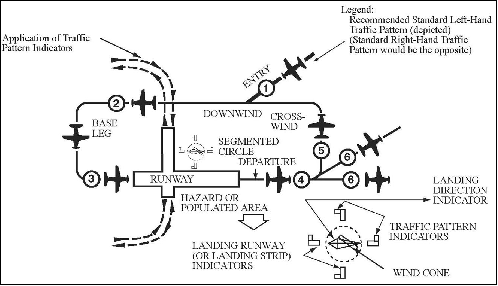
FIG 4-3-3
Traffic Pattern Operations
Parallel Runways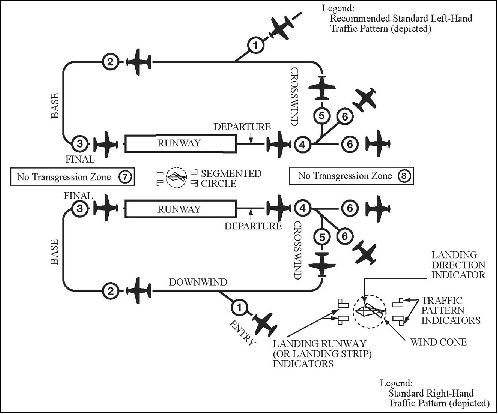
FIG 4-3-4
Headwind/Tailwind/Crosswind Component Calculator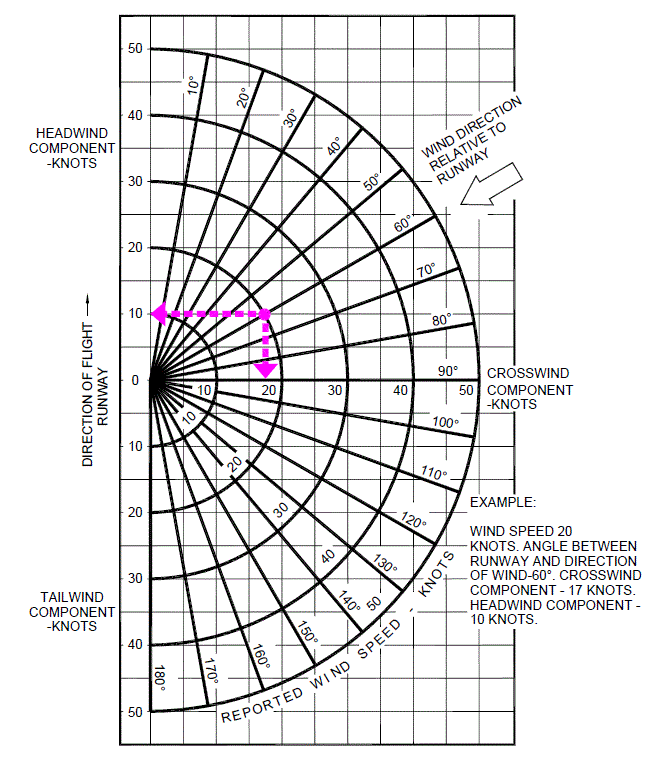
Source: FAA Aeronautical Information Manual · current edition · paragraph 4-3-3.
The short answer
This AIM section is FAA advisory guidance recommending traffic pattern entry altitudes and operations: propeller aircraft at 1,000 feet AGL, large/turbine aircraft at not less than 1,500 feet AGL, and helicopters near 500 AGL. All turns must be made to the left unless indicated otherwise, supporting cloud-clearance criteria under 14 CFR 91.155.
Research Notes
Common Questions
What altitude should I enter the traffic pattern at?
The AIM recommends propeller-driven aircraft enter at 1,000 feet AGL, while large and turbine-powered aircraft enter at not less than 1,500 feet AGL or 500 feet above the established pattern altitude. Helicopters may fly a similar pattern at a lower altitude of 500 AGL and closer to the runway. These altitudes apply unless another pattern altitude is published in the Chart Supplement.
What does “RP” mean next to a runway number on a sectional chart?
Per the AIM, “RP” means Right Pattern. On Sectional, Aeronautical, and VFR Terminal Area Charts, right traffic patterns are indicated at public-use and joint-use airports with “RP” followed by the applicable runway number(s), for example “RP 9, 18, 22R.” An asterisk (*RP) indicates special conditions exist and refers pilots to the Chart Supplement. Right patterns are not shown at airports with full-time control towers.
When should I turn to crosswind if staying in the pattern?
The AIM example guidance says to commence the turn to crosswind leg beyond the departure end of the runway within 300 feet of pattern altitude. Complete the turn to final at least 1/4 mile from the runway, and if departing the pattern, exit straight out or with a 45-degree turn (to the left in a left-hand pattern) beyond the departure end after reaching pattern altitude.