
AIM Text
When installed, runway half-way signs provide the pilot with a reference point to judge takeoff acceleration trends. Assuming that the runway length is appropriate for takeoff (considering runway condition and slope, elevation, aircraft weight, wind, and temperature), typical takeoff acceleration should allow the airplane to reach 70 percent of lift-off airspeed by the midpoint of the runway. The “rule of thumb” is that should airplane acceleration not allow the airspeed to reach this value by the midpoint, the takeoff should be aborted, as it may not be possible to liftoff in the remaining runway.
Several points are important when considering using this “rule of thumb”:
- Airspeed indicators in small airplanes are not required to be evaluated at speeds below stalling, and may not be usable at 70 percent of liftoff airspeed.
- This “rule of thumb” is based on a uniform surface condition. Puddles, soft spots, areas of tall and/or wet grass, loose gravel, etc., may impede acceleration or even cause deceleration. Even if the airplane achieves 70 percent of liftoff airspeed by the midpoint, the condition of the remainder of the runway may not allow further acceleration. The entire length of the runway should be inspected prior to takeoff to ensure a usable surface.
- This “rule of thumb” applies only to runway required for actual liftoff. In the event that obstacles affect the takeoff climb path, appropriate distance must be available after liftoff to accelerate to best angle of climb speed and to clear the obstacles. This will, in effect, require the airplane to accelerate to a higher speed by midpoint, particularly if the obstacles are close to the end of the runway. In addition, this technique does not take into account the effects of upslope or tailwinds on takeoff performance. These factors will also require greater acceleration than normal and, under some circumstances, prevent takeoff entirely.
- Use of this “rule of thumb” does not alleviate the pilot's responsibility to comply with applicable Federal Aviation Regulations, the limitations and performance data provided in the FAA approved Airplane Flight Manual (AFM), or, in the absence of an FAA approved AFM, other data provided by the aircraft manufacturer.
In addition to their use during takeoff, runway half-way signs offer the pilot increased awareness of his or her position along the runway during landing operations.
FIG 7-6-1
Typical Runway Half-way Sign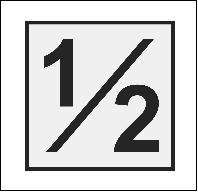
Source: FAA Aeronautical Information Manual · current edition · paragraph 7-6-8.
The short answer
This AIM section is FAA advisory guidance explaining how runway half-way signs at unimproved airports help pilots judge takeoff acceleration. The "rule of thumb" is that an airplane should reach 70 percent of lift-off airspeed by the runway midpoint, or the takeoff should be aborted. It supports compliance with applicable regulations and AFM performance data.
Research Notes
Common Questions
What is the 70 percent rule for runway half-way signs?
When installed, runway half-way signs give a reference point to judge takeoff acceleration trends. Assuming runway length is appropriate (considering condition, slope, elevation, weight, wind, and temperature), typical acceleration should let the airplane reach 70 percent of lift-off airspeed by the runway midpoint. The rule of thumb is that if airspeed has not reached this value by midpoint, the takeoff should be aborted, as lift-off may not be possible in the remaining runway.
Is the half-way sign rule of thumb always reliable?
No. The AIM cautions that airspeed indicators in small airplanes are not required to be evaluated below stalling speed and may not be usable at 70 percent of lift-off airspeed. The rule assumes a uniform surface; puddles, soft spots, tall or wet grass, and loose gravel can impede acceleration. It applies only to runway needed for actual lift-off and does not account for obstacles, upslope, or tailwinds, which require greater acceleration. The entire runway should be inspected beforehand.
Does using the half-way sign replace AFM performance data?
No. The AIM states this rule of thumb does not alleviate the pilot's responsibility to comply with applicable Federal Aviation Regulations and the limitations and performance data in the FAA-approved Airplane Flight Manual, or, absent an approved AFM, other manufacturer data. The signs are an awareness aid; they also help pilots judge position along the runway during landing. Note there is no FAA standard for the sign's appearance, as shown in FIG 7-6-1.