The CFI Checkride: What to Expect, How to Pass, and Why It's Not What You Think (2026 Guide)
A CFI checkride is the FAA practical test for the Certified Flight Instructor certificate, conducted by a Designated Pilot Examiner (DPE) or FAA Inspector. It has two parts — an oral exam (1.5–2.5 hours) and a flight test (1–2 hours) — and runs four to eight hours total, sometimes split across two days. The 2023 national pass rate was 76.1% (FAA Civil Airmen Statistics) — not the 50% the hangar rumors say. But the pass rate isn't the story. The story is what the test is actually measuring, and it isn't what you think.

- The CFI checkride consists of an oral exam (1.5–2.5 hours) and a flight test (1–2 hours), totaling 4–8 hours.
- Pass rate is 76.1% nationally per FAA Civil Airmen Statistics 2023 — DPEs pass 76.0%, FAA Inspectors pass 81.1%. The "50%" myth is wrong.
- All-in cost runs $1,500–$2,500 (DPE fee $900–$1,200, aircraft rental $300–$600, plus prep materials).
- The oral exam isn't a quiz. It's a teaching demonstration. The DPE asks questions; you answer them by teaching the DPE, not by reciting answers.
- The flight test isn't about your stick-and-rudder. It's about whether you can teach what you're flying while you're flying it.
- The candidates who walk in calm aren't the ones who memorized harder. They're the ones who reframed the test as a teaching demonstration.
- If you fail, you get a Notice of Disapproval listing only the areas you missed — the rest stand. You retest just the missed areas, often within a week.
Walking into your first lesson with a 50-page binder won't help you.
Get my Anti-Binder One-Page Lesson Plan Template free — the lesson plan tool I built for CFI candidates who want to be ready Day 1.
Get the Anti-Binder Template Free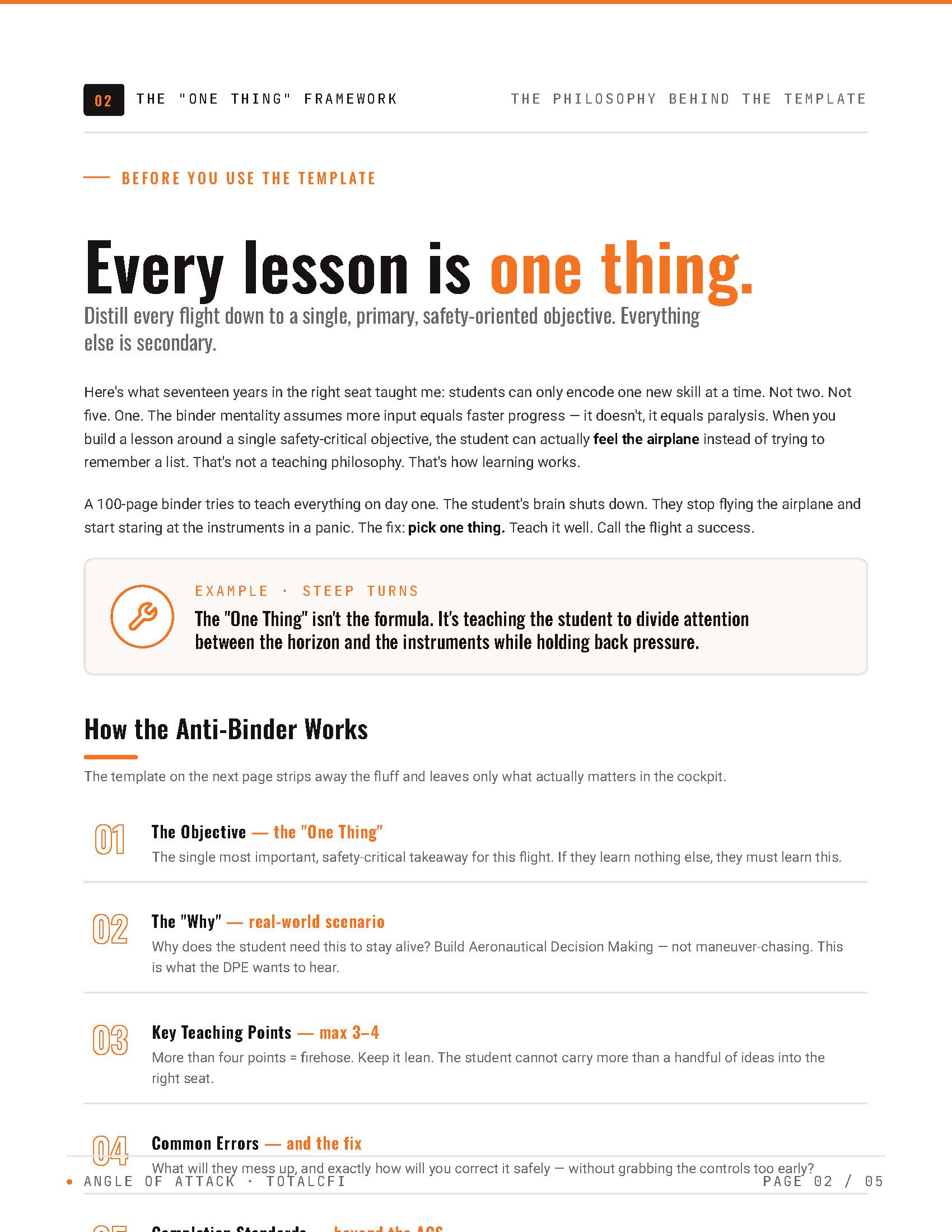
WHAT'S IN THIS GUIDE
- 1What Is the CFI Checkride? (And Why It's Different From Every Other One You've Taken)
- 2How Long Does the CFI Checkride Take?
- 3What's on the CFI Oral Exam?
- 4What's on the CFI Flight Test?
- 5What's the CFI Checkride Pass Rate? (Debunking the 50% Myth)
- 6How Much Does the CFI Checkride Cost in 2026?
- 7What the Examiner Is Really Testing on Your CFI Checkride
- 8How to Prepare for the CFI Checkride (The Right Way)
- 9What Happens If You Fail the CFI Checkride?
- 10Initial CFI vs CFII vs MEI: Which Should You Do First?
- 11Frequently Asked Questions
What Is the CFI Checkride? (And Why It's Different From Every Other One You've Taken)
The CFI checkride is the FAA practical test that turns a Commercial Pilot into a Certified Flight Instructor. It's the final step in the certificate process described under 14 CFR 61.183, and it's administered by either a Designated Pilot Examiner (DPE) or an FAA Aviation Safety Inspector (ASI).
You've already passed checkrides for Private, Instrument, Commercial. So far so familiar. Here's what's new.
Every checkride before this one tested your flying. The Private examiner watched you maintain altitude. The Instrument examiner watched you fly an approach to minimums. The Commercial examiner watched you nail a chandelle. They were grading your hands and your decisions in the airplane.
The CFI checkride is the first one that grades your teaching.
You'll fly the maneuvers — lazy eights, chandelles, eights-on-pylons, slow flight, stalls, ground reference work — but the airplane part is almost a sideshow. What the examiner is really watching is whether you can explain what you're doing while you're doing it, whether you can catch your student before they hurt themselves, and whether you can teach the maneuver to someone who's never seen it before. The stick-and-rudder is the prerequisite. The teaching is the test.
I did my CFI checkride at Fond du Lac, Wisconsin, in 2017. My DPE was a retired Vietnam Huey pilot — a Wisconsin Aviation Hall of Famer with thousands more hours than I had. I flew two airplanes that day, a 172 and a Piper Arrow for the complex demonstration. (The complex requirement has since changed; we'll get to that.) I drove away from KFLD with tears in my eyes, away from my six-month-old son back home, knowing I'd just done something that mattered.
It was the easiest checkride I'd ever done.
I'll come back to why it was easy in the reframe section below, because the reason is the whole article.
How Long Does the CFI Checkride Take?

The CFI checkride runs four to eight hours total, sometimes split across two days. The variation comes from the oral, not the flight.
| Phase | Time | Notes |
|---|---|---|
| Oral exam | 1.5–2.5 hours | Longer for Initial CFI, shorter for add-ons. |
| Pre-flight + briefing | 30–45 min | You brief weather, weight & balance, the works. |
| Flight test | 1–2 hours | One sortie; sometimes split if weather forces a discontinuance. |
| Debrief + paperwork | 30 min | Pass or fail, the debrief is where the real teaching happens. |
The Initial CFI ride sits at the long end of that range because the FAA wants to see your full teaching toolkit. CFII and MEI add-ons trim the oral by an hour or more (you've already proven the Fundamentals of Instructing on the initial; the add-on focuses narrowly on the new privilege).
If the weather goes south mid-ride, the examiner can issue a Letter of Discontinuance — you finish the missing areas on a separate day, no penalty. This isn't a fail. It's just paperwork.
What's on the CFI Oral Exam?

The oral is structured around the eight Areas of Operation in the FAA Flight Instructor Airplane Airman Certification Standards (FAA-S-ACS-25, current as of 2026). Every CFI checkride hits these eight areas in some form:
- Fundamentals of Instructing — the laws of learning, levels of learning, teaching methods, evaluation, professionalism. Pulled directly from the Aviation Instructor's Handbook (FAA-H-8083-9B).
- Technical Subject Areas — aeromedical, runway incursion avoidance, regulations, weight & balance, performance, weather. The "private pilot syllabus" through the eyes of a teacher.
- Preflight Preparation — pilot qualifications, airworthiness, weather information, cross-country planning.
- Preflight Lesson on a Maneuver to be Performed in Flight — pick a maneuver, plan a ground lesson on it, deliver the lesson to the examiner. This is the part most candidates underestimate.
- Preflight Procedures — preflight inspection, cockpit management, engine starting, taxiing, before-takeoff check.
- Airport Operations — radio communications, traffic patterns, runway markings.
- Takeoffs, Landings, and Go-Arounds — every takeoff/landing variant the ACS lists, taught and demonstrated.
- Postflight Procedures — after-landing, parking, securing.
The thread running through all eight: you're teaching, not testing. Every question the DPE asks is one you'll answer by teaching the DPE the answer. "Walk me through how you'd explain a power-on stall to a 15-hour student" is not a request for the ACS standard. It's a request for a lesson.
A few questions you should expect:
- "What are the four fundamentals of flight, and how do you teach them?"
- "What's the difference between a power-off and a power-on stall, and why does that difference matter to a student?"
- "What are the symptoms of fixation, and how would you catch it in a student?"
- "Walk me through your lesson on lazy eights."
- "A student says they're scared to do stalls. What do you do?"
Notice none of those questions are pure recall. Every one of them asks you to teach something.
What's on the CFI Flight Test?
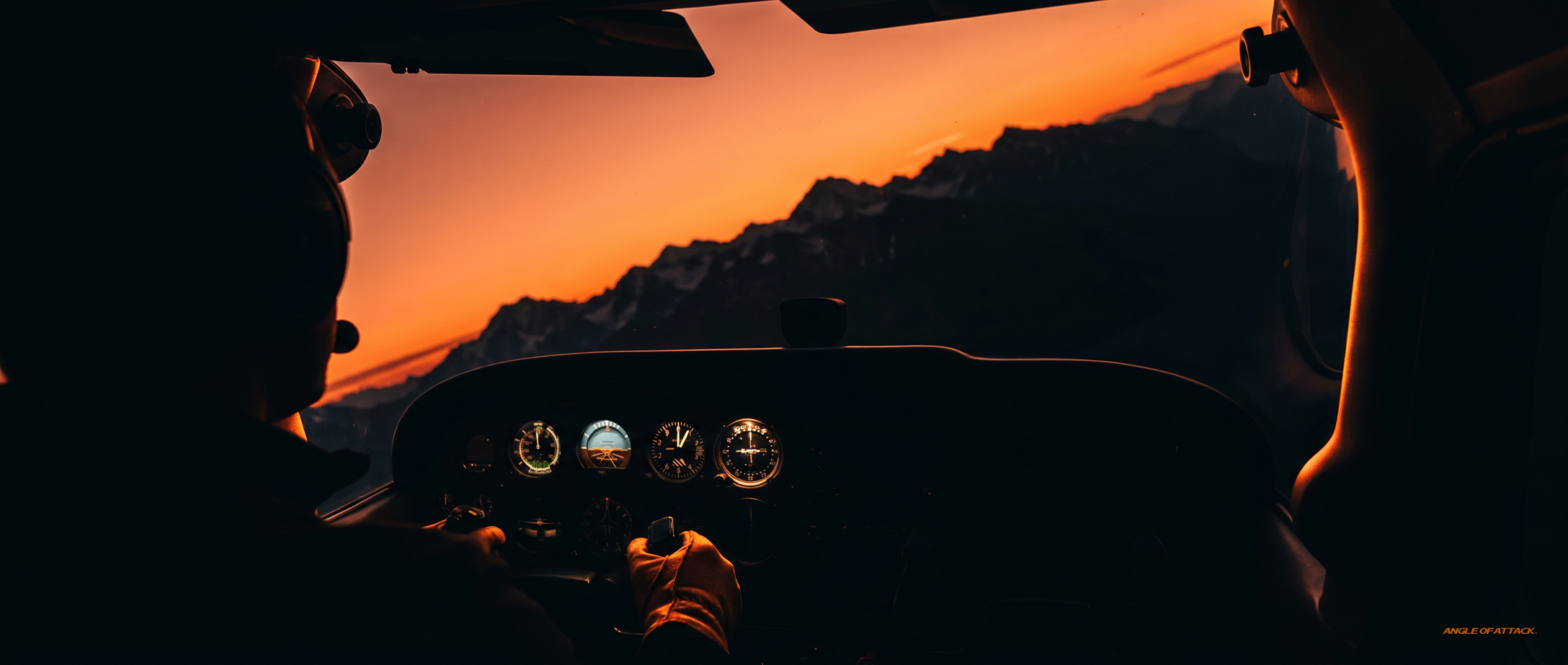
The flight portion is built around the same ACS but condensed into one (occasionally two) sorties of 1–2 hours. You'll demonstrate, and teach as you demonstrate, the following maneuvers:
- Steep turns (45°/50° banks, 360° turns)
- Slow flight (just above stall, configurations vary)
- Power-off stalls and power-on stalls (full stall, recovery, the teaching points)
- Lazy eights (commercial maneuver, taught from the right seat)
- Chandelles (commercial maneuver, taught from the right seat)
- Eights-on-pylons (the maneuver everyone's afraid of — pivotal altitude, ground reference)
- Emergency operations (engine failure, simulated forced landing, electrical fire — teach the procedure)
- Takeoffs and landings (normal, short field, soft field, crosswind — multiple variants)
- Go-arounds and rejected takeoffs
- Ground reference maneuvers (rectangular course, S-turns, turns around a point)
Two notes that catch candidates off guard.
You're flying from the right seat. Most of your training to this point has been left seat. The CFI checkride is the first one where you're sitting in the instructor's seat. The picture is different. The control inputs are subtly different (especially during landings — your sight picture for the runway centerline shifts). Practice this before checkride day, not on it.
The complex airplane requirement is gone. As of an FAA policy change a few years back, the Initial CFI no longer requires the complex demonstration in a complex aircraft. You can do the entire ride in a fixed-gear airplane like a 172. (Your DPE may still want to see configuration awareness in a more capable airplane, but it's not required.) Always check the current ACS and your DPE's preference before the ride.
While you're flying, you're talking. Continuously. Every maneuver gets a verbal teaching brief before, a verbal narration during, and a verbal debrief after. The examiner is your student; if they don't hear the teaching, the maneuver doesn't count.
What's the CFI Checkride Pass Rate? (Debunking the 50% Myth)
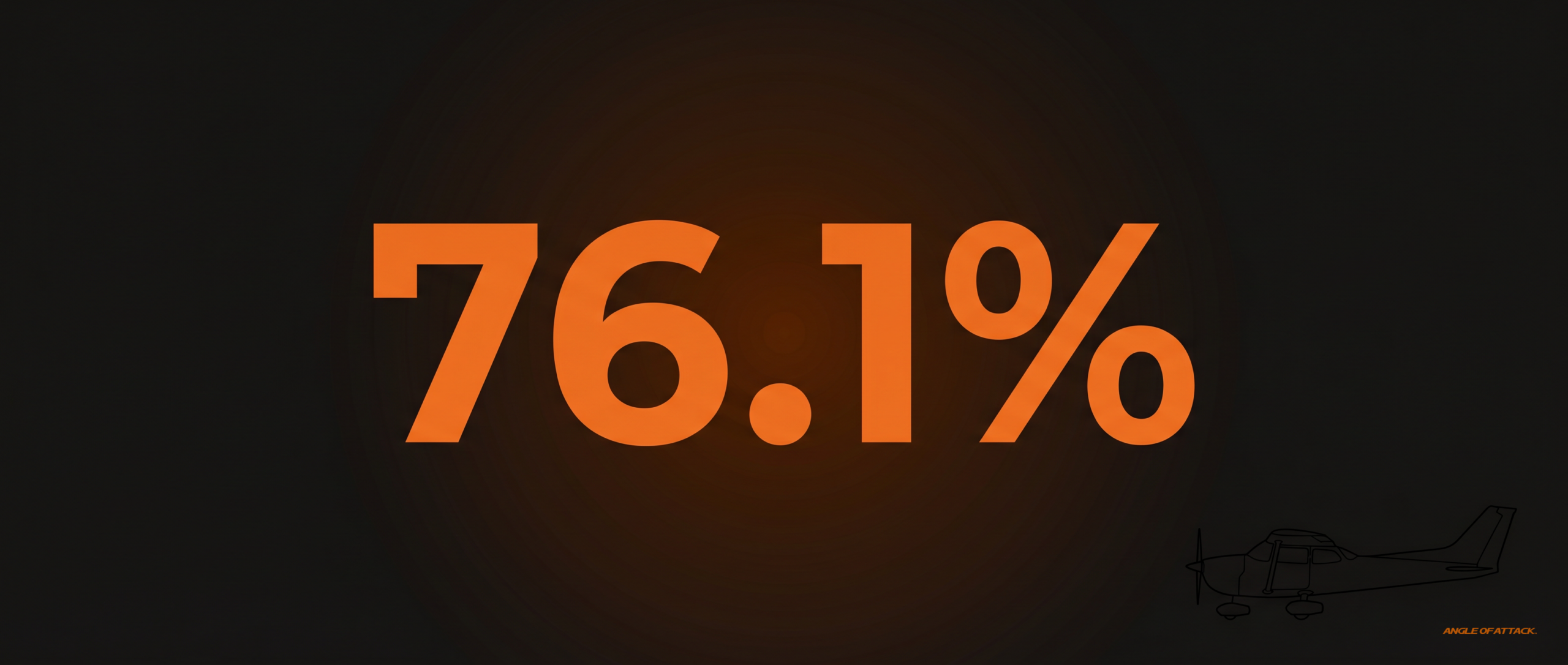
The 2023 national pass rate for the Initial CFI checkride was 76.1%, per the FAA Civil Airmen Statistics.
That's not 50%. It's not 60%. It's 76.1%.
The 50% number is a hangar myth that won't die. It probably came from the 1990s, when CFI pass rates were lower and the FAA was using the test as a quality filter for new instructors. The data hasn't supported the myth in two decades, but candidates still hear it from coworkers, from senior instructors who got their CFI in a tougher era, and from pilots online who repeat what they heard from someone else.
Here's the breakdown that gets even more interesting:
| Examiner type | 2023 pass rate |
|---|---|
| Designated Pilot Examiner (DPE) | 76.0% |
| FAA Aviation Safety Inspector (ASI) | 81.1% |
ASI checkrides actually pass more often than DPE rides. So the "FAA inspector is harder" myth is also wrong. (The reason is structural — ASI checkrides are usually scheduled for the better-prepared candidates because they're harder to book and more expensive to discontinue. Selection bias, not difficulty bias.)
Why does the myth matter? Because it changes how you walk into the room. A candidate who believes the pass rate is 50% walks in expecting failure. A candidate who knows it's 76.1% walks in expecting that if they did the work, they'll be fine.
Three out of four CFI candidates pass on the first attempt. The candidates who don't aren't unlucky — they're under-prepared, usually in one specific area (most often, lesson planning or the teaching demonstration). And every one of them gets a Notice of Disapproval with a specific list of what to fix.
Walk in expecting to pass. Because statistically, you will.
How Much Does the CFI Checkride Cost in 2026?
The all-in 2026 cost for an Initial CFI checkride runs $1,500–$2,500, broken down roughly as follows:
| Cost item | 2026 range | Notes |
|---|---|---|
| DPE fee | $900–$1,200 | Some markets higher, especially in states with DPE shortages |
| Aircraft rental (1.5–2 hrs) | $300–$600 | Depends on airplane and rate |
| Discontinuance fee | $0–$300 | Only if weather or aircraft forces a re-fly |
| Retest fee (if failed) | $400–$600 | DPE charges to re-administer just the failed areas |
| Knowledge test review | $50–$200 | Often paid before the ride |
| Realistic all-in (no fail) | $1,500–$2,500 | Ballpark — varies by market |
A few line items worth flagging:
- DPE fees jumped in 2024–2025 when the FAA loosened pricing rules. What used to be $500 is now often $900+. Markets with low DPE supply (the Pacific Northwest, parts of New England) sit at the top of that range.
- Aircraft rental adds up if you have to re-fly. A discontinuance is one extra rental block, but a fail on a flight area requires re-flying it.
- Don't economize on prep by skipping a mock checkride. A $300–$500 mock with a CFI mentor before your ride is the single highest-ROI dollar in the entire process.
What the Examiner Is Really Testing on Your CFI Checkride
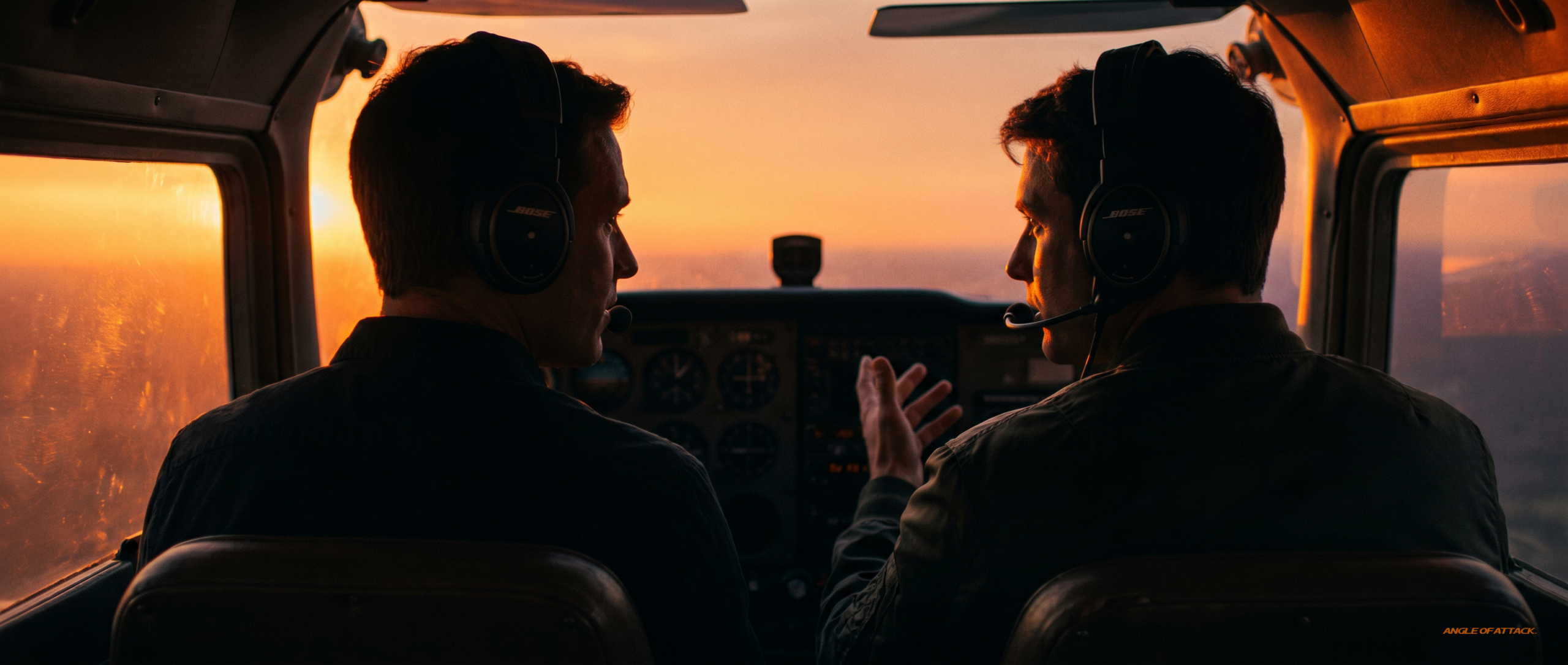
Here's the part nobody tells you, and it's the part that changes everything.
The CFI checkride is a teaching demonstration. The examiner is not your interrogator. The examiner is your student. Every question they ask, every maneuver they request, every weak answer they probe — all of it is a setup for you to teach them something. They are role-playing a 40-hour primary student. Your job is to teach that student.
This is the framing the Aviation Instructor's Handbook (FAA-H-8083-9B) describes when it talks about evaluation as a teaching tool. It's the framing the ACS implies when it lists "the applicant teaches" as the standard for nearly every Area of Operation. It's the framing every experienced DPE I've ever talked to operates from. And it's the single biggest unlock for candidates who walk in calm.
I'll tell you how I learned it.
When I showed up at Fond du Lac for my Initial CFI ride in 2017, my DPE was the kind of pilot who makes you feel a little awestruck before you even start the engine. Vietnam veteran. Huey pilot. Wisconsin Aviation Hall of Fame. Decorated, accomplished, the real thing. The kind of guy where you walk into the briefing room and a small voice in your head says "who do you think you are."
I walked in anyway. And here's what I did differently — what I still teach candidates to do today.
I treated him like a student.
When the oral started, I didn't recite ACS standards back at him. I taught him. When we got to the airplane, I didn't perform maneuvers for him. I taught him while I performed them. And then we got to the lazy eights.
Lazy eights are a beautiful, flowing maneuver — a slow rolling figure-eight where the airplane changes pitch and bank continuously through the symmetrical pattern. They're hard to fly well. The examiner asked me to demonstrate one and explain it as I flew it.
I flew it. I narrated. And as I was narrating, I noticed something about the way he was setting up his own clearing turns and entries — a small thing, but it was the kind of thing you'd correct in a student. So I corrected him.
I told a Wisconsin Aviation Hall of Fame Vietnam vet that he could do something better and different on his maneuver setup. He looked at me, half-smiling, and said, "Oh yeah, are you sure?"
I was so in the moment, so locked into "this is my student and I am teaching him," that I just said yes and explained why. To this day I'm not sure if he was actually doing it wrong or if he was testing whether I'd catch what he framed as wrong. Either way, I corrected him. Confidently. Because I was teaching, not testing.
That was the easiest checkride I have ever done. Because I never once thought of him as the examiner. He was my student, and I was his instructor, and the whole thing went exactly the way a good lesson goes.
That reframe — the examiner is your student, not your interrogator — is the centerpiece of TotalCFI, the course I built around the way I prepare candidates today. It's the unlock that turns a panicked check-pilot into a calm instructor. It's the difference between candidates who go in expecting to be tested and candidates who go in expecting to teach. The data, in my experience, says the second group passes more often.
You can teach yourself this. You can practice it. You can rehearse the maneuvers and the orals all you want, but until you make the cognitive switch — I am the teacher in this airplane — the checkride will feel like an interrogation. Make the switch, and it becomes a lesson.
How to Prepare for the CFI Checkride (The Right Way)

Most CFI prep programs prepare you to pass the checkride. That's the trap.
The candidates I've taken to their CFI rides — Riley, Annalynn, Myla, others — passed on their first try, every one of them. Not because we did a million practice orals. Not because we drilled FOI flashcards. We did some of that. But what we mostly did was something different:
I prepared them to be students.
That sounds backwards. They're trying to become teachers. Why prepare them to be students?
Because the candidate who can step back into the seat of the student — who can remember what it felt like to be confused about lift, to be scared of stalls, to be overwhelmed by the radio, to misjudge a flare — that candidate becomes the teacher who actually reaches their students. The teacher who can't step back into student empathy is the teacher whose students never quite get it. And the DPE will smell that gap from across the table.
So with my candidates, we work on finding the simpleness of every lesson. We work on stripping out the jargon and rebuilding the explanation from scratch. We work on the pre-brief, the in-flight teaching, the debrief — as if they're already teaching their first paying student tomorrow morning. We do "teach-backs" where they teach me a maneuver while I role-play a student who got it wrong.
By the time they walk into the checkride, the test isn't a test. It's just another teach-back. With a different student.
Riley, Annalynn, Myla — they passed because by checkride day they weren't checkride-takers anymore. They were teachers who happened to have a checkride that day. The DPE was just one more student.
That's the difference. And it's why I built TotalCFI around it instead of around lesson plan binders and FOI question banks. The course isn't checkride prep. It's teacher prep. The checkride is the byproduct.
If you want a 30-day plan that maps the right kind of prep onto a calendar, that's a separate article (forthcoming). But before you map any plan, get the framing right: prep to teach, not to pass. The pass takes care of itself.
What Happens If You Fail the CFI Checkride?

You fail one area, you don't fail the ride.
Per 14 CFR 61.43, if you fail any single Area of Operation, the examiner issues a Notice of Disapproval that lists only the Areas you missed. Everything you passed stays passed. You don't redo the whole thing. You retest the missed Areas — sometimes within a week, sometimes the same day if the examiner can fit you in.
That changes the stakes. A "fail" on the CFI checkride is rarely a wholesale fail. It's more often a "you're 90% there, fix this one thing, come back."
The most common reasons candidates earn a Notice of Disapproval:
- Weak teaching demonstration on a single maneuver — usually a stall, a chandelle, or eights-on-pylons
- A regulatory question they couldn't answer cleanly — endorsements is a frequent culprit
- A lesson plan that read like a binder dump instead of a real teaching plan
- An emergency procedure performed mechanically without explaining the why to the "student"
If you do fail, here's what not to do: don't catastrophize. Don't tell yourself you weren't cut out for this. The retest pass rate is high — most candidates pass the retest on the first attempt because the diagnosis is precise. The DPE has just told you exactly what to fix. Go fix it.
This is also where the TotalCFI Day-One Ready Guarantee comes in. If you take the course, do the work, and fail your CFI oral on the first attempt anyway, we cover the retest fee plus a 1-on-1 coaching session with a Master CFI. We built that guarantee because we believe the prep we offer makes the difference. We're willing to put our money behind it.
Initial CFI vs CFII vs MEI: Which Should You Do First?
Most CFI candidates do the Initial CFI (CFI-A, single-engine airplane) first. There are good reasons for that, and one good contrarian argument for going a different way.
| Comparison | Initial CFI | CFII (add-on) | MEI (add-on) |
|---|---|---|---|
| FOI knowledge test | Required | Not required | Not required |
| FIA knowledge test | Required | Different test (FII) | Different test (FIA-Multi) |
| Spin endorsement | Required | Already have it | Already have it |
| Oral length | 1.5–2.5 hr | 1–1.5 hr | 1–1.5 hr |
| Flight portion | 1.5–2 hr | 1–1.5 hr | 1–1.5 hr |
| All-in cost | $1,500–$2,500 | $1,000–$1,800 | $1,500–$2,500 |
Why most people do Initial first: the heavy lift (Fundamentals of Instructing, lesson planning, the spin endorsement) only happens once. Knock out the Initial, and CFII and MEI become short courses.
The contrarian argument: if you have a path to multi-engine time anyway (a friend's airplane, a flight school deal), some candidates argue for MEI first. The MEI doesn't require the FOI written. You skip the lesson plan deep-dive (since you've taught those before). And you graduate with a shinier certificate that gets you hired into multi-engine instructor jobs faster — which lets you build twin-engine PIC time toward the airlines on the same hours you'd have built single-engine PIC time as a primary CFI.
Most candidates ignore the MEI-first path because it's harder to find a school willing to support it. But if you can, it's worth thinking about.
CFII almost always comes second, regardless of whether you start with Initial or MEI. The instrument privilege is what makes you a complete instructor, and it adds the highest-paying client base — instrument candidates pay more for instruction than primary students.
Frequently Asked Questions
Can the DPE fail you for one bad maneuver?
If a single maneuver falls below ACS standards in a way the examiner judges as a deficiency in the Area of Operation, yes — but they don't fail you for the whole ride. You receive a Notice of Disapproval listing the specific Area(s) of Operation you missed. The areas you passed remain passed. You retest only the missed areas, often within a week.
How long does the CFI oral really take?
Plan on 1.5–2.5 hours for an Initial CFI oral. Some examiners go three. The duration depends on how cleanly you teach — a candidate who teaches well moves through the ACS faster than one who recites and waits to be redirected. CFII and MEI add-on orals run 1–1.5 hours.
Do you have to pass both knowledge tests before the practical?
Yes. For the Initial CFI you need a passing grade on both the Fundamentals of Instructing (FOI) and the Flight Instructor Airplane (FIA) knowledge tests before scheduling the practical. The FOI is good for 24 calendar months; the FIA, the same. Most candidates take both within the same 30-day window so they expire together.
Can I take my CFI checkride in a high-performance airplane?
Yes. A high-performance airplane (a 182 or 206, for example) is an acceptable platform for the Initial CFI checkride, provided you have any required endorsements. The complex airplane requirement was removed by FAA policy several years ago, so a fixed-gear, fixed-prop airplane is fine.
Do I need lesson plans on paper at the ride?
You need lesson plans, period. Whether they're on paper, on an iPad, or hand-written in a notebook is up to you and your DPE's preferences. What matters is that they're teaching tools, not regulatory checkboxes. A one-page plan you can actually teach from beats a 50-page binder you can't navigate. Bring the plans you'd use with a real student tomorrow morning.
What's the difference between the Initial CFI and an add-on?
The Initial CFI (CFI-A) requires the Fundamentals of Instructing knowledge test, the Flight Instructor Airplane knowledge test, the spin endorsement, and a longer oral covering all eight Areas of Operation. Add-ons (CFII, MEI) skip the FOI test, skip the spin endorsement, and run shorter orals focused on the new privilege. You only do the heavy lift once.
Can I retake the checkride the same day?
Sometimes — if the examiner's schedule allows and the failure was narrow (a single maneuver, for example), you may be able to retest the failed Area(s) the same day. More often, you go home, fix what the Notice of Disapproval flagged, and retest within a week. The retest fee is typically $400–$600.
How do I find a good DPE?
Ask working CFIs in your area, not internet forums. Examiner reputations are local, not national. The DPEs who are known for "fair but thorough" tend to be the ones who passed your CFII or MEI — track them down and ask their schedule. Also: don't pick a DPE just because they have an availability slot. Wait three weeks for the right examiner; it pays off.
If the CFI checkride is keeping you up at night, you're prepping for the wrong thing.
TotalCFI teaches you to walk into the oral as a teacher, not a test-taker — the reframe most candidates only figure out after they've already failed once.
The CFI checkride is the most important checkride you'll ever take, but not for the reason you think. It's not important because it makes you legal to teach. The FAA can do that with a piece of paper. It's important because it's the day you decide what kind of instructor you're going to be — the kind who recites, or the kind who teaches. The candidates who walk in calm have already made the decision. The rest are still hoping the examiner won't notice they haven't.
You've done the flying. You've passed the writtens. The last work left is the work between your ears. Make the switch. Be the teacher in the airplane.