Your First Day as a CFI: The Discovery Flight Playbook
A new CFI's first day usually looks the same: a discovery flight booked for a brand-new student who's never touched a yoke. The flight runs about 90 minutes total — a 30-minute pre-flight brief, 45 minutes in the airplane, and a 15-minute debrief. The structure is simple. The execution is what separates the CFI whose first student books a second lesson from the CFI whose first student says "thanks, I'll think about it" and disappears. This playbook covers the structure, what to teach, what to demonstrate, what to hand over, and how to convert the discovery flight into a booked student — the actual Day 1 work, minute by minute.
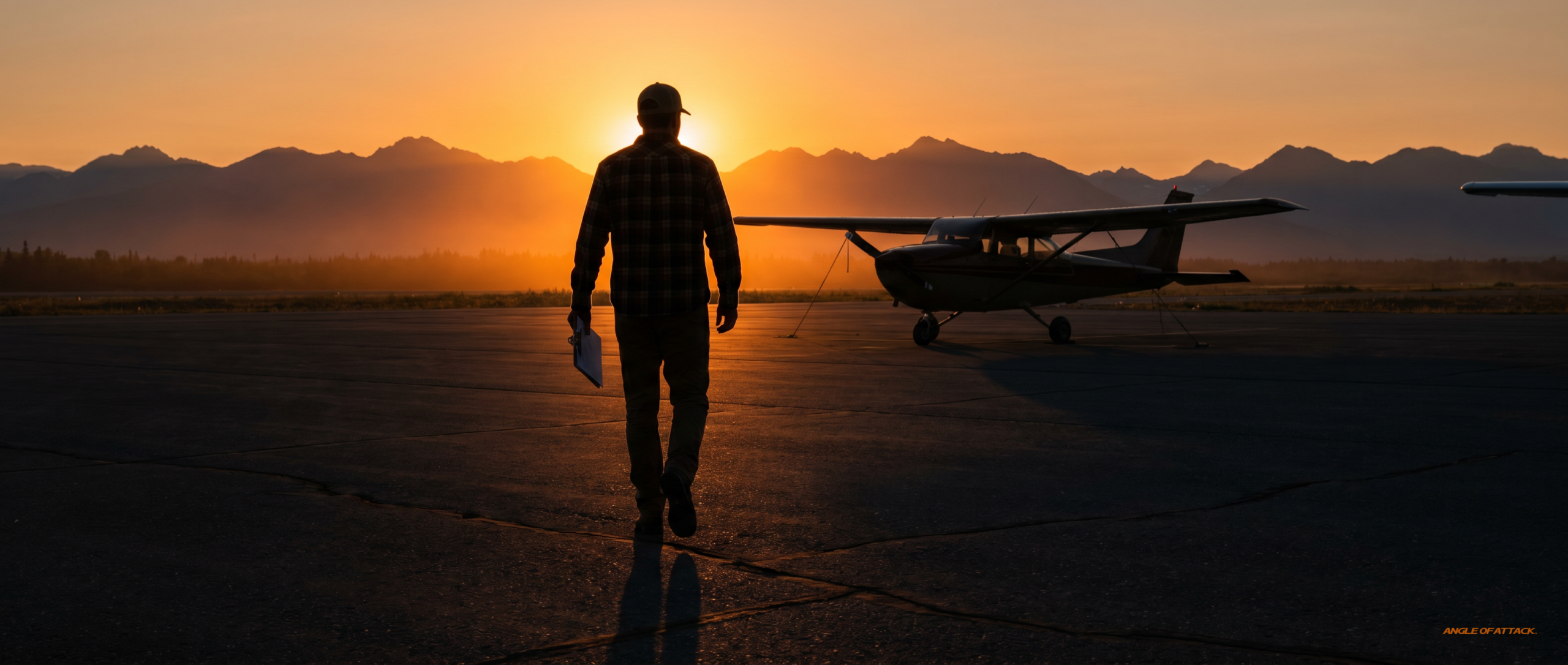
- A typical Day-1 discovery flight runs 90 minutes total: a 30-minute pre-flight brief, 45 minutes in the airplane, a 15-minute debrief.
- The debrief is the most important 15 minutes of the entire flight. It's where the student decides whether they're booking a second lesson — or not.
- The mistake most new CFIs make: they treat Day 1 as a demo (show off how cool flying is) when it should be a teaching exchange (the student does real flying, not just sightseeing).
- A discovery flight student should walk out having actually flown the airplane — gentle turns, climbs, descents, level-offs. Not aerobatics. Not the throttle for takeoff. Real, controlled, hands-on flying.
- What to charge in 2026: typically $150–$250 for a 60–90-minute discovery flight, depending on aircraft and market. Don't undercharge. The student will value what they paid for.
- The conversion question is asked in the debrief, not after. "Do you want to book lesson two?" — direct, casual, expectation set.
Walking into your first lesson with a 50-page binder won't help you.
Get my Anti-Binder One-Page Lesson Plan Template free — the lesson plan tool I built for CFI candidates who want to be ready Day 1.
Get the Anti-Binder Template Free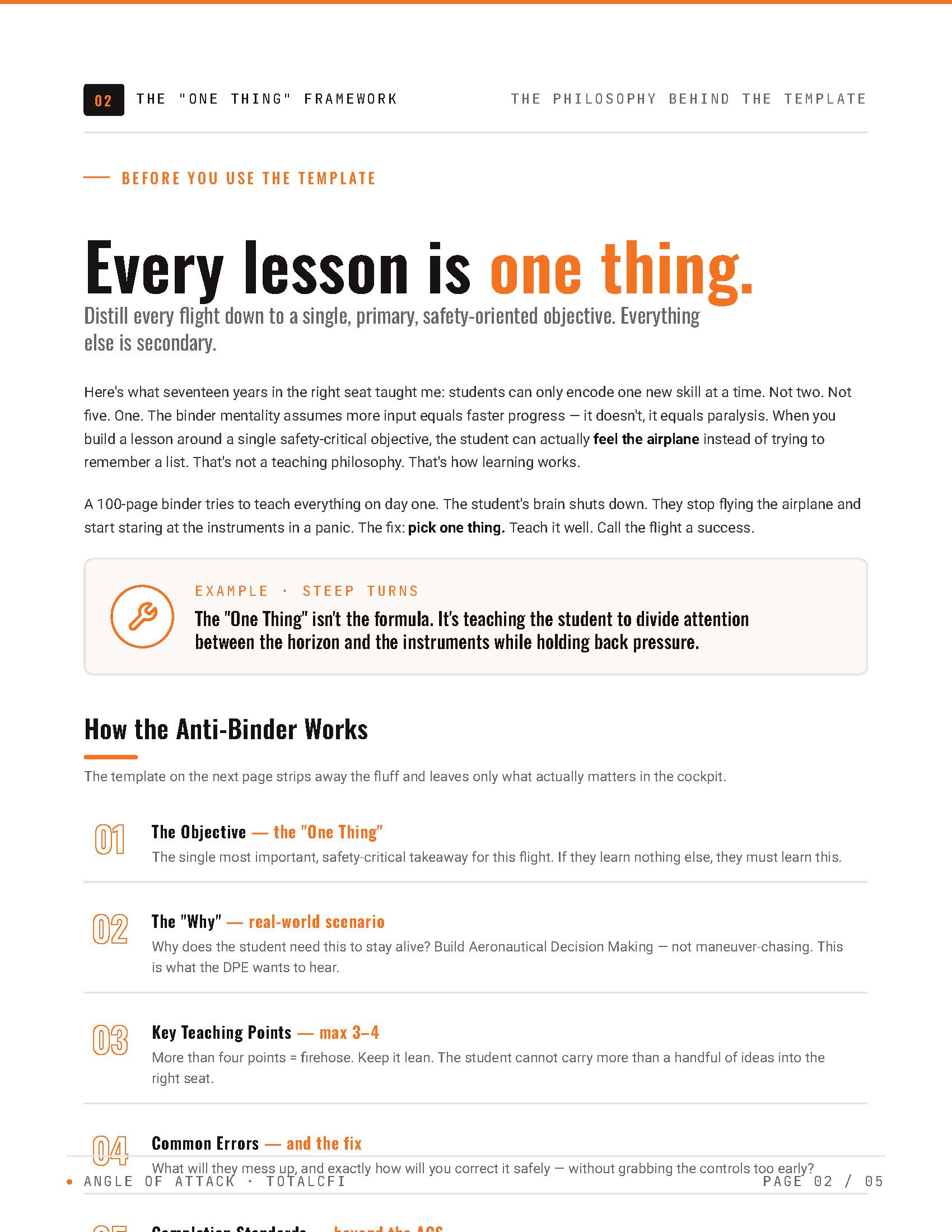
WHAT'S IN THIS GUIDE
- 1What Is a Discovery Flight? (And Why Yours Will Set the Tone)
- 2The Mistake Most New CFIs Make on Day 1
- 3The 90-Minute Discovery Flight Structure
- 4The 30-Minute Pre-Flight Brief — What to Cover
- 5The 45-Minute Flight — What to Demonstrate, What to Hand Over
- 6The 15-Minute Debrief — The Most Important 15 Minutes
- 7How to Handle the Three Most Common First-Lesson Reactions
- 8What to Charge, What to Bring, What to Wear
- 9The Conversion: From Discovery Flight to Booked Student
- 10Frequently Asked Questions
What Is a Discovery Flight? (And Why Yours Will Set the Tone)
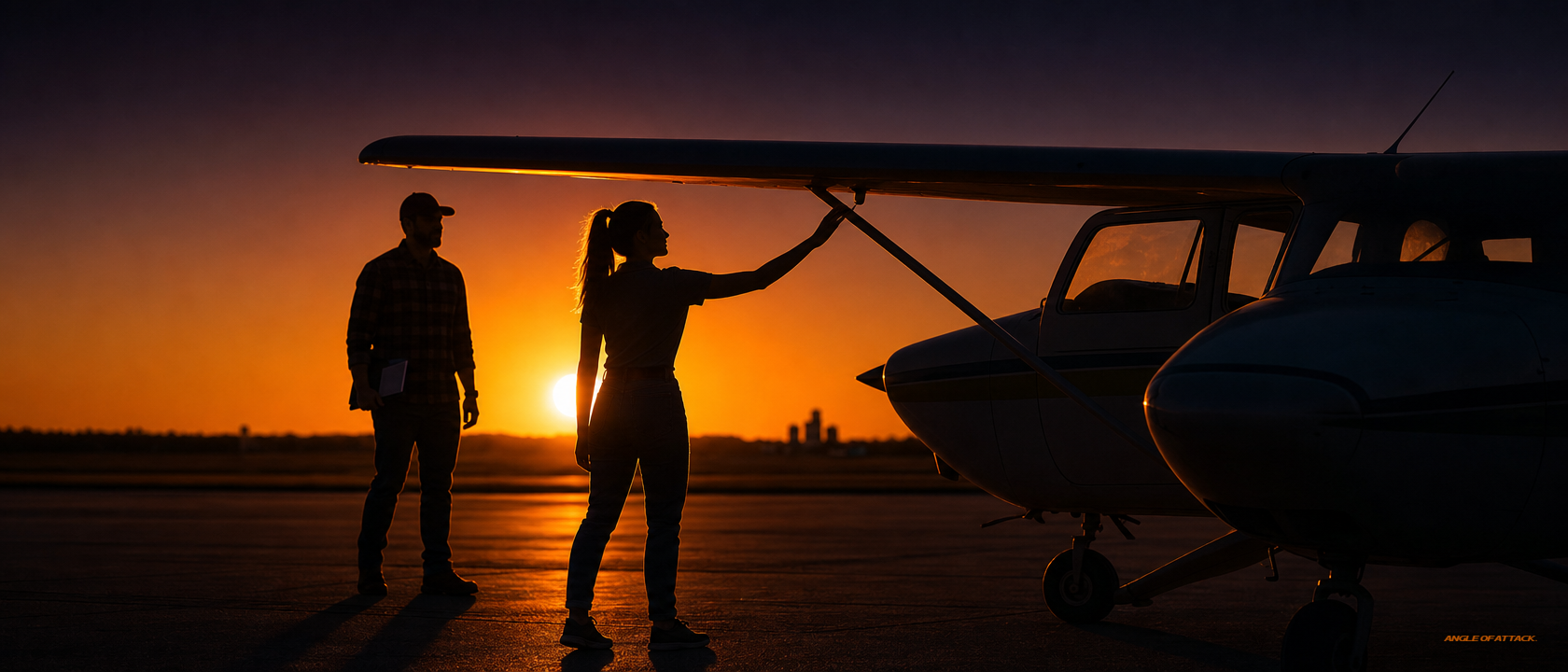
A discovery flight is a short introductory flight lesson designed for someone who has never (or barely) flown an airplane. Most flight schools market it as a "try-out" for prospective students, priced at a flat rate, scheduled at 60 to 90 minutes total, including ground time. The student gets to see what flight training feels like. The school gets to evaluate fit. The CFI gets a teaching exchange with someone who has zero airplane background.
For a brand-new CFI, the discovery flight is almost always your first paying student. Whether you go on to teach hundreds of students or pivot to airlines after 1,500 hours, the rhythm you set on this first discovery flight is the rhythm you'll fall into for every flight after. Get the rhythm right Day 1 and the next 1,500 hours of instructing get easier. Get it wrong and you'll spend years unlearning bad habits.
The flight school you're working for has expectations too. They want this student to come back. The financial model of a flight school is built around discovery-to-booked-student conversion — the discovery flight is essentially a $200 audition for a $15,000 customer. Your job isn't just to fly the lesson. It's to build enough rapport, demonstrate enough competence, and deliver enough fun that the student says yes to the next lesson before they leave the building.
That's a lot of weight on Day 1. The good news: there's a playbook.
The Mistake Most New CFIs Make on Day 1
Most new CFIs treat the discovery flight like a demo flight. They show off. They take the student on a sightseeing tour. They demonstrate maneuvers from the right seat while the student watches. They land. They say "wasn't that cool?" They're surprised when the student doesn't book a second lesson.
The mistake is treating the student as a passenger. The point of a discovery flight is to make the student feel like a pilot — a beginner pilot, with hands on the controls, executing real turns and climbs and descents under your guidance. Not aerobatic stuff. Not unusual attitudes. Just basic, gentle, controlled flying. Because flying the airplane yourself feels infinitely better than watching someone else fly it. And that feeling is the entire selling point of flight training.
The instructor who turns the discovery flight into a demo gets a student who walks out thinking "that was fun." The instructor who turns it into a real lesson gets a student who walks out thinking "I want more of that. When can we go again?" Same flight. Same airplane. Same DPE-airworthy CFI. Different framing.
Here's the philosophy I teach every new CFI in TotalCFI Lesson 4.4 (Starting Strong as a New CFI), and the philosophy underneath the entire Phase 4 of the course: Day 1 is when the student decides whether they're going to be a pilot. Your job isn't to impress them. Your job is to make them feel like one.
The 90-Minute Discovery Flight Structure
The 90-minute structure is industry-standard for a reason. It fits the attention span of a brand-new student, leaves room for weather adjustment, and produces a memorable experience without overwhelming someone who's never been in a small airplane.
| Phase | Duration | What happens |
|---|---|---|
| Greeting & paperwork | 10 min | Hello, signed waivers, basic safety brief, restroom stop |
| Pre-flight brief | 30 min | The teaching exchange below — controls, weather, what to expect |
| Pre-flight inspection | 10 min | Walk around the airplane together, narrate what you're checking and why |
| In-flight time | 35 min | Taxi out, takeoff (you), enroute hands-on time (mostly student), pattern, landing (you) |
| Post-flight + debrief | 15 min | The most important 15 minutes. See below. |
Total elapsed time: 100 minutes. Schools often book the slot at 90 minutes with 10 minutes of buffer at each end. Plan around that.
The 30-Minute Pre-Flight Brief — What to Cover
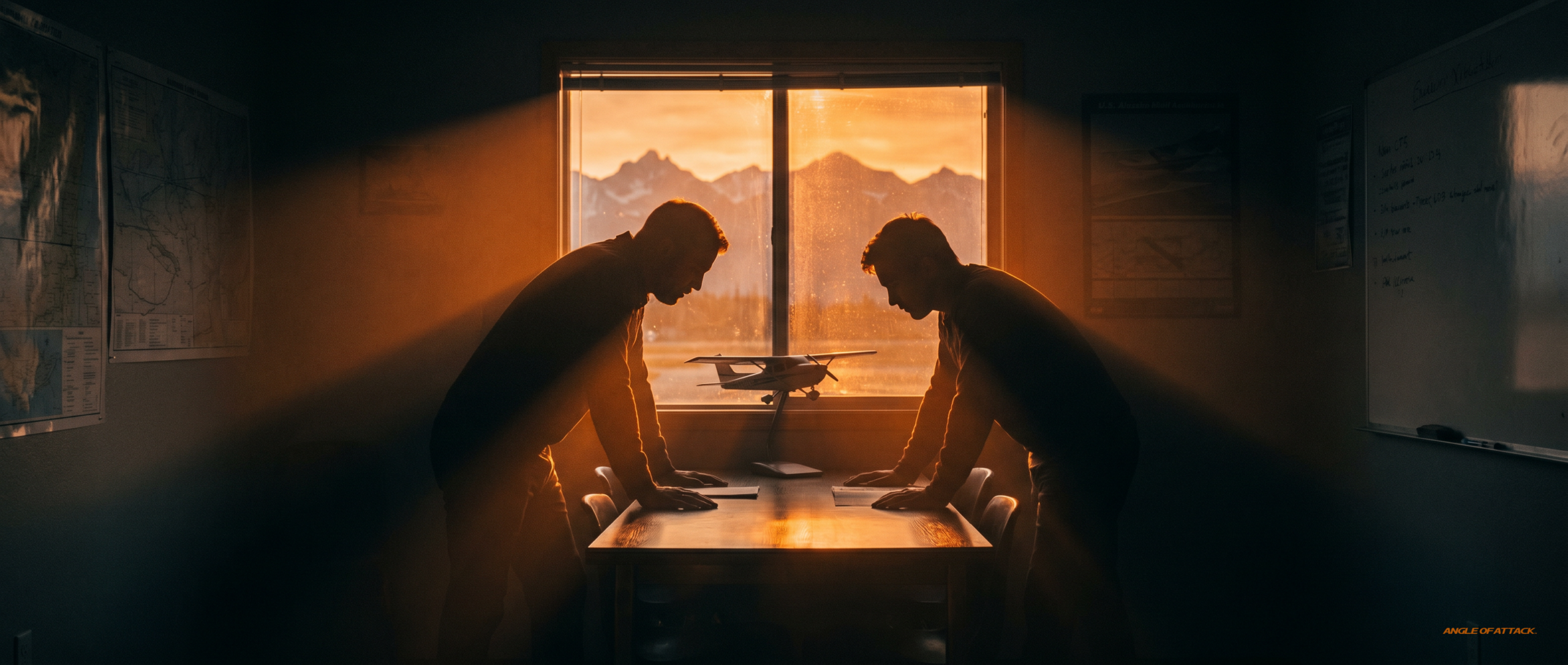
The pre-flight brief is where you establish your authority and your warmth. Both. A student who finds you intimidating won't book again. A student who finds you unprofessional won't either. The middle ground — confident, calm, friendly, organized — is what books second lessons.
Cover four things in 30 minutes:
1. The basics of how an airplane flies (5 minutes). Lift, weight, thrust, drag — the fundamentals. Use a model airplane on the table or your hands in the air. Don't get technical. The student doesn't need to know about Bernoulli; they need to know that the wings make the lift, the engine makes the thrust, and you're going to show them how to manage both. Keep it conversational.
2. The controls (10 minutes). Yoke, rudder, throttle. Show them what each does. Then have them sit in the right seat of the airplane (when you walk out) and put their hands on the controls. Their first physical contact with the airplane should be inside, not at the door. This builds the mental model.
3. What you'll do together (5 minutes). Lay out the flight. "We'll taxi out, I'll do the takeoff, we'll climb out to the practice area, you'll fly some gentle turns and climbs and descents, then I'll do the landing." Naming the structure removes anxiety.
4. Safety briefing (10 minutes). Seatbelts, headsets, sterile cockpit during takeoff/landing, what to do if you feel sick, what to do if you don't feel sick (most don't), how to communicate during the flight. Quick, professional, brief.
Throughout the brief, you're doing two things: teaching real content (the controls, the structure, the safety) and projecting calm. The student is matching your energy. If you're anxious, they'll be anxious. If you're casually competent, they'll relax.
The 45-Minute Flight — What to Demonstrate, What to Hand Over
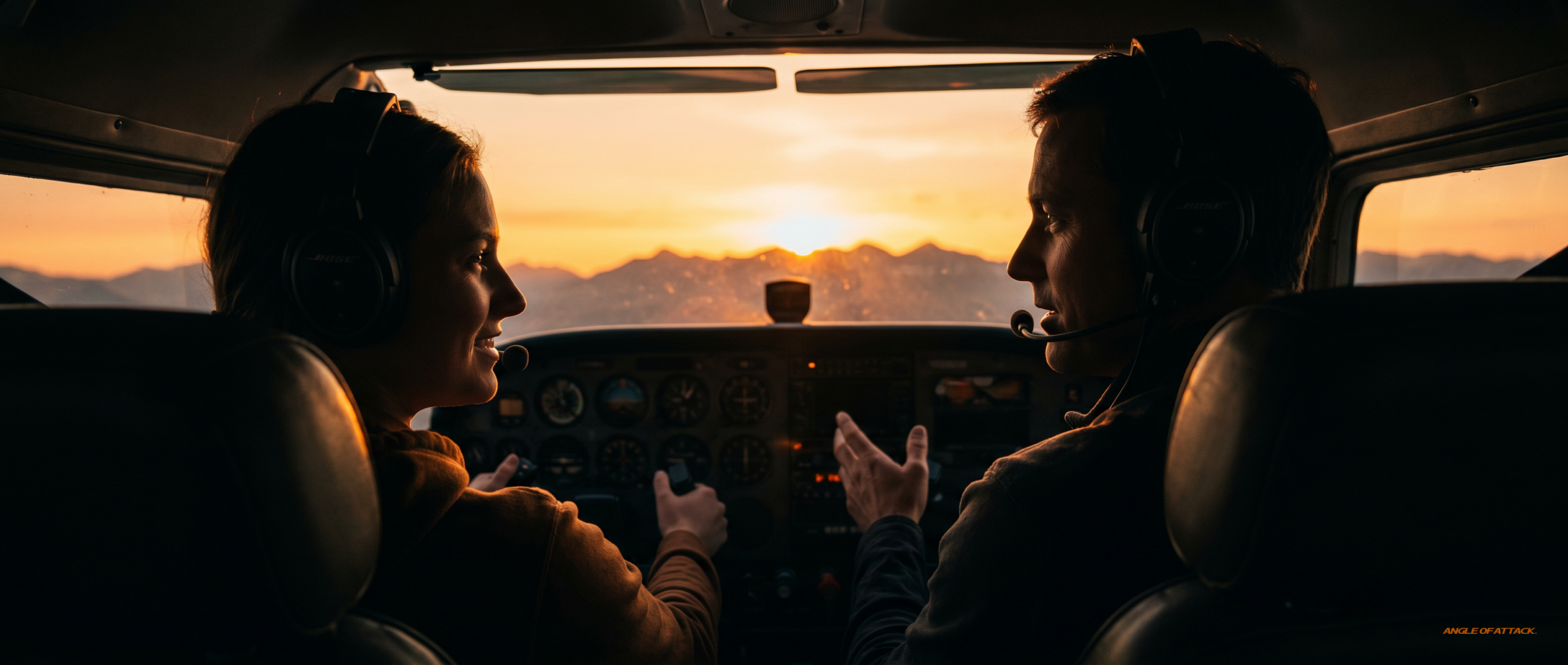
This is where most new CFIs over-fly and under-teach. The student should be on the controls for at least 60% of the airborne time. You handle takeoff, climb-out, and landing. They handle the rest.
Here's the in-flight breakdown:
| Phase | Time | Who flies |
|---|---|---|
| Taxi to runway | 3 min | You demonstrate, narrate |
| Takeoff & climb out to 2,000 AGL | 5 min | You |
| Cruise to practice area | 5 min | Student takes the controls — straight and level |
| Gentle turns (left and right, ≤30° bank) | 8 min | Student |
| Climbs and descents | 8 min | Student |
| Slow flight intro (just below cruise speed) | 4 min | You demonstrate, student feels |
| Return to airport | 6 min | Student flies most of the way back |
| Pattern entry & landing | 6 min | You |
While they're flying, you're teaching. Out loud. Constantly. "Notice how the airplane wants to fly straight if you let it. The yoke is for changes, not for holding. Let go for a second — feel that? It's flying itself." Make them feel the airplane's natural tendencies. Make them feel like the airplane is friendly, not a wild animal they have to wrestle.
A few things to avoid:
- Don't let them do the takeoff or landing. Beyond their skill level Day 1. They'll feel the difference.
- Don't pull power without warning, ever. You're not testing them; you're introducing them.
- Don't demonstrate steep turns or stalls. Save those for paying students who've signed up to be challenged.
- Don't fly through significant turbulence or weather marginal conditions. If the conditions are uncomfortable, scrub and reschedule. A scared student is a lost student.
The 15-Minute Debrief — The Most Important 15 Minutes

The debrief is where the discovery flight either converts or evaporates. Most new CFIs rush this. Don't. Sit down. Coffee or water. Take 15 minutes.
Cover three things, in order:
1. What they did well (3–5 minutes). Be specific. "Your turns were beautifully coordinated." "You handled that climb cleanly." "When the wind kicked us a little, you instinctively corrected with rudder — that's exactly right." The student is fishing for evidence that they could actually do this. Give them the evidence. Be honest, not flattering. Real specifics they'll remember.
2. What they'd work on next (3–5 minutes). Frame as opportunities, not failures. "Next time we'd start working on the rudder coordination during slow flight — that's the next building block." The student is now picturing a next time. You've planted it.
3. The structure of getting their certificate (5 minutes). Briefly outline how flight training works: hours, lessons, written test, checkride. Don't overwhelm. High-level only. Give them a realistic timeline (6–12 months for Private), a realistic cost ballpark (research yours; varies hugely by region), and the next single step — which is booking lesson 2.
Then ask the conversion question. We'll cover that in the dedicated section below.
The reason this debrief matters so much: the student left the airplane on a high. Adrenaline, excitement, the residue of having just flown an airplane themselves. That high lasts about 30 minutes after they shut the door. If you let them walk out without booking the next lesson during that window, you lose them to logistics — to second-guessing — to spousal conversation — to "I'll call back next week" that turns into never.
The debrief locks in the next lesson while the high is still active. That's not pushy. That's professional.
How to Handle the Three Most Common First-Lesson Reactions

Most new CFIs are surprised by how predictable first-flight reactions are. Three patterns cover 80% of students.
Reaction 1: The "I can do this!" student. Energetic, talkative, pulled the yoke too hard a few times during the flight. They're high on the experience. They'll book the second lesson within 5 minutes of asking. Easy. Just ask.
Reaction 2: The "I'm not sure" student. Quiet, observant, didn't smile much during the flight but didn't seem unhappy either. Often the deepest converter — they're processing internally. Don't push. Walk them through the structure-of-training section thoroughly. Give them the schedule of how to book. Let them go home and decide. Most come back within a week.
Reaction 3: The "this isn't for me" student. Got mildly motion-sick. Felt overwhelmed. Or just didn't connect with flying. Don't force the conversion. Thank them, give them options for non-pilot aviation paths if appropriate (intro flights with someone else, visiting the airport, considering RC flying for fun), and let them go gracefully. Pushing a "not-for-me" student costs you reputation and gives flight training a bad name. Accept the no, move on.
The CFI who can read which reaction is in front of them in the first 5 minutes of the debrief is the CFI whose conversion rate runs above 60%. The CFI who runs the same script for all three converts 25%. Read the room.
What to Charge, What to Bring, What to Wear
The flight school usually sets the price for the discovery flight, not the CFI. Typical 2026 ranges:
| Item | 2026 typical range |
|---|---|
| Discovery flight package (60–90 min, plane + instructor) | $150–$250 |
| CFI hourly rate (entry-level, after the discovery) | $50–$80/hr |
| CFI hourly rate (experienced) | $70–$100+/hr |
| Aircraft rental (Cessna 152/172, wet) | $130–$220/hr |
Don't undercharge yourself when you do go independent. The student values what they pay for. A $30/hour CFI signals desperation. A $65/hour CFI signals competence.
What to bring on Day 1:
- A clean kneeboard with one pre-printed page: today's schedule, your contact info, the next-lesson booking process
- A pen the student can keep (printed with the school's name if available)
- A bottle of water for them, one for you
- The school's intake paperwork, pre-filled where possible
- Your CFI certificate, your medical, your driver's license (FAA spot-checks happen)
- Your one-page lesson plan for the discovery flight
What to wear: clean, professional, not a uniform. Khakis or dark jeans, a polo or button-down with the school's logo or your own (no graphic tees), comfortable closed-toe shoes. Sunglasses on a leash. A light jacket if the airport is windy. You're representing aviation to someone who's never met an instructor before. Look like the kind of person they'd trust with their life. Because, technically, they are about to.
The Conversion: From Discovery Flight to Booked Student
The single sentence that converts the most students:
"Do you want to book lesson two before you head out?"
That's it. Casual. Direct. Asked during the last 2 minutes of the debrief, not at the door. Stated as if it's the obvious next step (because it is, if they enjoyed the flight). The student says yes, you walk to the front desk together, you book the slot, they leave with a confirmed appointment. Done.
If they hesitate, three follow-ups in order:
- "What questions do you have first?" Often hesitation is a logistics question (cost, schedule, how it works) — not a no. Answer it. Then re-ask.
- "What if we just put one tentative lesson on the calendar — you can always cancel." Lowers the commitment threshold. Often books the lesson.
- "Want me to email you the schedule and you can book online when you're ready?" Last resort. Plants the path. Send the email within an hour. Most students who say "I'll book later" mean it — but they need the email in their inbox to make it happen.
Then, regardless of outcome: send a thank-you message within 24 hours. Brief, warm, three-sentence email or text. Reference one specific thing they did well during the flight ("That coordinated turn at altitude was beautifully done — you've got natural instincts for this"). Sign off with your phone number.
This is the work of a professional instructor, not just a CFI with a license. The license makes you legal. The work above is what makes you bookable. It's the entire content of TotalCFI Section 4 — the "Day-One Ready" half of the course, designed so that on the morning of your first discovery flight, you're not improvising. You're executing a playbook you've already practiced.
Frequently Asked Questions
What do you do on your first day as a CFI?
Most new CFIs start with a discovery flight — a 90-minute introductory lesson for a brand-new student. The structure: 30-minute pre-flight brief, 45 minutes in the airplane, 15-minute debrief. Your job is to teach real content, let the student feel like a real pilot, and convert the discovery into a booked second lesson.
How long is a discovery flight?
Industry standard is 60 to 90 minutes total (including ground time and flight time), with about 35–45 minutes of those minutes in the air. Some schools run shorter "intro flights" at 30 minutes, but those convert to booked students at lower rates because the student doesn't get enough hands-on time to feel like a pilot.
What should a CFI teach a brand new student on the first lesson?
The basics of how an airplane flies (in plain English), how the controls work, basic safety procedures, and then real hands-on flying in the air — gentle turns, climbs, descents, level-offs. The student should feel like they actually flew the airplane, not like they watched you fly it. That feeling is the entire selling point.
How much does a discovery flight cost?
Typical 2026 pricing in the U.S. runs $150–$250 for a 60–90-minute discovery flight package (aircraft + CFI + ground time bundled). Markets in major metro areas tend to run higher; rural markets lower. Don't undercharge — the student values what they pay for.
How does a new CFI get students after passing their checkride?
Most new CFIs start at a flight school that hands them students. Discovery flights become booked students. Booked students refer friends. Within 6–12 months, most CFIs have a steady book of business through the school's marketing pipeline plus their own referral network. The single biggest variable in early-career student volume is how well you teach the discovery flight — that's what fills your calendar.
Can a brand-new CFI legally do a discovery flight?
Yes. As soon as you have your CFI certificate and the appropriate medical, you can teach any student authorized for the lesson type. There's no minimum-experience requirement before instructing — but most flight schools pair new CFIs with senior CFI mentors for the first 30–60 days as a soft onboarding.
If the CFI checkride is keeping you up at night, you're prepping for the wrong thing.
TotalCFI teaches you to walk into the oral as a teacher, not a test-taker — the reframe most candidates only figure out after they've already failed once.
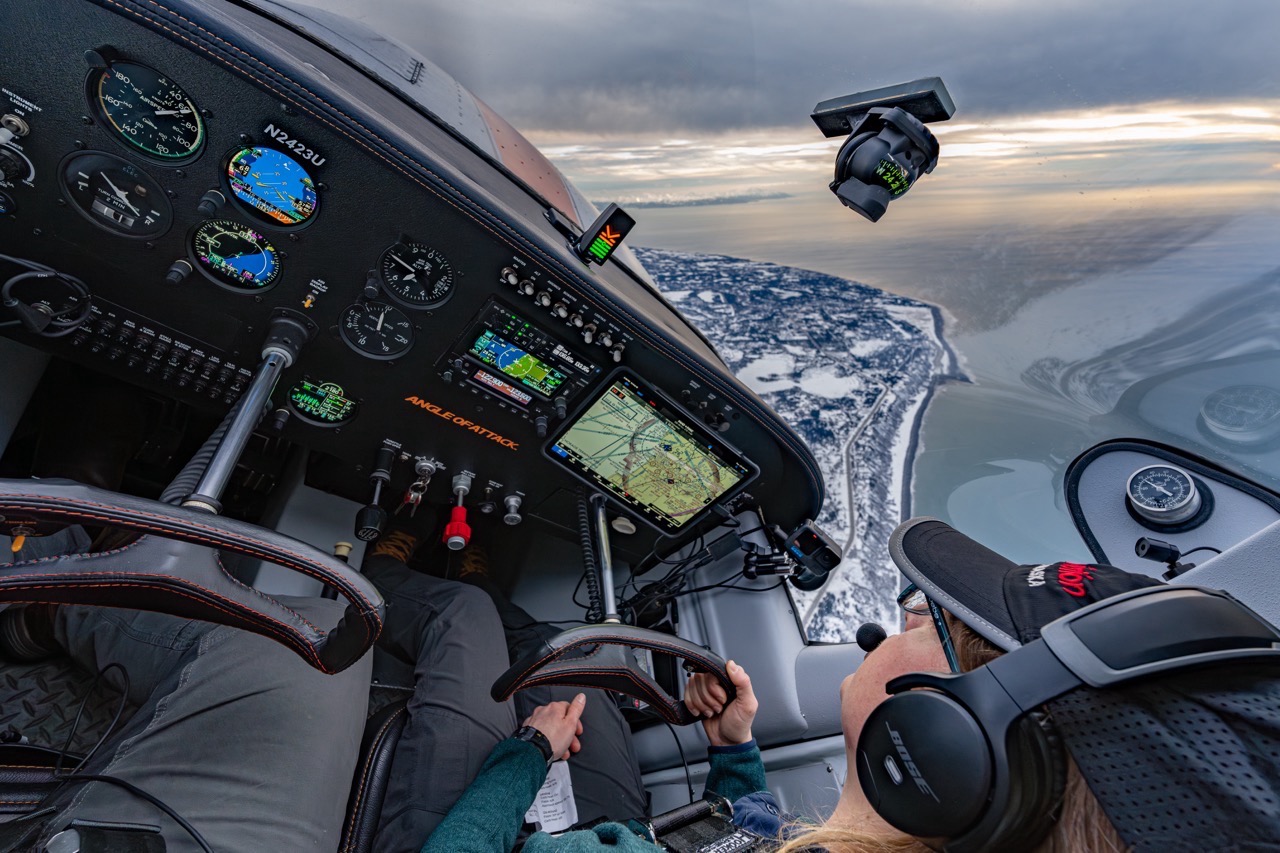
The certificate makes you legal to teach. It doesn't make you ready. The first discovery flight is the one most new CFIs remember for the rest of their career — either because it went smoothly and the student booked the second lesson on the spot, or because it didn't and they spent the next month wondering what they did wrong. The difference between those two outcomes isn't talent. It's preparation. Build the playbook. Run the playbook. Make the student feel like a pilot. The career that follows takes care of itself.