
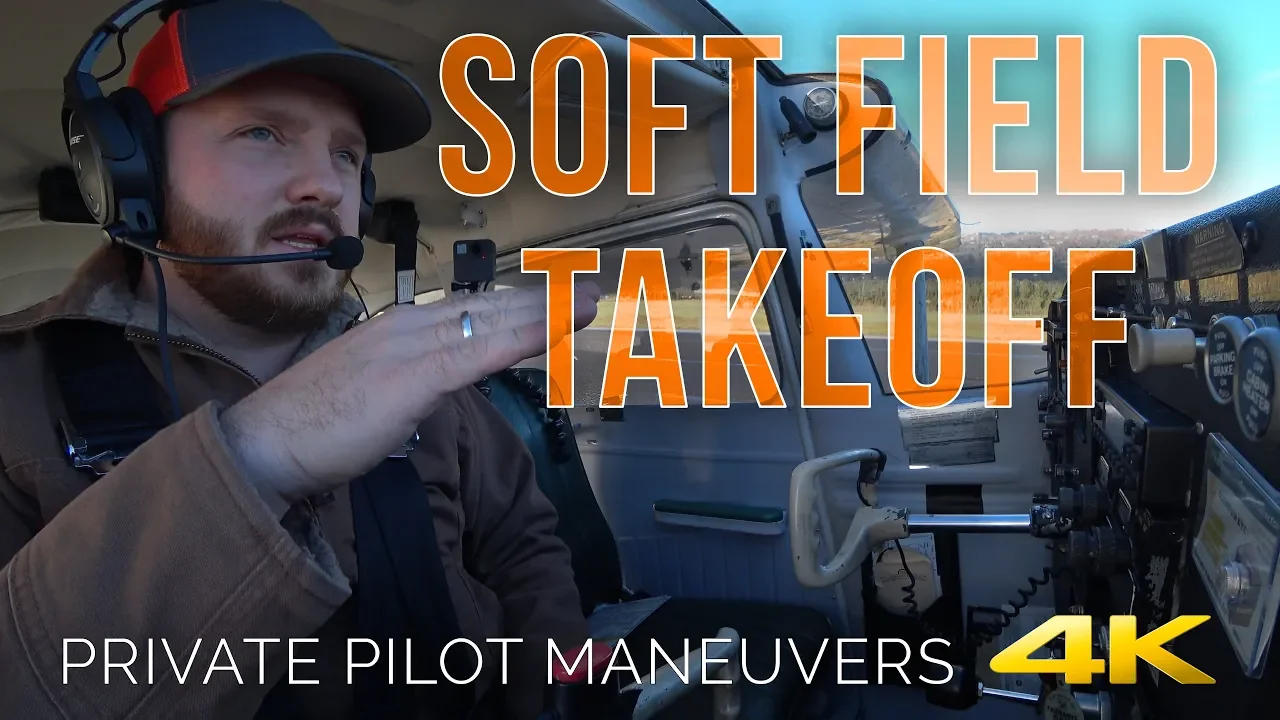
Learning how to fly a soft field takeoff can be fun, but first what is a soft field? A soft field is a runway/taxi surface that is grass, water, snow, mud, loose dirt, soft gravel, and so on. This kind of surface acts as glue to the tires and prevents the aircraft from accelerating at a normal rate. Additionally, protecting our propellor is key. Oftentimes these types of airports also have the potential for potholes, ruts, gopher holes, etc. If our nose wheel was to drop into one of those holes with a good amount of weight on it, it could cause it to dip down, and cause a prop strike. That’s a big, expensive and dangerous mistake.
When operating on a soft field, we don’t come to a stop. If we need to do our runup before, we get that done. But once we start moving onto the runway, we stay moving. Even during the taxi, you’ll add back pressure on the yoke. The slipstream of the propellor causes significant effectiveness on the elevator. This actually does take quite a bit of weight off of the nose wheel.
Now moving into the takeoff position, and with one notch of flaps, we smoothly add full power while still holding back on the yoke. During this takeoff roll, we’re going to be actively flying the airplane even though we’re not airborne yet. With all that power, and with that yoke back, we’ll have not only a lot of need for the right rudder, but we can vary the pitch.
We want to find a pitch angle or angle of attack, that is going to get our nose wheel off the runway. Pull back TOO much and you’ve not created too much drag, and you won’t become airborne as fast as you could. So you’ve gotta find that sweet spot.
Because we already have back pressure on the yoke with a higher angle of attack, and that nose wheel is already off the runway, we’re going to become airborne before the aircraft is really ready to fly. The good news is we have a friend to help us out. That friend is Ground Effect.
Ground effect is a cushion of air, most effective about 1/4 wingspan above the runway. This is where our induced drag is drastically decreased. In other words, we can ride this cushion, fly at a slow speed, and gain the energy we need to climb out.
So as soon as the airplane becomes ‘unstuck’ from the ground, you’re going to release some of that back pressure and accelerate VERY close to the runway. Literally, a few feet. Don’t touch back down, but get as close as you practically can. The closer you get, the more effective that ground effect. Once you’re at Vx or Vy, you will transition out of ground effect. Then climb out as normal, clean up the airplane, and continue onward.
If you have any questions on the soft field takeoff, always contact a team member at Angle of Attack.

ON THE SAME TOPIC
IFR vs VFR: The Two Sets of Rules Every Pilot Flies By
IFR vs VFR: The Two Sets of Rules Every Pilot Flies By 19 min read Last updated June 2026 · Chris Palmer The difference between IFR and VFR is which set of rules you fly under. VFR — visual flight rules — lets you navigate by looking outside and staying clear of clouds in good […]
 Read more
ASOS vs AWOS vs ATIS: How to Pull the Right Weather Before You Fly
ASOS vs AWOS vs ATIS: How to Pull the Right Weather Before You Fly 13 min read Last updated June 2026 · Chris Palmer The difference comes down to who is talking and what the broadcast covers. ASOS and AWOS are automated, computer-generated weather observations of the conditions right at the field. ATIS is a […]
Read more 
What Is RNAV Navigation? Area Navigation for VFR Pilots
What Is RNAV Navigation? Area Navigation for VFR Pilots 17 min read Last updated June 2026 · Chris Palmer RNAV — Area Navigation — is a method that lets an aircraft fly any desired path within the coverage of ground- or space-based navigation aids, rather than being forced to fly directly to and from stations. […]
Read more 
NDB and ADF Explained: The Oldest Radio Nav System You Still Need to Understand
NDB and ADF Explained: The Oldest Radio Nav System You Still Need to Understand 16 min read Last updated June 2026 · Chris Palmer An NDB (non-directional beacon) is a ground-based radio transmitter that sends a signal in all directions, and an ADF (automatic direction finder) is the cockpit receiver whose needle points straight at […]
Read more 
Stay Connected
Be the very first to get notified when we publish new flying videos, free lessons, and special offers on our courses.
