
How to Become a Pilot: The Step-by-Step Path From Discovery Flight to Certificate
To become a pilot, you choose a certificate goal, find a flight school or instructor, get a student pilot certificate and an FAA medical, then complete the required ground and flight training before passing an FAA knowledge test and a practical test — the checkride — with a Designated Pilot Examiner. That’s the whole arc, start to finish. For most people the destination is the private pilot certificate, issued under 14 CFR Part 61, and the path there is a lot more accessible than the internet makes it look. In this guide I’ll walk you through every step in order, what each one costs you in time and money, and how to keep the whole thing from stalling out.
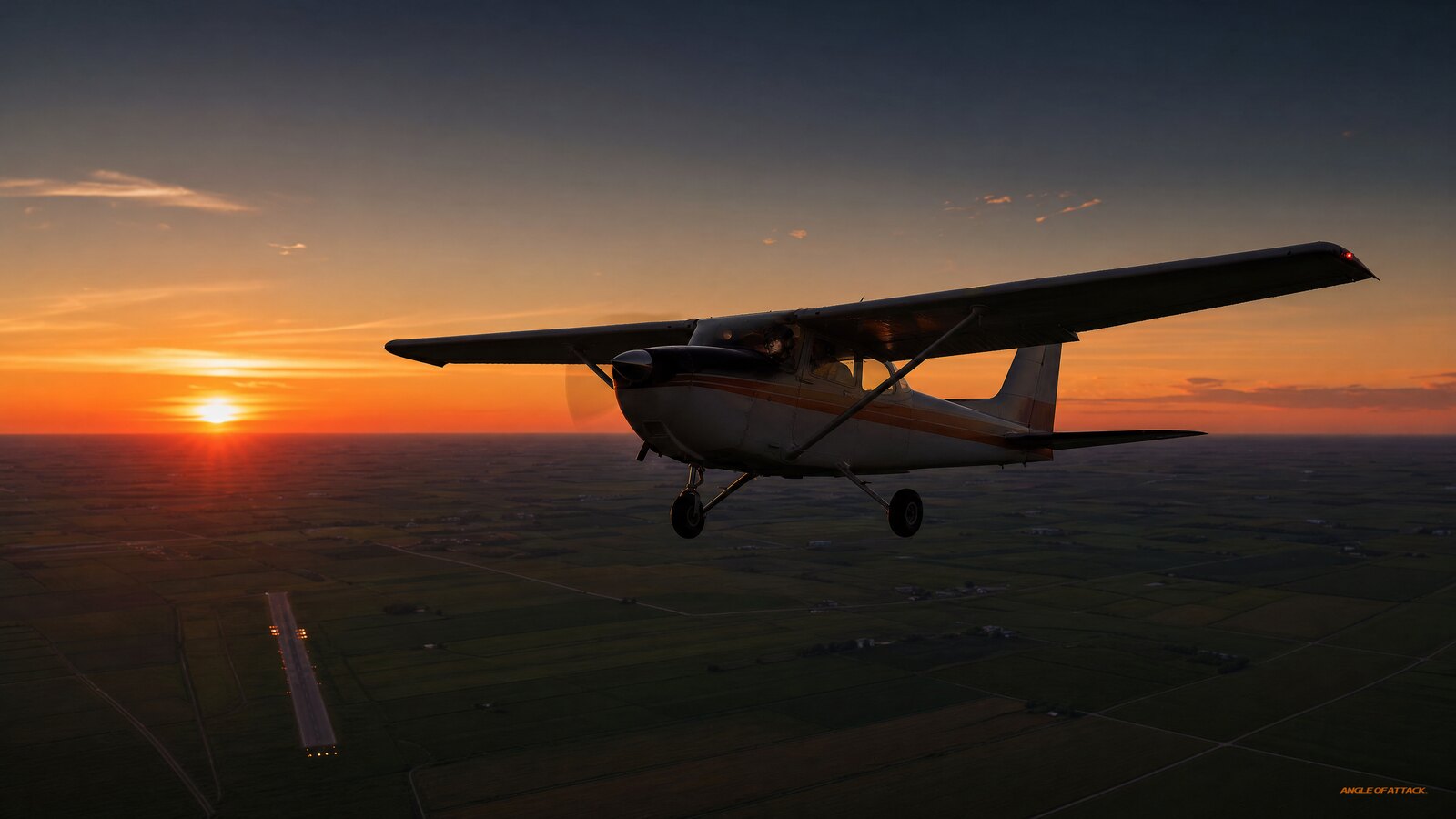
climbout with an instructor in the right seat" src="https://www.angleofattack.com/wp-content/uploads/2026/07/how-to-become-a-pilot-featured.jpg" style="margin-bottom: 0;">
- There’s a defined path. Becoming a pilot is a sequence of FAA steps: student certificate, medical, training, knowledge test, checkride. It’s a checklist, not a vague climb.
- The private pilot certificate is the usual goal. Issued under 14 CFR Part 61 Subpart E, it lets you carry passengers, fly cross-country, and operate most single-engine airplanes for personal use.
- You can fly before you can drive solo on the road. You may begin lessons at any age, solo an airplane at 16, and earn the private certificate at 17.
- The FAA minimum is 40 hours, but the national average is higher. Most students finish closer to 60 to 75 hours under Part 61, because the checkride tests proficiency, not the clock.
- A medical and a student certificate come early. Both are straightforward for most people, and you knock them out in the first weeks of training.
- Consistency is the cheapest accelerant. Flying two or three times a week instead of once a month is the single biggest thing you control to lower total cost.
- Day-one preparation matters. Walking into your first lesson already knowing the airplane and the basics saves you billable instructor time.
WHAT’S IN THIS GUIDE
- 1What does it take to become a pilot?
- 2What kind of pilot do you want to be?
- 3How do you find a flight school or instructor?
- 4What is a student pilot certificate and a medical?
- 5What does flight and ground training actually look like?
- 6How do you pass the knowledge test and the checkride?
- 7How long does it take and what does it cost?
- 8A first solo in Alaska (and what it taught me about the path)
- 9PLT Study Guide
- 10Frequently Asked Questions
What does it take to become a pilot?
Becoming a pilot takes meeting the FAA’s eligibility rules, completing required ground and flight training, and passing two FAA tests — a knowledge test and a practical test. For a private pilot certificate, the eligibility basics under 14 CFR § 61.103 are simple: you must be at least 17 years old, be able to read, speak, write, and understand English, and hold the right student certificate and medical along the way.
None of those gates are exotic. The English-language requirement is about radio communication and reading charts. The age requirement lets you start training as a kid — you can solo an airplane at 16 and earn the private certificate at 17 — so plenty of pilots are licensed before they finish high school.
What it really takes is time, money managed wisely, and consistency. The FAA sets the floor; your instructor, your schedule, and your discipline set the actual finish line. Think of it the way I tell my students: a certificate is a license to learn, not a finish line. The path below gets you that license.
What kind of pilot do you want to be?
Before you spend a dollar, decide what you’re aiming for, because the certificate you choose changes the whole path. The four common starting points are the sport pilot certificate, the recreational pilot certificate, the private pilot certificate, and — if you want to fly for a living — the commercial pilot certificate. Each is defined in 14 CFR Part 61 with its own privileges, limits, and training requirements.
For the overwhelming majority of new pilots, the answer is the private pilot certificate. It’s the versatile, day-or-night, carry-your-family, fly-cross-country certificate that opens the door to almost all personal flying and serves as the foundation for an instrument rating or a professional career later.
| Certificate | Governing reg | FAA min. hours (airplane) | Medical | What you can do |
|---|---|---|---|---|
| Sport pilot | Part 61 Subpart J | Lowest (about 20) | U.S. driver’s license | Light-sport aircraft, day VFR, one passenger |
| Recreational | Part 61 Subpart D | 30 | FAA medical or BasicMed | Small airplanes near home, limited cross-country |
| Private pilot | Part 61 Subpart E | 40 | FAA medical or BasicMed | Most single-engine GA airplanes, passengers, cross-country, night |
| Commercial | Part 61 Subpart F | 250 | FAA medical (2nd class) | Fly for compensation or hire |
If your goal is flying friends and family on weekends and maybe a career someday, start with the private. If a medical is a real concern or your budget is tight and you only want day-VFR fun, the sport pilot certificate is a legitimate, cheaper on-ramp — and every hour you log rolls forward toward the private later, so nothing is wasted.
How do you find a flight school or instructor?
To find a flight school, visit your local general aviation airport, talk to the flight schools and independent CFIs based there, take an introductory “discovery flight,” and pick the operation whose airplanes, instructors, and schedule fit your life. There are two regulatory flavors: Part 61 schools (flexible, instructor-driven, the most common path for private pilots) and Part 141 schools (FAA-approved structured syllabus, sometimes lower hour minimums).
For most private pilot students, Part 61 is the right call. It’s flexible enough to fit around a job and a family, and the hour difference rarely matters because you’ll train past the minimum anyway. Part 141 shines for full-time students, integrated career programs, and VA-benefit eligibility.
The discovery flight is your audition of them, not the other way around. Sit in the airplane, fly a little, and pay attention to whether the instructor teaches in a way that clicks for you. The relationship with your CFI matters more than the paint on the airplane. A good instructor who you trust and communicate with will get you to your checkride faster and cheaper than a fancy glass-cockpit trainer flown with someone you dread sitting next to.
Before you ever show up, you can take the intimidation out of that first lesson. The free Total Student Pilot course is built to make you day-one ready — knowing the parts of the airplane, the basic regulations, and what your instructor is actually asking you to do — so you’re not paying instructor time to learn things you could have learned on the couch.
What is a student pilot certificate and a medical?
Early in training you’ll obtain two documents: a student pilot certificate and, for most pilots, an FAA medical certificate. The student pilot certificate is free, applied for through the FAA’s IACRA system, and required before you fly solo — your instructor endorses it when you’re ready. The medical certificate, issued under 14 CFR Part 67, is the FAA’s confirmation that you’re physically fit to fly.
For a private pilot, a third-class medical is the standard. You get it from an Aviation Medical Examiner (AME) — a doctor specifically authorized by the FAA — in an appointment that, for a healthy person, is quick and routine. The exam checks vision, hearing, blood pressure, and general fitness, and most applicants walk out with the certificate in hand.
Here’s the advice I give every nervous student: do your medical early, before you’ve sunk thousands into training. If you have a medical history that worries you, whether it’s a past condition or a medication, talk to an AME or an aviation medical specialist first. It’s far better to know where you stand on day one than on hour forty. And if a traditional medical is a barrier, remember the sport pilot path lets qualifying pilots fly on a valid U.S. driver’s license under 14 CFR § 61.23(c) instead.
What does flight and ground training actually look like?
Training splits into two halves that run in parallel: flight training (the hands-on flying with your CFI, plus supervised solo time) and ground training (the body of aeronautical knowledge behind the flying). The FAA spells out the required flight experience for a private pilot in 14 CFR § 61.109 — including specific minimums for dual instruction, solo flight, cross-country flying, and night flying.
A typical flight lesson follows an arc: a preflight briefing on the table, then the flight itself where you build a skill (maneuvers, takeoffs and landings, navigation, emergencies), then a debrief afterward. You’ll progress from basic aircraft control to your first solo (a milestone you’ll never forget), then to solo cross-country flights, and finally to checkride-ready proficiency. The required minimums under § 61.109 include dual cross-country and night training, three hours of instrument-reference flight, and the solo experience that proves you can operate the airplane as pilot in command.
Ground training is where a lot of students leak money, because they try to learn it in the airplane at instructor rates instead of at home. Don’t. Knock out the knowledge (aerodynamics, weather, regulations, navigation, systems) on your own time, then use cockpit time for what only the cockpit can teach. When you’re ready to study the full body of knowledge behind the checkride and the FAA written test, the Private Pilot Ground School takes you all the way through it, structured the way an examiner thinks.
How do you pass the knowledge test and the checkride?
Becoming a certificated pilot ends with two FAA tests: the knowledge test (a computer-based written exam at an approved testing center) and the practical test, universally called the checkride, conducted by a Designated Pilot Examiner (DPE). You must pass the knowledge test and hold the required instructor endorsements before the checkride. The standards for both come from the Airman Certification Standards (ACS) for the private pilot certificate.
The knowledge test is a 60-question multiple-choice exam covering regulations, weather, navigation, aerodynamics, and aircraft systems. You need a 70% to pass. Each question is keyed to a Pilot Learning Statement (PLT) code, which is why studying by PLT code — as in the section below — is such an efficient way to prepare.
The checkride has two parts: an oral exam, where the DPE probes your knowledge and your decision-making, and a flight test, where you fly the maneuvers and scenarios in the ACS to standard. Here’s the mindset that separates students who pass clean from students who white-knuckle it: the checkride isn’t a trap. The examiner is verifying you’re a safe pilot in command, not trying to fail you. Train to the ACS standard, demonstrate sound judgment, and treat the oral as a conversation between two aviators — because that’s what it is.
How long does it take and what does it cost?
A private pilot certificate typically takes a few months to about a year of part-time training, and most students log somewhere around 60 to 75 hours even though the Part 61 minimum is 40 hours. Cost is driven mostly by flight hours, because you’re paying for airplane rental and instructor time by the hour. The single biggest lever you control is frequency — fly consistently and you finish in fewer hours; fly sporadically and skills fade between lessons, so you pay to re-learn.
Why the gap between the 40-hour minimum and the 60–75 hour reality? Because the checkride tests proficiency, not hours logged. The 40-hour figure assumes ideal, near-daily training; almost nobody trains that way. Weather cancellations, work schedules, and the simple time it takes to build muscle memory push the real number up. That’s normal, not a sign you’re behind.
| Cost driver | What it covers | How to control it |
|---|---|---|
| Aircraft rental | Hourly airplane + fuel | Fly consistently; train past minimum efficiently |
| Instructor time | Dual instruction + briefings | Come prepared; learn ground at home |
| Ground study | Knowledge for the written + oral | Use a structured ground school, not cockpit time |
| FAA tests | Knowledge test + checkride fees | Pass the first time — retests cost double |
| Supplies | Headset, charts, kneeboard, apps | Buy once, buy well |
The honest budgeting advice: don’t try to crash-finish in 40 hours to save money — you’ll end up flying scared and unprepared. Budget for the real-world number, fly often, and study hard on the ground. That’s how you finish faster and cheaper.
A first solo in Alaska (and what it taught me about the path)
I run education at Angle of Attack. I’ve been in aviation education since 2006 and a CFI since 2017, and a lot of my flying happens up here in Alaska in our Cessna 172, where the weather is the boss and the country is unforgiving and beautiful. I think about a student I worked with who’d convinced himself he’d never get there. He’d started and stopped twice over the years, scared off by cost and by the sheer size of the thing.
What turned it around wasn’t a secret technique. It was rhythm. We committed to flying twice a week, rain or shine, and we knocked out his ground knowledge at the kitchen table so the cockpit time was pure flying. The hours stacked up faster than he believed they could.
The day he soloed, he taxied back, shut down, and just sat there for a second with this look on his face. He’d spent years thinking “becoming a pilot” was one impossible leap. It isn’t. It’s a stack of small, ordinary steps — a medical here, a lesson there, a written test, a solo — and the only people who don’t make it are the ones who stop taking the steps.
That’s the real lesson of the path. The FAA didn’t build a wall; it built a staircase. Show up consistently, respect each step, and let the hours carry you. The certificate is the beginning, not the end.
PLT Study Guide
The FAA knowledge test tags each question with a PLT (Pilot Learning Statement) code. For becoming a pilot, these are the codes whose official FAA wording actually matches the material in this article — study them this way:
- PLT448 — Recall regulations: privileges / limitations of pilot certificates. This is the heart of “what kind of pilot do you want to be.” Know what each certificate (sport, recreational, private) lets you do and not do, and that the private pilot certificate’s privileges and limits live in 14 CFR Part 61 Subpart E.
- PLT451 — Recall regulations: ratings issued / experience requirements / limitations. Understand the flight-experience requirements that get you to a private certificate under 14 CFR § 61.109 — the minimum 40 hours, and the specific dual, solo, cross-country, and night requirements inside it.
- PLT447 — Recall regulations: privileges / limitations of medical certificates. Know which class of medical a private pilot needs (third class), where it comes from (an Aviation Medical Examiner under 14 CFR Part 67), and the driver’s-license medical option for sport pilots under 14 CFR § 61.23(c).
- PLT443 — Recall regulations: pilot qualifications / privileges / responsibilities. Know the eligibility basics under 14 CFR § 61.103 — minimum age, the English-language requirement, the student certificate — and the pilot’s ongoing responsibility to operate safely as pilot in command.
When you sit the test, read each stem carefully: the FAA loves to mix the privileges and limits of different certificates in the answer choices to see whether you actually know which certificate the question is about.
Frequently Asked Questions
How long does it take to become a pilot?
For a private pilot certificate, plan on a few months to about a year of part-time training. The exact timeline depends on how often you fly, the weather, and how quickly you absorb the material. Flying two or three times a week is the fastest, cheapest way through, because skills fade between infrequent lessons and you end up paying to re-learn them.
How much does it cost to become a pilot?
Cost is driven mostly by flight hours, since you pay for the airplane and instructor by the hour. Because most students log 60–75 hours rather than the 40-hour minimum, real-world totals run well above the bare-minimum math. The biggest lever you control is consistency — fly often, study the ground knowledge at home, and pass your tests the first time.
Do you need a college degree to become a pilot?
No. There is no FAA requirement for any college degree to earn a private, recreational, or sport pilot certificate. Even professional airline flying no longer universally requires a four-year degree, though some carriers still prefer one. To start, you need to meet the age and English-language requirements and complete FAA training and testing — that’s it.
How old do you have to be to become a pilot?
You can begin flight lessons at any age. Under 14 CFR Part 61 you may solo an airplane at 16 and earn a private pilot certificate at 17. For a sport pilot certificate in airplanes the minimum is also 17, while gliders and balloons allow solo at 14 and the certificate at 16. There’s no upper age limit — plenty of people start in retirement.
What’s the first step to becoming a pilot?
The practical first step is a discovery flight at a local flight school — a short introductory lesson where you actually fly the airplane. It tells you whether you love it and lets you audition instructors. Before that, getting day-one ready with a free student pilot course saves money, and scheduling your FAA medical early confirms you’re clear to train.
Do you need a medical certificate to become a pilot?
For a private or recreational certificate, yes — most pilots get a third-class FAA medical from an Aviation Medical Examiner under 14 CFR Part 67, and it’s quick and routine for healthy applicants. Sport pilots are the exception: they may fly on a valid U.S. driver’s license under 14 CFR § 61.23(c), provided their most recent FAA medical was never denied, suspended, or revoked.
How many hours do you need to become a pilot?
The FAA minimum for a private pilot certificate under Part 61 is 40 flight hours, but the national average is higher — most students finish around 60 to 75 hours. The reason is that the checkride tests proficiency, not hours logged. The 40-hour figure assumes near-daily, ideal training that almost nobody actually does, so plan and budget for the real number.
Is becoming a pilot hard?
It’s challenging but achievable. The flying itself is a trainable skill, and the knowledge is straightforward if you study it at home instead of in the airplane. The students who don’t make it almost always quit for reasons of money, time, or consistency rather than ability. Show up regularly and you’ll get there.
Master every system on your checkride — and on day one.
The Private Pilot Ground School breaks down every FAA subject area in the same plain-English, real-world way you just read — with quizzes, scenarios, and the explanations that finally make it click.
So here’s where you start. Choose your certificate, find an instructor you click with, knock out the medical early, and then just keep showing up. The hours add up faster than you think, and one day soon you’ll taxi back from a solo with a grin you can’t wipe off.


ON THE SAME TOPIC
IFR vs VFR: The Two Sets of Rules Every Pilot Flies By
IFR vs VFR: The Two Sets of Rules Every Pilot Flies By 19 min read Last updated June 2026 · Chris Palmer The difference between IFR and VFR is which set of rules you fly under. VFR — visual flight rules — lets you navigate by looking outside and staying clear of clouds in good […]
 Read more
ASOS vs AWOS vs ATIS: How to Pull the Right Weather Before You Fly
ASOS vs AWOS vs ATIS: How to Pull the Right Weather Before You Fly 13 min read Last updated June 2026 · Chris Palmer The difference comes down to who is talking and what the broadcast covers. ASOS and AWOS are automated, computer-generated weather observations of the conditions right at the field. ATIS is a […]
Read more 
What Is RNAV Navigation? Area Navigation for VFR Pilots
What Is RNAV Navigation? Area Navigation for VFR Pilots 17 min read Last updated June 2026 · Chris Palmer RNAV — Area Navigation — is a method that lets an aircraft fly any desired path within the coverage of ground- or space-based navigation aids, rather than being forced to fly directly to and from stations. […]
Read more 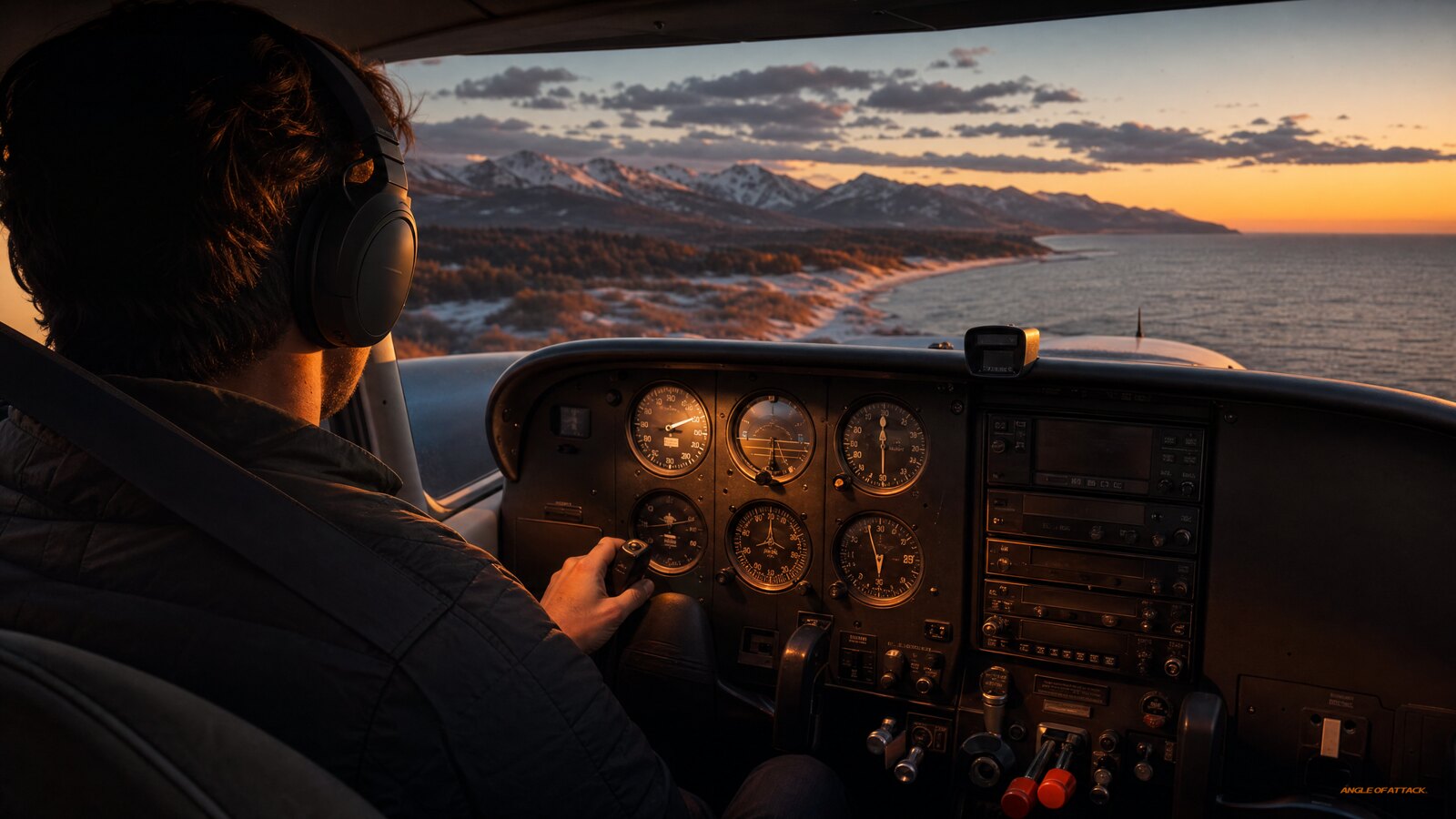
NDB and ADF Explained: The Oldest Radio Nav System You Still Need to Understand
NDB and ADF Explained: The Oldest Radio Nav System You Still Need to Understand 16 min read Last updated June 2026 · Chris Palmer An NDB (non-directional beacon) is a ground-based radio transmitter that sends a signal in all directions, and an ADF (automatic direction finder) is the cockpit receiver whose needle points straight at […]
Read more 
Stay Connected
Be the very first to get notified when we publish new flying videos, free lessons, and special offers on our courses.
