
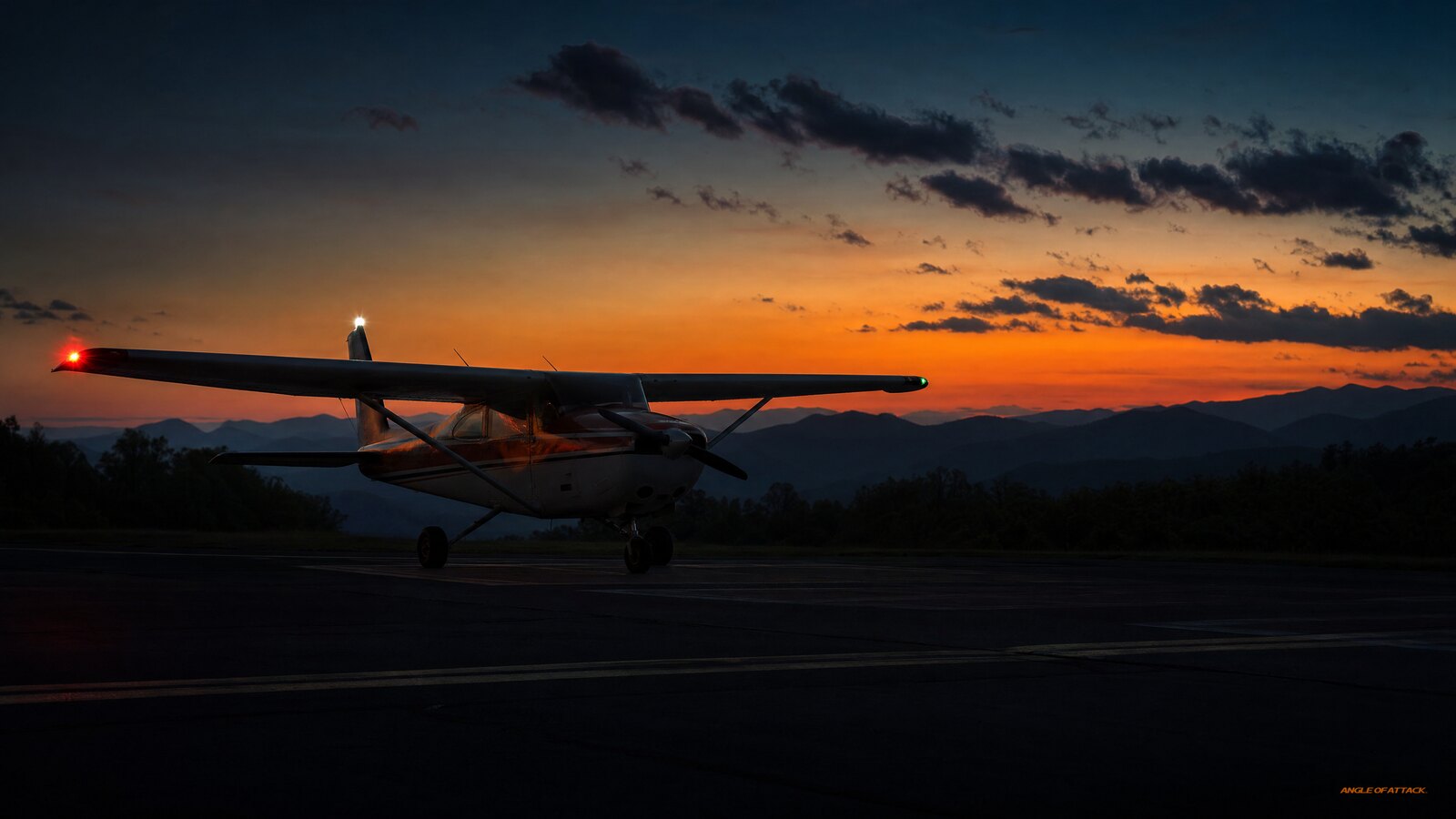
What Are Aircraft Position Lights? Red, Green, and White Decoded
Aircraft position lights are the red, green, and white lights on an airplane’s wingtips and tail that show other pilots your aircraft’s position and direction of travel at night. The left wingtip is red, the right wingtip is green, and the tail is white — a layout borrowed straight from maritime navigation rules. Together they let another pilot tell, in the dark, which way you’re pointed and whether you’re a collision threat. They are required equipment for night flight under federal regulation, and learning to read them is one of the first real night-flying skills a student picks up.
Let’s break down what each light means, the regulations that require them, how they differ from the flashing anti-collision lights, and the old sailor’s trick for remembering which side is which.
- Position lights are red (left wingtip), green (right wingtip), and white (tail) — they mark your aircraft’s outline and direction so other pilots can judge your position and heading at night.
- The red-left, green-right convention comes from maritime navigation — the same port (red) and starboard (green) rule ships have used for over a century.
- Position lights are separate from anti-collision lights. Position lights show steady; anti-collision lights (the rotating beacon and the white/red strobes) flash to grab attention.
- They are required equipment for night flight under 14 CFR § 91.205(c), and they must be lighted from sunset to sunrise under 14 CFR § 91.209.
- Reading another aircraft’s lights tells you its direction. Both red and green together means the aircraft is facing you — and because its left wing (red) shows up on your right and its right wing (green) on your left, head-on traffic reads as red-on-your-right, green-on-your-left.
- The FAA tests this under PLT119 (recall aircraft lighting – anti-collision / landing / navigation) and PLT461 (regulations – use of aircraft lights).
WHAT’S IN THIS GUIDE
- 1What are aircraft position lights?
- 2What do the red, green, and white lights mean?
- 3Why is the left light red and the right light green?
- 4When are aircraft position lights required?
- 5What is the difference between position lights and anti-collision lights?
- 6How do you read another airplane’s lights at night?
- 7The night a stranger’s red light kept me out of trouble
- 8PLT Study Guide
- 9Frequently Asked Questions
What are aircraft position lights?
Aircraft position lights — also called navigation lights, or “nav lights” on the ramp — are the steady-burning red, green, and white lights mounted at the extremities of an airplane. The red light sits on the left wingtip, the green on the right wingtip, and a white light faces aft from the tail. Their entire job is to make your aircraft visible and to communicate its orientation to other pilots in low light.
These lights are standard equipment on virtually every certificated airplane, and their placement and color are defined by airworthiness standards (for normal-category airplanes, 14 CFR Part 23). You don’t choose where they go or what color they are — every airplane in U.S. airspace uses the same red-left, green-right, white-tail scheme, and that uniformity is what makes the system work. When everyone uses the same code, any pilot can read any other aircraft.
Think of position lights as your airplane’s outline drawn in the dark. A steady set of three colored points tells another pilot where your wings end, where your tail is, and — most importantly — which way you’re traveling relative to them. That last piece is what makes them a collision-avoidance tool, not just a “see me” light.
What do the red, green, and white lights mean?
Each position light has a fixed meaning tied to a specific part of the aircraft. Red marks the left (port) side, green marks the right (starboard) side, and white marks the tail facing aft. Because the colors are locked to specific sides, the combination you see on another aircraft tells you which way it is pointed and whether it is moving toward you, away from you, or across your path.
The wingtip lights are not visible from everywhere — they are designed to project forward and out to the sides. The red left light and green right light are each visible through an arc of roughly 110 degrees from dead ahead toward each side, and the white tail light covers the rear. That deliberate coverage pattern is what lets the colors do their job: from straight ahead you see both red and green, from behind you see white, and from the side you see one color plus white.
Here’s the quick reference every student should memorize:
| Light color | Location | What it tells you |
|---|---|---|
| Red | Left wingtip (port) | You are looking at the aircraft’s left side |
| Green | Right wingtip (starboard) | You are looking at the aircraft’s right side |
| White | Tail, facing aft | You are looking at the aircraft from behind |
Lock those three in and the rest of night traffic-watching becomes a reading exercise. The colors never change meaning, so once you know the code you can decode any aircraft you see in the dark.
Why is the left light red and the right light green?
The red-left, green-right convention is not arbitrary — aviation borrowed it directly from the rules of the sea. Ships have used red on the port (left) side and green on the starboard (right) side for well over a century, and when aircraft came along, they adopted the identical color scheme so the two systems would be instantly familiar. Port is red; starboard is green. Aviation inherited a code that already worked.
The memory trick that pilots and sailors both use ties the short words together: the words “port” and “left” both have four letters, and port wine is red — so the left side is the red side. Some instructors teach “there is no red port left in the bottle” to lock it in. However you remember it, the goal is to make red-equals-left an instant reflex, because in the cockpit at night you won’t have time to reason it out.
There’s a practical payoff baked into the colors. When two aircraft (or two ships) are converging, the colors help establish who gives way, the same way they do on the water. You don’t need to memorize the maritime right-of-way rules for your private checkride, but understanding that the colors carry directional meaning — not just decoration — is the point. Red and green are a language, and every pilot speaks it.
When are aircraft position lights required?
Position lights are required by regulation, and the rule has two parts you need to know. Under 14 CFR § 91.205(c), lighted position lights are required equipment for VFR flight at night, and under 14 CFR § 91.209, no person may operate an aircraft from sunset to sunrise unless it has lighted position lights. The two rules use slightly different clocks — § 91.205 hangs on the regulatory definition of “night” (the time between the end of evening civil twilight and the beginning of morning civil twilight under 14 CFR § 1.1), while § 91.209 uses the plain sunset-to-sunrise window. The practical takeaway is the same: once the sun is down, your position lights are on.
There is a regional wrinkle that matters here in Alaska, where I fly. In Alaska, 14 CFR § 91.209 doesn’t use sunset to sunrise — it ties the position-light requirement to the period a prominent unlighted object cannot be seen from three statute miles, or when the sun is more than six degrees below the horizon, recognizing the long summer twilight up north. For most students in the lower 48, the simple sunset-to-sunrise rule is what you’ll fly by and what the test will ask about.
One more practical note: the regulation requires the lights to be lighted, not just installed. That means part of your night preflight is physically confirming the position lights work before you taxi. A burned-out nav light is an airworthiness problem at night, so check them every time — a quick walk around with the master switch on tells you whether all three are burning.
If you want every one of these night-flight rules and equipment requirements laid out in the order they actually click for a new student, that’s exactly what we build into the Angle of Attack Private Pilot Ground School — structured to make you day-one ready, not just checkride ready.
What is the difference between position lights and anti-collision lights?
Position lights and anti-collision lights are two different systems that do two different jobs. Position lights burn steadily to show your aircraft’s outline and direction; anti-collision lights flash to grab attention and make you conspicuous. The anti-collision system includes the rotating beacon (usually a red flashing light on top of and/or beneath the fuselage) and the white or red strobe lights, often out at the wingtips. The FAA tags both kinds of lighting together under the same learning statement, but they are not the same lights.
The regulations treat them differently too. Anti-collision lights are required equipment under 14 CFR § 91.205(c) for night VFR and must be operated for all flight under 14 CFR § 91.209(b) — day and night — though that rule allows the pilot in command to turn them off when they would create a hazard or impair safety, such as bright strobes reflecting back in heavy cloud or fog. Position lights don’t have that “turn them off for safety” allowance for night operations; if it’s night, they’re on.
In everyday use, you’ll run the rotating beacon any time the engine is running — it’s the universal “this aircraft is live, props could turn” signal on the ramp. The strobes typically come on as you taxi onto the runway and stay on in flight. The steady position lights stay on the whole time you’re operating at night. Knowing which light is which, and which rule governs it, is the kind of detail an examiner probes on the oral.
Here’s the side-by-side:
| Feature | Position lights | Anti-collision lights |
|---|---|---|
| Behavior | Steady burn | Flashing (rotating beacon + strobes) |
| Colors | Red / green / white | Red beacon; white or red strobes |
| Purpose | Show outline + direction | Maximize conspicuity |
| Required (night VFR) | Yes — 14 CFR § 91.205(c) | Yes — 14 CFR § 91.205(c) |
| May be turned off for safety? | Not at night | Yes, by PIC if a hazard — 14 CFR § 91.209(b) |
How do you read another airplane’s lights at night?
Reading another aircraft’s lights is a direction-decoding skill, and it’s one of the most useful things you’ll practice on a night cross-country. When you can see both the red and the green light, the aircraft is facing you — potential head-on or converging traffic. When you see only a white light, you are looking at its tail and it is moving away from you. Seeing a single color plus white means you’re off to one side and the aircraft is crossing your path.
The highest-priority picture is red-and-green together: that means the nose is pointed somewhere near you, and that traffic deserves your immediate attention. A useful gut check is which color is on which side from your seat. Because you’re looking at the oncoming airplane’s nose, its left wing reads on your right and its right wing on your left — so true head-on traffic shows red to your right and green to your left. See that, and you should be ready to maneuver per right-of-way rules. The colors aren’t just identifying the airplane; they’re giving you the geometry of a potential conflict.
This is why the steady, color-coded position lights matter so much. The flashing strobes scream “I’m here,” but it’s the red and green that quietly tell you where “here” is going. Train your eye to ask three questions about any light you spot at night: Do I see both colors (facing me)? One color and white (crossing)? Only white (going away)? Answer those and you’ve turned a scatter of dots in the dark into a clear traffic picture.
The night a stranger’s red light kept me out of trouble
Let me tell you about a night the colors did exactly what they’re supposed to. I was repositioning a 172 in the dark, descending toward a small Alaska field with the panel dimmed down and my eyes adjusted to the night. Out my left side, well off in the black, I caught a steady point of light that wasn’t a star and wasn’t a town light — it was red, and it was holding position relative to me a little too well.
A single red light, off to my left, holding steady. I knew the code: red is the left wingtip, so I was looking at the left side of another aircraft, and the fact that I saw only red and no green told me it was tracking across my path, not pointed at me. That one color told me where the other airplane was going before I could make out anything else about it. I eased my descent, gave it room, and watched it slide across and away until I picked up the white tail light as it moved off.
Nothing dramatic happened, and that’s the point. The lights did their job quietly. A stranger’s red wingtip light, read correctly, turned a vague “is that traffic?” into a clear “that’s an aircraft on my left, crossing left to right, give it room.” That’s not a party trick. That’s the system working the way it was designed to.
That’s the lesson I give every student before their first real night flight: don’t just look for lights, read them. Red, green, white — each one is telling you something specific. Learn the code on the ground so that in the air, the picture assembles itself.
PLT Study Guide
The FAA tags knowledge-test questions with PLT (learning statement) codes. Here are the codes that actually map to aircraft position lights and the surrounding lighting rules, with the FAA’s own wording translated into plain study points.
| PLT code | FAA learning statement | What to study for this topic |
|---|---|---|
| PLT119 | Recall aircraft lighting – anti-collision / landing / navigation | The core code for this topic. Know the position-light colors and locations (red left, green right, white tail) and how they differ from anti-collision lights. |
| PLT461 | Recall regulations – use of aircraft lights | The regulatory side: when lights are required, the sunset-to-sunrise rule, and the PIC’s ability to turn off anti-collision lights for safety. |
| PLT220 | Recall flight operations – night and high altitude operations | Night-flying context — how you use position lights to identify traffic direction and the broader habits of safe night operations. |
Plain-English study points:
- PLT119 (aircraft lighting): This is the one to nail. Memorize the colors and sides: red on the left wingtip, green on the right wingtip, white on the tail. Know that position lights burn steadily while anti-collision lights (rotating beacon and strobes) flash, and that both are night-VFR equipment.
- PLT461 (use of aircraft lights): Be able to recall that lighted position lights are required from sunset to sunrise (14 CFR § 91.209), and that anti-collision lights must be operated for all flight unless the PIC determines they’d create a safety hazard. Know the Alaska variation if you train up north.
- PLT220 (night and high altitude operations): Understand how you use another aircraft’s lights to read its direction — both colors means facing you, white only means moving away — and how that ties into night collision avoidance and scanning.
Frequently Asked Questions
What are aircraft position lights?
Aircraft position lights, also called navigation lights, are steady red, green, and white lights at an airplane’s wingtips and tail. Red marks the left wingtip, green marks the right wingtip, and white faces aft from the tail. Their job is to show other pilots your aircraft’s position and direction of travel at night.
Which wingtip has the red light and which has the green?
The red position light is on the left wingtip and the green is on the right wingtip, with a white light at the tail. The convention comes from maritime navigation, where port (left) is red and starboard (right) is green. Aviation adopted the identical scheme so the colors carry the same directional meaning.
When are position lights required to be on?
Under 14 CFR § 91.209, lighted position lights are required from sunset to sunrise. Under 14 CFR § 91.205(c), they are required equipment for night VFR flight. In Alaska, the requirement is keyed to the period a prominent unlighted object can’t be seen for three statute miles, or when the sun is more than six degrees below the horizon.
What is the difference between position lights and anti-collision lights?
Position lights burn steadily to show your aircraft’s outline and direction. Anti-collision lights flash to grab attention and include the rotating beacon and the strobe lights. Both are required for night VFR, but the pilot in command may turn off anti-collision lights when they’d create a safety hazard, such as strobes reflecting in cloud.
How do you tell which way another aircraft is flying at night?
Read its colors. If you see both red and green, the aircraft is facing toward you — possible converging traffic. If you see only a white light, you’re looking at its tail and it’s moving away. A single color plus white means it’s crossing your path off to one side.
Why are aircraft navigation lights red and green?
Aviation borrowed the colors from ships, which have used red for the port (left) side and green for the starboard (right) side for over a century. A common memory aid: “port” and “left” both have four letters, and port wine is red — so the left side is red. The colors give other pilots instant directional information.
Are position lights the same as strobe lights?
No. Position lights are steady red, green, and white lights that mark your aircraft’s outline. Strobes are bright flashing white (sometimes red) anti-collision lights, usually at the wingtips, designed for maximum conspicuity. They’re part of the anti-collision system, which is governed by its own regulation and may be switched off by the pilot if it creates a hazard.
Do I need to physically check position lights before a night flight?
Yes. The regulation requires the lights to be lighted, not merely installed, so confirming all three burn is part of a proper night preflight. Switch on the master, do a walk-around, and verify the red, green, and white lights are working. A burned-out position light makes the aircraft unairworthy for night flight.
Master every system on your checkride — and on day one.
The Private Pilot Ground School breaks down every FAA subject area in the same plain-English, real-world way you just read — with quizzes, scenarios, and the explanations that finally make it click.
Aircraft position lights are a small piece of equipment that earn their keep on every single night flight. Learn the code cold — red on the left, green on the right, white at the tail — remember that both colors facing you means traffic is converging, and let those steady points of color turn a dark, confusing sky into a readable traffic picture.


ON THE SAME TOPIC
IFR vs VFR: The Two Sets of Rules Every Pilot Flies By
IFR vs VFR: The Two Sets of Rules Every Pilot Flies By 19 min read Last updated June 2026 · Chris Palmer The difference between IFR and VFR is which set of rules you fly under. VFR — visual flight rules — lets you navigate by looking outside and staying clear of clouds in good […]
 Read more
ASOS vs AWOS vs ATIS: How to Pull the Right Weather Before You Fly
ASOS vs AWOS vs ATIS: How to Pull the Right Weather Before You Fly 13 min read Last updated June 2026 · Chris Palmer The difference comes down to who is talking and what the broadcast covers. ASOS and AWOS are automated, computer-generated weather observations of the conditions right at the field. ATIS is a […]
Read more 
What Is RNAV Navigation? Area Navigation for VFR Pilots
What Is RNAV Navigation? Area Navigation for VFR Pilots 17 min read Last updated June 2026 · Chris Palmer RNAV — Area Navigation — is a method that lets an aircraft fly any desired path within the coverage of ground- or space-based navigation aids, rather than being forced to fly directly to and from stations. […]
Read more 
NDB and ADF Explained: The Oldest Radio Nav System You Still Need to Understand
NDB and ADF Explained: The Oldest Radio Nav System You Still Need to Understand 16 min read Last updated June 2026 · Chris Palmer An NDB (non-directional beacon) is a ground-based radio transmitter that sends a signal in all directions, and an ADF (automatic direction finder) is the cockpit receiver whose needle points straight at […]
Read more 
Stay Connected
Be the very first to get notified when we publish new flying videos, free lessons, and special offers on our courses.
