
Canard Wings Explained: Why Some Airplanes Wear Their Tail Up Front
A canard wing is a small horizontal lifting and control surface mounted ahead of the main wing — in front of the airplane’s center of gravity — instead of behind it like a conventional tail. The word “canard” is French for “duck,” and these designs trade the familiar tail-at-the-back layout for a nose-first surface that helps lift the airplane and control its pitch. That’s enough to recognize one on the ramp, but the why is where it gets interesting. A canard isn’t just a tail moved to the wrong end of the airplane — it changes how the whole machine balances, lifts, and stalls. For a student pilot, understanding canards is one of the cleanest ways to really get longitudinal stability, because it forces you to think about where lift comes from and why airplanes are built to recover when you let go.
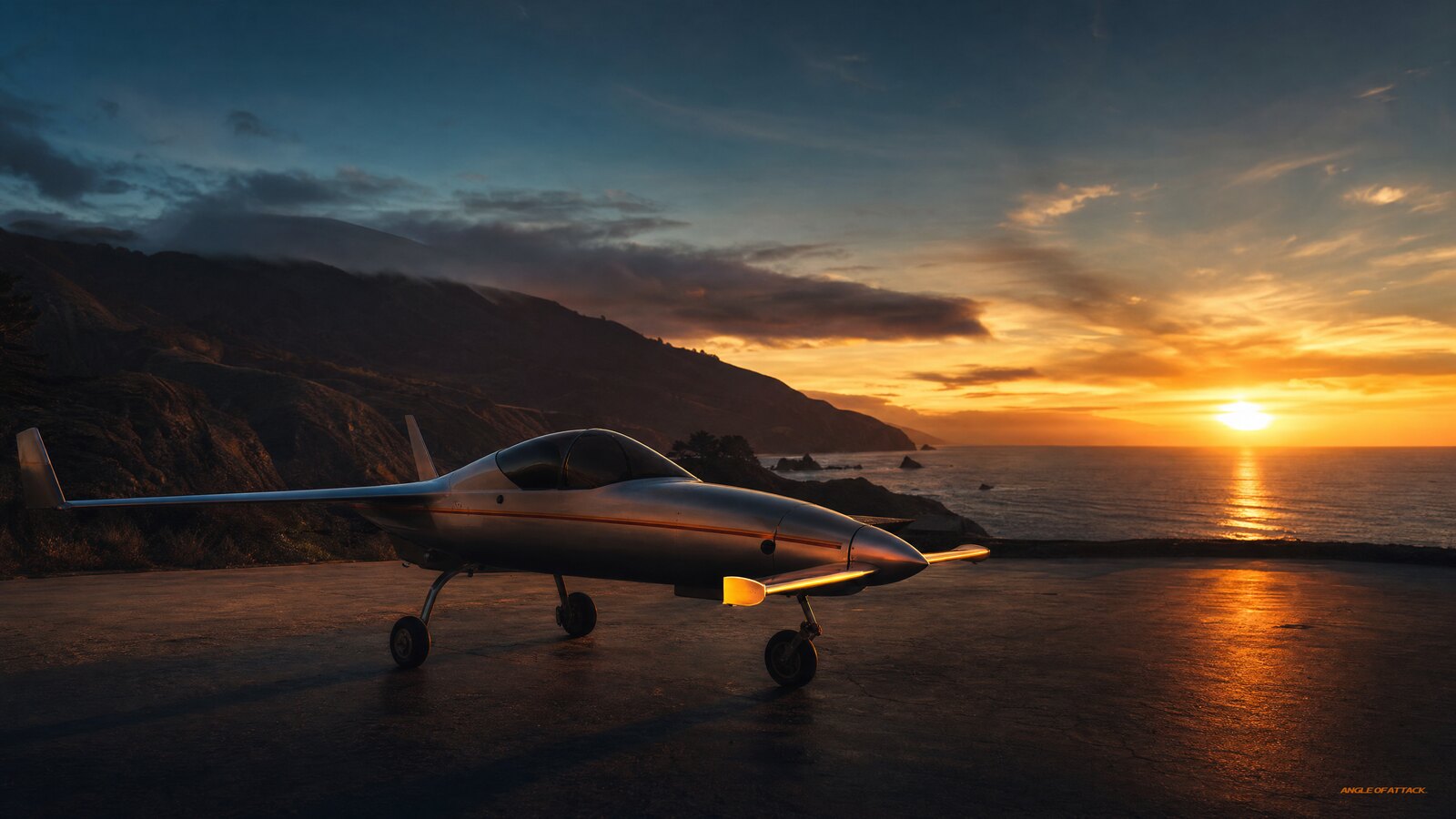
- A canard is a forward-mounted horizontal surface that sits ahead of the wing and the center of gravity, doing the pitch-control job a conventional tail does from behind.
- Canards usually produce lift, not downforce. A conventional aft tail pushes down to balance the airplane; a canard pushes up, adding to total lift instead of subtracting from it.
- The canard is designed to stall first. It reaches its critical angle of attack before the main wing, dropping the nose and recovering on its own — the heart of the stability story (PLT244).
- Longitudinal stability is the whole point. Stability is the airplane’s tendency to return to its trimmed condition after a disturbance, and canard layouts must be balanced carefully to keep that quality (PLT213).
- Real airplanes use them. The Wright Flyer, the Rutan VariEze and Long-EZ, the Beechcraft Starship, and fighters like the Eurofighter Typhoon are all canards.
- There’s no free lunch. Canards bring efficiency and stall resistance but cost flexibility in flap design, CG range, and pitch authority — which is why most trainers keep a tail at the back.
WHAT’S IN THIS GUIDE
- 1What are canard wings?
- 2How does a canard wing work?
- 3Why do canard airplanes resist stalling?
- 4How is a canard different from a conventional tail?
- 5What airplanes actually use canard wings?
- 6What are the disadvantages of canard wings?
- 7Why do canards matter for a student pilot?
- 8PLT Study Guide
- 9Frequently Asked Questions
What are canard wings?
A canard wing is a horizontal surface placed in front of the main wing — forward of the center of gravity — that provides pitch control and contributes lift. It does the job a conventional horizontal stabilizer and elevator do on a normal airplane, but from the front of the aircraft instead of the back. The main wing still carries most of the load; the canard sits ahead of it like a smaller wing leading the way.
The name comes from French aviation slang: early observers thought the layout — small surface out front, big wing behind — looked like a duck (canard) flying with its neck stretched forward. Today “canard” refers both to the configuration and to the forward surface itself.
The key distinction is simple. On most airplanes you fly, the tail is behind you and usually pushes down to keep the nose up. On a canard airplane, that pitch-balancing surface is ahead of you and usually pulls up — same job, mirror-image geometry, completely different personality.
How does a canard wing work?
A canard wing works by balancing the airplane about its center of gravity using upward lift at the front rather than downward force at the back. The main wing produces the bulk of the lift, and because the center of gravity sits ahead of the main wing’s lift, the nose wants to drop. The canard, mounted out front, produces its own upward lift to hold the nose where the pilot wants it — balancing the whole system like a seesaw.
This is the part that flips a lot of students’ mental models. On a conventional airplane, the tail produces downforce — it pushes the tail down to keep the nose up, and that download is essentially “wasted” lift the wing has to overcome. A canard lifts upward instead, so that forward lift adds to the airplane’s total rather than fighting it. That’s one of the efficiency arguments for the layout.
To control pitch, the pilot changes the canard’s angle of attack (or moves an elevator built into it): more canard lift raises the nose, less lowers it. The FAA frames all of this under stability and controllability (PLT244) — a canard is just a different arrangement of the same four forces you learn from day one. And because the airplane is balanced between two lifting surfaces, the design has to be tuned so it stays stable, naturally returning toward its trimmed attitude after a bump. That balancing act is exactly what longitudinal stability is about (PLT213).
Why do canard airplanes resist stalling?
Canard airplanes resist a full stall because the forward canard surface is intentionally designed to reach its critical angle of attack — and stall — before the main wing does. When the canard stalls first, it loses lift up front, the nose drops, the angle of attack on the main wing decreases, and the airplane naturally pitches down and recovers, often before the main wing ever stalls. The wing keeps flying.
This is the single most quoted advantage of the layout, and it’s worth understanding precisely. A stall happens when any wing exceeds its critical angle of attack and the airflow separates — true for every airplane, canard or not (PLT477). The trick is sequencing the stall: build the canard so it runs out of lift first. The moment it does, the nose falls, angle of attack drops everywhere, and the airplane self-recovers rather than mushing into a deep, full-wing stall.
Picture a student in a Long-EZ easing the stick back to find the stall. As the angle of attack climbs, the canard out front reaches its limit first. The nose bobs down on its own, the airplane gives back a little altitude, and the main wing never fully quits flying. Instead of a sharp break and a wing drop, the student feels a gentle, almost stubborn refusal to stay stalled. That behavior is engineered into the airplane on purpose.
Here’s the honest caveat: “stall-resistant” is not “stall-proof,” and it’s not “spin-proof.” A canard reduces the likelihood of a deep main-wing stall, but loading, CG, ice, or an aggressive design can still get one into trouble. The FAA’s stall and spin awareness fundamentals apply to every airplane (PLT477). The canard stacks the deck toward recovery; it doesn’t repeal aerodynamics.
How is a canard different from a conventional tail?
The core difference is location and the direction of force. A conventional tail sits behind the center of gravity and usually produces a downward force to keep the nose up; a canard sits ahead of the center of gravity and usually produces an upward force to do the same job. One pushes the back down, the other holds the front up — opposite geometry, same goal of balancing the airplane in pitch.
That difference cascades into behavior. Because a conventional tail pushes down, the main wing has to make extra lift to carry both the airplane’s weight and overcome the tail’s download; a canard’s forward lift adds to total lift instead. The aft-tail layout, though, is enormously flexible — it tolerates a wide range of flap settings, CG positions, and configurations, which is exactly why nearly every trainer and airliner uses it.
This comparison table lays it out side by side:
| Feature | Canard (forward surface) | Conventional tail (aft surface) |
|---|---|---|
| Position relative to CG | Ahead of the center of gravity | Behind the center of gravity |
| Typical force produced | Lift (upward) | Downforce (downward) |
| Effect on total lift | Adds to it | Subtracts from it |
| Stall behavior | Designed to stall first, nose drops, self-recovers | Wing typically stalls first; tail keeps pitch authority |
| Flap flexibility | Limited — big flaps overpower the canard | High — flaps can be used freely |
| Pilot visibility | Forward surface can clutter the view | Tail is out of the way behind you |
| Where you’ll see it | Experimental, fighters, some bizjets | Almost every trainer, airliner, and GA airplane |
Both layouts have to satisfy the same FAA requirement: the airplane must be longitudinally stable so it returns toward its trimmed attitude after a disturbance (PLT213). They just get there with different hardware in different places.
What airplanes actually use canard wings?
Real airplanes have used canards from the very beginning of powered flight right up to today’s front-line fighters. The Wright Flyer of 1903 was a canard. The most famous general-aviation examples are Burt Rutan’s homebuilt designs — the VariEze and Long-EZ — which made the canard layout iconic among experimental builders. The Beechcraft Starship was a certified canard business turboprop, and modern fighters like the Eurofighter Typhoon, Dassault Rafale, and Saab Gripen all use canards for agility.
It’s no accident that the Wright brothers started here — a canard let them put the pitch control out front where they could see and feel it. Aviation later standardized on the aft tail for its forgiving flexibility, but the canard never disappeared. In the experimental world, Rutan’s designs are the reason most pilots know the word at all: the Long-EZ — efficient, fast, and distinctive with that little wing out front — became a builder favorite you’ll still spot at fly-ins. The military earns its keep differently: fighters use computer-controlled canards to be intentionally less stable and therefore wildly maneuverable, with the flight computer doing the balancing a human couldn’t.
What are the disadvantages of canard wings?
The main disadvantages of canard wings are limited flap effectiveness, a more restrictive center-of-gravity range, reduced pitch authority for recovery, and some loss of forward visibility. Because the canard must always stall before the main wing, designers can’t add big, powerful flaps to the main wing — strong flaps would let the wing out-lift the canard and break the careful stall sequencing the whole design depends on.
That flap limitation is the big one. Conventional airplanes use generous flaps to slow down for landing; a canard has to be conservative, which often means higher approach speeds and longer runways. The careful front-to-back lift balance also tends to make the usable CG range narrower, so loading matters even more than usual.
There are practical costs too. The forward surface can intrude on the over-the-nose view, and recovery authority can be limited precisely because the design refuses to let the main wing reach full stall — great for stall resistance, less great if you need to aggressively change pitch. Add it all up and you can see why the FAA’s stability-and-controllability fundamentals (PLT244) push most everyday airplanes toward the proven aft-tail layout.
If you want the clear, plain-English version of why airplanes are built to be stable in the first place — the foundation that makes canards make sense — our free Total Student Pilot course walks you through stability and the four forces from the ground up, and the Private Pilot Ground School takes it all the way to checkride depth.
Why do canards matter for a student pilot?
Canards matter to a student pilot less because you’ll fly one and more because understanding them sharpens the concepts the FAA actually tests: longitudinal stability, angle of attack, and how an airplane is balanced about its center of gravity. When you can explain why a canard stalls front-first and recovers, you genuinely understand stall behavior and stability instead of just parroting memorized answers.
Think about what a canard forces you to reason through. Where does lift come from? Why does the CG’s location relative to the lift decide whether the nose wants to rise or fall? Why is an airplane built to return to its trimmed attitude after a gust? Those aren’t canard trivia — they’re the core of how every airplane flies, including the trainer you’ll solo in. The canard just makes the invisible balance visible.
There’s a real chance a canard shows up on your knowledge test or oral, usually as a stability or stall question. Knowing that it’s the forward surface, that it’s designed to stall first, and that this gives a nose-down recovery tendency is the kind of conceptual answer that shows a DPE you understand the why, not just the what. That’s the difference we keep chasing here at AOA: pilots who reason from principles, day-one ready, not just test ready.
So next time you spot a Long-EZ with that little wing up front, walk over and look. Find the CG. Picture the lift arrows — small one up front, big one in back, both pointing up. Imagine the canard running out of lift first and the nose nodding down. Do that, and you’ve just taught yourself longitudinal stability better than any flashcard could.
PLT Study Guide
These are the FAA learning-statement codes that map directly to canard wings. PLT244 is the cleanest match, and PLT477 covers the stall sequencing that defines the design. The longitudinal-stability, forces, and angle-of-attack codes round it out — each one is a concept a canard makes easier to see.
PLT244 — Recall forces acting on aircraft — stability / controllability.
The core code for canards. Know that a canard balances the airplane about its center of gravity from ahead of the CG, that it must be arranged so the airplane is stable (returns toward its trimmed state after a disturbance), and that stability and controllability are always a designed-in trade-off.
PLT213 — Recall flight characteristics — longitudinal stability / instability.
Know that longitudinal stability is stability about the lateral axis — the tendency to return to a trimmed pitch attitude after a disturbance. A canard achieves this with forward lift instead of an aft download, and one loaded outside its CG range can become longitudinally unstable.
PLT477 — Recall stalls — characteristics / factors / recovery / precautions.
Know that a stall occurs when the wing exceeds its critical angle of attack and airflow separates. In a canard, the forward surface is designed to reach that critical angle first, dropping the nose so the airplane self-recovers. Stall-resistant is not stall-proof.
PLT242 — Recall forces acting on aircraft — lift / drag / thrust / weight / stall / limitations.
Know the four forces and how a canard rearranges them: the main wing makes most of the lift, the canard adds upward lift rather than the download a conventional tail produces, and the system still balances weight against total lift.
PLT168 — Recall angle of attack — characteristics / forces / principles.
Know that angle of attack is the angle between the chord line and the relative wind, that every wing has a critical angle where it stalls regardless of airspeed, and that a canard controls pitch by changing the angle of attack of the forward surface.
Frequently Asked Questions
What does “canard” mean?
Canard is French for “duck.” Early French observers thought an airplane with a small surface out front and a large wing behind looked like a duck flying with its neck stretched forward, so the name stuck. Today it refers to both the configuration and the forward horizontal surface itself.
Are canard wings safer than conventional tails?
In one specific way, yes: a well-designed canard stalls front-first, dropping the nose and resisting a full main-wing stall. But “stall-resistant” is not “stall-proof,” and canards trade away flap flexibility, CG range, and pitch authority. They’re safer against one failure mode, not safer overall.
Do canard wings produce lift?
Yes. Unlike a conventional aft tail that usually produces downforce to keep the nose up, a canard typically produces upward lift. That forward lift adds to the airplane’s total lift instead of subtracting from it — one of the main efficiency arguments for the layout.
Why don’t training airplanes use canards?
Trainers use aft tails because the layout is far more flexible and forgiving. A canard can’t use big flaps without breaking its stall sequencing, needs a narrower CG range, and offers less pitch authority. The aft tail tolerates a wide range of loadings and configurations — ideal for a trainer.
What was the first canard airplane?
The Wright Flyer of 1903 was a canard. The Wright brothers mounted the pitch-control surface ahead of the wing where they could see and feel it. Aviation later standardized on the aft tail, but the canard has been part of flight since the first powered airplane.
Can a canard airplane spin?
Yes. A canard reduces the likelihood of a deep main-wing stall, but it is not spin-proof. Loading outside the CG envelope, ice, or unusual conditions can still produce a stall and departure. The FAA’s stall and spin awareness fundamentals apply to canards like every other airplane.
Is a canard the same as a horizontal stabilizer?
It does the same job — pitch stability and control — but from the opposite end of the airplane. A horizontal stabilizer sits behind the center of gravity and usually pushes down; a canard sits ahead of the center of gravity and usually lifts up. Same function, mirror-image geometry.
Why do fighter jets use canards?
Modern fighters use canards to be deliberately less stable, which makes them extremely maneuverable. A flight computer constantly balances an airplane no human could fly by hand. The canard also adds lift and pitch authority for high-angle-of-attack maneuvering, which is why jets like the Typhoon and Rafale wear them.
Master every system on your checkride — and on day one.
The Private Pilot Ground School breaks down every FAA subject area in the same plain-English, real-world way you just read — with quizzes, scenarios, and the explanations that finally make it click.
When you next hear someone call a wing “backwards” or joke about a tail on the wrong end, you’ll know better. A canard isn’t a mistake — it’s a deliberate answer to the same question every airplane answers: how do you keep this thing balanced and pointed where the pilot wants it? Some airplanes solve it with a tail that pushes down out back. A canard solves it with a little wing that lifts up out front. Understand that, and you understand the heart of how airplanes stay stable in the sky.


ON THE SAME TOPIC

IFR vs VFR: The Two Sets of Rules Every Pilot Flies By
IFR vs VFR: The Two Sets of Rules Every Pilot Flies By 19 min read Last updated June 2026 · Chris Palmer The difference between IFR and VFR is which set of rules you fly under. VFR — visual flight rules — lets you navigate by looking outside and staying clear of clouds in good […]
 Read more
ASOS vs AWOS vs ATIS: How to Pull the Right Weather Before You Fly
ASOS vs AWOS vs ATIS: How to Pull the Right Weather Before You Fly 13 min read Last updated June 2026 · Chris Palmer The difference comes down to who is talking and what the broadcast covers. ASOS and AWOS are automated, computer-generated weather observations of the conditions right at the field. ATIS is a […]
Read more 
What Is RNAV Navigation? Area Navigation for VFR Pilots
What Is RNAV Navigation? Area Navigation for VFR Pilots 17 min read Last updated June 2026 · Chris Palmer RNAV — Area Navigation — is a method that lets an aircraft fly any desired path within the coverage of ground- or space-based navigation aids, rather than being forced to fly directly to and from stations. […]
Read more 
NDB and ADF Explained: The Oldest Radio Nav System You Still Need to Understand
NDB and ADF Explained: The Oldest Radio Nav System You Still Need to Understand 16 min read Last updated June 2026 · Chris Palmer An NDB (non-directional beacon) is a ground-based radio transmitter that sends a signal in all directions, and an ADF (automatic direction finder) is the cockpit receiver whose needle points straight at […]
Read more 
Stay Connected
Be the very first to get notified when we publish new flying videos, free lessons, and special offers on our courses.
