
Secondary Stall: Why Rushing the Recovery Stalls You a Second Time
A secondary stall is a stall that happens during the recovery from a first stall, caused by the pilot raising the nose and increasing the angle of attack again too soon — before the wings have built back enough airspeed and flying energy. It is almost always pilot-induced, and it is one of the most common mistakes student pilots make when they get aggressive on the pull-out.
Here is the short version: you stall, you start to recover, you get impatient, and you yank the nose up before the wing is actually flying again. The wing exceeds its critical angle of attack a second time and quits flying — again. Let’s break down exactly why it happens and how you keep it from happening to you.
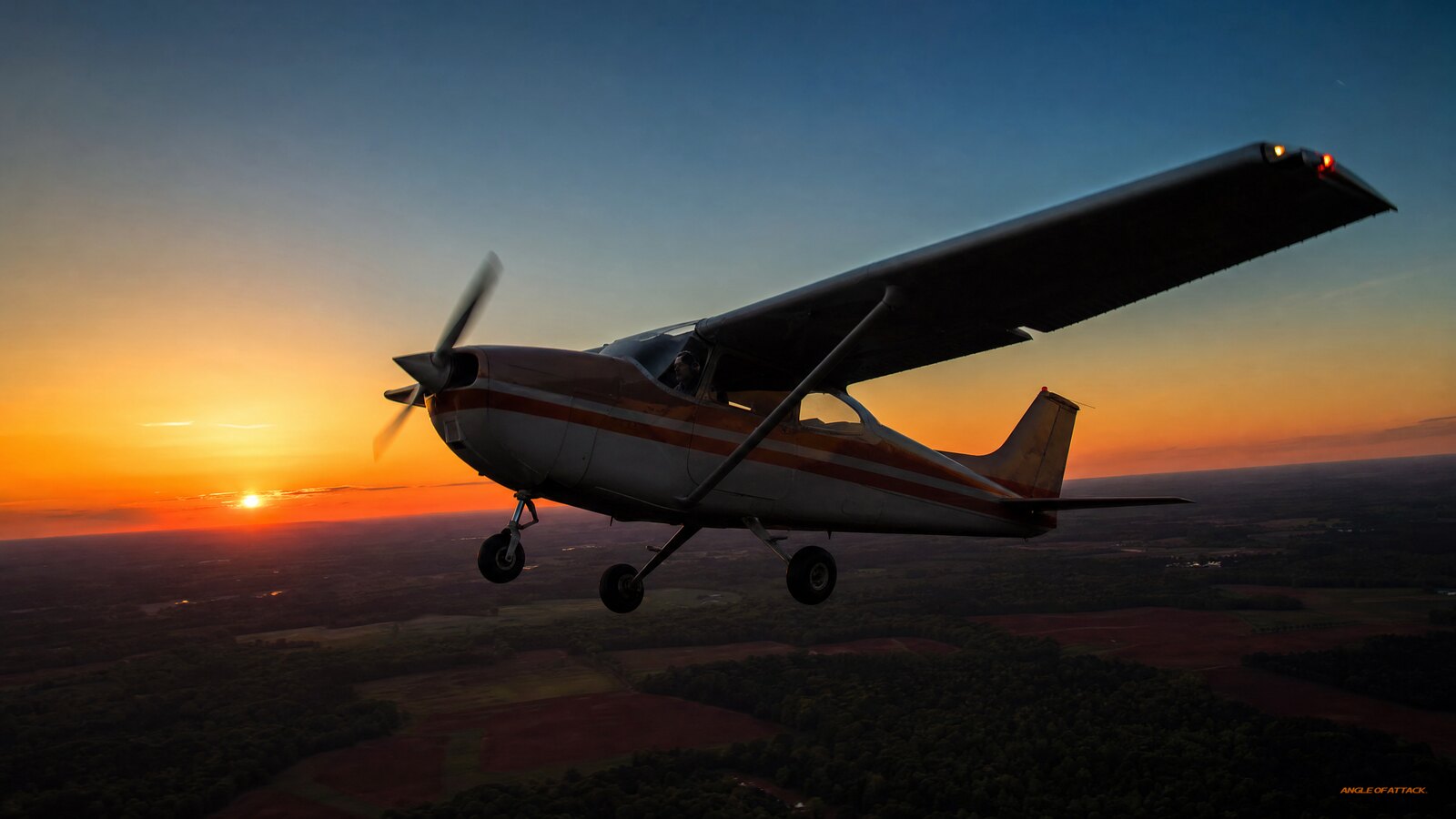
- A secondary stall happens during recovery — it is the result of recovering too aggressively from the first stall, not part of the original maneuver.
- The cause is angle of attack, every time: pulling the nose up before the wing regains flying speed exceeds the critical angle of attack again.
- It is pilot-induced. A smooth, patient recovery prevents it; an abrupt pull causes it.
- The fix is the same as any stall recovery: reduce angle of attack first (release back pressure), add power, then ease into a climb only once the wing is clearly flying.
- It is an ACS item. On the checkride, the secondary stall is a risk you are expected to manage — recover promptly from the first stall without provoking a second one.
- A secondary stall near the ground is dangerous because it steals altitude and can develop into a spin if it happens uncoordinated.
WHAT’S IN THIS GUIDE
- 1What is a secondary stall?
- 2What causes a secondary stall?
- 3How is a secondary stall different from an accelerated stall?
- 4How do you recover from a secondary stall?
- 5How do you prevent a secondary stall in the first place?
- 6A real cockpit lesson from Alaska
- 7Why does the FAA care about secondary stalls on the checkride?
- 8PLT Study Guide
- 9Frequently Asked Questions
What is a secondary stall?
A secondary stall is a second stall that occurs during recovery from the first stall, when the pilot increases the angle of attack again before the wing has regained enough airspeed to fly. The FAA describes it plainly in the Airplane Flying Handbook (FAA-H-8083-3C): it results from an attempt to hasten the completion of a stall recovery before the airplane has regained sufficient flying speed.
Think of a stall as a wing that has stopped flying because it hit its critical angle of attack. To get it flying again you have to do two things — lower the angle of attack and build energy. A secondary stall happens when you skip the “build energy” part and go straight back to pulling. The wing does not care how fast you want to recover. Ask it to fly before it is ready, and it will stall again.
What causes a secondary stall?
A secondary stall is caused by raising the nose and increasing the angle of attack too soon during recovery, before the wing has built back flying speed. It is pilot-induced, not an aerodynamic surprise — you simply commanded a critical angle of attack a second time while the airplane was still low on energy.
The trap is psychological. When you break a stall, you are usually nose-low and descending, and every instinct screams “stop the descent, pull up.” So you pull. But at that moment the wing is barely flying, the airspeed is still low, and a big pull-up spikes the angle of attack right back past critical.
There is also a load-factor angle here. A brisk pull-up increases load factor, and increased load factor raises your stall speed. So you can be above your normal 1G stall speed and still stall the wing simply because you loaded it during an abrupt pull — the same mechanism behind an accelerated stall.
How is a secondary stall different from an accelerated stall?
A secondary stall happens specifically during recovery from a first stall, while an accelerated stall happens any time you exceed the critical angle of attack at a higher-than-normal load factor — most often in a steep turn or an abrupt pull-up. They overlap (a secondary stall often involves an accelerated component from the pull), but they are not the same event.
The simplest way to keep them straight: a secondary stall is defined by when it happens (during recovery); an accelerated stall is defined by how it happens (under load factor above 1G). Here is the comparison side by side.
| Feature | Secondary stall | Accelerated stall |
|---|---|---|
| When it occurs | During recovery from a first stall | Any time, often in steep turns or abrupt pull-ups |
| Root cause | Increasing angle of attack again too soon | Exceeding critical angle of attack at high load factor |
| Pilot-induced? | Yes, almost always | Yes — caused by the abrupt or loaded input |
| Airspeed at stall | Low (still recovering) | Higher than normal 1G stall speed |
| Primary fix | Patience — let the wing fly before pulling | Reduce angle of attack and unload the wing |
The common thread across both is angle of attack. The airplane stalls because the wing exceeds its critical angle of attack — period. Airspeed, attitude, and load factor are just the conditions that get you there.
How do you recover from a secondary stall?
You recover from a secondary stall the same way you recover from any stall: reduce the angle of attack first by releasing back pressure, add full power, level the wings with coordinated rudder, and only then ease back into a climb once the wing is clearly flying. The mistake that caused it was rushing — so the cure is to stop rushing.
The Airplane Flying Handbook (FAA-H-8083-3C) lays out the recovery sequence, and the order matters. Reducing angle of attack always comes first, because nothing else works until the wing is flying again. Power helps you accelerate and minimize altitude loss, but power alone will not break a stall — only lowering the angle of attack will.
Then resist the urge to pull. The airplane needs another moment to accept airspeed: let the nose stay where it is, let the speed build, and raise the nose toward the horizon gradually. A smooth recovery costs you a couple hundred feet. A rushed one costs you a third stall, more altitude, and possibly a wing drop.
If you want a structured, FAA-aligned walkthrough of stall recoveries before you ever sit in the seat, our free Total Student Pilot course covers the aerodynamics and the recovery flow in plain English so the maneuver makes sense before your instructor demonstrates it.
How do you prevent a secondary stall in the first place?
You prevent a secondary stall by being patient on the recovery: lower the angle of attack, let airspeed build, and avoid any abrupt pull-up until the wing is flying again. The biggest preventer is a relaxed, deliberate hand on the controls instead of a panicked yank. You are coaxing the wing back to flying, not muscling the airplane back to level.
A few habits keep secondary stalls out of your flying:
- Trade altitude for airspeed, willingly. A few hundred feet lost in a recovery is normal and safe at altitude. Trying to “save” that altitude with an early pull is what causes the second stall.
- Feel the airplane fly before you climb. The controls get crisp again when the wing is flying. Wait for that feel.
- Keep it coordinated. Step on the rudder to keep the ball centered. An uncoordinated secondary stall is how a stall becomes a spin (see PHAK FAA-H-8083-25C on stall/spin awareness).
Every stall recovery is a small exercise in discipline. The wing tells you when it is ready. Your only job is to wait for it, then fly.
A real cockpit lesson from Alaska
I had a student up over the valleys outside home base in our Cessna 172, working power-off stalls. She was nailing the entry — smooth power reduction, nose coming up, good back pressure. The break came clean. And then, every single time, the moment the nose dropped she hauled it right back up to the horizon like she was trying to stop the descent with willpower. Buffet. Burble. Second break. A textbook secondary stall, three runs in a row.
The fix was not a new technique — it was a count. I had her break the stall, release the back pressure, add power, then literally count “one-one-thousand, two-one-thousand” before she even thought about raising the nose. Those two seconds gave the wing exactly what it needed: time to build energy. The secondary stalls vanished, and by the end of the lesson she was recovering so smoothly you could barely feel the transition.
That is the whole lesson in a sentence: a secondary stall is your impatience showing up in the airplane. Slow your hands down, and it disappears.
Why does the FAA care about secondary stalls on the checkride?
The FAA cares about secondary stalls because they show whether you actually understand stall recovery or are just going through the motions. In the Private Pilot Airman Certification Standards (FAA-S-ACS-6C), the power-on and power-off stall tasks require you to recover promptly once the stall occurs, and they list the secondary stall as a risk you are expected to manage — right alongside accelerated, elevator-trim, and cross-control stalls. Translation: a secondary stall on your checkride is the examiner watching you cause the exact failure the standard asks you to avoid.
Out in the real world the reason runs deeper. Most stall accidents do not happen at safe altitude during practice. They happen low and slow — a botched go-around, an overshooting base-to-final turn, a rushed climb-out. In those moments a secondary stall is not a do-over. It steals altitude you may not have, and if it happens uncoordinated it can roll off into a spin before you react.
That is why we train it at altitude until the recovery is automatic. When you can break a stall and recover smoothly without a second break every time, you have built the habit that protects you on the day it counts — the kind of day-one-ready skill, not just checkride-ready box-checking, that we build into every lesson of the Private Pilot Ground School.
A secondary stall is the easiest stall to prevent, because you cause it yourself. Take that fact and turn it into confidence: the airplane is not out to get you. It is just asking you to be patient.
PLT Study Guide
The FAA knowledge test ties stall questions to specific Learning Statement (PLT) codes. These are the codes that actually match the content of a secondary stall, with the real FAA wording translated into plain study points.
PLT477 — Recall stalls – characteristics / factors / recovery / precautions
The core code for this topic. Know that a stall is an exceedance of the critical angle of attack, that recovery requires reducing angle of attack first, and that a secondary stall is caused by raising the nose again before the wing regains flying speed. Expect questions on recovery sequence and what causes a stall to repeat.
PLT245 — Recall forces acting on aircraft – stalls / spins
Understand how a stall can progress into a spin when the airplane is uncoordinated. A secondary stall with the ball out of center — common during a rushed pull — is exactly the setup the FAA wants you to recognize and avoid.
PLT168 — Recall angle of attack – characteristics / forces / principles
Every stall, including a secondary stall, is fundamentally about angle of attack. Know that the wing stalls at the critical angle of attack regardless of airspeed, attitude, or weight, and that reducing angle of attack is always the first action in recovery.
Frequently Asked Questions
Is a secondary stall pilot-induced?
Yes. A secondary stall is almost always caused by the pilot, not by the airplane. It happens when you increase the angle of attack again — usually by pulling the nose up too soon — before the wing has regained flying speed during a stall recovery. The airplane is simply obeying physics.
What is the difference between a secondary stall and a normal stall?
A normal stall is the first stall you enter, whether power-on or power-off. A secondary stall is a second stall that occurs during the recovery from that first stall, because the recovery was rushed. The aerodynamics are identical — both are exceedances of the critical angle of attack.
How do you avoid a secondary stall?
Be patient on recovery. Lower the angle of attack by releasing back pressure, add power, keep the airplane coordinated, and let airspeed build before easing the nose back up. Avoid any abrupt pull-up. The wing needs a moment to start flying again before it can climb.
Does a secondary stall cause a spin?
It can. If a secondary stall occurs while the airplane is uncoordinated — ball off center — one wing can stall more than the other and drop, which is the start of a spin. Coordinated rudder pressure throughout the recovery is what keeps a stall from becoming a spin.
Will a secondary stall fail my checkride?
It can. The Private Pilot ACS (FAA-S-ACS-6C) lists the secondary stall as a risk you are expected to manage during the stall tasks, and it expects a prompt recovery once the stall occurs. An occasional rough moment may be salvageable, but a clear secondary stall during a required stall task signals a recovery you do not yet have under control.
Why does adding power not stop a secondary stall?
Because power does not break a stall — reducing angle of attack does. Power helps you accelerate and limits altitude loss, but if the wing is still beyond its critical angle of attack, it stays stalled no matter how much throttle you add. You must lower the angle of attack first, then let power do its job.
How much altitude should I expect to lose recovering from a stall?
A few hundred feet is typical and completely acceptable at training altitude, and trying to “save” that altitude with an early pull is exactly what causes a secondary stall. Trade altitude for airspeed willingly — it is the cheapest insurance against a second break.
Can a secondary stall happen during a go-around?
Yes, and it is one of the more dangerous places for it. A rushed go-around with an aggressive nose-up input, low and slow with full power and a nose-high attitude, is a classic setup for a stall — and a panicked second pull can produce a secondary stall close to the ground where altitude is scarce.
Master every system on your checkride — and on day one.
The Private Pilot Ground School breaks down every FAA subject area in the same plain-English, real-world way you just read — with quizzes, scenarios, and the explanations that finally make it click.
A secondary stall is, in a strange way, good news: it is the one stall you have complete control over. It does not sneak up on you and it does not need special conditions. It only shows up when you rush — which means the moment you slow your hands down and let the wing fly, it stops happening. Train it at altitude until smooth recoveries are automatic, and you will carry that calm into the low-and-slow moments where it actually matters.


ON THE SAME TOPIC
IFR vs VFR: The Two Sets of Rules Every Pilot Flies By
IFR vs VFR: The Two Sets of Rules Every Pilot Flies By 19 min read Last updated June 2026 · Chris Palmer The difference between IFR and VFR is which set of rules you fly under. VFR — visual flight rules — lets you navigate by looking outside and staying clear of clouds in good […]
 Read more
ASOS vs AWOS vs ATIS: How to Pull the Right Weather Before You Fly
ASOS vs AWOS vs ATIS: How to Pull the Right Weather Before You Fly 13 min read Last updated June 2026 · Chris Palmer The difference comes down to who is talking and what the broadcast covers. ASOS and AWOS are automated, computer-generated weather observations of the conditions right at the field. ATIS is a […]
Read more 
What Is RNAV Navigation? Area Navigation for VFR Pilots
What Is RNAV Navigation? Area Navigation for VFR Pilots 17 min read Last updated June 2026 · Chris Palmer RNAV — Area Navigation — is a method that lets an aircraft fly any desired path within the coverage of ground- or space-based navigation aids, rather than being forced to fly directly to and from stations. […]
Read more 
NDB and ADF Explained: The Oldest Radio Nav System You Still Need to Understand
NDB and ADF Explained: The Oldest Radio Nav System You Still Need to Understand 16 min read Last updated June 2026 · Chris Palmer An NDB (non-directional beacon) is a ground-based radio transmitter that sends a signal in all directions, and an ADF (automatic direction finder) is the cockpit receiver whose needle points straight at […]
Read more 
Stay Connected
Be the very first to get notified when we publish new flying videos, free lessons, and special offers on our courses.
