
What Is Adverse Yaw? The Reason Your Nose Swings the Wrong Way in a Turn
Adverse yaw is the tendency of an airplane’s nose to swing toward the outside of a turn — the opposite direction you’re rolling — at the moment you deflect the ailerons. It happens because the down-deflected aileron, the one lifting its wing up into the bank, makes more drag than the up-deflected aileron on the descending wing, and that extra drag drags the nose the wrong way. That single mismatch in drag is why your instructor keeps saying “step on the ball,” and why a turn that feels clumsy is almost always a coordination problem, not a stick problem.
Here’s the good news: once you understand why the nose moves, the fix becomes obvious and automatic. You stop fighting the airplane and start flying it. Let’s break it down the way I do on the ramp — simple, accurate, and aimed at making you a coordinated stick on day one, not just on checkride day.
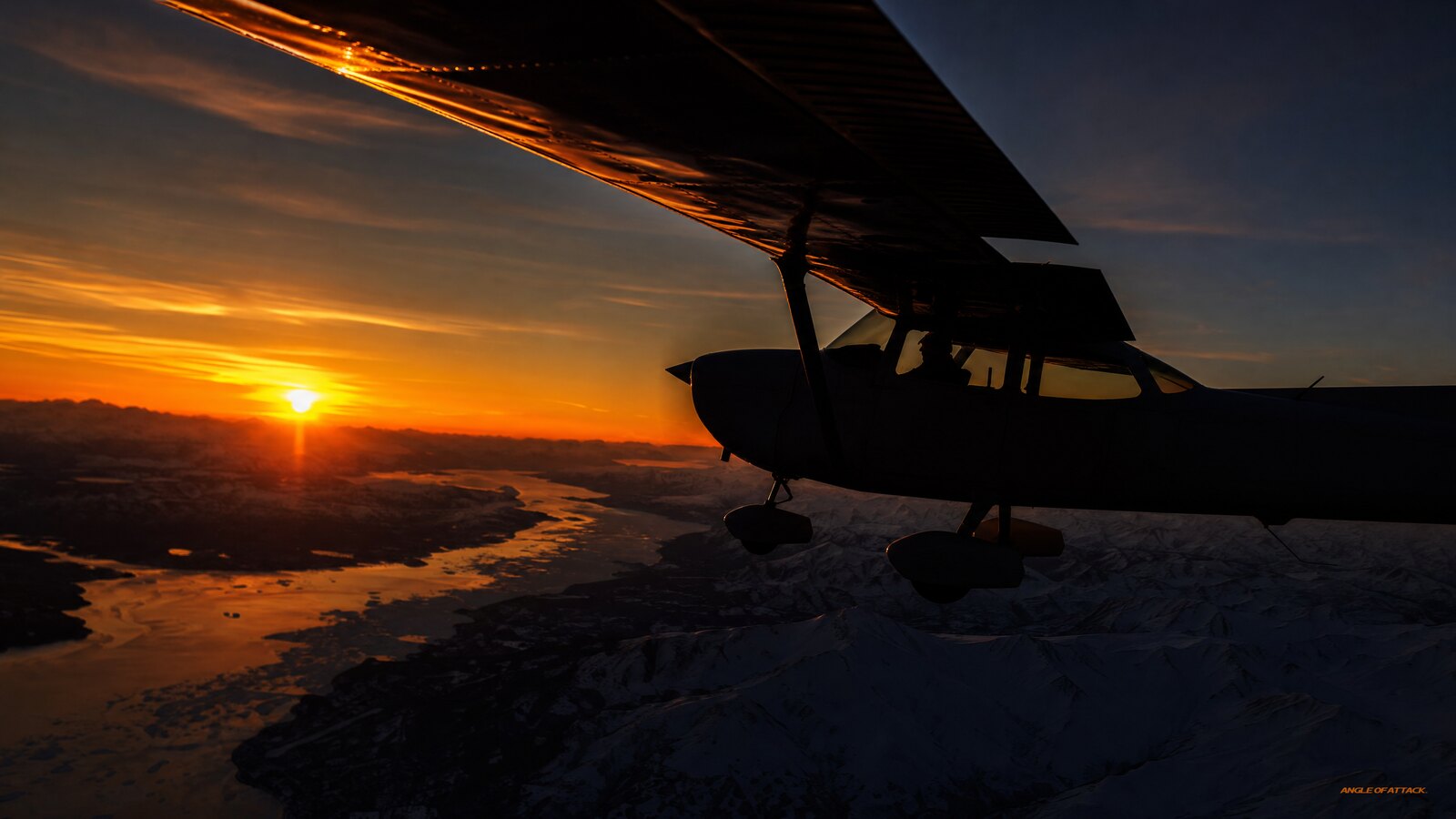
- Adverse yaw moves the nose opposite the roll. Roll left, and the nose initially wants to swing right — and vice versa.
- The cause is differential drag from the ailerons. The down-aileron (more lift) also makes more induced drag, and that extra drag yaws the airplane away from the intended turn.
- Rudder is the cure. Coordinated rudder pressure in the same direction as the bank cancels adverse yaw and keeps the ball centered. Lead it — apply it a beat before the aileron.
- It’s strongest at low speed and high angle of attack — slow flight, climbs, and the rollout from a turn near the ground are where it bites hardest.
- Adverse yaw is not the same as P-factor or torque. Those come from the engine and propeller; adverse yaw comes from the wings and ailerons. A glider has it too — with no engine at all.
- Designers fight it too, using differential ailerons, Frise ailerons, and even spoilers to reduce — but never fully eliminate — the effect. The Cessna 172 uses differential ailerons; the Piper Cherokee uses Frise.
- Uncorrected adverse yaw on roll-in produces a slip. Correcting an overshoot with bottom rudder produces a skid. The slip is awkward. The skid can kill you.
- You feel it, see it, and instrument-confirm it through the nose swing, the seat-of-the-pants push toward the low wing, and the slip/skid ball.
WHAT’S IN THIS GUIDE
- 1What is adverse yaw in simple terms?
- 2What actually causes adverse yaw?
- 3Which way does the nose move during adverse yaw?
- 4How do you correct for adverse yaw?
- 5When is adverse yaw the strongest?
- 6Adverse yaw vs. P-factor vs. torque: what’s the difference?
- 7How do aircraft designers reduce adverse yaw?
- 8What does adverse yaw feel like in the cockpit?
- 9Why does adverse yaw matter for safety?
- 10How do you practice coordination to beat adverse yaw?
- 11Adverse yaw beyond the trainer — gliders, jets, and what that teaches you
- 12PLT Study Guide
- 13Frequently Asked Questions
What is adverse yaw in simple terms?
Adverse yaw is the nose of the airplane yawing away from the direction you’re trying to turn, caused by the ailerons creating uneven drag across the two wings. The FAA’s Pilot’s Handbook of Aeronautical Knowledge (PHAK, FAA-H-8083-25C, Chapter 6) puts it plainly: “the increase in aileron deflection causes an increase in adverse yaw” — the more you bank, the more the nose tries to wander the wrong way.
Think of it as the airplane’s first reaction to your input being slightly stubborn. You tell it “left,” and for a moment it answers “right.” It’s not a malfunction. It’s physics, baked into how ailerons work on every airplane you’ll ever fly — including engineless gliders.
The term “yaw” refers to rotation around the airplane’s vertical axis — the nose moving left or right like shaking your head “no.” When that yaw works against your intended turn, it’s adverse. When you cancel it with rudder, the turn becomes smooth, efficient, and coordinated.
Here’s something worth knowing from day one: adverse yaw is a pure aerodynamic phenomenon. It has nothing to do with your engine. Gliders have zero torque, zero P-factor — and their pilots still fight adverse yaw on every single turn, often more aggressively than you will in a Cessna 172. That’s your first proof that the cause lives in the wings, not the engine room.
What actually causes adverse yaw?
Adverse yaw is caused by differential (unequal) drag between the two wings when the ailerons deflect. Most explanations stop at one cause. The full picture has three overlapping mechanisms, and understanding all three is what separates a pilot who knows the answer from one who can actually feel it coming.
Cause 1 — Induced drag on the down-aileron wing. The aileron that goes down increases the camber and angle of attack on that wing, producing more lift to raise it into the bank. But here’s what most textbook explanations gloss over: more lift means more induced drag — not generic drag, but the drag that’s inseparable from lift production. The relationship is not linear. Induced drag scales with the square of the lift coefficient (Cdi = CL²/π·AR·e). Double the lift at that wing and you quadruple the induced drag. At low airspeed — where you’re already flying at high lift coefficients — a given aileron deflection creates a far larger drag spike than the same input at cruise speed. This is the direct physical reason adverse yaw is worst exactly when you’re slowest.
Cause 2 — Profile drag on the down-aileron wing. The down-deflected aileron also increases profile drag simply by increasing the wing’s frontal cross-section. This is secondary to induced drag but adds to the total imbalance.
Cause 3 — The rolling motion itself. This one most articles miss entirely: as the airplane begins to roll, the rising wing sweeps forward and slightly upward through its arc. That ascending motion changes the relative airflow angle, deflecting the lift vector rearward and adding aerodynamic drag to the rising wing — independent of what the aileron is doing. Aviation researchers have found this rolling-motion component sometimes produces a greater yaw effect in the initial transient than the aileron drag itself. It’s why adverse yaw is pronounced from the very first degree of bank, before the aileron deflection has fully built.
The FAA describes the combined effect directly. As the PHAK puts it, “since the downward deflected aileron produces more lift as evidenced by the wing raising, it also produces more drag,” and “this results in the aircraft yawing toward the wing which had experienced an increase in lift (and drag)” (PHAK, FAA-H-8083-25C, Chapter 6). The handbook also names adverse yaw “a result of differential drag, as well as the slight difference in the velocity of the left and right wings” — acknowledging that rolling motion component.
The operational takeaway is what matters at the controls: the slower you fly, the more rudder any given aileron input demands. That’s the pilot-level rule. The physics above is why it’s true.
Which way does the nose move during adverse yaw?
During adverse yaw, the nose moves opposite to the direction of the intended roll and turn. Roll left, and the nose first swings right; roll right, and the nose first swings left. The wing that rises (the outside wing in the turn) has the down-deflected aileron, more drag, and it gets “held back” — so the nose points away from where you’re going.
This is the single most useful thing to memorize: the nose follows the dragging wing, and the dragging wing is the one going up. Get that straight and you’ll never guess which rudder pedal to use again.
Here’s a quick reference table so you can lock it in:
| You roll | Aileron that goes DOWN | Wing with MORE drag | Nose initially swings | Rudder you need |
|---|---|---|---|---|
| Left | Right aileron | Right (rising) wing | Right (away from turn) | Left rudder |
| Right | Left aileron | Left (rising) wing | Left (away from turn) | Right rudder |
Notice the rudder you need is always on the same side as the bank. Bank left, add left rudder. Bank right, add right rudder. That’s coordination in one sentence.
How do you correct for adverse yaw?
You correct adverse yaw with coordinated rudder pressure applied in the same direction as the roll, at the same time — ideally a beat before — you move the ailerons. As you roll into a left bank, you add a touch of left rudder; the rudder forces the nose back into the turn and cancels the unwanted yaw. The goal is to keep the inclinometer ball centered throughout the roll.
Timing is the teachable sub-skill that most explanations skip. Adverse yaw is strongest while the ailerons are deflected — during the roll into and out of the bank — not while you’re holding a steady bank. So the rudder pressure must lead the aileron input, not chase it. Mountain flying instructors phrase it “a tenth of a second before the aileron.” This is the difference between a student who knows to use rudder and one who actually flies coordinately. You can be told to add rudder a hundred times, but until you learn to lead with it, you’ll always be playing catch-up with the ball.
The progression is: lead with rudder on the roll-in, ease off as the bank steadies, come back with rudder pressure on the roll-out. Both the entry and the exit demand it. A pilot who nails the roll-in but forgets the rollout will slip the nose wide on every recovery.
Your reference is the ball in the turn coordinator or turn-and-slip indicator. The PHAK keeps it simple: “application of the rudder is used to counteract adverse yaw” (PHAK, FAA-H-8083-25C, Chapter 6). Instructors shorten that to a phrase you’ll hear a thousand times — “step on the ball.” If the ball slides left, you need left rudder; if it slides right, you need right rudder. Push the pedal on the side the ball has fallen toward and it slides home to center.
Don’t overdo it. Adverse yaw needs a touch of rudder, not a stomp. New students almost always under-rudder on the roll-in and over-rudder if they panic. Smooth, proportional pressure that matches your aileron input is the target — and on most light trainers, that pressure is genuinely light.
When is adverse yaw the strongest?
Adverse yaw is strongest at low airspeed and high angle of attack, with large aileron deflections — exactly the conditions of slow flight, climbs, and the moments near the ground after takeoff and before landing. Induced drag (the drag that drives adverse yaw) grows dramatically as airspeed drops and angle of attack rises, so the slower you fly, the more rudder a given aileron input demands.
This is why your instructor hammers coordination during slow flight and climbing turns. At cruise speed with a shallow bank, adverse yaw is mild and easy to manage. Pull the power back, slow down, and roll into a steep turn while climbing, and the nose’s tendency to wander becomes dramatic. The airplane is telling you it needs more rudder, and it’s not subtle about it.
| Flight condition | Airspeed / AoA | Adverse yaw severity | Rudder demand |
|---|---|---|---|
| Cruise, shallow bank | High speed, low AoA | Mild | Light |
| Cruise, steep bank entry | High speed, large aileron | Moderate | Medium |
| Climbing turn | Lower speed, higher AoA | Strong | High |
| Slow flight maneuvering | Low speed, high AoA | Very strong | Very high |
| Steep turn entry | Large aileron deflection | Strong | High |
| Base-to-final (low/slow) | Low speed, high AoA | Very strong + dangerous | Very high |
| Glider turn (any condition) | Low-moderate speed, high AR | Severe | Lead rudder before aileron |
That last row gets its own discussion — see the section on gliders and high-aspect-ratio wings below. But the second-to-last row is the one you need memorized cold. The base-to-final turn is low, slow, and often rushed — and uncoordinated aileron there is a classic setup for a stall/spin accident. Adverse yaw isn’t just a checkride word. It’s a survival concept.
Adverse yaw vs. P-factor vs. torque: what’s the difference?
Adverse yaw, P-factor, and torque are three separate forces that all make the nose yaw, but they come from completely different sources. Adverse yaw comes from the ailerons and wings during a roll. P-factor and torque come from the engine and propeller. Confusing them is one of the most common student-pilot mistakes, so let’s separate them cleanly.
Adverse yaw happens any time you use ailerons, regardless of power setting — even in a glider with the engine off. P-factor (asymmetric propeller loading) and torque are “left-turning tendencies” that show up at high power and high angle of attack, like the climb after takeoff, and they yaw the airplane left in a typical American engine that turns clockwise from the cockpit.
| Force | Source | When it’s strongest | Direction of yaw | Engine required? |
|---|---|---|---|---|
| Adverse yaw | Aileron drag (wings) | During any roll; worst slow/high AoA | Opposite the roll | No |
| P-factor | Descending prop blade makes more thrust | High power + high AoA (climb) | Left (US engines) | Yes |
| Torque (reaction) | Engine torque rolls airframe | High power, low speed | Left (US engines) | Yes |
| Spiraling slipstream | Prop wash striking the tail | High power, low speed | Left (US engines) | Yes |
| Gyroscopic precession | Spinning prop reacts to pitch input | Tailwheel raise-the-tail | Left (US engines) | Yes (prop spinning) |
The practical takeaway: in a full-power climb you’re fighting left-turning tendencies and adverse yaw if you’re also turning, so your right foot is busy. Roll into a right climbing turn and the demands stack up — adverse yaw (wants nose left from the right roll), P-factor (wants nose left), torque (wants nose left). Three forces, same direction. Roll into a left climbing turn and adverse yaw (which wants the nose right) partly offsets the left-turning tendencies — which is why left climbing turns feel more natural in a typical trainer. Same airplane, radically different footwork — and understanding why keeps you ahead of it.
This compounding is most dangerous on a go-around. When you apply full power from a slow, low-altitude configuration — say, an aborted approach — left-turning tendencies spike suddenly, the airplane is at a high angle of attack, and if you’re also banking to correct runway alignment, adverse yaw compounds the effect. Maximum rudder demand at minimum altitude. The fix: establish power first, let the airplane stabilize, then coordinate any turn with proper leading-rudder technique.
How do aircraft designers reduce adverse yaw?
Aircraft designers reduce adverse yaw mechanically, mostly through differential ailerons and Frise-type ailerons, because they know pilots can’t always supply perfect rudder. These design features shrink the drag imbalance, but they never eliminate adverse yaw entirely — coordinated rudder is still your job.
Differential ailerons are rigged so the up-going aileron travels a greater distance than the down-going aileron. The PHAK explains that deflecting “the up aileron on the descending wing to a greater angle than the down aileron on the rising wing” produces extra drag on the descending wing, balancing the drag on the rising wing. The handbook is honest about the limit: “while adverse yaw is reduced, it is not eliminated completely” (PHAK, FAA-H-8083-25C, Chapter 6).
The Cessna 172 uses differential ailerons — not Frise. Rotating the yoke to the stop, the down-going aileron deflects approximately 14° while the up-going aileron moves approximately 20°. That asymmetric travel is the differential design at work. The 172 does NOT have Frise ailerons because its piano-type hinge cannot produce the below-wing protrusion the Frise design requires.
Frise-type ailerons — which Piper Cherokees, Archers, and Warriors use — pivot on an offset hinge so that, per the PHAK, raising the aileron “projects the leading edge of the aileron into the relative wind, which creates drag” on the descending wing — drag that helps cancel the rising wing’s drag (PHAK, FAA-H-8083-25C, Chapter 6). The same offset hinge forms a slot that keeps airflow smooth over the lowered aileron, so it stays effective at higher angles of attack. The Beechcraft Bonanza also uses Frise ailerons. If you’ve trained in both a 172 and a Cherokee, the slightly different turn feel you noticed was partly this design difference.
Coupled aileron-rudder systems interconnect the ailerons and rudder mechanically or electronically so that aileron input automatically feeds in a bit of rudder. The Ercoupe (Erco Model 415) took this to its logical extreme — full aileron-rudder coupling and no rudder pedals at all. The FAA certificated it for two-control flight because the coupling effectively prevented cross-controlled stalls. The trade-off: limited crosswind capability and no ability to slip for altitude loss without modification. The Ercoupe still flies today and is available at some flight schools. It’s the engineering world’s ultimate answer to adverse yaw — and a useful reminder of why training aircraft still require pedals. Pilot skill is the final layer.
Spoilerons (roll spoilers used in large jets) solve adverse yaw by an entirely different mechanism — they create drag on the descending wing instead of the rising one. This produces what engineers call “proverse yaw” — the drag is on the correct side, assisting the turn instead of fighting it. Complex, heavy, and overkill for a light trainer, but it explains why large aircraft handle differently.
A practical comparison of all the design approaches:
| Design | Mechanism | Adverse yaw reduction | Trade-off | Common aircraft |
|---|---|---|---|---|
| Standard (symmetric) | Equal up/down deflection | None | Maximum adverse yaw | Some older designs |
| Differential | Up aileron travels farther than down | Moderate | Slightly reduced roll authority | Cessna 172, 152 |
| Frise | Offset hinge projects up-aileron leading edge below wing | Good | Higher overall drag; more maintenance | Piper Cherokee, Archer, Bonanza |
| Coupled aileron-rudder | Mechanical/electronic link feeds rudder with aileron | Good | Limits slips; crosswind limitations | Ercoupe (fully coupled); some LSA |
| Spoileron (roll spoiler) | Spoiler on down-going wing creates proverse yaw | Complete (turns adverse to proverse) | Complex; limited fine control | Large jets, some modern aircraft |
Worth noting: gliders have the worst adverse yaw of any aircraft category — but they deliberately avoid Frise ailerons because Frise designs add overall drag to the airframe, which is catastrophic for glide performance. Glider pilots solve adverse yaw entirely with technique (leading with rudder), not design. That illustrates the trade-off clearly: every design mitigation has a cost, and pilot skill is always the final safety layer.
What does adverse yaw feel like in the cockpit?
In the cockpit, adverse yaw feels like the nose hesitating or sliding away from your turn just as you bank, paired with the inclinometer ball sliding to the inside of the turn — the low-wing side — and a subtle sideways push in your seat toward the low wing. Roll in without enough rudder and you’ve created a slip, and in a slip the ball falls to the inside, toward the wing you’ve dropped. Your three confirmations are visual (the nose tracking wrong against the horizon), instrument (the ball off-center), and physical (the seat-of-the-pants push).
Here’s the thing about those three channels: experienced pilots feel the slip before they see the ball move. The seat-of-the-pants sensation — that sideways push toward the low wing — arrives first. The ball is the confirmation instrument, not the primary detector. The goal of your coordination training isn’t to stare at the ball every turn for the rest of your flying life. It’s to build a felt sense so precise that your foot is already moving before the ball has time to register. You build that feel by first understanding the cause and then practicing the correction deliberately.
The fastest way to build that feel is to experience the uncoordinated version on purpose. In N2423U, our 172 up in Alaska, I’ll have a student roll into a left turn with their feet flat on the floor — no rudder at all. The nose visibly skates to the right toward the mountains, away from the turn, while the ball slides left into the bank and you feel yourself being pushed toward the low wing. Then the exact same roll with left rudder leading the aileron. The nose tracks clean through the horizon, the ball stays glued to center, and the student almost always says the same thing: “Oh — that’s what coordinated feels like.” Once you feel the contrast, you can’t un-feel it.
Why does adverse yaw matter for safety?
Adverse yaw matters for safety because uncoordinated flight at low altitude and low airspeed — exactly where adverse yaw is strongest — is the setup for one of aviation’s most lethal accident chains. The statistics make this concrete: stalls in the base-to-final turn are a relatively small slice of all pattern-stall accidents — they are not the most common stall type. But when they do happen, NTSB-based reviews put the fatality rate somewhere around 66 to 80 percent. That combination — rare but almost always fatal — is the real risk picture. It’s not the most likely thing to happen to you, but it’s one of the most likely things to kill you if it does.
The classic scenario is the overshooting base-to-final turn. The pilot rolls in late, the airplane overshoots the runway centerline. Instead of going around, they try to rush the turn — often by pressing the bottom rudder to skid the nose around while holding off the bank. That maneuver has a name: a cross-controlled stall. Here’s the chain:
- The pilot adds rudder into the turn to tighten it (skid), while aileron holds or reduces the bank.
- The inside (low) wing slows and rises toward a higher angle of attack.
- The outside wing is moving faster and making more lift — but the inside wing stalls first at its higher AOA.
- At stall break, the airplane rolls into the turn — the spin-entry direction.
- At 500–800 ft AGL with gear down and reduced power, there is no recovery altitude.
Notice the compounding load factor problem: a steep bank already raises your stall speed (at 60° bank, stall speed is 1.41× the published 1G figure — about 40% higher). Add cross-control inputs and the inside wing can stall at speeds well above what the POH number implies. The pilot doesn’t know this. They’re already below what they think is a safe margin.
AC 61-67C — Stall and Spin Awareness Training — is direct: spins result from “aggravated stalls in uncoordinated flight, where one wing will drop before the other and the nose will yaw in the direction of the low wing.” Prevention includes “maintaining coordinated flight using rudder to counter yaw (e.g., adverse yaw).”
The best prescription for the overshoot isn’t complicated. Don’t fight it. Don’t do anything sudden. Keep it coordinated. If the final approach is salvageable, a coordinated correction with proper bank and rudder — not bottom-rudder tightening — is the fix. If it’s not salvageable, the only acceptable answer is a go-around. Any overshoot of final that requires an uncomfortable bank angle at low altitude is a go-around. This is the discipline that keeps you out of the accident chain.
The slip vs. skid distinction matters here more than most articles acknowledge. Adverse yaw on roll-in, uncorrected, produces a slip — ball to the inside, too little rudder for the bank. A slip is inelegant and inefficient, but the stall behavior in a slip is relatively more symmetrical and forgiving. A skid — ball to the outside, too much rudder for the bank — is different. In a skid, the inside wing is flying slower and at higher AOA. When it stalls, it breaks first and the roll is into the turn — spin entry. A skid is not just inelegant. It’s the specific condition that sets up inside-wing stall and spin initiation at pattern altitude.
If you want a structured way to build these coordination habits from your very first lessons, the free Total Student Pilot course walks you through the four fundamentals — straight-and-level, turns, climbs, and descents — with coordination built into every one.
How do you practice coordination to beat adverse yaw?
You practice coordination by isolating the controls and feeling the airplane respond — the best classic drill is the Dutch roll exercise, where you rock the wings back and forth while keeping the nose pinned on a point with rudder. It teaches your feet to anticipate aileron drag so coordination becomes automatic instead of reactive.
To fly the drill, pick a point on the horizon, then roll smoothly left and right between moderate bank angles. Your only job is to keep that nose point stationary by leading every aileron input with matching rudder pressure. At first the nose will wander; within a few cycles your feet start to anticipate, and the nose stays put. The moment you feel that shift — when your foot moves before the nose tries to slide — is when the habit is forming.
(This training “Dutch roll” exercise is a deliberate piloting drill — don’t confuse it with the Dutch roll lateral-directional instability that’s an aerodynamic phenomenon in swept-wing jets. The Airplane Flying Handbook (AFH, FAA-H-8083-3C) defines jet Dutch roll as “a combination of rolling and yawing oscillations that normally occurs when the dihedral effects of an aircraft are more powerful than the directional stability” — typically countered by a yaw damper. Same name, completely different thing.)
Three habits cement coordination for good:
-
Fly slow flight and climbing turns often. They exaggerate adverse yaw and force good footwork. When slow flight feels natural, cruise turns feel effortless.
-
Deliberately fly the uncoordinated version, then the coordinated version, back to back. You can’t fully appreciate coordinated until you’ve felt uncoordinated on purpose in a controlled setting with your instructor. The contrast is the lesson.
-
Glance at the ball on every rollout until your seat-of-the-pants feel takes over — then trust the feel and use the ball as a backup confirmation, not a primary scan item. The AFH (FAA-H-8083-3C) treats coordinated flight as a core skill woven through every maneuver from Chapter 3 basic maneuvers through Chapter 5 performance work.
The progression is simple: understand the cause, feel the uncoordinated version, drill the correction, then forget you’re doing it. When rudder becomes invisible — when you just fly and the ball lives in the center — you’ve beaten adverse yaw.
Want to go from “I understand it” to “I fly it without thinking”? The Angle of Attack Private Pilot Ground School breaks down aerodynamics like adverse yaw with animations, real cockpit footage, and a learning path built to make you a confident, coordinated pilot from day one — not just a checkride passer.
Adverse yaw beyond the trainer — gliders, jets, and what that teaches you
You’ll fly the 172 and feel adverse yaw as a manageable inconvenience. Then you’ll sit in a glider or watch a high-performance jet from the ramp and realize the story goes much deeper.
Gliders: the most demanding adverse yaw environment in aviation
High-aspect-ratio sailplane wings — aspect ratios of 20:1 to 40:1, compared to the 172’s roughly 7.5:1 — produce severe adverse yaw. The long lever arm multiplies the drag differential at the tips. A glider’s Cessna-width wingspan might be three or four times longer for the same approximate span-station, so the drag imbalance at roll initiation is dramatically larger. Glider instructors teach leading with rudder as a standard non-negotiable: apply rudder first, then aileron.
And remember: gliders have zero engine, zero P-factor, zero torque. Pure aerodynamic adverse yaw with nothing else in the mix — and it’s still the most demanding coordination environment in general aviation. If you ever want to develop exceptional rudder feel, a few hours in a glider with a competent soaring instructor will permanently improve your powered-aircraft flying.
Gliders also avoid Frise ailerons despite their severe adverse yaw — because Frise designs add overall airframe drag, which decimates glide ratio. Every design solution has a trade-off. For gliders, the trade-off is unacceptable, so pilot technique carries the whole load.
Aspect ratio matters across every aircraft type
| Aircraft type | Typical aspect ratio | Adverse yaw severity | Design mitigation |
|---|---|---|---|
| Trainer (C172) | ~7.5:1 | Moderate | Differential ailerons |
| Cherokee/Archer | ~7.3:1 | Moderate | Frise ailerons |
| High-performance GA (Bonanza) | ~7.8:1 | Moderate | Frise ailerons |
| Standard-class glider | ~20:1 to 25:1 | Severe | Pilot technique — lead rudder |
| Competition glider | ~30:1 to 40:1+ | Very severe | Pilot technique — lead rudder |
| Large swept-wing jet | ~7:1 to 9:1 (swept) | Complex (also Dutch roll risk) | Spoilerons + yaw damper |
Large jets: spoilerons and proverse yaw
Large jets and some modern aircraft solve adverse yaw with spoilerons — plates on the wing upper surface that deflect upward to spoil lift on the descending wing. The spoiler creates drag on the wing going down — the correct side — which pulls the nose into the turn instead of away from it. That’s called proverse yaw, and it’s a complete engineering reversal of the problem. The aircraft turns toward its drag instead of away from it.
This is why large jets feel different to experienced pilots. The roll control response is fundamentally different aerodynamically, and it’s backed by yaw dampers that continuously make small rudder corrections the pilot would never consciously feel. Understanding spoilerons gives you a framework for why complex aircraft don’t just “have better autopilots” — they’re built around different physics.
A brief history: the Wright Brothers hit this wall first
Adverse yaw is literally as old as controlled flight. The Wright brothers first ran into it with their 1901 glider — when Wilbur warped the wings to turn, the aircraft sometimes swung the opposite way and they couldn’t reliably complete a turn. Their fixed vertical fin didn’t fix it. The breakthrough came on the 1902 glider: they hinged the rudder and linked it to the wing-warping controls, so a single input coordinated roll and yaw together — the first working answer to adverse yaw, and the control concept they carried into the 1903 Flyer. The brothers documented the directional-control deficiency in detail. Every pilot who has ever stepped on the ball is continuing a conversation the Wrights started in 1901.
PLT Study Guide
Adverse yaw shows up on the FAA Private Pilot Airmen Knowledge Test under several learning-statement (PLT) codes. The hint codes sometimes associated with this topic (PLT242 and PLT132) are incorrect — those cover lift/drag/thrust/weight and instrument airspeed markings, not control coordination. The codes below are the verified matches from the FAA learning-statement reference.
| PLT code | Official FAA learning statement | What to study for adverse yaw |
|---|---|---|
| PLT112 | Recall aircraft controls — proper use / techniques | Coordinated use of aileron and rudder; “step on the ball”; leading with rudder during rolls; timing of rudder input at roll-in and roll-out |
| PLT346 | Recall primary / secondary flight controls — types / purpose / functionality / operation | How ailerons create differential drag; the rudder’s role in canceling yaw; differential vs. Frise aileron design; what “reduces but does not eliminate” means |
| PLT248 | Recall forces acting on aircraft — turns | Why the nose yaws opposite the roll during turn entry; why it’s strongest at low speed/high AoA; coordination through the turn |
| PLT095 | Recall aerodynamics — longitudinal axis / lateral axis | Yaw is rotation about the vertical axis; roll is about the longitudinal axis — adverse yaw couples them; which control governs each axis |
Study points in plain English:
- PLT112 (controls — proper use): Know that correcting adverse yaw means applying rudder in the same direction as the bank, simultaneously with — ideally leading — the ailerons, and centering the inclinometer ball. Know that the Cessna 172 uses differential ailerons; the Cherokee uses Frise.
- PLT346 (primary/secondary controls): Know that the down aileron makes more induced drag, the up aileron less, and the rudder is the control that restores balance. Differential and Frise ailerons reduce — not eliminate — the effect.
- PLT248 (forces — turns): Know that adverse yaw is worst during roll-in and roll-out, and strongest at low airspeed/high angle of attack. Know that uncorrected adverse yaw produces a slip; overcorrection with rudder produces a skid.
- PLT095 (axes): Be able to name the axis (vertical) about which yaw occurs, the axis (longitudinal) about which roll occurs, and the controls that govern each. Adverse yaw is the coupling between these two axes.
ACS connections: Adverse yaw knowledge is tested across PA.VII.A (Slow Flight), PA.VII.B and C (Stalls), and PA.VII.D (Spin Awareness). The Private Pilot ACS (FAA-S-ACS-6C) explicitly states that spin prevention includes “maintaining coordinated flight using rudder to counter yaw (e.g., adverse yaw).”
Frequently Asked Questions
What is adverse yaw in the simplest possible terms?
Adverse yaw is when your airplane’s nose swings the wrong way — opposite your turn — the instant you bank. It happens because the rising wing’s down-aileron makes more induced drag than the lowering wing’s up-aileron, pulling the nose away from the turn. Rudder in the direction of bank fixes it.
Why does adverse yaw happen?
Three overlapping causes: (1) The down aileron increases lift and therefore increases induced drag on the rising wing — induced drag scales with the square of the lift coefficient, so at low speed this is dramatic. (2) The down aileron also increases profile drag on that wing. (3) The rolling motion itself causes the rising wing to sweep forward in its arc, adding aerodynamic drag. All three push the nose opposite the intended turn.
How do I correct adverse yaw?
Add coordinated rudder pressure in the same direction as your bank — and lead the rudder slightly, applying it a beat before the aileron movement. Ease off once the bank is steady, and bring it back on the rollout. Keep the ball centered. “Step on the ball.” Use a touch, not a stomp, and match your pressure to your aileron input.
Which way does the nose move with adverse yaw?
The nose moves opposite to your roll. Roll left and the nose first swings right; roll right and it first swings left. The rising wing has the down-aileron and more drag — it gets held back, so the nose points toward it and away from where you’re trying to go.
Is adverse yaw the same as P-factor?
No. Adverse yaw comes from aileron drag on the wings and happens any time you roll, even with the engine off — gliders have it constantly. P-factor is a left-turning tendency from the propeller at high power and high angle of attack. Different source, different cause, both fixed with rudder.
When is adverse yaw worst?
At low airspeed and high angle of attack with large aileron inputs — slow flight, climbing turns, and the base-to-final turn near the ground. Induced drag grows as you slow down, so the slower you fly, the more rudder any given aileron input demands.
Does the Cessna 172 have Frise ailerons?
No. The 172 uses differential ailerons — the up-going aileron travels farther (approximately 20°) than the down-going aileron (approximately 14°). This reduces adverse yaw without needing the Frise offset hinge. Piper Cherokees and Archers use Frise ailerons, which is one reason they have a slightly different feel in turns.
Do gliders have adverse yaw?
Yes — more than almost any airplane. High-aspect-ratio glider wings (20:1 to 40:1) produce severe adverse yaw because the long lever arm amplifies the drag differential. Glider pilots train to lead with rudder before aileron as a standard technique. The fact that gliders have zero engine and still have significant adverse yaw confirms the phenomenon is purely aerodynamic.
Do all airplanes have adverse yaw?
Yes. Every airplane with ailerons has adverse yaw to some degree. Designers reduce it with differential ailerons, Frise ailerons, and coupled aileron-rudder systems, but none of these eliminate it entirely. Coordinated rudder from the pilot is always part of flying a clean turn.
What instrument shows adverse yaw?
The inclinometer — the ball in the turn coordinator or turn-and-slip indicator. Uncorrected adverse yaw on roll-in causes a slip: the ball slides to the inside (low-wing side). Experienced pilots also feel the slip as a sideways push toward the low wing before they see the ball move. Step on the ball — press the rudder on the side the ball has fallen toward — to center it.
What’s the difference between a slip and a skid?
In a slip, the ball falls to the inside of the turn (low-wing side) — too little rudder or too much bank. In a skid, the ball falls to the outside — too much rudder for the bank. Adverse yaw uncorrected on roll-in creates a slip, which is relatively forgiving. Pressing the bottom rudder to tighten a late base-to-final turn creates a skid, where the inside wing flies slower and at higher AoA — and stalls first, rolling the airplane into a spin entry. The slip is inelegant. The skid is dangerous.
Why is adverse yaw dangerous?
Because the conditions where it’s strongest — low, slow, high AoA — are the same conditions where uncoordinated flight triggers stall/spin. Base-to-final stalls are a relatively small share of all pattern-stall accidents, but NTSB-based reviews put their fatality rate in the range of 66 to 80 percent — rare, but almost always fatal. The classic setup is an overshoot — pilot tightens the turn with bottom rudder (skid), inside wing stalls, spin entry at 500 ft AGL. The fix is always a coordinated correction or a go-around.
What is the Dutch roll exercise and why is it called that?
The training Dutch roll exercise has you rock wings rhythmically left-right while keeping the nose on a fixed horizon point with rudder. It trains your feet to anticipate aileron drag so coordination becomes automatic. The name is shared — confusingly — with Dutch roll lateral-directional instability, an oscillation in swept-wing jets where dihedral overpowers directional stability (AFH FAA-H-8083-3C, Glossary). They have the same name but are completely different phenomena. The training exercise is a drill you control; the jet instability is a design problem solved by yaw dampers.
Master every system on your checkride — and on day one.
The Private Pilot Ground School breaks down every FAA subject area in the same plain-English, real-world way you just read — with quizzes, scenarios, and the explanations that finally make it click.
Adverse yaw is one of those concepts that feels mysterious until the day it clicks — and then you can’t un-feel it. Every coordinated turn you fly for the rest of your life is you quietly beating it without a second thought. Understand the cause, feel the difference, drill the correction, and let your feet take over. That’s what flying a clean airplane is all about.

ON THE SAME TOPIC
IFR vs VFR: The Two Sets of Rules Every Pilot Flies By
IFR vs VFR: The Two Sets of Rules Every Pilot Flies By 19 min read Last updated June 2026 · Chris Palmer The difference between IFR and VFR is which set of rules you fly under. VFR — visual flight rules — lets you navigate by looking outside and staying clear of clouds in good […]
 Read more
ASOS vs AWOS vs ATIS: How to Pull the Right Weather Before You Fly
ASOS vs AWOS vs ATIS: How to Pull the Right Weather Before You Fly 13 min read Last updated June 2026 · Chris Palmer The difference comes down to who is talking and what the broadcast covers. ASOS and AWOS are automated, computer-generated weather observations of the conditions right at the field. ATIS is a […]
Read more 
What Is RNAV Navigation? Area Navigation for VFR Pilots
What Is RNAV Navigation? Area Navigation for VFR Pilots 17 min read Last updated June 2026 · Chris Palmer RNAV — Area Navigation — is a method that lets an aircraft fly any desired path within the coverage of ground- or space-based navigation aids, rather than being forced to fly directly to and from stations. […]
Read more 
NDB and ADF Explained: The Oldest Radio Nav System You Still Need to Understand
NDB and ADF Explained: The Oldest Radio Nav System You Still Need to Understand 16 min read Last updated June 2026 · Chris Palmer An NDB (non-directional beacon) is a ground-based radio transmitter that sends a signal in all directions, and an ADF (automatic direction finder) is the cockpit receiver whose needle points straight at […]
Read more 
Stay Connected
Be the very first to get notified when we publish new flying videos, free lessons, and special offers on our courses.
