
What Is Climb Rate in Aviation? A Student Pilot’s Guide to Feet Per Minute
Climb rate in aviation is how fast an airplane gains altitude, measured in feet per minute (fpm) and shown on the vertical speed indicator. It comes from excess power — the engine power left over after maintaining level flight. More excess power means a faster climb; thinner air, more weight, or a hotter day all shrink it.
When you pull back on the yoke and the airplane starts trading runway for sky, you’re watching climb rate happen in real time. It’s one of the first performance numbers you’ll learn to feel in your hands and read off the panel. Get comfortable with it early, and a lot of the harder performance topics — density altitude, obstacle clearance, takeoff planning — suddenly click into place.
This guide breaks climb rate down the way I’d teach it on the ramp before a lesson: plain language first, the physics second, and the real-world gotchas that actually bend metal third.
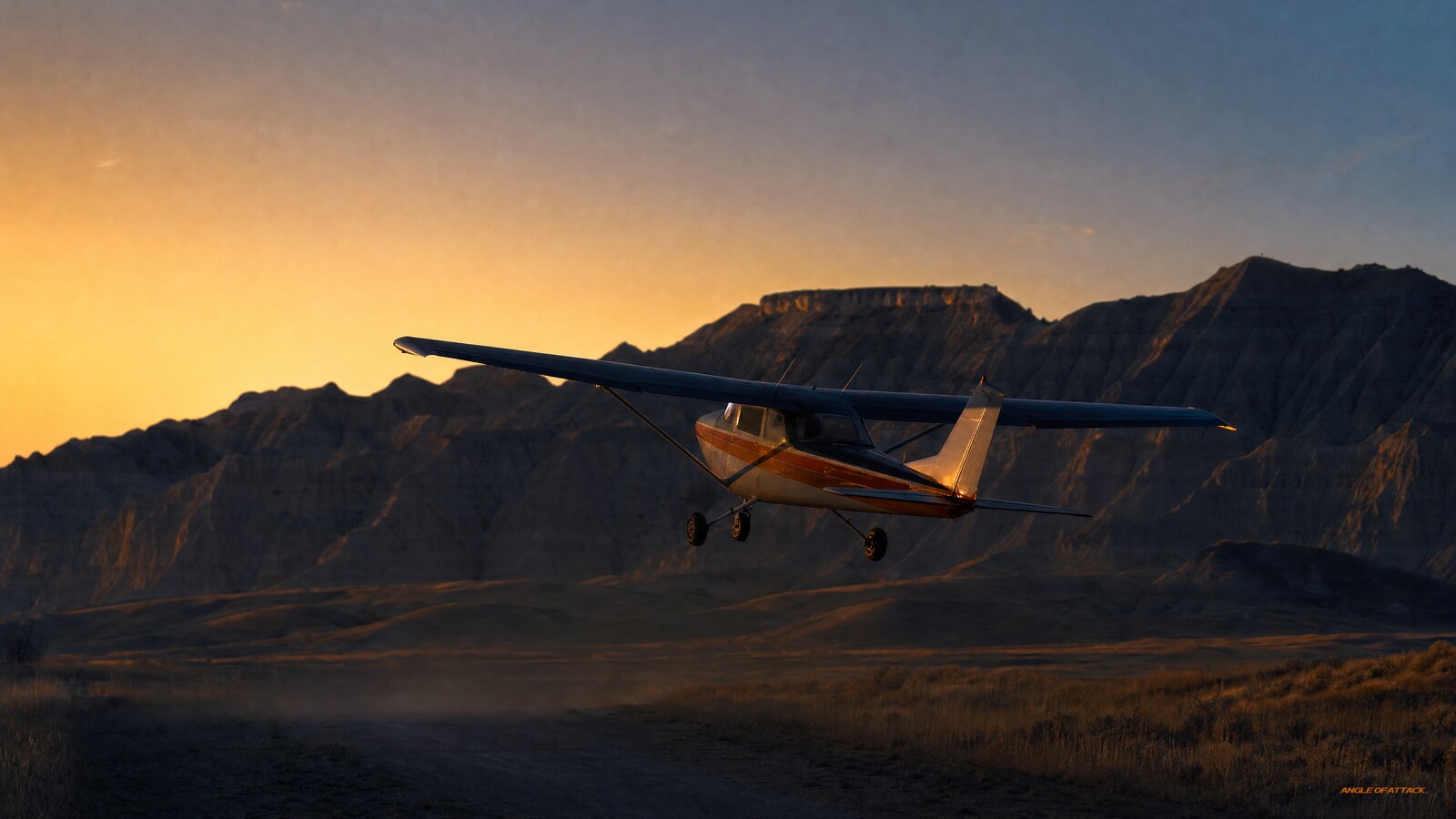
- Climb rate is vertical speed, measured in feet per minute (fpm) and displayed on the vertical speed indicator (VSI).
- Excess power drives the climb. The engine power beyond what’s needed for level flight is what lifts the airplane — not “more lift.”
- Two key speeds matter: Vx (best angle of climb) gives the most altitude per mile for clearing obstacles; Vy (best rate of climb) gives the most altitude per minute.
- Density altitude is the climb killer. Heat, high elevation, and humidity thin the air, and a thinner atmosphere means a weaker climb — sometimes dramatically.
- Weight matters. A heavier airplane has less excess power available, so it climbs slower at every altitude.
- Climb rate decreases with altitude. As you go up, the engine makes less power and excess power shrinks toward zero at the service ceiling.
- The POH is the source of truth. Your aircraft’s Pilot’s Operating Handbook gives real climb numbers for your airplane, day, and weight.
WHAT’S IN THIS GUIDE
- 1What is climb rate in aviation?
- 2How is climb rate measured and displayed?
- 3What actually makes an airplane climb?
- 4What’s the difference between Vx and Vy?
- 5What reduces an airplane’s climb rate?
- 6How density altitude steals your climb (a story from Alaska)
- 7How do you find your airplane’s real climb rate?
- 8PLT Study Guide
- 9Frequently Asked Questions
What is climb rate in aviation?
Climb rate is the speed at which an airplane gains altitude over time, expressed in feet per minute (fpm). A typical training airplane like a Cessna 172 climbs somewhere in the neighborhood of 700 fpm near sea level at full gross weight — meaning it gains about 700 feet of altitude every 60 seconds.
That number isn’t fixed. Climb rate is a performance value, not a fixed limitation, so it changes constantly with weight, altitude, temperature, and airspeed. The same airplane that climbs 700 fpm on a cool morning at sea level might only manage 300 fpm on a hot afternoon at a mountain airport.
Don’t confuse climb rate with climb angle. Rate is about time — how many feet per minute. Angle is about distance — how steeply the airplane rises over the ground. They feel similar in the seat, but they’re optimized at different speeds, and the difference is the whole reason Vx and Vy exist.
How is climb rate measured and displayed?
Climb rate is measured in feet per minute and displayed on the vertical speed indicator (VSI), the instrument in the bottom-right of the standard six-pack. The VSI reads positive (up) in a climb and negative (down) in a descent. It’s a pressure instrument: it senses how fast the static air pressure around the airplane is changing as you move through the atmosphere.
Because the VSI works off changing pressure, it has a built-in lag of a few seconds. When you raise the nose, the needle takes a moment to catch up and settle on the real climb rate. New pilots often “chase” the VSI by over-correcting before it stabilizes — resist that. Set the pitch attitude, hold it, and let the needle settle.
For precise climb planning, pilots use the climb performance charts in the Pilot’s Operating Handbook (POH) rather than reading the VSI in the moment. The instrument tells you what’s happening now; the charts tell you what should happen so you can plan a takeoff or a terrain crossing before you ever leave the ground.
What actually makes an airplane climb?
An airplane climbs because of excess power — the engine power available beyond what’s needed to maintain level flight at a given speed. When you have power to spare, that surplus goes into lifting the airplane’s weight against gravity, and you gain altitude. This is the single most important idea in this whole article, so let it sink in.
Here’s the part that trips up almost every student: a steady climb is not caused by “more lift.” In a stabilized climb, lift is actually slightly less than weight, because part of the wing’s job is taken over by the forward thrust now tilted partly upward. The physics of a steady-state climb are about the balance of thrust, drag, lift, and weight along the flight path — and excess thrust (or power) is what makes the difference.
| Concept | What drives it | Best at speed |
|---|---|---|
| Climb angle (Vx) | Excess thrust | Lower airspeed |
| Climb rate (Vy) | Excess power | Higher airspeed |
| Level flight | Thrust = drag, lift = weight | Cruise speed |
This is why a more powerful engine, a lighter airplane, or denser air all improve climb: each one increases the gap between the power you have and the power you need. Shrink that gap and the climb shrinks with it.
What’s the difference between Vx and Vy?
Vx is the best angle of climb speed and Vy is the best rate of climb speed. Vx gives you the most altitude gained per unit of horizontal distance — use it to clear an obstacle off the end of the runway. Vy gives you the most altitude gained per unit of time — use it to get to altitude fastest once you’re clear of obstacles. Both are published in your POH.
Picture two trees at the far end of a short strip. Flying Vx, you rise at a steeper angle over the ground, so you’ll be higher by the time you reach those trees — that’s what clears the obstacle. Flying Vy, you’d cover more ground before reaching the same height, but you’d reach any given altitude sooner if distance weren’t the concern.
Vx is the slower of the two speeds; Vy is faster. As altitude increases, Vx increases and Vy decreases, and the two speeds gradually converge. They meet at the absolute ceiling — the altitude where the airplane can no longer climb at all because excess power has dropped to zero.
In a Cessna 172, you’ll typically rotate, establish a Vy climb for efficiency, and only reach for Vx when there’s something tall to clear. Know both numbers cold for your airplane — they’re checkride staples and, more importantly, day-one safety tools.
What reduces an airplane’s climb rate?
Climb rate drops whenever excess power drops, and four things shrink excess power: high density altitude, heavy weight, increasing altitude, and the wrong airspeed. Each one either reduces the power your engine can make or increases the power your airplane needs just to stay aloft, narrowing the surplus that powers the climb.
Density altitude is the big one. Hot air, high elevation, and high humidity all make the air less dense, and a normally-aspirated engine and propeller both make less power in thin air. The published lapse rate of the standard atmosphere is roughly 2 °C per 1,000 feet — but it’s the density of the air, not just the elevation, that your airplane responds to. (See PHAK, FAA-H-8083-25C, Chapter 11, Aircraft Performance.)
Weight is the second. Add passengers, bags, and full fuel, and the airplane needs more power to stay level — leaving less excess for climbing. That’s why a solo training flight feels like a rocket compared to a fully loaded cross-country.
Altitude itself is the third. As you climb, a normally-aspirated engine makes progressively less power, so your climb rate tapers off the higher you go. It approaches zero at the service ceiling — defined as the altitude where the airplane can only manage a 100 fpm climb at gross weight.
And airspeed is the fourth lever. Fly faster or slower than Vy and your climb rate falls off, because you’re no longer at the speed that maximizes excess power. Pitch for the number, not the picture.
How density altitude steals your climb (a story from Alaska)
I learned the real weight of density altitude flying in Alaska, not from a textbook. On a cool spring morning, a loaded 172 off a short gravel strip felt perfectly normal — climb out, clear the spruce, turn down the valley. Same airplane, same strip, a warm summer afternoon a few weeks later: the climb went soft. The trees at the end of that strip came up a lot slower than I was used to, and I had time to think about it on the way up — which is exactly the kind of thinking you want to do on the ground instead.
Nothing had changed about the airplane. What changed was the air. The warmer afternoon raised the density altitude by a couple thousand feet, the engine and prop both lost a slice of power, and the excess power that drives the climb got thin right along with the air. The VSI told the whole story — a climb rate noticeably lower than the morning’s, on the identical runway.
That’s the lesson I drill into every student: the airplane doesn’t care what the field elevation sign says. It flies the density altitude. Run your numbers for the hot, heavy, high-elevation case — not the comfortable morning you trained in. If you want to build that habit from your very first lessons, the free Total Student Pilot course walks through performance planning in plain language, and the Private Pilot Ground School takes you all the way to day-one ready with the charts and worked examples.
The mountains in Alaska are unforgiving about thin air. So is the physics, everywhere else — Alaska just makes it obvious.
How do you find your airplane’s real climb rate?
You find your real climb rate in the climb performance chart in your airplane’s Pilot’s Operating Handbook (POH), not from a rule of thumb. The chart cross-references pressure altitude, temperature, and weight to give an expected rate of climb in feet per minute for your specific conditions. This is the number you plan with — and the one examiners expect you to be able to pull off the chart.
The process is straightforward once you’ve done it a few times. Find your pressure altitude, read across to your outside air temperature, and account for your takeoff weight. The chart returns a climb rate; many also list the climb speed (usually Vy) and fuel, time, and distance to climb. Always interpolate between the lines rather than rounding to the nearest column — that small difference can matter off a short strip.
| Factor | Effect on climb rate | Why |
|---|---|---|
| Higher temperature | Decreases | Lower air density, less engine power |
| Higher field elevation | Decreases | Lower air density at altitude |
| Heavier weight | Decreases | Less excess power available |
| Higher humidity | Decreases (slightly) | Moist air is less dense |
| Lower density altitude | Increases | Denser air, more power |
One honest caveat: POH numbers assume a new airplane, a clean engine, and a sharp pilot flying the exact published speed. Your trainer is probably none of those. Treat the chart figure as a best case and give yourself margin — especially on a hot day, off a short field, with the airplane near gross. Day-one ready means planning for the airplane you actually have, not the one in the book.
PLT Study Guide
The FAA tags knowledge-test questions with Learning Statement (PLT) codes. These are the codes that genuinely match climb rate, each translated into plain-English study points using the official FAA wording.
PLT133 — Recall aircraft performance: normal climb / descent rates. Know roughly what a normal climb rate looks like for your trainer (a 172 climbs in the hundreds of fpm, not thousands) and that “normal” shifts with weight, altitude, and temperature. Expect questions that test whether a climb rate is reasonable for the conditions.
PLT125 — Recall aircraft performance: climb / descent. Understand the relationships: heavier weight, higher density altitude, and increasing altitude all reduce climb rate. Know that climb rate tapers toward zero at the service ceiling and that Vx and Vy converge there.
PLT004 — Calculate aircraft performance: climb / descent / maneuvering. Be able to use the POH climb chart — enter with pressure altitude, temperature, and weight, interpolate, and read out a climb rate (and often time, fuel, and distance to climb). This is a chart-reading skill, so practice it with real numbers.
PLT246 — Recall forces acting on aircraft: steady state climb / flight. Understand that a steady climb is powered by excess thrust/power, and that in a stabilized climb lift is slightly less than weight — climb does not come from “extra lift.”
PLT127 — Recall aircraft performance: density altitude. Know that high temperature, high elevation, and high humidity raise density altitude, thin the air, and cut climb performance. This is the single most tested factor behind reduced climb rate.
Frequently Asked Questions
What is a good climb rate for a Cessna 172?
Near sea level at gross weight on a standard day, a Cessna 172 climbs roughly 700 fpm at Vy, though exact figures vary by model and year. That rate drops with higher density altitude, heavier loading, and increasing altitude. Always confirm the real number in your specific airplane’s Pilot’s Operating Handbook.
What’s the difference between climb rate and climb angle?
Climb rate is altitude gained per unit of time (feet per minute); climb angle is altitude gained per unit of horizontal distance over the ground. Best rate is flown at Vy and gets you up fastest; best angle is flown at the slower Vx and gets you highest over a fixed point, which is what clears obstacles.
What units measure climb rate?
Climb rate is measured in feet per minute (fpm) in the United States and shown on the vertical speed indicator (VSI). Some countries and aircraft use meters per second instead. Feet per minute is the standard you’ll use throughout your private pilot training and on the FAA knowledge test.
Why does climb rate decrease as you go higher?
A normally-aspirated engine makes less power as it climbs into thinner air, and the propeller becomes less efficient too. That shrinks the excess power available for climbing. Climb rate keeps tapering until it reaches the service ceiling, where the airplane can only manage about 100 fpm at gross weight.
Does weight affect climb rate?
Yes. A heavier airplane needs more power just to maintain level flight, which leaves less excess power for climbing. The same airplane climbs noticeably better light than at gross weight. This is why a solo flight feels far peppier than a fully loaded cross-country with passengers and full fuel.
What is Vy?
Vy is the best rate of climb speed — the airspeed that produces the greatest altitude gain per minute. It uses the airplane’s maximum excess power. Fly Vy when you want to reach altitude quickly and there’s no obstacle to clear. The exact Vy speed is published in your airplane’s Pilot’s Operating Handbook.
How does density altitude affect climb rate?
Density altitude is pressure altitude corrected for temperature, and high density altitude means thin air. Thin air reduces engine power, propeller efficiency, and wing performance, so climb rate falls — sometimes dramatically on a hot, high day. It’s the most common reason a climb feels weaker than expected.
Where do I find my airplane’s exact climb rate?
In the climb performance chart in your airplane’s Pilot’s Operating Handbook (POH). Enter the chart with your pressure altitude, temperature, and weight, interpolate between the lines, and read off the expected feet per minute. Treat the result as a best-case figure and add margin for a worn engine and real-world conditions.
Climb rate is one of those topics that looks like a single number on a gauge but really teaches you how the whole airplane works — power, weight, and air all pulling against each other every second you’re in a climb. Learn to read it, plan it, and respect what density altitude does to it, and you’ll be a safer, sharper pilot from your very first solo onward.
Master every system on your checkride — and on day one.
The Private Pilot Ground School breaks down every FAA subject area in the same plain-English, real-world way you just read — with quizzes, scenarios, and the explanations that finally make it click.
Keep it simple, fly the numbers, and let that VSI needle settle before you chase it.


ON THE SAME TOPIC

What Is Density Altitude? The Performance Killer Explained
What Is Density Altitude? The Performance Killer Explained 16 min read Last updated June 2026 · Chris Palmer Density altitude is pressure altitude corrected for nonstandard temperature — in plain terms, the altitude your airplane “feels” it’s flying at based on how thin the air is. When it’s hot, high, or humid, the air thins […]
 Read more
What Is Class E Airspace? Rules, Limits & VFR Minimums
What Is Class E Airspace? Rules, Limits & VFR Minimums 13 min read Last updated June 2026 · Chris Palmer Class E airspace is controlled airspace that isn’t Class A, B, C, or D. It’s the catch-all that fills the gaps so air traffic control can serve instrument traffic almost everywhere. For a VFR student […]
Read more 
Calibrated Airspeed Explained: The Number Your Airspeed Indicator Wishes It Could Show
Calibrated Airspeed Explained: The Number Your Airspeed Indicator Wishes It Could Show 16 min read Last updated June 2026 · Chris Palmer Calibrated airspeed (CAS) is your indicated airspeed corrected for the built-in installation and instrument errors of the pitot-static system. In plain terms, it’s the airspeed your gauge would read if the system were […]
Read more 
Bernoulli’s Principle in Aviation: How a Wing Really Makes Lift
Bernoulli’s Principle in Aviation: How a Wing Really Makes Lift 16 min read Last updated June 2026 · Chris Palmer Bernoulli’s principle says that in a moving fluid, faster-flowing air has lower pressure. On a wing, air speeds up over the curved upper surface, so the pressure on top drops below the pressure underneath — […]
Read more 
Stay Connected
Be the very first to get notified when we publish new flying videos, free lessons, and special offers on our courses.
