
AIM Text
- Pilots operating in accordance with an IFR flight plan in Visual Meteorological Conditions (VMC) may request ATC authorization for an overhead maneuver. An overhead maneuver is not an instrument approach procedure. Overhead maneuver patterns are developed at airports where aircraft have an operational need to conduct the maneuver. An aircraft conducting an overhead maneuver is considered to be VFR and the IFR flight plan is canceled when the aircraft reaches the initial point on the initial approach portion of the maneuver. (See FIG 5-4-34.) The existence of a standard overhead maneuver pattern does not eliminate the possible requirement for an aircraft to conform to conventional rectangular patterns if an overhead maneuver cannot be approved. Aircraft operating to an airport without a functioning control tower must initiate cancellation of an IFR flight plan prior to executing the overhead maneuver. Cancellation of the IFR flight plan must be accomplished after crossing the landing threshold on the initial portion of the maneuver or after landing. Controllers may authorize an overhead maneuver and issue the following to arriving aircraft:
- Pattern altitude and direction of traffic. This information may be omitted if either is standard.
- Request for a report on initial approach.
- “Break” information and a request for the pilot to report. The “Break Point” will be specified if nonstandard. Pilots may be requested to report “break” if required for traffic or other reasons.
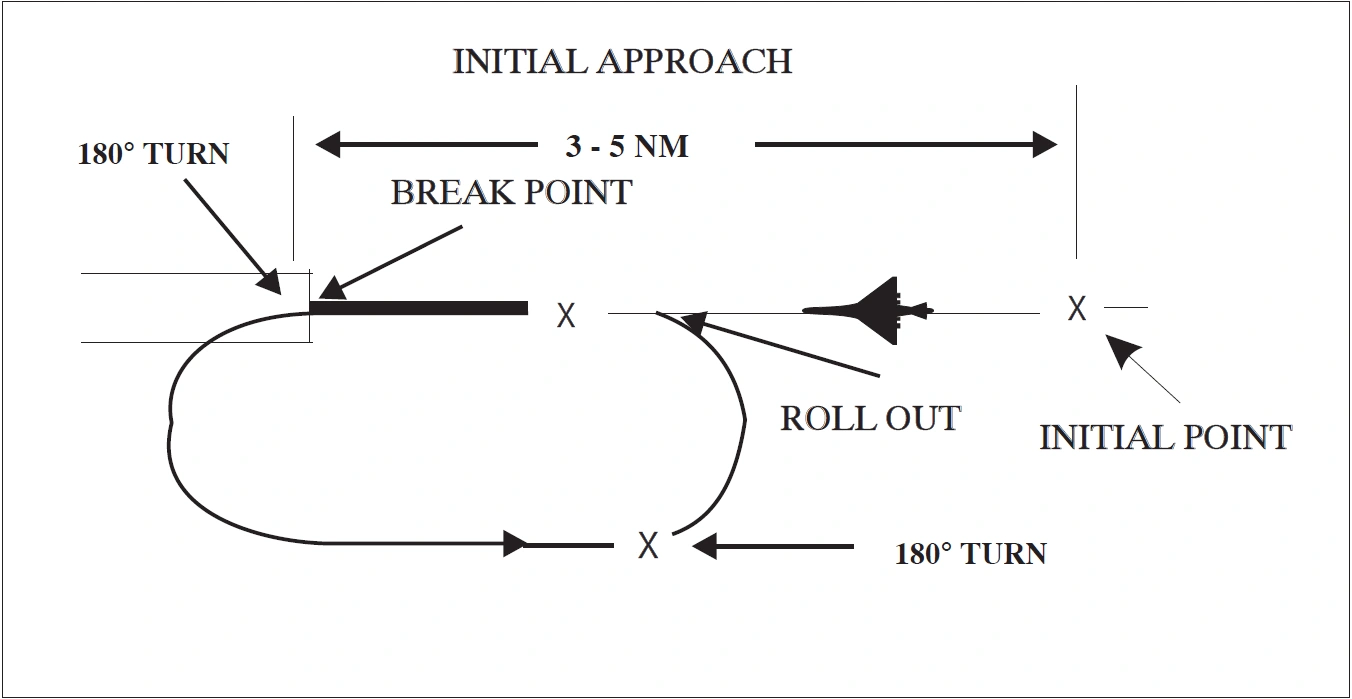
Source: FAA Aeronautical Information Manual · current edition · paragraph 5-4-27.
The short answer
This AIM section is FAA advisory guidance describing the overhead approach maneuver. Pilots on an IFR flight plan in VMC may request ATC authorization for the maneuver, which is not an instrument approach procedure. The aircraft is considered VFR and the IFR flight plan is canceled upon reaching the initial point. It supports VFR pattern operations rather than a specific 14 CFR clearance rule.
Research Notes
Common Questions
Is the overhead maneuver an instrument approach?
No. The AIM states an overhead maneuver is not an instrument approach procedure. Pilots operating on an IFR flight plan in VMC may request ATC authorization for it, and an aircraft conducting the maneuver is considered to be VFR, with the IFR flight plan canceled when the aircraft reaches the initial point on the initial approach portion of the maneuver.
When do I cancel IFR at an airport without a tower?
The AIM directs that aircraft operating to an airport without a functioning control tower must initiate cancellation of the IFR flight plan prior to executing the overhead maneuver. Cancellation must be accomplished after crossing the landing threshold on the initial portion of the maneuver or after landing.
What does the controller issue for an overhead maneuver?
Per the AIM, controllers may authorize the maneuver and issue pattern altitude and direction of traffic (which may be omitted if either is standard), a request for a report on initial approach (“REPORT INITIAL”), and “Break” information with a request to report break. The break point is specified if nonstandard.