
AIM Text
In the event that electronic communications cannot be maintained between the ARFF IC and the flight crew, standard emergency hand signals as depicted in FIG 6-5-1 through FIG 6-5-3should be used. These hand signals should be known and understood by all cockpit and cabin aircrew, and all ARFF firefighters.
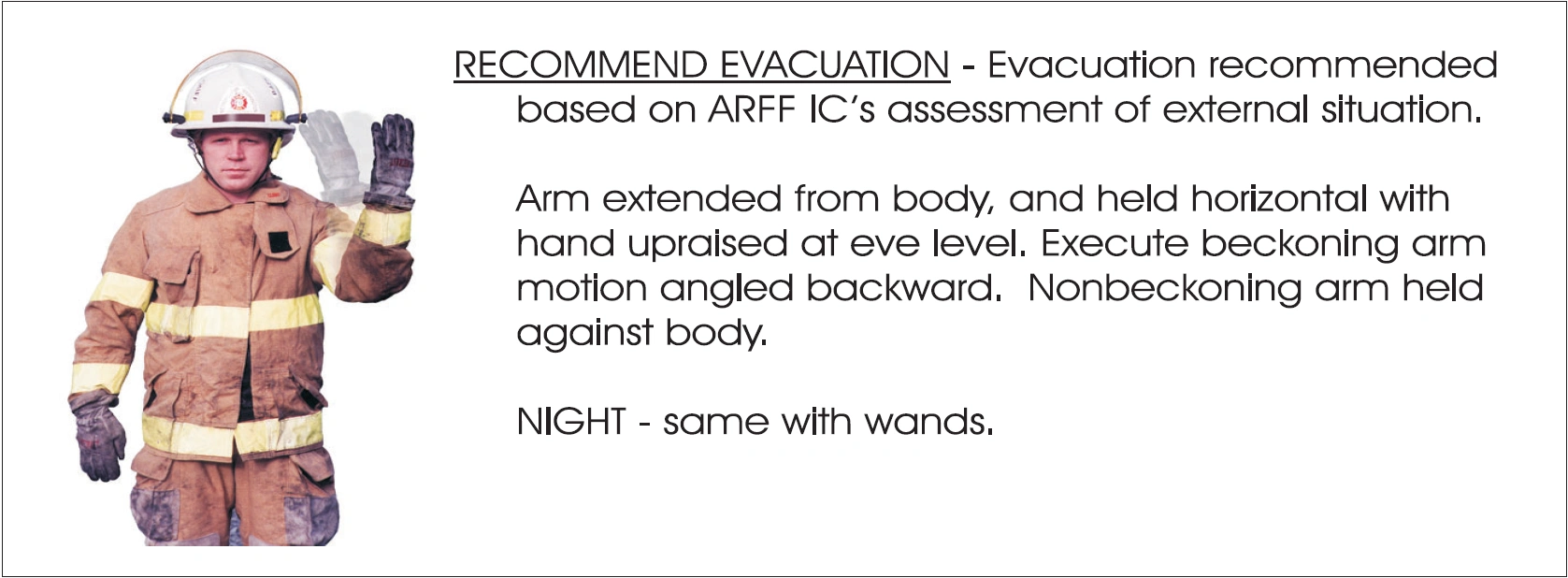
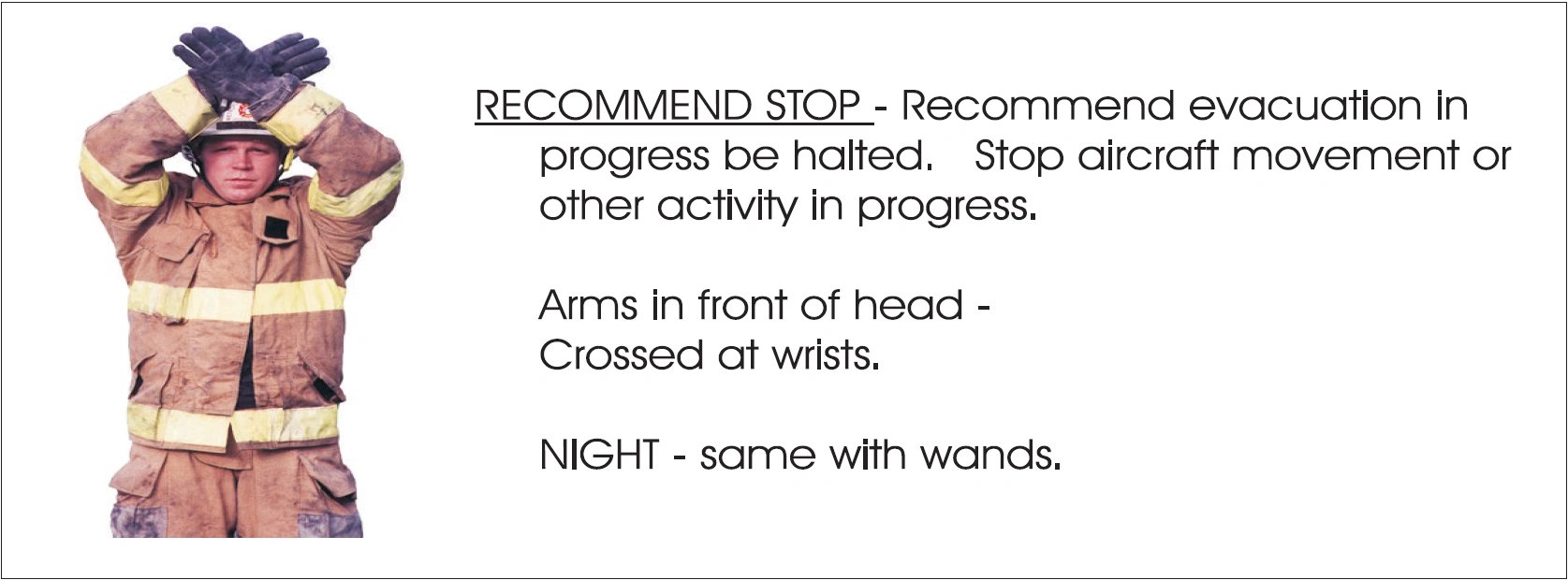
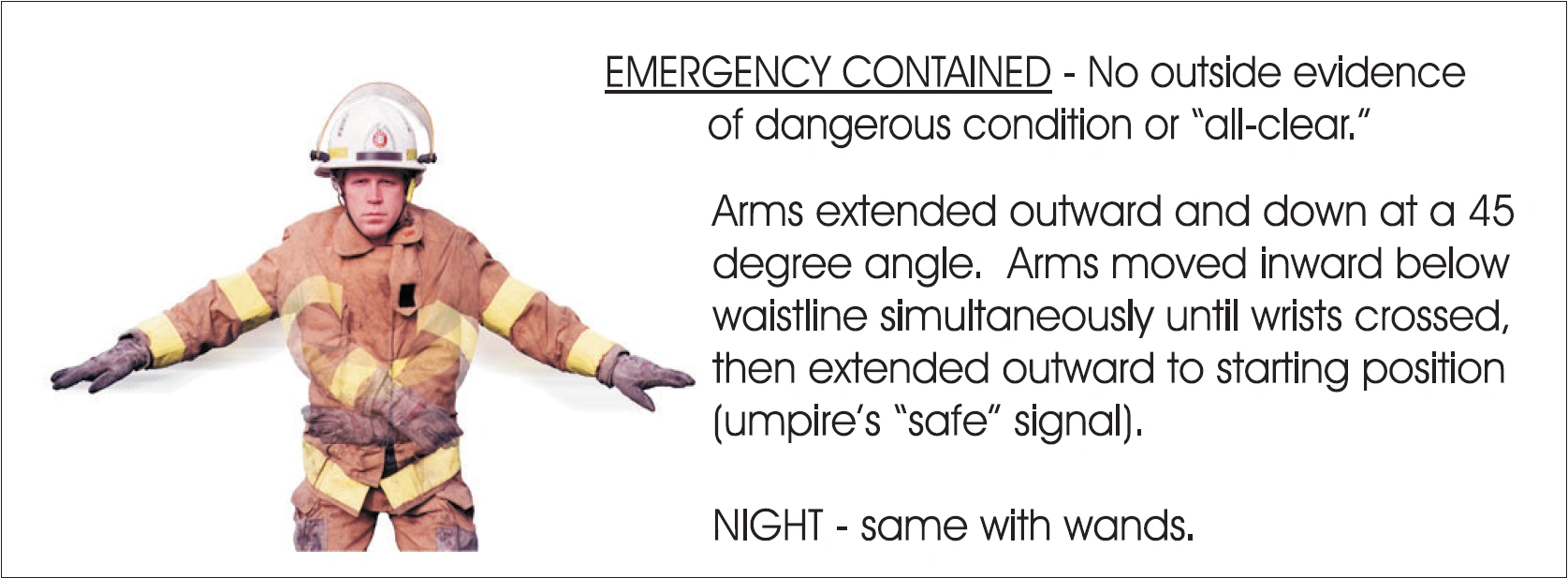
Source: FAA Aeronautical Information Manual · current edition · paragraph 6-5-3.
The short answer
This AIM section is FAA advisory guidance describing standard ARFF emergency hand signals — Recommend Evacuation, Recommend Stop, and Emergency Contained — used when electronic communications cannot be maintained between the Aircraft Rescue and Fire Fighting Incident Commander and the flight crew. It advises that all cockpit and cabin aircrew and ARFF firefighters know and understand these signals, supporting emergency coordination under 14 CFR 91.3.
Research Notes
Common Questions
When are ARFF emergency hand signals used?
Which ARFF hand signals are depicted in the AIM?
The section references three standard signals shown in FIG 6-5-1 through FIG 6-5-3: Recommend Evacuation, Recommend Stop, and Emergency Contained.
Who is expected to know these signals?
The AIM advises that these hand signals should be known and understood by all cockpit and cabin aircrew, and all ARFF firefighters, so the signals can be used reliably when radio contact is lost.