Spin Training for Your CFI: What to Expect, Where to Get It, and Why It Matters More Than You Think
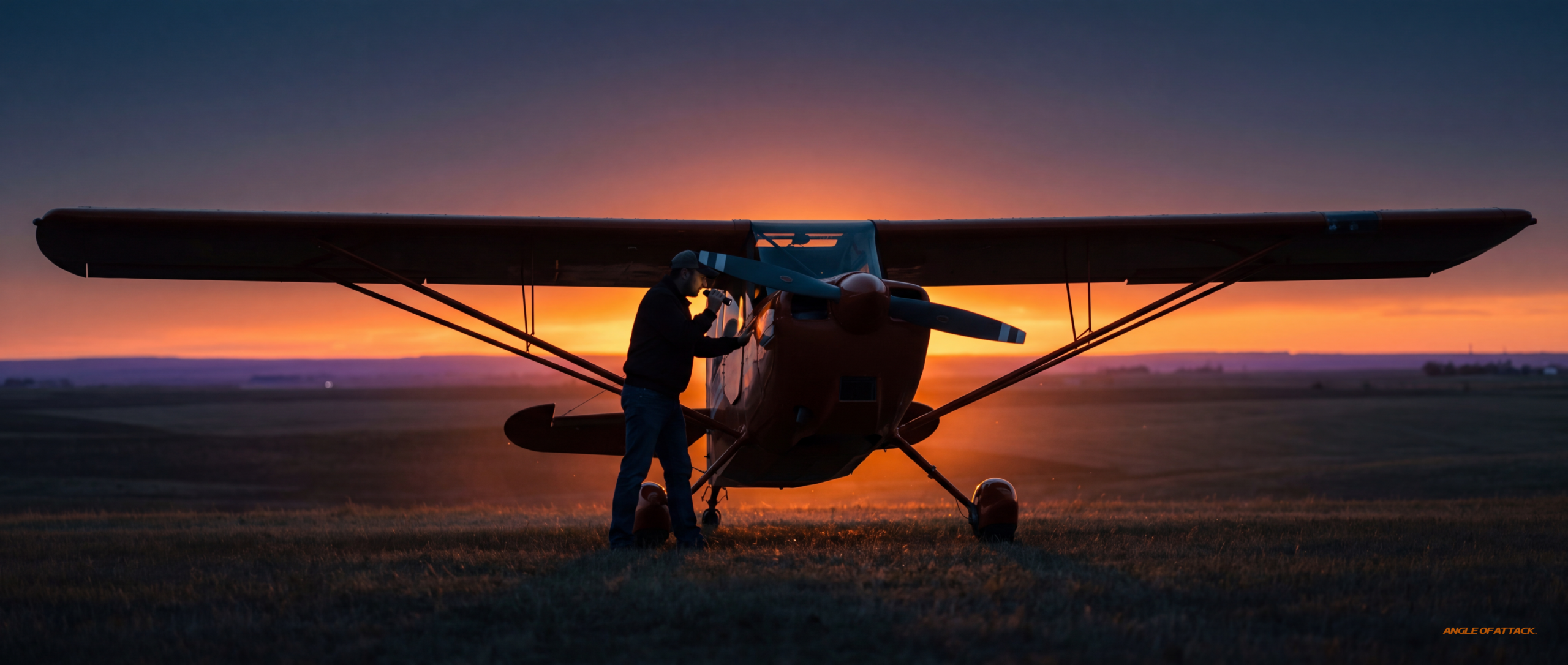 airplane on a grass strip at sunset — Angle of Attack CFI spin endorsement training airplane" />
The CFI spin endorsement is a logbook signature required by 14 CFR 61.183(i)(1) for every initial flight instructor applicant in the airplane or glider category. After receiving flight training in stall awareness, spin entry, spins, and spin recovery in an aircraft certificated for spins, an authorized instructor endorses your logbook attesting to your instructional proficiency. It’s a one-time endorsement, good for life, not required for CFII, MEI, or any add-on rating.
I’m Chris Palmer, two-time Master Aviation Educator, Gold Seal CFI, founder of Angle of Attack. Most CFI candidates treat the spin endorsement like a $600 line item on the checkride budget. They book the cheapest provider, do the minimum, check the box. They’re missing the point. Here’s what your spin training actually covers, where to get it, what to expect in the airplane, and why this single endorsement is the closest thing the FAA gives you to a soul-check.
- The CFI spin endorsement is required by 14 CFR 61.183(i)(1) for every initial CFI-Airplane and CFI-Glider applicant, and only those applicants. CFII, MEI, and any add-on rating after the initial CFI are exempt.
- Sample wording is in AC 61-65K Appendix A.49. Some older internet references point to A.8, but in the current AC 61-65K (effective 11/14/25), A.8 is the solo-takeoffs-and-landings-at-another-airport endorsement — not pre-solo and not spin-related.
- There is no FAA-mandated minimum number of spins for the endorsement. The reg requires “competent and possess instructional proficiency,” a proficiency-based standard, not a count. Industry custom is 2 left + 2 right in 1.0 to 2.0 flight hours.
- Most spin training happens in a Citabria, Super Decathlon, Pitts, or Cessna 152 Aerobat, aircraft certificated for intentional spins. A standard Cessna 172 is approved for spins only in Utility Category within a restricted weight-and-balance envelope; most providers prefer aerobatic-certified aircraft.
- Cost ranges from $400 to $800 for the standalone endorsement at independent providers, up to $1,500 for premium aerobatic-school packages (vendor-reported, 2026).
- You won’t have to spin on the CFI checkride. § 61.183(i)(2) lets the DPE accept the endorsement as proof of instructional proficiency. But you will be tested on the aerodynamics and PARE recovery technique on the oral.
Walking into your first lesson with a 50-page binder won't help you.
Get my Anti-Binder One-Page Lesson Plan Template free — the lesson plan tool I built for CFI candidates who want to be ready Day 1.
Get the Anti-Binder Template Free
WHAT'S IN THIS GUIDE
- 1What Is the CFI Spin Endorsement? (And Why the FAA Requires It)
- 2Do All CFIs Need Spin Training?
- 3What Aircraft Can You Do Spin Training In?
- 4What Actually Happens During Spin Training (First-Person Walkthrough)
- 5How to Recover From a Spin (The PARE Method)
- 6Will You Have to Spin on the CFI Checkride?
- 7Where to Get CFI Spin Training (And What It Costs)
- 8What’s the Endorsement Wording Your CFI Will Sign?
- 9Why This Endorsement Matters More Than You Think
- 10Frequently Asked Questions
What Is the CFI Spin Endorsement? (And Why the FAA Requires It)
The endorsement comes from one regulation. 14 CFR 61.183(i)(1), the eligibility requirements for flight instructors, says the applicant must:
“Receive a logbook endorsement from an authorized instructor indicating that the applicant is competent and possesses instructional proficiency in stall awareness, spin entry, spins, and spin recovery procedures after providing the applicant with flight training in those training areas in an airplane or glider, as appropriate, that is certificated for spins.” — 14 CFR 61.183(i)(1)
Read it twice. The regulation requires four things: stall awareness, spin entry, spins themselves, and spin recovery procedures. All taught in flight, in an aircraft certificated for spins, with the applicant proving instructional proficiency. Not just “I can recover from a spin.” I can teach somebody else how to recover from a spin. Different bar.
Why does this rule exist at all? In 1991 the FAA changed Part 61 in response to NTSB stall/spin accident analysis (referenced in AC 61-67C) showing stall/spin accidents made up roughly 25% of fatal general aviation accidents. The fix wasn’t to require every private pilot to spin. The fix was to put the experience in front of the people who would teach the next generation. If the CFI has felt a spin, the CFI teaches stall recognition differently.
That’s the whole point of this endorsement. It isn’t training for the checkride. It’s training for the moment, ten years from now, when a student of yours puts a 172 into a base-to-final cross-control stall and you have a tenth of a second to push the right pedal forward.
For the full walkthrough of every endorsement a CFI signs in their first year, see the CFI endorsements cheat sheet — the spin endorsement is one entry on the bigger list.
One last frame before we go further. The endorsement is one-and-done. Sign it once for your initial CFI ride, it’s good for the rest of your career. There is no recurrent spin endorsement. No expiration. No renewal. The FAA built this as a foundational airmanship gate. Pass through it once, and the certificate stands.
Do All CFIs Need Spin Training?
Short answer: only initial CFI-Airplane and CFI-Glider applicants. Everyone else is exempt. The detail matters because new CFIs lose money to bad information here.
| Certificate / rating | Spin endorsement required? | Citation |
|---|---|---|
| Initial CFI-Airplane (single- or multi-engine) | YES | 14 CFR 61.183(i)(1) |
| Initial CFI-Glider | YES | 14 CFR 61.183(i)(1) |
| CFII (instrument instructor add-on) | NO | 61.183(i) applies to initial airplane/glider only |
| MEI (multi-engine instructor add-on) | NO | 61.183(i) applies to initial airplane/glider only |
| CFI-Helicopter (different category) | NO | Different category, different requirements |
| CFI renewal or reinstatement | NO | One-and-done at initial checkride |
The pattern: 61.183(i) applies once, at the initial CFI ride, in the airplane or glider category. After that, the privilege rides with you for the life of your certificate. Add CFII a year later? No spin. Add MEI two years after that? No spin. Let the certificate lapse and reinstate? No spin.
The “why” is the same as the “why” for the rule existing in the first place. The initial CFI is the gatekeeper, the instructor who will sign student pilots off for first solo, recommend them for the private practical, and certify their proficiency. The FAA wants that first CFI to have felt the airplane spin. After that gate, the airmanship is presumed.
A note on the “any add-on” framing. Some older articles say “CFII applicants are exempt, MEI applicants are exempt” and stop there. The cleaner statement: once you hold an initial CFI-Airplane (or CFI-Glider) certificate, no further spin endorsement is required for any subsequent rating. Same logic, less hedging.
What Aircraft Can You Do Spin Training In?
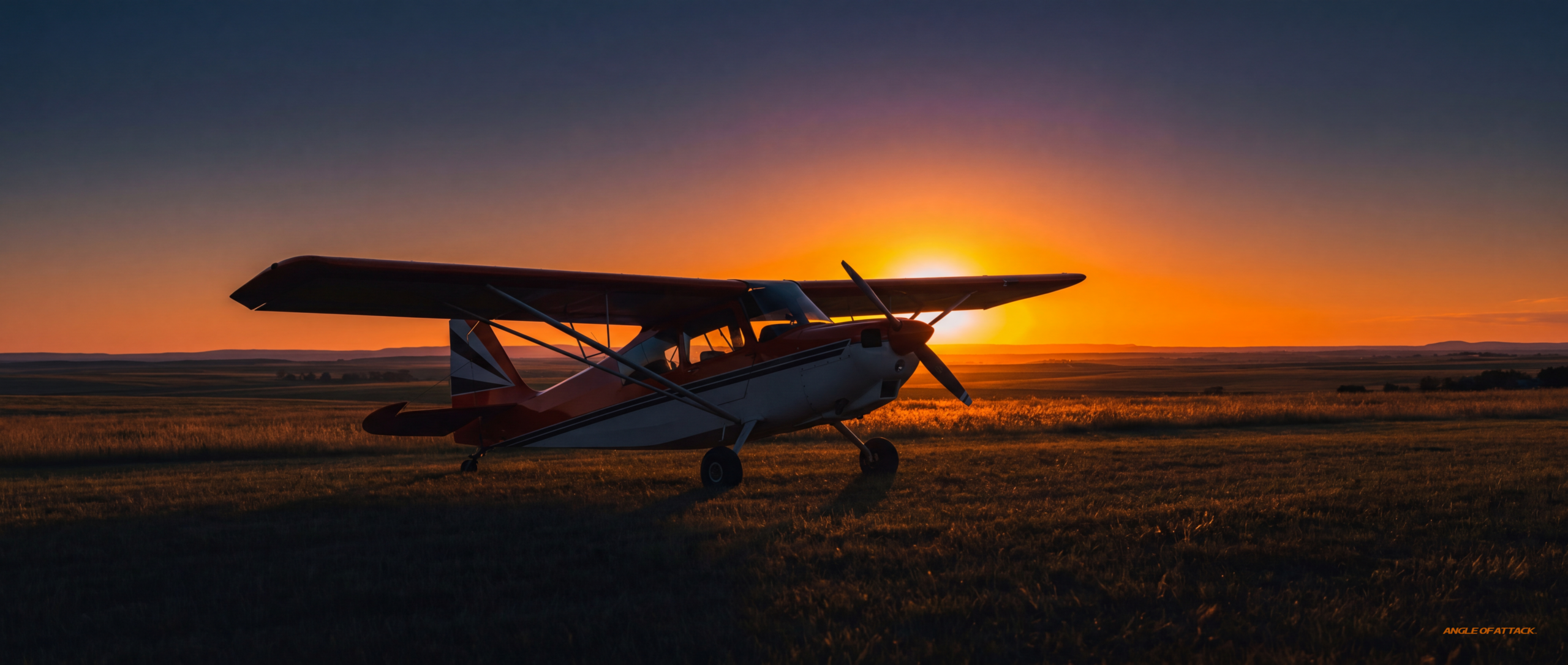
The reg is specific. The aircraft must be certificated for spins. That phrase narrows the field hard, because most general aviation airplanes you’ve flown in training are not approved for intentional spins. A Piper Cherokee is not. A Cirrus SR22 is not. A Diamond DA40 is not.
The airplanes that are approved fall into a small, repeating cast.
| Aircraft | Category | Typical hourly rate | Notes |
|---|---|---|---|
| Citabria 7ECA / 7GCAA / 7GCBC | Utility / Acrobatic | $200–$280/hr | Most common entry-level CFI spin trainer |
| Super Decathlon 8KCAB | Acrobatic | $250–$350/hr | More performance, +6/-5 G envelope, common pick |
| Pitts S-2 series | Acrobatic | $350–$500/hr | Higher-performance, faster recoveries, premium feel |
| Extra 300 | Acrobatic | $500–$700/hr | Premium aerobatic, overkill for the endorsement alone |
| Cessna 152 Aerobat (A152) | Utility / Acrobatic | $150–$220/hr | Vintage but available; limited supply |
| Cessna 172 (Utility Category only) | Utility | varies | Approved within restricted envelope; most providers avoid |
A few notes on what the table doesn’t tell you.
The Cessna 172 question. Yes, technically the standard Cessna 172 is approved for intentional spins, but only in Utility Category, which means a restricted weight-and-balance envelope: front-seat occupants only, half-tanks or less, no aft baggage, flaps UP. Outside that envelope it’s a Normal Category airplane and intentional spins are prohibited. Most independent spin instructors will tell you straight up that they prefer aerobatic-certified airplanes for the higher safety margin and steeper recovery attitudes. The 172 will technically do it. The Decathlon is the airplane that was built for it.
Aerobatic certification matters because of recovery margins. Under 14 CFR Part 23 Subpart B, Normal Category airplanes only need to demonstrate recovery from a one-turn spin or a 3-second spin, whichever takes longer, in no more than one additional turn. Utility Category airplanes approved for intentional spins must meet the same six-turn recovery standard as Acrobatic Category, plus the applicable emergency exit requirements of § 23.807. Acrobatic Category airplanes are designed for sustained spins from any attitude. The aerobatic airplane gives you and the instructor more cushion if something goes sideways.
Glider training is its own path. CFI-Glider applicants do their spin training in a glider certificated for spins (Schweizer 2-33s and similar are common). Same regulation, different airplane category, different specific providers.
What Actually Happens During Spin Training (First-Person Walkthrough)
The day usually goes like this.
Ground brief (1–2 hours). You’ll cover the aerodynamics. What a spin actually is (a stall plus a yaw, with one wing more deeply stalled than the other), the four phases (entry, incipient, developed, recovery), the airplane’s specific POH spin recovery procedure, and the bailout brief if you’re flying with parachutes. Most providers wear chutes even though 14 CFR 91.307(d)(2)(i) carves out an exception for spins and other flight maneuvers required by the regulations for any certificate or rating when given by a certificated flight instructor. It’s just best practice.
Walk-around and strap-in. Aerobatic airplanes have heavier harnesses than you’re used to in trainers: a five- or six-point lap-and-shoulder system that pins you to the seat in negative G. The chute fits behind you on a tandem-seat airplane (Citabria, Decathlon), and the bulk takes some getting used to. Headset goes on, intercom check, brief the bailout sequence one more time at the hold-short line.
The first entry. Climb to the recommended altitude. Most providers want at least 4,000 feet AGL of recovery margin, and AC 61-67C calls for recovery to be complete above 1,500 feet AGL in single-engine airplanes (3,000 feet AGL in multi-engine). Slow flight, power back, full back stick, and as the wing breaks the stall the instructor calls for full rudder to one side. The nose drops. Hard.
What happens next is the part you can’t simulate on a chair-flying drill. The horizon falls out of the windscreen. The ground appears at the top of the canopy and starts rotating. Your peripheral vision narrows. The airframe makes a sound it doesn’t make in level flight, a low rumble through the rudder pedals. You’re upright in the seat one second and looking at the ground spinning the next.
The recovery. PARE: Power idle, Ailerons neutral, Rudder full opposite, Elevator forward. We’ll break each step down in the next section. The discipline at this stage is doing the steps in order, deliberately, not in a panic. Spin recoveries are a procedure. Procedures don’t reward speed. They reward sequence.
Pull out, check your altitude, climb back up. A typical syllabus runs 2 left and 2 right, sometimes plus an accelerated entry or a cross-control demonstration to show you what a base-to-final stall looks like from the inside. Total flight time: 1.0 to 2.0 hours.
Debrief. This is where the instructor either signs the endorsement or doesn’t. They’re watching for two things: that you can fly the recovery cleanly, and that you can teach it. Explain the aerodynamics, describe the entry, walk through PARE, defend the technique against a hypothetical student question. If the answer to either is no, you go back up.
How to Recover From a Spin (The PARE Method)
PARE is the universal memory aid CFIs teach for spin recovery. It is not a quote from any FAR or FAA handbook. It’s a teaching mnemonic that wraps the standard NASA-developed recovery sequence — the procedural framework documented in the FAA’s Airplane Flying Handbook (FAA-H-8083-3C, Chapter 5, Maintaining Aircraft Control) — into something you can recall under stress. Always defer to the specific aircraft’s POH for the actual procedure. Some airplanes call for slightly different inputs.
That said, the PARE sequence works for almost every spin-certified light single you’ll fly during your training:
- P, Power to idle. Why: the propeller’s airflow over the horizontal stabilizer keeps the tail flying, keeps the nose up, and prolongs the spin. Reducing power lets the nose drop and breaks the rotation’s energy source. Idle, not just back.
- A, Ailerons neutral. Why: trying to lift the inside (down) wing with aileron increases its angle of attack and deepens the stall on that side. Aileron-against-the-spin is the most common student instinct and the one most likely to flatten the spin into something nobody wants. Neutral is the only safe input.
- R, Rudder full opposite the spin direction. Why: rudder stops the yawing moment that drives the rotation. Spinning left to right rudder. Spinning right to left rudder. Hold it until rotation stops. Coming off the rudder early is the second most common student error.
- E, Elevator briskly forward to neutral or slightly past. Why: forward elevator reduces angle of attack below the critical angle, breaking the stall on both wings. The wings start flying again. The airplane is now in a steep dive, a normal flight attitude.
Once the rotation stops and the wings are flying, neutralize the rudder, level the wings with coordinated aileron and rudder, and pull smoothly out of the dive. Smoothly, because pulling too hard at low altitude can secondary-stall you straight back into another spin.
That’s the technique. The “why each step works” framing is what the DPE will ask you to explain on the oral. Memorize PARE for the cockpit. Understand the aerodynamics for the briefing room. Always defer to the POH for the airplane in front of you. Boldmethod has a clean visual breakdown of PARE that’s useful if you want to see the airflow over each control surface diagrammed out.
Will You Have to Spin on the CFI Checkride?
No.
14 CFR 61.183(i)(2) is explicit: the DPE may accept your spin training endorsement as satisfactory evidence of instructional proficiency in stall awareness, spin entry, spins, and spin recovery procedures, provided the practical test is not a retest as a result of failing the previous test on those areas.
That last clause is the catch. If you fail your initial CFI checkride for deficiency in stall or spin areas, your retest must include in-flight spin demonstration in a spin-certified aircraft. You don’t want to have that conversation. Show up with the endorsement, the aerodynamics in your head, and the PARE sequence on the tip of your tongue.
The other catch, and this is where candidates lose points, is that the endorsement gets you out of the airplane spin demonstration but does not get you out of the oral exam. The DPE will ask:
- Define a spin. (A stall plus a yaw, one wing more deeply stalled than the other, the airplane rotating about its vertical axis while descending.)
- What are the four phases of a spin? (Entry, incipient, developed, recovery.)
- Walk me through PARE. (Power idle, ailerons neutral, rudder full opposite, elevator forward.)
- Why ailerons neutral? (Aileron toward the high wing increases its AoA and deepens the asymmetric stall.)
- What does the POH for [the airplane you brought] say about spin recovery? (Know it cold.)
The endorsement covers the airplane proof. The oral is the teaching proof. Both bars have to clear for the CFI to sign. For the full picture of how the rest of the oral and the flight portion unfold, see the CFI checkride pillar guide.
Where to Get CFI Spin Training (And What It Costs)

There are three places to look: independent aerobatic CFIs, dedicated aerobatic schools, and CFI bootcamp programs that bundle spin training into a larger course.
Independent aerobatic CFIs with a Citabria, Decathlon, or 152 Aerobat on the line are usually the cheapest and most flexible. Search “spin endorsement [your region]” and you’ll find them at municipal airports across the country. Pricing typically lands in the $400 to $800 range for the standalone endorsement (1–2 flight hours plus ground), depending on aircraft and instructor rate.
Aerobatic schools offer packaged programs that include the endorsement as part of a broader introduction to aerobatics. A few names worth knowing (vendor-reported pricing as of 2026, verify directly):
- Hewison Aviation: $600 program (2 hr ground + 3 hr flight, Citabria/Decathlon class).
- Vapor Global Aviation: $1,200 program (3 hr ground + 3 flights in a Citabria ECA).
- Fly the Decathlon: 1–2 lessons in an 8KCAB Super Decathlon (price on request).
- Patty Wagstaff Aerobatic School (St. Augustine, FL): premium experience with one of the legends of the sport.
- Sunrise Aviation (Santa Ana, CA): west-coast aerobatic option.
- CFI Academy: bundles spin training into the broader CFI bootcamp.
If you’re pursuing a full aerobatic introduction at the same time, expect $2,000 to $3,500 for a 5–10-hour package (loops, rolls, hammerheads, plus the spin endorsement). That’s the upgrade, overkill if all you need is the signature, generous if you want to keep flying upside-down for fun.
One practical tip. Ask your local flight school first. Many have an aerobatic-rated CFI on staff or know someone in the area who does. The cheapest endorsement is often the one your home-base instructor connects you to over coffee.
The duration is short either way. Most candidates complete ground brief plus flight in a single day, two if weather pushes the flight portion. You’ll fly home with a logbook entry and a story.
What’s the Endorsement Wording Your CFI Will Sign?
The sample wording lives in AC 61-65K Appendix A.49 (“Spin training: §61.183(i)(1)”). Verbatim from the current AC (effective 11/14/25):
“I certify that [First name, MI, Last name] has received the required training of 14 CFR § 61.183(i) in [an airplane, a glider]. I have determined that they are competent and possess instructional proficiency in stall awareness, spin entry, spins, and spin recovery procedures.” — AC 61-65K, Appendix A.49
The signature block underneath needs your endorsing CFI’s name, certificate number, expiration date, and the date signed. That’s the entire entry: short, specific, and citing the regulation by number.
A few practical notes on placement and verification.
Where it goes in your logbook. Most candidates put it on the endorsements page or in the remarks column near the spin training flight entry. Either is fine. The DPE will find it during the records check on checkride day.
Fill in the aircraft-category bracket. Look at the verbatim text again: “[an airplane, a glider]” is a load-bearing piece of the endorsement. The endorsing CFI has to specify which category the training was in. If you trained in a Citabria, the bracket reads “an airplane.” If you trained in a Schweizer 2-33, it reads “a glider.” Skipping the bracket entirely is a non-conforming endorsement and a DPE who notices can refuse it.
Pull the AC, copy the language verbatim. The minute your endorsing CFI writes their own version because they don’t want to look up the AC, you have a non-conforming endorsement. A DPE who notices can refuse to accept it, and your retest just got more expensive. Find, copy, fill, sign. Don’t improvise.
A.49 in the current AC. A small-but-load-bearing detail: the spin training endorsement is in Appendix A.49 of AC 61-65K (effective 11/14/25). Some older internet articles and printed cheat sheets still point to A.8 by mistake — A.8 is something else entirely in the current AC (solo takeoffs and landings at another airport, § 61.93(b)(1)). If you’re working from a printed reference, double-check the appendix number against the current AC revision.
Why This Endorsement Matters More Than You Think
Here’s the part most CFI candidates miss.
You will probably never spin an airplane intentionally again after your endorsement flight. Private and commercial students don’t do intentional spins as part of their syllabus. That hasn’t been required since the 1949 Part 61 rewrite. The airplane you’ll teach in is almost certainly a Cessna 172 or a Cherokee or a Diamond, none of which are spin-approved in the configuration you’ll fly.
So why did the FAA make you do this?
Because for the rest of your career, you will be the person teaching stall awareness to every primary student you ever take. Not “how to recover from a spin.” How to recognize the conditions that lead to one and break the chain before it starts. The base-to-final cross-control stall. The takeoff/departure stall during a power-on climb. The accelerated stall in a steep turn. Every one of those is a spin entry waiting for the wrong rudder input.
The “law of primacy” hits hardest right here. The way you teach a power-off stall to a student in their fifth lesson is the way that pilot will think about stalls for the next forty years of their flying life. If you teach it as “wait for the buffet, push forward, recover,” they’ll handle a benign departure from level flight. If you teach it as “recognize the asymmetric break, neutralize the ailerons, get the nose down, restore coordinated flight,” they’ll handle the surprise stall on a base-to-final scenario fifteen years from now when they’re tired and their attention is in the cockpit.
You can’t teach what you haven’t felt. The spin endorsement is the FAA’s way of making sure you’ve felt it.
This is the work I walk through inside TotalCFI. Section 3 (Scenario-Based Training) takes the “Power-On Stall” maneuver out of the maneuver book and reframes it as a Takeoff/Departure Stall Scenario the student will recognize on their fiftieth solo. The endorsement gets you the FAA’s permission to teach. The way you teach it determines how a generation of pilots will react when their wing breaks at 400 feet on climb-out.
Professionalism is not a certificate — it’s behavior. Get this right and you’re the CFI students will remember twenty years later. Not because you signed the logbook. Because the way you taught stalls is the reason they’re still alive to talk about it.
The certificate you’re about to earn is a license to learn. Your spin endorsement is one small but load-bearing piece of how you’ll spend the next decade learning to teach.
Frequently Asked Questions
Do CFIs need spin training?
Only initial CFI-Airplane and CFI-Glider applicants, required by 14 CFR 61.183(i)(1). CFII, MEI, and any add-on rating after the initial CFI are exempt. Once you hold an initial CFI certificate in airplane or glider category, no further spin endorsement is required for any subsequent rating.
How long is the CFI spin endorsement valid?
There is no expiration. It's a one-time endorsement. Once logged, it stays valid for the rest of your career. No renewal required, no recurrent training required.
What aircraft can you do spin training in?
Any aircraft certificated for intentional spins. The most common are Citabria 7ECA/7GCAA, Super Decathlon 8KCAB, Pitts S-2 series, Extra 300, and Cessna 152 Aerobat. A standard Cessna 172 is approved only in Utility Category within a restricted weight-and-balance envelope; most providers prefer aerobatic-certified aircraft for the higher safety margin.
How many spins do you need for the CFI endorsement?
There is no FAA-mandated minimum. 14 CFR 61.183(i)(1) requires the applicant to be "competent and possess instructional proficiency," a proficiency standard, not a count. Industry custom is 2 left + 2 right in 1.0 to 2.0 flight hours, sometimes with an accelerated or cross-control demonstration added.
Can you do spin training in a Cessna 172?
Technically yes. A standard Cessna 172 is approved for intentional spins in Utility Category (front-seat occupants only, half-tanks or less, no aft baggage, flaps UP). Outside that envelope it's prohibited. Most independent spin instructors prefer aerobatic-certified airplanes (Citabria, Decathlon, Pitts) because they have tighter recovery margins and steeper recovery attitudes, which is better instructional value.
How much does spin training cost?
Vendor-reported 2026 pricing: $400 to $800 for the standalone endorsement at independent providers, $600 typical at named programs like Hewison Aviation, up to $1,500 for premium aerobatic-school packages. Full aerobatic introductions that include the endorsement run $2,000 to $3,500.
Is spin training scary?
The first entry is disorienting. The horizon falls out of the windscreen and the ground starts rotating below you. After two or three entries, the disorientation fades and the procedure takes over. A solid ground brief, a properly fitted parachute, and the right airplane do most of the work of making it manageable. Honest framing: it's intense, not scary.
Do you have to recover from a spin on the CFI checkride?
No. 14 CFR 61.183(i)(2) lets the DPE accept your endorsement as proof of instructional proficiency. The exception: if you fail your initial CFI checkride for deficiency in stall or spin areas, your retest must include in-flight spin demonstration. The DPE will still test you on the aerodynamics and PARE recovery on the oral.
Do CFII applicants need spin training?
No. 61.183(i) applies only to initial CFI-Airplane and CFI-Glider applicants. CFII is an instrument-instructor add-on to an existing CFI certificate. No additional spin endorsement required.
What is the PARE method?
PARE is the universal memory aid for spin recovery: Power idle, Ailerons neutral, Rudder full opposite the spin direction, Elevator briskly forward. It's a teaching mnemonic, not a quote from any FAR or handbook. Always defer to the specific aircraft's POH for the actual recovery procedure.
If the CFI checkride is keeping you up at night, you're prepping for the wrong thing.
TotalCFI teaches you to walk into the oral as a teacher, not a test-taker — the reframe most candidates only figure out after they've already failed once.
Only initial CFI-Airplane and CFI-Glider applicants, required by 14 CFR 61.183(i)(1). CFII, MEI, and any add-on rating after the initial CFI are exempt. Once you hold an initial CFI certificate in airplane or glider category, no further spin endorsement is required for any subsequent rating.