

What Is a Sport Pilot Certificate? Privileges, Limits & Cost
A sport pilot certificate is an FAA pilot certificate, defined under 14 CFR Part 61 Subpart J, that lets you fly light-sport aircraft for personal, recreational use without holding an FAA medical certificate — you fly on a valid U.S. driver’s license instead, after meeting reduced training minimums. It is the most accessible rung on the FAA’s pilot certificate ladder, and for a lot of people it is the fastest, cheapest legal way to become pilot in command of a real airplane. In this guide we’ll walk through exactly what the certificate is, what you can and can’t do with it, what it costs, and how it stacks up against the recreational and private pilot certificates.
- No FAA medical required. A sport pilot can fly on a valid U.S. driver’s license in place of an FAA medical certificate, as long as the driver’s license has not been denied, suspended, or revoked and the pilot has never had their most recent FAA medical denied or revoked.
- Lower time minimums. Sport pilot training requires fewer flight hours than the private pilot certificate, which is the single biggest reason it costs less to earn.
- Light-sport aircraft only. The certificate limits you to operating light-sport aircraft (LSA), a category the FAA defines by specific weight, speed, and configuration limits.
- Day VFR, one passenger. Sport pilot privileges are restricted to day visual flight rules (VFR) and carry meaningful limits on passengers, altitude, and airspace.
- A real stepping stone. Hours and training you log as a sport pilot count toward a higher certificate, so it’s a legitimate on-ramp, not a dead end.
- Endorsements unlock more. Want to fly into busier airspace or a different class of aircraft? You add logbook endorsements rather than starting over.
WHAT’S IN THIS GUIDE
- 1What is a sport pilot certificate?
- 2What can a sport pilot actually do?
- 3What are the limits of a sport pilot certificate?
- 4Do you need a medical to fly as a sport pilot?
- 5What does it cost and how long does it take?
- 6Sport pilot vs. recreational vs. private pilot
- 7A flight from a gravel bar (and why the medical rule matters)
- 8PLT Study Guide
- 9Frequently Asked Questions
What is a sport pilot certificate?
A sport pilot certificate is an FAA airman certificate, issued under 14 CFR Part 61 Subpart J, that authorizes you to act as pilot in command of a light-sport aircraft for personal and recreational flying. It was created in 2004 to lower the barriers — cost, training time, and medical hurdles — that kept a lot of would-be pilots on the ground. It’s a full certificate, not a “license to learn” placeholder like a student pilot certificate.
The defining feature is the aircraft you’re allowed to fly. A sport pilot operates light-sport aircraft (LSA), which the FAA defines in 14 CFR § 1.1 by a set of limits: things like maximum weight, stall speed, and engine and landing-gear configuration. If the airplane fits inside that box, a sport pilot can fly it. If it doesn’t, you need a higher certificate. Keep in mind that the FAA’s MOSAIC rulemaking is reshaping this definition, with the airworthiness side phasing in through 2026, so the exact numbers are a moving target right now. Confirm the current ones against 14 CFR Part 61 and your CFI.
Here’s the part beginners get wrong: “sport pilot” is the certificate and “light-sport aircraft” is the airplane. They go together, but they’re two separate ideas. You can hold a private pilot certificate and still legally fly a light-sport aircraft. You cannot hold only a sport pilot certificate and fly a heavier four-seat airplane.
What can a sport pilot actually do?
A sport pilot can act as pilot in command of a light-sport aircraft, carry one passenger, share operating expenses (fuel, oil, airport fees, and rental) on a pro-rata basis with that passenger, and fly cross-country during the day under visual flight rules. Those are the core privileges granted under 14 CFR § 61.315. It is real, useful flying — you can take a friend on a $100 hamburger run or fly to a nearby field for the weekend.
You earn the certificate for a specific category and class of aircraft — most commonly airplane single-engine land — and you can add others. Sport pilot privileges also extend across several LSA types beyond airplanes: gliders, gyroplanes, weight-shift-control aircraft (think powered trikes), powered parachutes, and lighter-than-air balloons and airships. Each is its own set of training and endorsements.
You can also build on the certificate. Every hour of dual and solo time you log toward sport pilot counts toward the recreational or private certificate later, and the FAA designed the system so endorsements — not brand-new checkrides — unlock additional privileges as you grow.
What are the limits of a sport pilot certificate?
Sport pilot privileges come with firm operating limits, spelled out in 14 CFR § 61.315(c): you may carry no more than one passenger, you may not fly for hire or compensation, you must stay in day visual flight conditions, and you’re held to specific ceilings on altitude, visibility, and the airspace you can enter without additional training. These limits define the difference between a sport pilot and a private pilot more than anything else.
The big ones to internalize as a student:
| Limit | Sport pilot rule |
|---|---|
| Passengers | One passenger maximum |
| Time of day | Day VFR by default; night requires specific added training and an endorsement |
| Weather | No flight in IMC; you must stay clear of clouds and meet VFR minimums |
| Compensation | No flying for hire; expense-sharing with the passenger only |
| Altitude | Limited (the rule caps how high you may operate) |
| Airspace | Controlled airspace at busier airports requires a separate logbook endorsement |
| Towing/aerobatics | Not permitted under sport pilot privileges |
A couple of those deserve a note. The altitude and airspace limits surprise people — out of the box, a sport pilot is kept clear of the busiest controlled airports and capped on how high they can climb, but a CFI can sign you off for that airspace once you’ve trained for it. Night flying works the same way under the newer rules: it’s not part of the default privileges, but it’s reachable with specific added training and an endorsement rather than a whole new certificate. Instrument flying, though, is a different animal — for IFR you’re looking at the private certificate and, eventually, an instrument rating.
One more thing worth flagging: the FAA’s light-sport modernization rulemaking — MOSAIC — is widening what light-sport aircraft and sport pilots can do. The sport pilot privilege side of it took effect in late 2025, and the aircraft-certification side phases in through 2026, so a few of these limits are loosening as the rule rolls out. Always confirm the current numbers against 14 CFR Part 61 and your CFI before you bank on a figure.
Do you need a medical to fly as a sport pilot?
No — and this is the headline feature of the sport pilot certificate. A sport pilot may exercise privileges using a valid U.S. driver’s license in place of an FAA medical certificate, as authorized under 14 CFR § 61.23(c). You self-certify that you’re fit to fly, the same way you certify you’re fit to drive. There is no flight physical and no trip to an Aviation Medical Examiner required to start.
There’s an important catch, and it’s a hard gate. You can only use the driver’s-license option if you have never had your most recent FAA medical certificate application denied, suspended, or revoked. If the FAA has ever said no to you on a medical, you cannot simply fall back to sport pilot — you have to resolve that medical situation first. The driver’s license itself also has to be currently valid, and you must comply with any restrictions on it (like corrective lenses).
This is different from BasicMed, a separate FAA program that lets certain private pilots fly larger airplanes without a traditional medical after a one-time exam and an online course. Sport pilot’s driver’s-license option and BasicMed are two different paths — don’t mix them up. For sport pilot specifically, a valid driver’s license and honest self-assessment are the standard, and if any medical condition would make you a hazard, the regulation still requires you not to fly.
What does it cost and how long does it take?
The sport pilot certificate is cheaper and faster than the private pilot certificate mainly because it requires fewer training hours. The FAA minimum flight time for a sport pilot (airplane) is lower than the private pilot minimum, and since flight instruction is billed largely by the hour — airplane rental plus instructor time — fewer required hours means a lower total bill. Most people will still train beyond the bare minimum, because the checkride tests proficiency, not hours.
Your real-world cost depends on aircraft rental rates in your area, instructor rates, how often you fly, and how quickly you absorb the material. The required pieces are the same shape as any certificate: dual instruction, solo flight, ground training, an FAA knowledge (written) test, and a practical test (the checkride) with an examiner. Flying consistently — two or three times a week instead of once a month — is the cheapest thing you can do, because skills fade between lessons and re-learning costs money.
If you want to walk in day-one ready for that first lesson — knowing the parts of the airplane, the basic regulations, and what your instructor is actually asking you to do — the free Total Student Pilot course is built exactly for that. When you’re ready to study the full body of knowledge behind the checkride and knowledge test, the Private Pilot Ground School takes you all the way through. Even sport pilot students benefit, because much of the regulatory and aeronautical knowledge overlaps.
Sport pilot vs. recreational vs. private pilot
The sport, recreational, and private pilot certificates form a ladder of increasing privileges and increasing requirements. The sport pilot certificate has the lowest time minimums and the simplest medical path but the most operating limits; the private pilot certificate has the highest minimums and requires an FAA medical (or BasicMed), but it removes nearly all of the recreational and sport restrictions. Recreational sits in between, and in practice most students today choose either sport or private.
| Feature | Sport pilot | Recreational pilot | Private pilot |
|---|---|---|---|
| Governing regs | 14 CFR Part 61 Subpart J | 14 CFR Part 61 Subpart D | 14 CFR Part 61 Subpart E |
| Min. flight hours (airplane) | Lowest | Higher than sport | Highest of the three |
| Medical requirement | Valid U.S. driver’s license | FAA medical (or BasicMed) | FAA medical (or BasicMed) |
| Aircraft allowed | Light-sport aircraft | Limited (small, low-horsepower) | Most single-engine GA airplanes |
| Passengers | One | One | Multiple (up to aircraft capacity) |
| Night flight | Endorsement required | No | Yes (with training) |
| Cross-country | Yes (day VFR) | Limited without endorsement | Yes |
| Controlled airspace | Endorsement required | Endorsement required | Yes |
The honest takeaway: if your goal is weekend day-VFR flying in a light airplane and the medical is a concern, sport pilot is a fantastic fit. If you know you’ll eventually want night flight, an instrument rating, or to carry the whole family, going straight for the private certificate often makes more sense, because your sport pilot hours roll forward anyway.
A flight from a gravel bar (and why the medical rule matters)
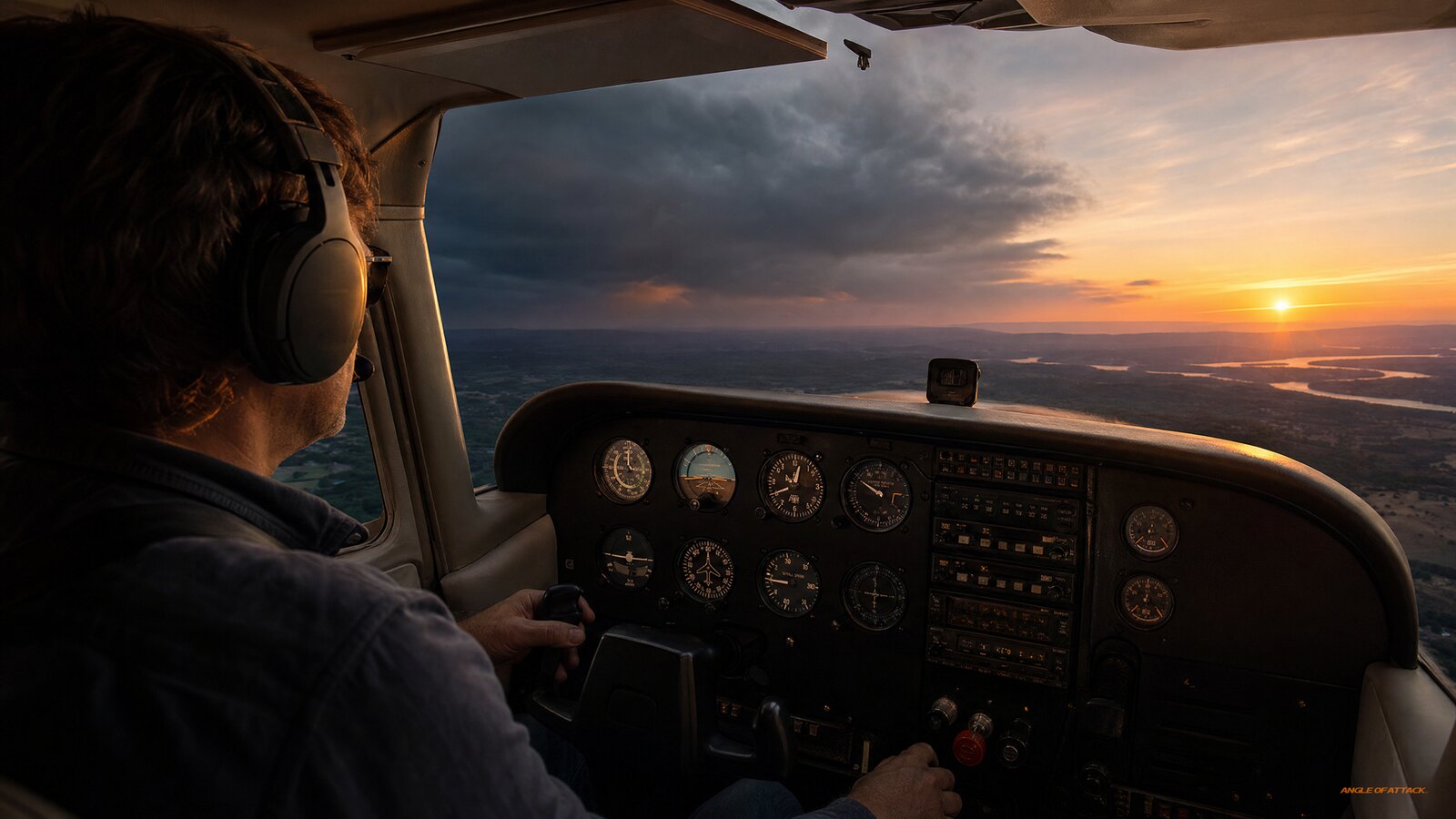
I run aviation education at Angle of Attack — I’ve been in aviation education since 2006 and a CFI since 2017 — and a lot of my own stick time has been up in Alaska, where the flying is honest and the weather is the boss. I remember a trip out to a gravel bar on a river bend in our 172, dropping a buddy off for a fishing weekend. Clear day, light wind, the kind of conditions a sport pilot is built for.
What stuck with me wasn’t the landing — it was the conversation on the way out. My buddy was in his fifties, had always wanted to fly, but was scared stiff of the FAA medical, convinced some old paperwork would disqualify him forever. That fear had kept him grounded for thirty years.
So I walked him through it on the way home: as long as he’d never been denied an FAA medical, he could train as a sport pilot on his driver’s license and be pilot in command of an airplane like the light-sport trainers at our field. His whole posture changed. He started lessons that fall.
That’s the real value of the sport pilot rule. It’s not a watered-down certificate — it’s a legitimate door into aviation for people who’d otherwise never walk through it. The day-VFR limits aren’t a punishment; they keep you flying in exactly the conditions where a new pilot is safest while you build judgment. Respect the limits, train hard, and that certificate will take you to gravel bars and grass strips you’ll remember for the rest of your life.
PLT Study Guide
The FAA knowledge test tags each question with a PLT (Pilot Learning Statement) code. For a sport pilot certificate topic, these are the codes whose official FAA wording actually matches the material in this article — study them this way:
- PLT448 — Recall regulations: privileges / limitations of pilot certificates. This is the core of the whole topic. Know what a sport pilot may do (PIC of an LSA, one passenger, day VFR, expense-sharing) and what they may not do without added training (no IMC, no flying for hire, plus the altitude, airspace, and night caps that lift only with the right endorsements) under 14 CFR § 61.315.
- PLT451 — Recall regulations: ratings issued / experience requirements / limitations. Understand that the sport pilot certificate is issued for a category and class, that it has defined flight-experience minimums (lower than private), and that additional privileges come through endorsements rather than new certificates.
- PLT447 — Recall regulations: privileges / limitations of medical certificates. Know the driver’s-license medical option under 14 CFR § 61.23(c): a valid U.S. driver’s license substitutes for an FAA medical for sport pilot, unless your most recent FAA medical was denied, suspended, or revoked.
- PLT443 — Recall regulations: pilot qualifications / privileges / responsibilities. Know the eligibility requirements to become a sport pilot — minimum age, English-language ability, the required training and tests — and the pilot’s ongoing responsibility to self-certify fitness before every flight.
When you sit the test, read each stem carefully: the FAA loves to mix sport pilot limits with recreational and private limits in the answer choices to see whether you actually know which certificate you’re being asked about.
Frequently Asked Questions
Is a sport pilot certificate the same as a pilot’s license?
Yes — in everyday speech, “pilot’s license” and “pilot certificate” mean the same thing. The FAA issues airman certificates, not licenses. A sport pilot certificate is a genuine FAA certificate that makes you legal pilot in command of a light-sport aircraft, with the specific privileges and limits set out in 14 CFR Part 61 Subpart J.
Can a sport pilot fly at night?
Not by default — but it’s no longer a flat no. Sport pilot privileges start as day VFR under 14 CFR § 61.315, and under the FAA’s newer light-sport rules a sport pilot can earn night privileges through specific added training and a logbook endorsement rather than a new certificate. Instrument flight is still off the table for sport pilots; for that you’d move up to the private certificate and an instrument rating. Confirm the current night-training requirements with your CFI.
Do you need an FAA medical to be a sport pilot?
No. A sport pilot may use a valid U.S. driver’s license instead of an FAA medical certificate under 14 CFR § 61.23(c) — provided your most recent FAA medical was never denied, suspended, or revoked. You self-certify your fitness to fly. If you’ve ever been denied a medical, you must resolve that before exercising sport pilot privileges.
Can a sport pilot carry passengers?
Yes, but only one. Sport pilot privileges allow carrying a single passenger, and you may share operating expenses (fuel, oil, airport fees, and rental) with that passenger on a pro-rata basis. You may not fly for hire or compensation. To carry more than one passenger, you’d need a recreational or private pilot certificate and a suitable aircraft.
What is a light-sport aircraft (LSA)?
A light-sport aircraft is a category the FAA defines in 14 CFR § 1.1 by limits on things like weight, stall speed, engine type, and landing-gear configuration. If an airplane meets those limits, a sport pilot may fly it. The FAA’s MOSAIC rulemaking is widening that definition, with the aircraft-certification changes phasing in through 2026 — so check the current numbers against the regulation.
Can sport pilot hours count toward a private pilot certificate?
Yes. Flight time you log while training for or operating under a sport pilot certificate counts toward the recreational and private pilot certificates. The sport pilot certificate is designed as a stepping stone, so nothing is wasted — you build privileges through additional training and endorsements rather than starting over.
Can a sport pilot fly into a controlled airport?
Not without additional training. By default, sport pilot privileges keep you out of the busier classes of controlled airspace. A flight instructor can provide the required training and a logbook endorsement that authorizes you to operate in that airspace once you’ve demonstrated the necessary skills and knowledge.
How old do you have to be to get a sport pilot certificate?
You can begin training at any age, but the FAA sets minimum ages to solo and to be issued the certificate. For powered airplanes you must be at least 17 to hold the sport pilot certificate (16 for gliders and balloons). You must also be able to read, speak, write, and understand English.
Master every system on your checkride — and on day one.
The Private Pilot Ground School breaks down every FAA subject area in the same plain-English, real-world way you just read — with quizzes, scenarios, and the explanations that finally make it click.
The sport pilot certificate is the FAA’s most accessible path into the cockpit. For the right person, it isn’t a compromise. It’s the smartest first step you can take. Learn the privileges, respect the limits, fly consistently, and let the hours carry you toward whatever’s next.


ON THE SAME TOPIC
IFR vs VFR: The Two Sets of Rules Every Pilot Flies By
IFR vs VFR: The Two Sets of Rules Every Pilot Flies By 19 min read Last updated June 2026 · Chris Palmer The difference between IFR and VFR is which set of rules you fly under. VFR — visual flight rules — lets you navigate by looking outside and staying clear of clouds in good […]
 Read more
ASOS vs AWOS vs ATIS: How to Pull the Right Weather Before You Fly
ASOS vs AWOS vs ATIS: How to Pull the Right Weather Before You Fly 13 min read Last updated June 2026 · Chris Palmer The difference comes down to who is talking and what the broadcast covers. ASOS and AWOS are automated, computer-generated weather observations of the conditions right at the field. ATIS is a […]
Read more 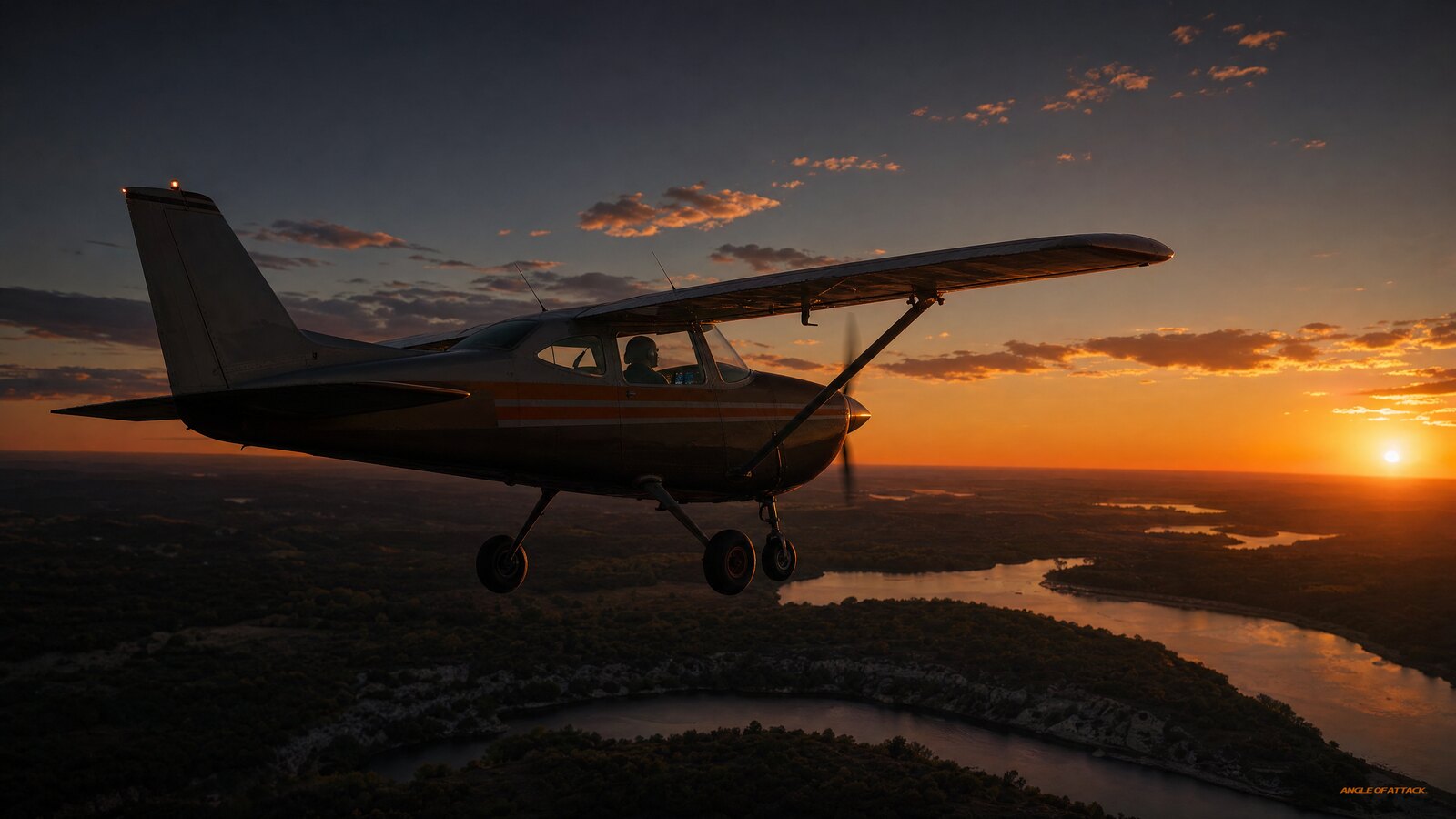
What Is RNAV Navigation? Area Navigation for VFR Pilots
What Is RNAV Navigation? Area Navigation for VFR Pilots 17 min read Last updated June 2026 · Chris Palmer RNAV — Area Navigation — is a method that lets an aircraft fly any desired path within the coverage of ground- or space-based navigation aids, rather than being forced to fly directly to and from stations. […]
Read more 
NDB and ADF Explained: The Oldest Radio Nav System You Still Need to Understand
NDB and ADF Explained: The Oldest Radio Nav System You Still Need to Understand 16 min read Last updated June 2026 · Chris Palmer An NDB (non-directional beacon) is a ground-based radio transmitter that sends a signal in all directions, and an ADF (automatic direction finder) is the cockpit receiver whose needle points straight at […]
Read more 
Stay Connected
Be the very first to get notified when we publish new flying videos, free lessons, and special offers on our courses.
