
To understand the workings of an airplane, it’s essential to be familiar with the various components that allow it to operate efficiently. One such component is the airplane mixture control. This article aims to explain the mixture control in simple terms. Explaining on its purpose and how it adjusts the fuel-air mixture in an aircraft engine. In conclusion, we will explain the importance of the mixture control in maintaining engine performance and efficiency.
The Basics of Internal Combustion Engines
To better understand mixture control, it’s necessary to have a basic understanding of internal combustion engines, specifically those used in aircraft.
An internal combustion engine operates by burning a mixture of fuel and air, creating high-pressure gases that push a piston, which in turn generates mechanical power. This mechanical power is converted to thrust, allowing the aircraft to move forward. The key components of an internal combustion engine include the cylinders, pistons, intake valves, exhaust valves, and spark plugs.

Fuel-Air Mixture
The fuel-air mixture is a critical aspect of internal combustion engines. A proper ratio of fuel and air is required to ensure efficient combustion and prevent damage to the engine. The ideal fuel-to-air ratio is the stoichiometric ratio, which is approximately 14.7 parts air to 1 part fuel by weight. This ratio allows for the most efficient combustion, resulting in the complete burning of the fuel with minimal leftover residue.
The Role of Mixture Control

The mixture control plays a crucial role in adjusting the fuel-air mixture in an airplane’s engine. The mixture control is typically a red-colored knob located in the cockpit, which the pilot can use to manually adjust the fuel-to-air ratio depending on the altitude, temperature, and other environmental conditions.
The primary functions of the mixture control include:
Ensuring proper combustion: As altitude increases, air pressure and density decrease, resulting in a reduction in the amount of oxygen available for combustion. To maintain efficient combustion, the pilot must adjust the mixture control to decrease the amount of fuel entering the engine, thus maintaining the ideal fuel-to-air ratio.
Preventing engine damage: If the fuel-to-air ratio is too rich (excess fuel), it can cause incomplete combustion, leading to a buildup of carbon deposits and potential engine damage. On the other hand, a lean mixture (insufficient fuel) can lead to increased combustion temperatures and engine overheating, potentially causing damage to the cylinders, pistons, and valves. The mixture control allows the pilot to maintain a proper fuel-to-air ratio, reducing the risk of engine damage.
Optimizing engine performance: Adjusting the mixture control allows the pilot to optimize engine performance, maximizing power output while minimizing fuel consumption. A well-tuned engine can improve efficiency, reduce emissions, and increase engine life.
How Mixture Control Works
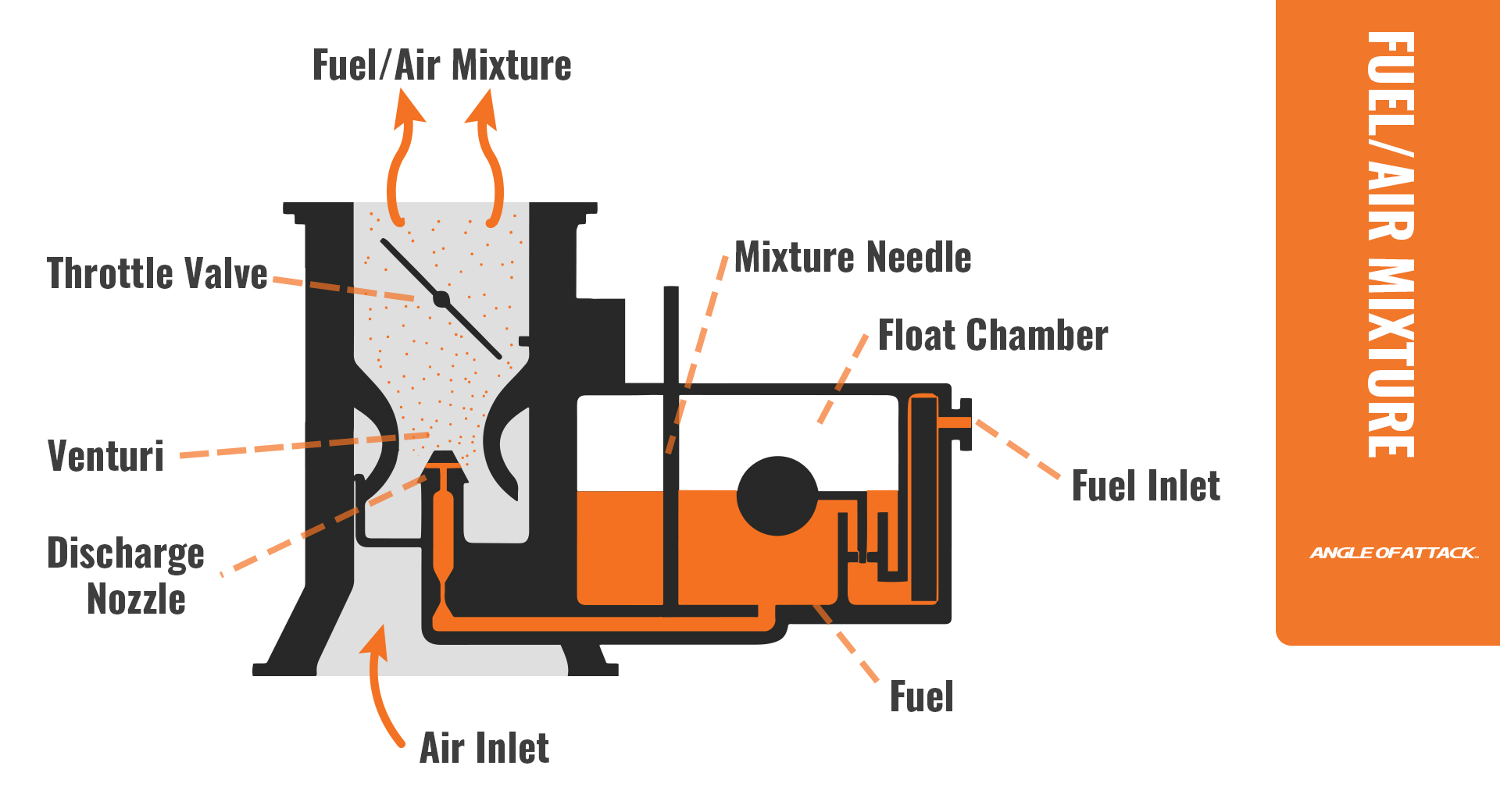
The mixture control operates by adjusting the flow of fuel into the engine’s carburetor or fuel injection system. In carbureted engines, the mixture control adjusts the position of a needle valve within the carburetor. This regulates fuel flow from the fuel bowl into the venturi. In fuel-injected engines, the mixture control alters the pulse width of the fuel injectors, controlling the duration that the injectors are open and the amount of fuel delivered.
When the mixture control is in the “rich” position, it allows more fuel into the engine, creating a fuel-rich mixture. Conversely, when the mixture control is in the “lean” position, it restricts the flow of fuel, resulting in a leaner mixture. Pilots can fine-tune the mixture by adjusting the control, finding the optimal
 Mixture is an important thing to understand, especially if you plan on making aviation a hobby or career. Angle of Attack strives to make the learning process easier. Check us out today!

ON THE SAME TOPIC

IFR vs VFR: The Two Sets of Rules Every Pilot Flies By
IFR vs VFR: The Two Sets of Rules Every Pilot Flies By 19 min read Last updated June 2026 · Chris Palmer The difference between IFR and VFR is which set of rules you fly under. VFR — visual flight rules — lets you navigate by looking outside and staying clear of clouds in good […]
 Read more
ASOS vs AWOS vs ATIS: How to Pull the Right Weather Before You Fly
ASOS vs AWOS vs ATIS: How to Pull the Right Weather Before You Fly 13 min read Last updated June 2026 · Chris Palmer The difference comes down to who is talking and what the broadcast covers. ASOS and AWOS are automated, computer-generated weather observations of the conditions right at the field. ATIS is a […]
Read more 
What Is RNAV Navigation? Area Navigation for VFR Pilots
What Is RNAV Navigation? Area Navigation for VFR Pilots 17 min read Last updated June 2026 · Chris Palmer RNAV — Area Navigation — is a method that lets an aircraft fly any desired path within the coverage of ground- or space-based navigation aids, rather than being forced to fly directly to and from stations. […]
Read more 
NDB and ADF Explained: The Oldest Radio Nav System You Still Need to Understand
NDB and ADF Explained: The Oldest Radio Nav System You Still Need to Understand 16 min read Last updated June 2026 · Chris Palmer An NDB (non-directional beacon) is a ground-based radio transmitter that sends a signal in all directions, and an ADF (automatic direction finder) is the cockpit receiver whose needle points straight at […]
Read more 
Stay Connected
Be the very first to get notified when we publish new flying videos, free lessons, and special offers on our courses.
