How to Get CFI Students: The $0-Budget Marketing Playbook

Marketing yourself as a new CFI isn’t about Facebook ads or business cards — it’s about teaching well enough that your students don’t quit. Every retained student is 60+ hours of revenue and 2 to 3 referrals. Every student who drops out is a leak no amount of acquisition can fill. The CFIs with full calendars aren’t out-marketing the rest. They’re out-retaining them. Here’s how to plug the leak first, then layer the five channels that actually fill a calendar on a $0 budget, plus a 90-day plan that compounds.
- Retention is your biggest marketing lever, not acquisition. A retained Private Pilot student logs 60 to 70 hours with you. That’s $3,600 to $4,200 of revenue at $60/hr, plus 2 to 3 referrals. A student you lose after lesson 3 costs you that same $3,300+ in forfeited revenue plus the referral chain that never starts.
- 80% of student pilots drop out before their certificate (the most replicated figure in flight-training research, originally surfaced by General Aviation News and amplified by SAFE and AOPA). AOPA’s “Flight Training Experience” research found that cost is NOT the top driver of why students pick a CFI — syllabus quality, value (which is more than price), instructor quality, and the personal bond between CFI and student all rank higher.
- Five channels actually work for a $0-budget new CFI: referrals (highest ROI), FBO presence, Google Business Profile, local Instagram, and aviation-ecosystem partnerships. Paid ads, YouTube, and personal-brand stuff can wait.
- 14 CFR 61.193 is silent on advertising. CFIs can advertise instruction freely. Only Part 119/135 restrict commercial operations dressed up as instruction.
- Non-owned aircraft CFI liability insurance (~$1,000 to $1,500/year for $1M coverage depending on tier) is the gate to high-value owner-supplied training. BFRs, transitions, and insurance dual all require it. Get it before you market.
- Realistic timeline: 8 to 12 active students, or a documented pipeline, by Day 90 if you run the plan below. Steady, predictable booking by month 6 to 12.
Walking into your first lesson with a 50-page binder won't help you.
Get my Anti-Binder One-Page Lesson Plan Template free — the lesson plan tool I built for CFI candidates who want to be ready Day 1.
Get the Anti-Binder Template Free
WHAT'S IN THIS GUIDE
- 1Why Most CFI Marketing Advice Is Backwards
- 2The Retention Foundation (This Comes Before Any Marketing)
- 3How Do CFIs Actually Find Students? The 5-Channel Framework
- 4Channel #1: Referrals (The Highest-ROI Channel for a CFI)
- 5Channel #2: Be Present at the Airport
- 6Channel #3: Your Google Business Profile (Free, Underrated)
- 7Channel #4: Social Media (Realistically)
- 8Channel #5: Partnerships With the Local Aviation Network
- 9The Insurance & Setup You Need Before You Market
- 10The CFI Personal-Brand Question
- 11Your First 90 Days: The Concrete Plan
- 12Pricing Yourself So Students Actually Book
- 13CFI Marketing FAQs
Why Most CFI Marketing Advice Is Backwards
Almost every “how to get CFI students” article on the first page of Google was written by a marketing agency selling services to flight schools. The advice rhymes: build a website, post on Instagram, run some ads, hand out cards, hire us. None of it is wrong. All of it misses the part that actually matters.
The unsexy truth is this: your single biggest marketing lever as a new CFI is teaching well enough that your students don’t quit. 80% of student pilots drop out before they get their certificate. That figure was originally surfaced by General Aviation News and has been replicated across AOPA’s Flight Training Student Retention Initiative and SAFE for over a decade. SAFE’s framing is the one I keep coming back to. Technical instruction is fine across the industry. What’s broken is the soft-skills layer, the customer-service half of teaching that decides whether a student comes back for lesson 4.
I had the moment myself early on. I had a student I thought was going great. Solid airwork, decent radio skills, showed up on time. After lesson 3, he stopped scheduling. I called. He’d “decided to take a break.” A month later I learned he’d booked with another CFI across the field and finished his Private. I went back through my notes and realized the problem wasn’t the flying. He’d asked me a question after lesson 2 about realistic cost-to-completion, and I’d given him a vague answer because I didn’t actually know. He read that as me not caring. He found a CFI who did. I lost 55 hours of revenue and a referral chain that probably went 3 deep, and I learned the lesson the expensive way. Every time you lose a student, you lose the next 60 hours plus the friends they would have sent you.
Here’s the part that should change how you think about this. AOPA’s “Flight Training Experience” research found that cost is not the top driver of where students choose to train. Syllabus quality, value (which AOPA explicitly distinguishes from price), instructor quality, customer service, and the personal bond between CFI and student all rank above price. Translation: students don’t churn because you’re too expensive. They churn because they don’t trust that you’re invested in them.
So before we get to channels and scripts, here’s the math you need to internalize. The numbers come from industry-cited rates ($45 to $85/hr for basic CFI work, per ZipRecruiter, Salary.com, Indeed, and the going POA consensus) and a typical Private Pilot completion of 60 to 70 dual hours.
| Student outcome | Hours logged with you | Revenue at $60/hr | Referrals expected |
|---|---|---|---|
| Drops out after lesson 3 (5 hours) | 5 | $300 | 0. Disgruntled students don’t refer |
| Stays through solo, then drops out | ~20 hours | $1,200 | 0 to 1 (lukewarm) |
| Completes Private Pilot certificate | 60 to 70 hours | $3,600 to $4,200 | 2 to 3 over the next 12 months |
| Continues to Instrument with you | +35 to 40 hours | additional $2,100 to $2,400 | +1 to 2 more |
| Completes Commercial with you | +90 hours | additional $5,400 | +2 to 3 more |
One student you take from zero through Private + Instrument + Commercial is roughly $11,000 to $12,000 in direct CFI revenue plus 5 to 8 referrals over two to three years. Each of those referrals carries the same potential. A booked calendar is what happens when you compound four or five retained students over twelve months. It’s mathematically impossible to out-acquire a leaky retention bucket.
Get the teaching right first. Then everything else gets easier.
The Retention Foundation (This Comes Before Any Marketing)

Before you ever post a reel or set up a Google Business Profile, fix the leak. Three things make a student drop out, and all three are inside your control.
Confused. They don’t understand what just happened in the airplane. You used five acronyms in a row, didn’t explain the why, and they spent the last 20 minutes pretending to follow. They go home, can’t tell their spouse what they learned, and the next lesson feels heavier. Two more like that and they’re gone.
Bored. They’re not flying. They’re watching you fly. Or they’re sitting through a 40-minute pre-flight that’s all checklist recitation, no teaching. Or you’re flying the same pattern at the same altitude every week. Boredom in flight training is rarer than confusion, but when it shows up it kills retention quietly. The student doesn’t complain, they just stop scheduling.
Scared. Real fear. Not the healthy what-if-we-stall awareness, but the kind where you pulled power without warning, or flew through turbulence you should have scrubbed for, or yelled at them on the radio. Fear is the fastest student-killer in the book. One scared lesson can take three good ones to recover from. Two scared lessons and they’re done.
The antidote to all three is the same thing. I call it finding the simpleness. Every lesson has one durable idea. Maybe it’s “the airplane wants to fly straight if you let it.” Maybe it’s “the rudder makes the airplane honest.” Maybe it’s “the picture on downwind sets the picture on final.” You teach to that one idea, you connect everything else back to it, and at the end of the lesson the student can say what it was without prompting. That’s a Day-1 Ready instructor. That’s the kind of teaching AOPA was pointing at when they said the personal bond between CFI and student outranks cost, because finding the simpleness is respect for the student’s time and intelligence. They feel it.
This is exactly the gap I built TotalCFI to close. Lesson 4.4 (Starting Strong as a New CFI) and Lesson 5.2 (Career Readiness and What Comes Next) are the two that go deepest on the retention-as-marketing argument, because the moment you internalize that teaching well is marketing, every other tactic in this article gets 3x easier. If you want the full playbook for being Day-1 ready, the kind of teaching that earns retention, that’s where it lives.
Get the leak plugged. Then we’ll talk about the channels.
How Do CFIs Actually Find Students? The 5-Channel Framework
There are a hundred things you could do to market yourself as a new CFI. Five of them actually move the needle on a $0 budget. Here they are, ranked by ROI for a CFI just starting out.
| Rank | Channel | Setup time | First-result time | $0-budget? | Notes |
|---|---|---|---|---|---|
| 1 | Referrals from current/completed students | 0 (the moment you have a student) | 30 to 90 days after first solo / checkride | Yes | Highest conversion of any channel — anecdotally in the 50%+ range vs. 5-10% cold. The ASK is the part most CFIs skip. |
| 2 | FBO and airport presence | Ongoing (be there) | 30 to 60 days | Yes (the lunch counter is free) | The hangar-flying network is the strongest local marketing apparatus in aviation. CFIs, DPEs, A&Ps, owners. |
| 3 | Google Business Profile | 30 min one-time | 30 to 90 days for local-pack ranking | Yes | Massively underused by independent CFIs. Flight schools with optimized GBPs see 7x more clicks than incomplete ones. |
| 4 | Instagram (local-focused) | 1 hour/week ongoing | 90 to 120 days | Yes | One reel per week. Student wins, behind-the-scenes, “today’s lesson.” Use local hashtags. NOT a YouTube strategy. |
| 5 | Aviation-ecosystem partnerships | Variable | 60 to 180 days | Yes | Flight schools (overflow), aircraft owner clubs (BFRs/transitions), type clubs, university aviation programs. |
A note on what’s not on this list: paid Google or Facebook ads, a full YouTube channel, podcasting, paid lead-gen services. They can all work eventually. For a brand-new CFI with no budget and no portfolio yet, they’re all on the wrong side of the effort/return curve. The five above are where your hours go for the first 12 months.
And one more thing. I called retention “the leak you can’t out-pump” earlier. If retention is channel zero, then the five above are channels one through five. Run the channels without the retention foundation and you’ve built a marketing engine that pours customers into a leaky bucket. Run retention without the channels and you’ve built a great hidden CFI no one can find. Both, in order. That’s the whole game.
Channel #1: Referrals (The Highest-ROI Channel for a CFI)

In my experience, aviation referrals close at roughly 5 to 10 times the rate of cold leads — anecdotally in the 50%+ range vs. 5 to 10% cold. Flight training is high-trust by nature, which is why the gap is so wide. For a $0-budget new CFI, referrals are the only channel where the math is unfair in your favor.
Two reasons aviation referrals close so hard. First, flight training is high-trust by nature. You’re going to be in the airplane with this person. Your life is in their hands and theirs is in yours, and the friend-vouches-for-CFI conversation does the trust work for you before the student ever calls. Second, the local pilot community is small. People talk. A CFI who’s known as the one who “actually teaches” gets named in conversations the CFI never sees. That’s referral momentum, and it compounds.
Here’s the catch. Almost no new CFIs ever ask for the referral. I asked a roomful of new CFIs once how many had explicitly asked their last completed-rating student for a referral. Two hands out of fifteen. AOPA’s old “CFI as a Salesperson” piece said it best: “You must ask for the next flight, or it won’t happen.” Same goes for the referral. The student isn’t going to read your mind.
The script is short, low-pressure, and reciprocal. Use it after a successful lesson, not in a high-stress moment, just casually:
“Hey [Student], I love working with you, and one of the most rewarding parts of this job is meeting people through students I already know. If you’ve got a friend, a coworker, or anyone in your life who’s ever talked about wanting to fly, even casually, would you mind passing my number along? No pressure, just if it comes up.”
That’s it. Specific, complimentary, no hard ask. You’d be amazed how many people respond with “Actually, my brother-in-law has been talking about it for years.”
The other referral move that doesn’t get talked about enough: the completed-rating moment. When your student passes their checkride, that’s the highest-emotion event of their entire training. They’re elated. They want to tell people. Be present at the airport when they get back from the checkride. Take a photo with the airplane. Send them a quick text the next day saying how proud you are and how much you enjoyed working with them. Then, only then, when the high is at peak, ask. “If you know anyone else thinking about it, this is when I’d love to hear about them. Your win opens up time on my schedule.” That ask, framed that way, in that moment, converts at a rate I’ve never seen any other ask match.
And don’t forget the flight-school referral chain. Your students have friends. Their friends have friends. If you’re at a flight school, the CFI who treats every student well becomes the one the front desk recommends when a new walk-in asks “who’s the best instructor here?” That recommendation is worth more than any reel you’ll ever post.
Channel #2: Be Present at the Airport

The single most reliable way I know to find students as a new CFI is to be at the airport when you’re not flying. The hangar-flying network is the strongest local marketing apparatus in aviation, and it costs you nothing but time.
Here’s what “being present” actually means. Eat lunch at the FBO once or twice a week. Stop by on a Saturday morning even if you’re not booked. Introduce yourself to every CFI on the field (yes, including the ones who teach what you teach, because they get overflow), every A&P in the maintenance hangar, the IA who does the annuals, the airport manager, every DPE based at your home field, the FAASTeam reps. These are the people who get asked “do you know a CFI who…?” and you want to be the name they say.
Then there are the network nodes that matter even more than the daily airport crowd:
- EAA chapter meetings. Most chapters meet monthly. Show up, don’t pitch, just be the new CFI in the room a few times. People who fly EAA-style aircraft want CFIs who get the culture. Tailwheel, taildragger transition, BFRs in older airplanes, all high-margin work that gets thrown around in EAA hangars all the time.
- Local IMC and VMC clubs. These are the people doing serious recurrent training. They book BFRs, they refer students, and they take their training seriously. Show up to a few meetings, sit quietly, say hello to the host afterward.
- AOPA Air Safety Institute and FAASTeam seminars. Every safety seminar at your home field is a room of 30 to 300 active pilots. The presenter is often a DPE or designee. You introduce yourself once and you’ve cleanly opened up the entire room.
- Local pilot Facebook groups. Most regional aviation communities have one. Lurk first, contribute helpful answers, never spam. People notice the CFI who answers questions clearly without being smug about it.
The bulletin-board card still works in 2026. I don’t know why people keep saying it doesn’t. Print a 3x5 index card that looks like this:
[Your Name] — Certificated Flight Instructor
[Ratings: e.g., CFI, CFII, MEI, Tailwheel]
Primary, Instrument, BFRs, Insurance Training
[Home airport]
[Phone] | [Email]
[Optional: "First flight review on me — let's meet for coffee."]
Pin it on the FBO bulletin board. Then walk back inside and introduce yourself to the front desk so the card is associated with a face. The card alone gets ignored. The card-plus-face gets calls.
The point of all this is simple. You can’t out-market the CFI who’s in the room when the conversation happens. So be in the room.
Channel #3: Your Google Business Profile (Free, Underrated)

This is the cleanest tactical wedge in the whole article. Setting up a Google Business Profile takes 30 minutes, costs nothing, and almost no independent CFIs do it. Right Rudder Marketing’s data on flight schools puts it bluntly. The schools with complete, optimized GBPs get 7x more clicks than the ones with incomplete profiles. The same dynamic plays out for individual CFIs, except you’re competing against zero other CFIs in your market who bothered.
Google’s official guidance on local ranking is public and short. Three factors decide whether you show up in the local pack: relevance (does your profile clearly say what you do), distance (how close are you to the searcher), and prominence (reviews, photos, complete data, posts). You can’t pay for ranking. You can absolutely earn it.
Here’s the 30-minute setup, top to bottom:
- Go to
business.google.comand click “Manage now.” - Business name:
[Your Name] — Flight Instructor(or your DBA if you have one). - Business category: “Flying School” or “Flight Instructor.” Use both if available.
- Service area: 50-mile radius from your home airport.
- Address: your home airport (with a tenant suite or hangar number if you have one), or set it as a service-area-only profile.
- Hours: when you’re actually available. Include weekends if you fly weekends.
- Photos: cockpit POV, you teaching (with permission), the airplane you fly most, post-checkride student photos (with permission). Eight to ten photos minimum.
- Services: list ratings explicitly. “Private Pilot Instruction,” “Instrument Rating Instruction,” “Tailwheel Endorsement,” “Flight Review,” “Insurance-Required Dual,” and so on.
- Description: 750 characters. Lead with the one thing you’re known for. Mention your home airport explicitly. Don’t keyword-stuff.
- Post weekly. A student win, a teaching note, a flight photo. Google rewards active profiles.
- Ask every completed-rating student for a Google review. Send them the direct review link from your GBP dashboard. Make it easy. Most will say yes if you ask within 48 hours of their checkride.
Search “flight instructor near me” from your phone six weeks after you set this up. If you’ve added photos, posts, and a few reviews, you’ll be in the local pack. That’s where the next student is going to find you.
Channel #4: Social Media (Realistically)

A note on YouTube before we get into Instagram. I run a 191K-subscriber YouTube channel. I built it from zero. It pays the bills. And I would not tell a brand-new CFI to start a YouTube channel as their primary marketing strategy. YouTube is a brand-building lever that pays off in months 12 to 18 if you’re consistent. For a new CFI trying to fill a calendar in 90 days, the math doesn’t work. You’ll burn through too much time and energy for too little local-student return.
Instagram is different. Instagram for a CFI is local. The student who sees your reel on Instagram is already in your market because they follow other local pilots and aviation tags in your area. One reel a week, posted consistently for a few months, and you become “the CFI in [your town] who actually teaches.” That recognition turns into DMs. DMs turn into discovery flights. Discovery flights turn into students.
For full transparency, my first Instagram post was bad. I wrote a long caption about Bernoulli’s principle and posted a stock photo of a wing. It got eleven likes. I’d ignored everything I now tell new CFIs about how to actually use the platform. The first Instagram post that worked for me was a 30-second video of a student doing their first solo. No caption gymnastics, no hashtag spam, just the moment. That’s the kind of thing that earns a follow from another local pilot. And another local pilot is exactly the person you want following you.
Three content pillars work for a CFI account, run weekly:
- Lessons. A teaching point from today’s flight. “Most students think the round-out is the hardest part. It’s actually the picture you build on downwind.” 30 to 60 seconds. Talking head or B-roll over a panel shot.
- Student wins. First solo, first cross-country, checkride pass. With permission, with a face if they’re comfortable, blurred or cropped if not. The win itself is the content.
- Behind-the-scenes. The airplane on a quiet ramp at sunrise. A pre-flight inspection time-lapse. A quick walk-around in the snow. The texture of the flying life is its own pull.
Here’s a copy-paste structure for the weekly post:
Caption structure (3 paragraphs): 1. The hook: a specific moment from today’s lesson. “First solo for [name redacted], wind 8 gusting 14, perfectly handled.” 2. The teaching point: “Most students think the round-out is the hardest part. It’s actually the picture you build on downwind.” 3. The CTA: “Reach out if you’re learning, or thinking about it. I’m at [airport] and have openings for [type of training].” Hashtags: 5 to 8, mix of broad (#studentpilot #flighttraining #cfi) and local (#[city]aviation #[state]pilots #[airport-identifier]).
TikTok is hit or miss for local CFI booking. The algorithm doesn’t reward locality the way Instagram does, so you can go viral with a million views and book zero students because none of them live within 100 miles of you. If you enjoy making short-form video, double-post your Instagram reels to TikTok. Don’t build a TikTok-first strategy.
You’re not building an audience. You’re being findable.
Channel #5: Partnerships With the Local Aviation Network

Once the first four channels are running, partnerships become the multiplier. These take longer to develop but produce higher-value students per touch.
Flight schools you don’t work for. Every flight school has overflow. They get a call asking about tailwheel, mountain training, or insurance dual on a Bonanza, and they don’t carry that rating. Where do they send the caller? To the CFI they trust. Be that CFI for two or three local schools. Walk in, introduce yourself, hand them your card, tell them what you do that they don’t. No pitch, just availability.
Aircraft owner clubs. Cirrus owners need their factory-required transition training. Bonanza pilots need recurrent. Mooney pilots need insurance-required dual. These are owner-supplied airplanes, which is why your non-owned CFI insurance matters (see the next section). Owner-club gigs pay $100 to $150/hour and book in clusters. Find your local Cirrus Owners and Pilots Association chapter, the American Bonanza Society regional reps, the Mooney type-club rep. Show up to a fly-in or two.
University aviation programs. Most have more students than CFIs to handle them. Overflow students who need instruction outside the program’s hours, or who need a specific endorsement the program doesn’t carry, end up with local independent CFIs. Reach out to the chief flight instructor at your nearest collegiate aviation program. One conversation can yield 3 to 5 referrals a semester.
Type clubs and pilot organizations. Cirrus, Cessna 400, Bonanza, Mooney, Cessna Pilot Association, AOPA local activities, Civil Air Patrol. The pattern is the same: be present, build relationships, accept the slow burn. A type-club referral six months from now is worth a hundred Instagram likes today.
The compounding effect of partnerships is what makes them worth the patience. Each connection you build sends students for years, not weeks.
The Insurance & Setup You Need Before You Market

Before you advertise to a single student, get your setup right. Two things matter here, and one of them is non-negotiable.
Non-owned aircraft CFI liability insurance. If you’re going to instruct independently, especially in airplanes you don’t own, you need non-owned aircraft liability coverage. Industry standard is ~$1M of coverage for around $1,000 to $1,500 per year depending on coverage tier, through AOPA Insurance Services, Avemco, or the SAFE program. It’s the gate to high-value owner-supplied training. No aircraft owner with their own insurance will let you instruct in their plane without seeing your CFI binder. Without it, you’re locked out of BFRs in owned aircraft, transition training, insurance-required dual on high-performance singles, and most owner-club work. We go deeper on coverage choices in the CFI insurance guide, but for marketing purposes, treat insurance as part of your setup, not a separate compliance project.
The legal setup. You don’t need an LLC to start instructing independently. A sole proprietorship works fine for most new CFIs. Get an EIN from the IRS (free, takes 10 minutes online), open a business checking account so you’re not commingling, and check your state for any local business-license requirement. Most states don’t require one for a CFI operating under their own name. Talk to a CPA before tax season hits. The deductions for an independent CFI (mileage, headset, charts, insurance, continuing education) add up quickly.
The advertising question. New CFIs ask me all the time whether they’re allowed to advertise. The short answer is yes. 14 CFR 61.193, “Flight instructor privileges,” is silent on advertising. It lists what you may endorse and what training you may give, period. There’s nothing in the FARs that prohibits a CFI from posting on Instagram, putting up a Google Business Profile, running a Facebook page, or printing business cards. The only restriction in the regs that touches advertising is over in Part 119 and Part 135. Those are the certificates required for commercial passenger or cargo operations. As a CFI you can advertise instruction freely. What you cannot do is advertise charter flights dressed up as instruction (taking three friends “for instruction” to a destination they wanted to visit anyway). That’s a Part 119 problem, and it’s not what we’re talking about here. Advertise your instruction. The reg is on your side.
The CFI Personal-Brand Question

Should you brand yourself as the “Cirrus CFI” or the “tailwheel CFI” or just “local CFI”? It depends on the math, and the math is more interesting than the marketing-bro version of this question.
A general CFI in a typical metro market charges $50 to $80/hr and books primarily Private and Instrument students. Steady work, predictable rates, lots of competition. Calendar fills slowly with broad appeal.
A specialist CFI charges differently. Specialty rates run $150 to $300/hr for things like insurance-required mountain training, glass-panel transitions in high-performance singles, tailwheel endorsements in scarce aircraft, or Cirrus factory-style training. The students are fewer. The hourly rate is roughly triple. The competition is roughly zero in most markets.
When does niching help? When the specialty has real demand in your area and very few CFIs to serve it. Mountain training in Colorado. Tailwheel in any market with backcountry flying. Glass-panel transitions anywhere. Insurance dual on Bonanzas, Mooneys, Cirruses. If you can credibly do one of these (meaning you have the experience, the endorsements, the comfort level), and you can be the obvious answer to “who do I call for this?”, niche.
When does niching limit? When you’re brand new and don’t have the experience yet to back the niche, or when the specialty is so narrow that you don’t have enough students to fill the calendar. A new CFI claiming to be a “tailwheel specialist” with 50 hours of tailwheel time will get found out fast.
The middle path most new CFIs should take: brand yourself as the local CFI who teaches well, build the general practice for your first 12 to 18 months, then layer a specialty on top once you have the experience. The “I’m just a great local CFI” brand is more powerful than people think, because most local CFIs aren’t great. Being known as the one who actually teaches is its own niche.
Your First 90 Days: The Concrete Plan

Here’s how it all fits together. Nineteen steps over three months. Run them in order. Target by Day 90: 8 to 12 active students, or a documented pipeline showing months 4 to 6 will hit that number.
Days 1-30: Foundation
- Get non-owned CFI liability insurance. $1M coverage, ~$1,000 to $1,500 per year through AOPA Insurance Services, Avemco, or the SAFE program.
- Print 100 business cards. Use the format from the FBO bulletin-board card script above.
- Set up your Google Business Profile per the 30-minute checklist in Channel #3. Add 8 to 10 photos.
- Take five portfolio photos: you in the right seat, you on the ramp with the airplane, you teaching (with student permission), a panel close-up, a horizon shot from the cockpit.
- Build a one-page website. Carrd, Squarespace, WordPress, whatever’s easiest. Free or $12/mo. Domain:
[yourname]cfi.comor similar. Link your GBP, your phone, your email, and a Calendly. - Introduce yourself in person to: the airport manager, FBO front desk staff, two or three local CFIs, the IA on the field, every DPE based at your airport.
- List yourself in AOPA’s CFI database (free for members) and EAA’s instructor finder.
Days 31-60: Marketing Launch
- Post one Instagram reel or carousel per week using the Channel #4 caption template. Five posts over the month.
- Attend one local aviation event: an EAA chapter meeting, an IMC club, or a FAASTeam seminar.
- Drop a 3x5 card on the FBO bulletin board AND introduce yourself to the FBO staff so the card is associated with a face.
- Ask 2 to 3 connections (other CFIs, A&P, an owner you know) explicitly for a referral if they hear of anyone needing instruction.
- Set up a Calendly or scheduling page linked from your GBP and website. Make booking the next step a one-click action.
- Run one free “office hours” coffee at the FBO. Two hours on a Saturday morning, anyone can drop by and ask about training. Print a sign.
Days 61-90: Compounding
- Run your first referral campaign with completed students using the Channel #1 script.
- Ask every completed-rating student for a Google review on your GBP. Send them the direct link.
- Identify one specialty to start building toward: tailwheel, instrument, mountain, transition, owner-flown. Take the steps to add the rating or experience.
- Post 4 to 6 more Instagram pieces. Aim for at least one with a real student win (with permission).
- Reach out to one flight school you don’t work with and offer overflow services for ratings they don’t carry.
- Target by Day 90: 8 to 12 active students or recurring training relationships, OR a documented pipeline showing months 4 to 6 will hit that number.
I had a TotalCFI candidate run this exact 90-day plan last fall, anonymized as “Mark” in the course community. Mark got his initial CFI in early August at a small Class D field with one flight school, set up his GBP that first weekend, and spent a month showing up at the FBO three days a week even when he wasn’t booked. By Day 60 he had three discovery flights from the GBP, two referrals from the school’s overflow, and one BFR from a Bonanza owner who saw his bulletin-board card. By Day 90 he was at ten active students. He never ran a single ad. The plan worked because he ran the plan, and because the students he booked early stuck with him, which means they referred. Retention compounding into bookings. Exactly the math at the top of this article.
Pricing Yourself So Students Actually Book

Pricing gets its own deep dive in the new CFI pricing guide. What to charge by region, how to package, how to raise rates without losing students. For a new CFI deciding what number to put on the website, here’s the quick rule:
The independent CFI rate landscape in 2026 looks roughly like this. $45 to $85/hr for basic CFI work, $50 to $85/hr for CFII/MEI, $150 to $300/hr for specialty or insurance-required training. School-employed CFIs run lower because the school takes a cut. Typical employed CFI rate is around $28.85/hr per Indeed’s May 2026 data, with annual pay averaging $94,620 according to ZipRecruiter (counting all hours billed including non-flight time).
The pricing trap to avoid: too cheap signals “amateur”; too expensive without proof signals “ripoff.” A $30/hour CFI in a market where the going rate is $65/hour broadcasts desperation, attracts price-shoppers (who drop out the most), and undercuts the local market. A $90/hour brand-new CFI in the same market without a portfolio gets passed over. The middle, typically the local going rate or 5% to 10% above it once you have a few completions, is where you want to land.
For your first couple of students, consider a “founding student rate” 10% to 15% below your standard rate. Be explicit about it. “I’m just starting out and want to build my reputation, so I’m taking my first three students at $55/hour. After that my rate goes to $65.” Students respect transparency. The lower rate gives you a closing edge for early students. The bump is built in.
CFI Marketing FAQs
How do CFIs find students?
The five highest-ROI channels for a new CFI on a $0 budget are referrals from current and completed students, FBO and airport presence, a Google Business Profile, local-focused Instagram, and aviation community partnerships. Referrals close at 5 to 10 times the rate of cold leads (anecdotally 50%+ vs 5 to 10% cold), so they’re channel #1 by a wide margin, but you only get referrals when you retain students. Retention is channel zero.
How long does it take to fill a CFI calendar?
Realistic timeline if you run the 90-day plan above: 8 to 12 active students or a documented pipeline by Day 90. Steady, predictable booking by month 6 to 12. The biggest variable is retention. CFIs who keep their early students compound into a full calendar much faster than CFIs who churn through students.
Do I need to be on Instagram to be a CFI?
No. But it’s free, it’s local, and one reel per week for 90 days makes you findable to other local pilots. If you’re philosophically opposed to social media, double down on the four other channels. Referrals, FBO presence, Google Business Profile, and partnerships will fill a calendar without it.
Should I run paid ads for my CFI business?
Not until you’ve maxed the five free channels. A new CFI without a portfolio, reviews, or a tracked conversion path will burn $500 to $2,000 on Google or Facebook ads with a poor return. Once you have 5+ completed students, a working GBP with reviews, and a clear conversion funnel, paid ads can layer on top. For the first 12 months they’re rarely worth it.
Can a CFI advertise their services?
Yes. 14 CFR 61.193 is silent on advertising. It lists CFI privileges and authorized endorsements but says nothing restricting how you promote instruction. You can run a Google Business Profile, post on Instagram, hand out cards, take out Yellow Pages ads. Where you cannot go: advertising charter flights as “instruction,” which is a Part 119/135 violation. Real instruction, advertised honestly, is fine.
Do flight instructors need insurance?
Yes, practically speaking. Independent CFIs not covered by a flight school’s policy need non-owned aircraft CFI liability insurance, typically $1M of coverage for around $1,000 to $1,500 per year through AOPA Insurance Services, Avemco, or the SAFE program. Without it, no aircraft owner will let you instruct in their plane, which eliminates the entire owner-supplied-aircraft revenue category (BFRs, transitions, insurance dual). See the CFI insurance guide for coverage choices and how to get bound.
How much do independent CFIs make?
Independent CFI rates run $45 to $85/hr for basic instruction, $50 to $85/hr for CFII/MEI work, and $150 to $300/hr for specialty training (insurance-required mountain, tailwheel, high-performance transitions). Annual income depends on hours flown. A typical full-time independent CFI charging $60/hr and flying 50 to 70 hours a month nets $36,000 to $50,000 in CFI revenue. Specialists in high-demand markets can clear $100,000+. Compare against employed-CFI compensation in the CFI salary breakdown.
Should I be an independent CFI or work for a flight school?
Different math, different lifestyle. Schools feed you students but take a cut and constrain your schedule. Independents earn higher per-hour rates but carry their own marketing and insurance burden. Most new CFIs do best starting at a school for the first 12 to 18 months, building reputation and student count, then transitioning independent. The full breakdown is in the independent CFI vs. flight school comparison.
How do I get my first CFI job?
Most new CFIs start at the flight school where they trained, or at a regional flight school within commuting distance of their home airport. Network during your CFI training, apply directly, lean on your training CFIs for introductions. The walkthrough is in how to land your first CFI job.
If the CFI checkride is keeping you up at night, you're prepping for the wrong thing.
TotalCFI teaches you to walk into the oral as a teacher, not a test-taker — the reframe most candidates only figure out after they've already failed once.
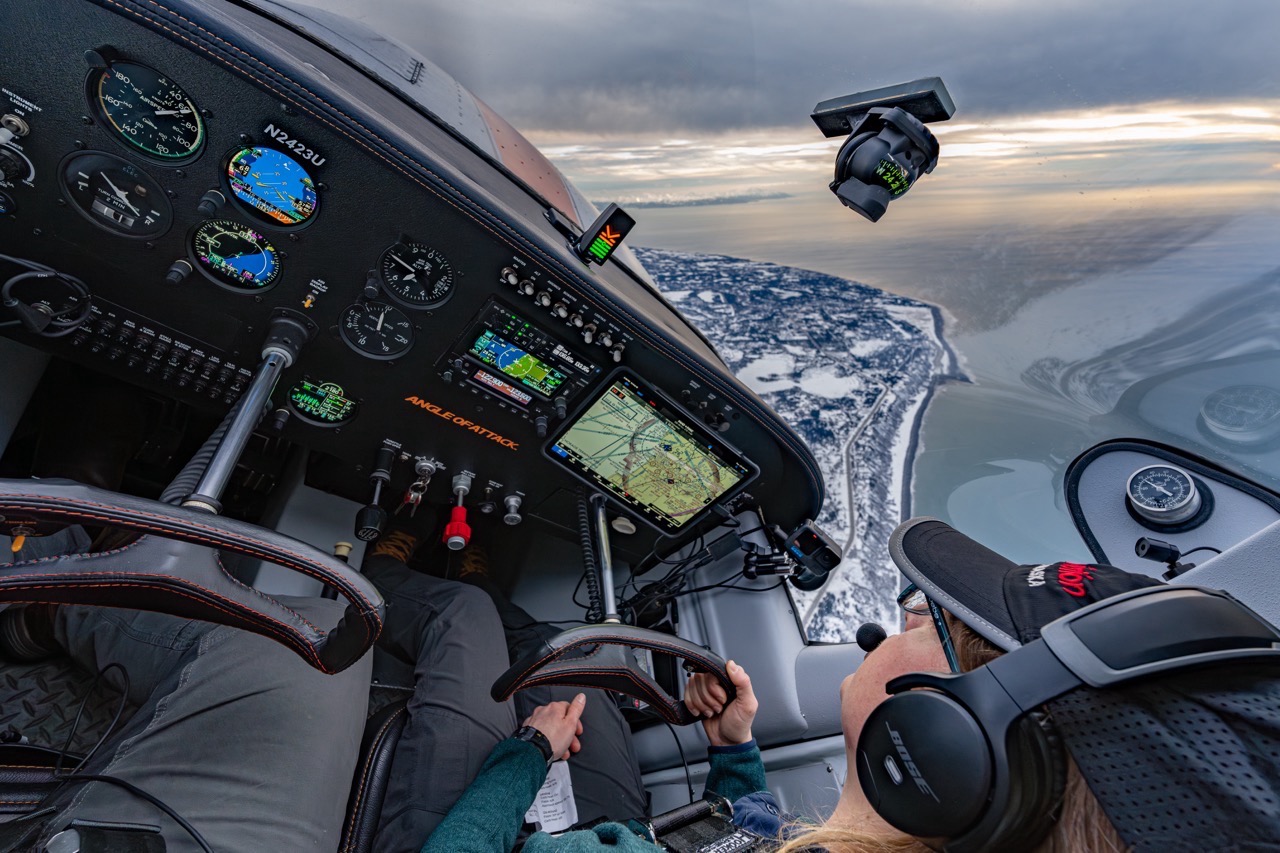
Marketing as a new CFI is mostly the absence of two things: the absence of a leaky retention bucket, and the absence of being invisible. Plug the leak by teaching simply, finding the one durable idea in every lesson, and treating every student like the human they are instead of the checkbox you need to clear. Then become findable. Show up at the airport, set up the Google Business Profile, post one reel a week, ask for the referral. The CFIs with full calendars aren't doing anything fancier than that. They just do it consistently for 90 days, and then they keep doing it. Your students will know if you actually care. So will every CFI, A&P, and DPE on your home field. Be the one who teaches well, ask for the next student when the rating gets signed, and the calendar fills the way it's supposed to: one retained student at a time.