From CFI to Airlines: How Long to Hit 1,500 Hours (And the Strategy That Cuts a Year Off the Path)
Most working CFIs hit 1,500 hours in 18 to 24 months. The fast lane is 12. The slow lane is 30 or more. Student retention separates them — not luck, not location. Here’s the real math, the four R-ATP paths under 14 CFR 61.160, what 2026 regional first officers actually earn, and the one variable most CFIs ignore until it’s already cost them six months.
I’m Chris Palmer — two-time Master Aviation Educator, Gold Seal CFI, founder of Angle of Attack. Twenty years in aviation education taught me one thing about building hours as a CFI: the instructors who get to the airlines first are the ones who keep the students they have. Not the ones who fly more per week.
- The 1,500-hour rule lives in 14 CFR 61.159 — and the headline number hides the sub-mins: 500 hrs cross-country, 100 night, 75 instrument, 250 PIC, 50 in class of airplane. A CFI with 1,500 hours of day-VFR dual-given is still not ATP-eligible.
- R-ATP has four paths under 14 CFR 61.160: 750 hours (military), 1,000 hours (Bachelor’s in aviation from an FAA-authorized institution), 1,250 hours (Associate’s), 1,500 hours (standard). The unrestricted ATP minimum age sits at 23 under 14 CFR 61.153; R-ATP holders can be 21.
- 2026 regional first-year FO total comp is $91K to $115K across SkyWest, Envoy, PSA, Republic, Endeavor, and the rest. Six figures is the floor at most carriers now.
- Industry observers project roughly 8,000 airline pilot hires in 2026 — down from the 2022-2023 peak of 12,000+, up from the 2024-2025 dip. Healthy, not desperate.
- At 60 hrs/month you hit 1,500 in 21 months. At 80, 15.5 months. At 100, 12.5 months. The biggest lever is student retention — bigger than hours per week. The national 80% student dropout rate (AOPA) shows up in your logbook before it shows up anywhere else.
Walking into your first lesson with a 50-page binder won't help you.
Get my Anti-Binder One-Page Lesson Plan Template free — the lesson plan tool I built for CFI candidates who want to be ready Day 1.
Get the Anti-Binder Template Free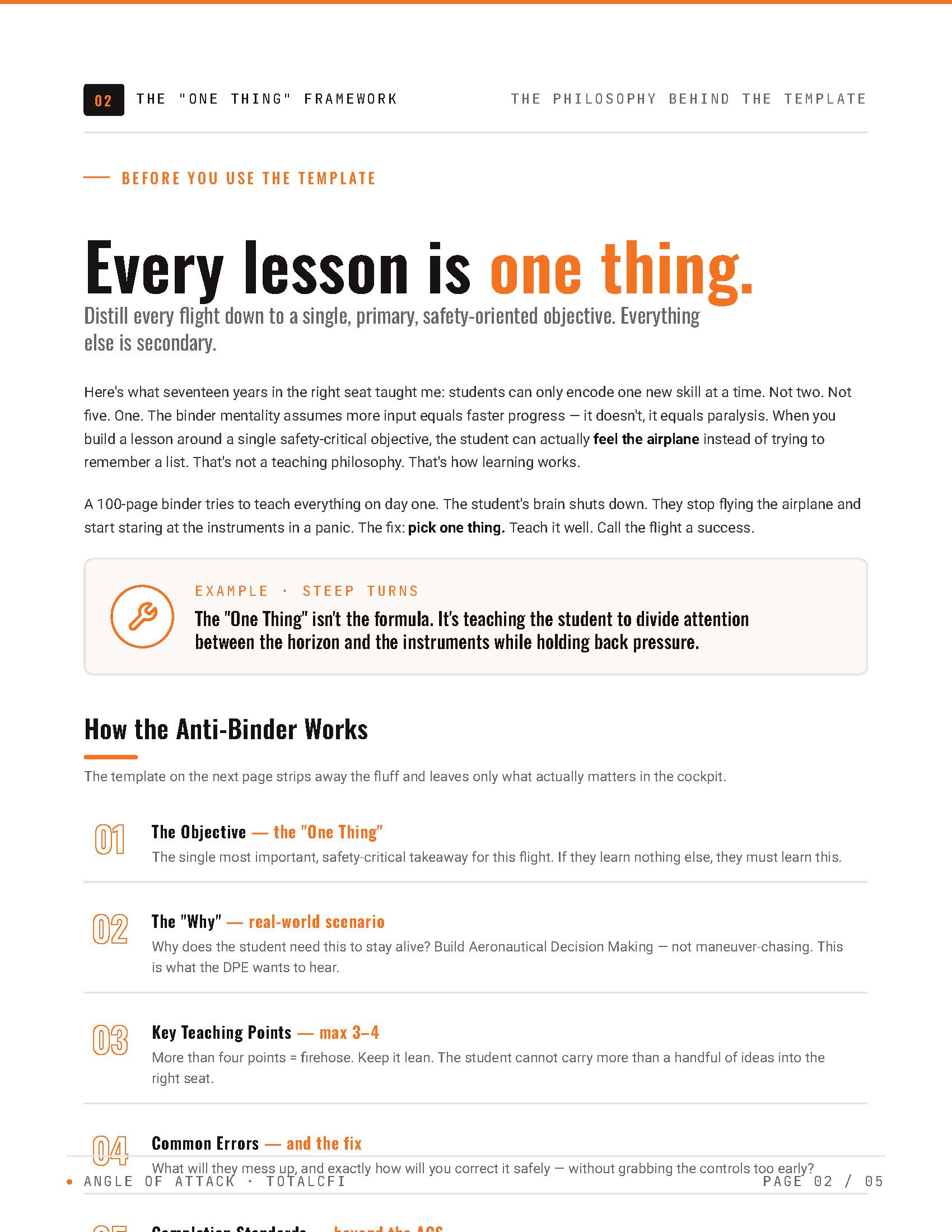
WHAT'S IN THIS GUIDE
- 1How Long Does It Take to Hit 1,500 Hours as a CFI?
- 2How Many Hours Per Month Does the Average CFI Actually Fly?
- 3What's the R-ATP Rule? (And Should You Aim for It?)
- 4How Do CFIs Build Hours Fastest? (The Honest Comparison)
- 5Why Some CFIs Take Twice as Long to Hit 1,500 (The Retention Lever)
- 6Can You Go Straight From CFI to Airlines?
- 7What Do Airlines Look For Beyond the 1,500 Hours?
- 8How Much Do Regional First Officers Make in 2026?
- 9Is the Airline Hiring Market Still Hot in 2026?
- 10Frequently Asked Questions
How Long Does It Take to Hit 1,500 Hours as a CFI?
Most working CFIs hit 1,500 hours in 18 to 24 months from CFI initial. The aggressive number is 12. The slow grind is 30 or more.
A new CFI typically starts the clock around 250 hours total time — roughly where you sit walking out of the CFI checkride. If you’re not there yet, the how-to-become-a-CFI guide maps the full path. From CFI initial you have 1,250 hours to log. The pace is the question.
| Hours flown per month | Months from 250 to 1,500 |
|---|---|
| 60 hrs/month (part-time or slower school) | 21 months |
| 80 hrs/month (solid full-time CFI) | 15.5 months |
| 100 hrs/month (aggressive, busy school + side work) | 12.5 months |
| 120 hrs/month (burnout territory) | 10.5 months |
That table is the math. It’s also the trap. Because the headline number — 1,500 — isn’t the full requirement.
Here’s where most working CFIs get caught. 14 CFR 61.159 doesn’t just say “1,500 hours.” It says 1,500 hours total + 500 cross-country + 100 night + 75 instrument + 250 pilot-in-command + 50 in the class of airplane for the rating sought.
Read that again. A CFI who logs 1,500 hours of day-VFR dual-given out of a busy flight school is still not ATP-eligible. No night. No cross-country. No PIC outside of dual-given.
Build the sub-mins as you build the total. Night freight, banner tow, ferry flights, aerial survey, charter Part 135 — these are where you backfill night, cross-country, and PIC time. The CFIs who arrive at 1,500 with the sub-mins in place are at the regional interview within 30 days. The ones who arrive needing 200 more hours of night and PIC are six months out.
How Many Hours Per Month Does the Average CFI Actually Fly?

The honest answer depends on the school, the season, the weather, and one variable I’ll come back to.
- Busy Part 141 flight school CFI: 70 to 100 hours per month. High end is summer in Arizona or Florida with a full student load.
- Average Part 61 or mid-tier CFI: 30 to 50 hours per month. Smaller schools, fewer students per CFI.
- Part-time independent CFI: 15 to 25 hours per month. Higher hourly rates, lower volume.
The FAA’s 2025 Civil Airmen Statistics show the shape of the market: 887,519 active US pilots, 370,286 student pilots (up from 222,629 in 2020 — a 66% climb), and a record-tying approximately 13,000 new CFI certificates issued in 2025. The pipeline is loading. Competition for the right CFI seat — busy school, steady students, good weather — is real. The first day on the job sets the trajectory — the CFIs who retain students start strong on Day 1.
The biggest variable in your monthly hours is how many of your students show up next month. School volume matters less than you’d think. A CFI at a busy school whose students keep quitting at hour 20 is functionally a CFI at an average school. That’s the retention lever — coming in two sections.
What’s the R-ATP Rule? (And Should You Aim for It?)
The R-ATP is the legal exit ramp from the 1,500-hour requirement. Under 14 CFR 61.160, you can earn a Restricted ATP at fewer than 1,500 hours under one of four paths — and exercise SIC privileges in Part 121 until you accumulate the full 1,500 and upgrade to unrestricted. The 1,500-hour rule itself comes from 49 USC 44729 — the Airline Safety and FAA Extension Act of 2010, signed in response to the Colgan Air 3407 accident (Buffalo, February 2009).
| ATP Path | Hours Required | Who Qualifies | Time Saved vs. Standard |
|---|---|---|---|
| Standard ATP (14 CFR 61.159) | 1,500 hrs total | Anyone who meets 61.159 sub-mins (500 XC, 100 night, 75 instrument, 250 PIC, 50 in class) | Baseline |
| R-ATP Military (61.160(a)) | 750 hrs total | US military pilots with DD-214 + Armed Forces records of UPT graduation + military pilot rating | 750 hrs (~9-12 mo) |
| R-ATP Bachelor’s (61.160(b)) | 1,000 hrs total | Bachelor’s degree with aviation major from an FAA-authorized institution of higher education + 60 semester credits of aviation coursework + commercial w/ instrument | 500 hrs (~6-8 mo) |
| R-ATP Associate’s (61.160(c)) | 1,250 hrs total | Associate’s with aviation major from an FAA-authorized institution of higher education + 30 semester credits + commercial w/ instrument | 250 hrs (~3-4 mo) |
Footnote — R-ATP cross-country reduction: Under 14 CFR 61.160(e), all R-ATP paths only require 200 hours of cross-country time instead of the 500 hours required for the standard ATP. This is the single most-missed regulatory detail in the R-ATP framework.
The restriction sits in 14 CFR 61.167(b): an R-ATP holder may not act as pilot in command in Part 121 operations until they meet both the age requirement of §61.153(a)(1) AND the full aeronautical experience requirements of §61.159 — the trigger for upgrading to unrestricted ATP. The practical effect — R-ATP holders fly as SIC at regional carriers and upgrade to unrestricted ATP within their first 12 to 24 months on the line.
14 CFR 61.153 sets the unrestricted ATP minimum age at 23; R-ATP holders can be 21 under 61.160(d). For most CFI candidates this isn’t a constraint, but it’s the floor.
Who is R-ATP for? Anyone whose academic path or military background already qualifies. R-ATP eligibility is set the day you graduate. You can’t earn an aviation degree retroactively. If you came up through a Part 61 path with no aviation degree, the standard 1,500 is your path.
How Do CFIs Build Hours Fastest? (The Honest Comparison)
“How do I build hours fastest?” sounds like a math problem. It’s actually a path-design problem — raw volume without the right sub-mins gets you to 1,500 hours and stuck.
| Path | Avg hrs/month | Pros | Cons |
|---|---|---|---|
| Busy Part 141 flight school CFI | 70-100 | Steady, makes you a better pilot, recommendation network | Burnout risk, weather-dependent |
| Part 61 independent CFI | 30-60 | Flexibility, higher hourly rate | Marketing burden, inconsistent hours |
| Banner tow / pipeline patrol | 60-100 | Fast solo hours, low oversight | Repetitive, seasonal |
| Survey / aerial photography | 60-100 | Fast hours, often PIC | Cyclical, project-dependent |
| Glider tow / skydive ops | 40-80 | Fast turn time, fun environment | Seasonal, weekend-heavy |
| Charter Part 135 (when eligible) | 40-80 | PIC time counts heavy, real-world IFR | Often requires 500+ PIC before hire |
| Combo: CFI + banner tow | 100-130 | Maximizes hours and income | Burnout risk #1, schedule chaos |
Two reads. One — highest volume isn’t always best. Airlines look at sub-mins, airplane mix, PIC ratio — whether your hours look like an organized career or a scramble. A CFI with 1,500 hours built methodically often beats a candidate with 1,800 hours of straight banner tow. Two — burnout is real. I’ve watched CFIs chase 130 hours/month for six months and arrive at 1,500 emotionally cooked. The 12-month sprint is doable; the 24-month steady climb is sustainable. Most candidates do better at 80-90 hours than at 120.
The fastest path is rarely the most volume. It’s the most volume with the right structure — and the volume that you keep.
Why Some CFIs Take Twice as Long to Hit 1,500 (The Retention Lever)

Here’s what nobody tells you when you’re three months into the CFI grind and watching your hour total like it’s a stock chart.
The 12-month path to 1,500 hours is about not losing the students who would have flown with you next month. Flying more hours per day matters less than keeping the students you already have.
The number you need: roughly 80 percent of student pilots quit before they finish their training. That’s not a number I made up. It comes from AOPA’s Flight Training Experience research — the canonical multi-year study with over 1,000 respondents that’s been the industry citation for over a decade. Four out of every five students who start training never see a checkride.
That’s not an industry statistic. That’s your logbook.
Of the 11 dropout factors AOPA identified, five are educational-quality issues — instruction effectiveness, lesson organization, flight school support, additional resources, test prep. The dropouts trace back to a teaching problem, not random attrition.
The Retention Math, Worked
Imagine two CFIs at the same flight school. Both start the same week. Both have six active students.
CFI A teaches like a mentor. She knows how each student processes information. She debriefs the way TotalCFI teaches her to. Five of her six students finish their private. The sixth quits at hour 40. Total hours logged: about 280.
CFI B teaches by the binder. Two of his six students finish. The other four quit between hour 15 and hour 30 — frustrated, lost in the binder, not sure why they’re doing what they’re doing. Total hours logged: about 150.
Same flight school. Same calendar. Same airplanes.
CFI A is 130 hours ahead. Multiply that across six months of student turnover. CFI A hits 1,500 in 14 months. CFI B hits it in 22 — if he doesn’t burn out first.
The 80 percent national dropout rate isn’t an industry statistic. It’s your hour total.
Where TotalCFI Fits
TotalCFI is the course I built around exactly this problem — the gap between passing the CFI checkride and being the kind of teacher whose students don’t quit. The two lessons that map directly to the retention math are Lesson 4.3 — Managing Students as People and Lesson 4.4 — Starting Strong as a New CFI. The candidates I’ve prepped don’t just pass their checkrides first try. They graduate into instructor seats where students request them by name within months. That’s the retention engine. That’s the lever.
The fast lane to the airlines is a teaching problem. Get that right and the airline interview shows up six months earlier than you planned.
Can You Go Straight From CFI to Airlines?

Yes. The regional first officer seat is the standard 2026 path from CFI to airlines — and the most reliable transition in commercial aviation.
The typical sequence: CFI builds to 1,500 (or R-ATP minimums), interviews with a regional, completes ATP-CTP and a type rating, flies as SIC for 2-3 years, upgrades to captain, and after another 3-5 years either stays as a regional captain or flows to mainline. The Endeavor → Delta flow-through is the most reliable — contractually structured, predictable timing. PSA, Envoy, and Piedmont flow to American with conditional structures. Republic and SkyWest run broader multi-carrier flow programs.
Alternative paths work for the right candidate. Cargo-first (FedEx Feeder, Ameriflight, Mountain Air Cargo) builds turbine PIC time fast, with the trade-off of nights and irregular schedules. Corporate and fractional (NetJets, Wheels Up, Flexjet) has different requirements and a different culture than the airlines.
Most CFIs go the regional route. It’s direct, and the carriers are actively hiring at the 1,500-hour line.
What Do Airlines Look For Beyond the 1,500 Hours?

The 1,500 hours opens the door. It doesn’t get you the seat.
Pilot-in-command time. Competitive applicants have 250 hours of PIC minimum, often 400 to 500. Real PIC from Part 91 ferry, Part 135 charter, or consistent solo cross-country makes a difference at the interview.
Multi-engine time. FAA minimum is 50 hours ME with at least 25 in actual aircraft for the ATP-ME ride. Airlines often want more. Some hire at 25; others want 50 to 100. Get the rating, then build the stack before the interview.
Recommendation letters. The variable nobody puts in the brochure. Pilots hired fastest at the regionals have a recommendation pipeline — current pilots at the carrier who write letters, chief pilots who’ve trained their students, line FOs who flew with them as students. Every student who becomes a pilot is a future recommendation.
Pattern over presence. One failed checkride is explainable. Two with a clean explanation is workable. Three or more starts to look like a pattern. Own it, explain what you learned, show what’s changed.
This is where the signature phrase belongs: professionalism is not a certificate — it’s behavior. The recommendation network, the way you carry your record, the way you sit at the interview — that’s what the airline is paying attention to.
One more frame. The 1,500-hour ATP is the license to learn at the next level — not the finish line. You’ll spend your first year on the regional line learning more about Part 121 than your CFI ticket ever taught you. The mindset that got you here is the same one that gets you upgraded to captain three years from now.
How Much Do Regional First Officers Make in 2026?
The new floor is six figures at most carriers. (For where the CFI pay floor sits before you make the airline jump, see how much CFIs earn.) Here’s the 2026 first-year FO total compensation across the major regionals.
Numbers below are aggregated from publicly reported 2025–2026 first-officer contracts and carrier hiring pages (FlightDeckCrew, AirlinePilotPay, ALPA, Career Pilot) — treat as a directional Year-1 range, not a per-airline contract quote. Actual pay varies by base, type, and individual contract section.
| Carrier | Year-1 Hourly Rate | Year-1 Total Comp* | Signing Bonus | Mainline Flow |
|---|---|---|---|---|
| Endeavor Air | $105/hr | ~$111,500 | $40,000 | Delta (most reliable, 4-6 yr) |
| Mesa Airlines | $95/hr | ~$115,000 | $30,000 | United / American (broad) |
| Piedmont Airlines | $98/hr | ~$111,700 | $38,000 | American (conditional) |
| PSA Airlines | $100/hr | ~$111,200 | $45,000 | American (conditional) |
| Envoy Air | $102/hr | ~$110,400 | $42,000 | American (conditional) |
| SkyWest Airlines | $98/hr | ~$111,200 | $35,000 | Multi-carrier flexible |
| Air Wisconsin | — | ~$103,400 | — | American (limited) |
| GoJet Airlines | $97/hr | ~$100,400 | $35,000 | United |
| Republic Airways | $100/hr | ~$99,300 | $40,000 | Multi-carrier broad |
| Horizon Air | — | ~$99,900 | — | Alaska (group) |
| CommuteAir | — | ~$91,500 | — | United |
*Total comp = base hourly × monthly guarantee × 12 + per diem + override pay + Year-1 signing bonus prorated.
Bottom of the range is $91K at CommuteAir. Top is $115K at Mesa. Six of the 11 carriers are at or above $110K Year-1. Signing bonuses run $30K to $45K standard, with Envoy and Republic retention packages bringing first-and-second-year cash to $50K to $100K on top of the hourly.
Mainline anchors at 2026 Year-1: Southwest ~$125,700 (87 hrs/mo), United ~$115,600 (73 hrs/mo), American and Delta ~$113,500 (72 hrs/mo). Most regional FOs upgrade to captain in 2 to 3 years; the captain-to-mainline-interview window is another 3 to 5.
Is the Airline Hiring Market Still Hot in 2026?
Healthy. Not desperate. Not slowing.
Industry observers project roughly 8,000 pilot hires across major US airlines in 2026 — down from the 2022-2023 peak of 12,000+ at the height of the post-pandemic retirement wave, up from the 2024-2025 dip when carriers paused to absorb the 2022-2023 class. The breakdown: United plans ~2,500. American ~1,500. Delta 1,000+. Southwest, the legacies, and the regionals fill out the rest.
What that means for your timeline: the airline is hiring when you arrive at 1,500. Not at the desperate 2022-2023 pace, but consistently. The candidate who shows up with sub-mins clean, recommendation letters in hand, and an interview-ready presence beats the candidate with 1,800 raw hours but a messy record.
The Regional Airline Association’s 2025 Annual Report notes the pipeline of new pilots continues to narrow at the front end — hour-builders with the right structure are scarce relative to demand. The candidates who show up well-prepared have leverage they didn’t have two years ago. The market is yours. Show up prepared.
Frequently Asked Questions
How long does it take to get 1,500 hours as a CFI?
Most working CFIs hit 1,500 hours in 18 to 24 months from CFI initial. The aggressive timeline is 12 months (requires 100+ hrs/mo at a busy school). The slow grind is 30+ months. The variable that separates the fast lane from the slow lane is student retention.
How many hours per month does the average CFI fly?
Busy Part 141 CFIs log 70 to 100 hours per month. Average Part 61 CFIs log 30 to 50. Part-time independents log 15 to 25. Seasonal and weather factors shift these ranges 20 to 30 percent.
What is the R-ATP rule?
Under 14 CFR 61.160, Restricted ATP allows airline-transport-pilot privileges at fewer than 1,500 hours under four paths: 750 hours for US military pilots, 1,000 hours for an aviation Bachelor’s from an FAA-authorized institution of higher education, 1,250 hours for an aviation Associate’s, and 1,500 hours standard. R-ATP holders cannot act as PIC in Part 121 until they meet both the age requirement under 14 CFR 61.153 and the full sub-mins under 14 CFR 61.159.
How much do regional airlines pay first-year pilots in 2026?
2026 first-year FO total compensation runs $91,500 to $115,000 across major US regionals, with hourly rates of $95 to $105 and signing bonuses of $30,000 to $45,000. Retention packages at Envoy and Republic can bring two-year cash to $50,000 to $100,000 on top of the hourly.
Is being a CFI worth it for hour building?
Yes. Instructing is the most reliable path to 1,500 hours — it pays you to build time, develops your judgment, and creates the recommendation network airlines value. The trade-off is intensity (70-100 hrs/mo when busy) and the requirement to teach well to keep your students and your hours.
What’s the fastest way to get 1,500 hours?
A combination strategy: busy Part 141 CFI work (70-100 hrs/mo) plus a side gig like banner tow, survey, or ferry flying that backfills night, cross-country, and PIC time. Volume isn’t the goal — sub-mins matter. A CFI with 1,500 hours but no night or cross-country isn’t ATP-eligible under 14 CFR 61.159.
Do airlines hire CFIs directly?
Yes. Regional first officer is the standard direct path. Once a CFI hits 1,500 hours (or R-ATP minimums) with the right sub-mins, regional carriers actively recruit through their pathway and direct-hire programs.
If the CFI checkride is keeping you up at night, you're prepping for the wrong thing.
TotalCFI teaches you to walk into the oral as a teacher, not a test-taker — the reframe most candidates only figure out after they've already failed once.
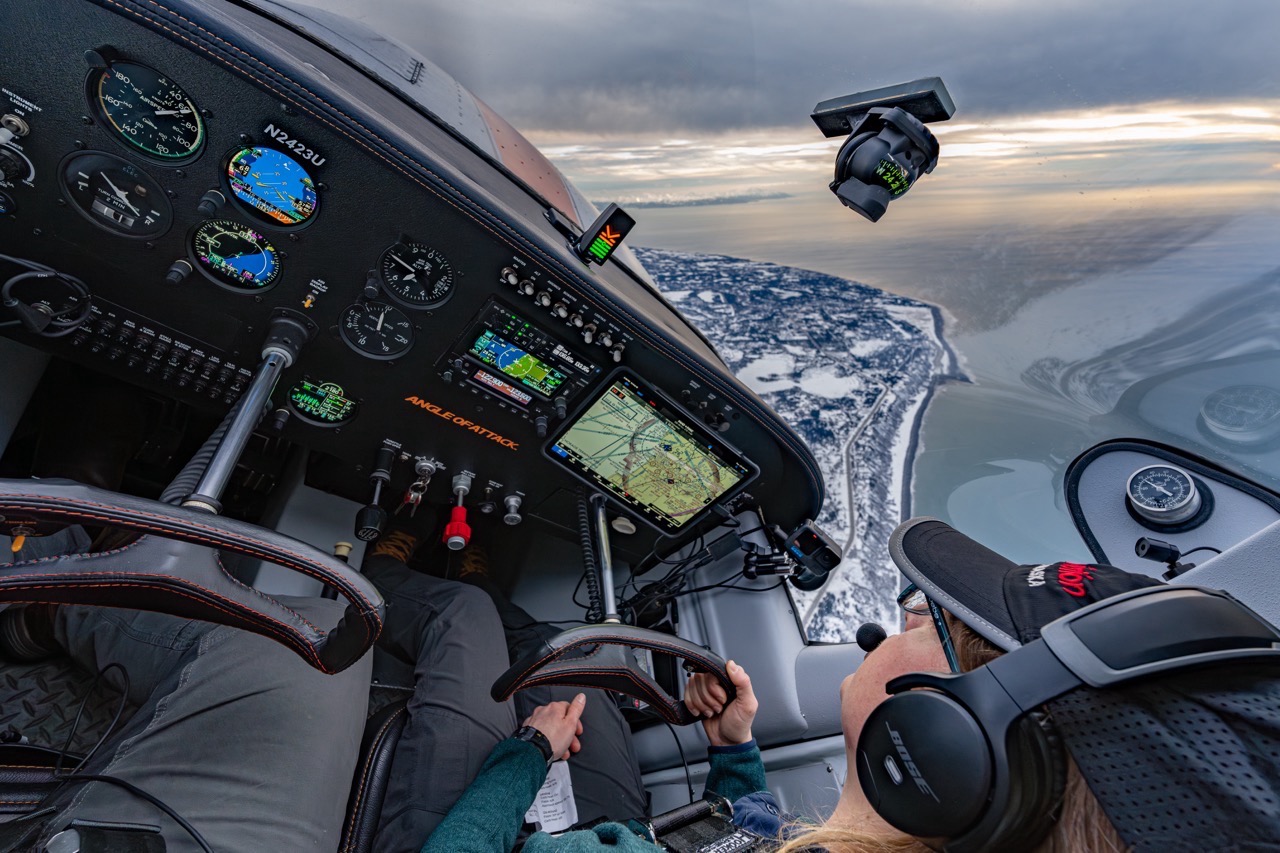
The path from CFI to airlines is a teaching problem. The instructors who hit 1,500 hours in 12 months are the ones whose students don't quit. The instructors who grind for 24 or 30 are grinding twice — once to teach the student, once to replace the student who left. The hour total in your logbook reflects the quality of the teaching that put it there. Get the teaching right and the airline interview shows up six months earlier than you planned. That's the lever.