Power-On Stall Lesson Plan: How to Teach the Departure Stall Without Scaring the Student

A power-on stall isn’t a maneuver. It’s a scenario. You just rotated at a hot-and-high airport, the airplane is climbing but it feels sluggish, you’re behind the power curve, and the airplane is telling you something. Teach it as a maneuver and you hand the student a recipe. Teach it as a scenario and you hand them judgment. And no competitor article will say this out loud: power-on stalls are where coordination discipline shows up. If your student isn’t using rudder, you’re training a spin candidate.
- A power-on stall is what the FAA itself calls a “departure stall”. It’s practiced with takeoff power, high pitch, clean configuration, simulating the moment a pilot stalls on initial climb.
- AC 61-67C Change 2 explicitly names “power-on (departure) stalls” and tells the CFI to teach them straight ahead and in turns, with emphasis on how they could occur during takeoff. The FAA already agrees with the reframe.
- The recovery doctrine from AC 120-109A is universal: reduce angle of attack → wings level with coordinated rudder → return to flight path → manage thrust. For a power-on stall, power is already in, so focus on AOA and rudder.
- Power-on stalls are the highest-stakes stall task because high pitch plus high power plus low airspeed equals maximum left-turning tendency. Uncoordinated equals spin entry. Coordination discipline is the lesson.
- Your job on the CFI ACS (FAA-S-ACS-25) Task X.D is to teach a power-on stall well enough that your student leaves knowing where the ball was at the break, not just to fly a clean one yourself.
The CFI Toolkit Every New Instructor Wishes They Had on Day One
Most new CFIs build their teaching system from scratch, a binder of borrowed lesson plans and scattered notes. The Anti-Binder Template is the one-page framework I use to plan every lesson, including the power-on stall block. Same scenario-first shape. Same Day-One focus.
Grab the Anti-Binder Template, Free →
Walking into your first lesson with a 50-page binder won't help you.
Get my Anti-Binder One-Page Lesson Plan Template free — the lesson plan tool I built for CFI candidates who want to be ready Day 1.
Get the Anti-Binder Template Free

WHAT'S IN THIS GUIDE
- 1What a Power-On Stall Really Is (And Why “Departure Stall” Is the Better Name)
- 2Find the Simpleness: It’s About the Moment, Not the Maneuver
- 3The One-Page Lesson Plan for Power-On Stalls (Six Boxes Applied)
- 4How to Teach a Power-On Stall as a Departure Scenario
- 5Power-On Stall vs Power-Off Stall: The Comparison the Student Needs
- 6Power-On Stall Speeds in a Cessna 172 (From the POH)
- 7Common Student Errors on Power-On Stalls
- 8Where Coordination Discipline Shows Up: Power-On Stalls Are the Doorway to the Spin
- 9Where This Lives in TotalCFI (Lesson 3.4, Scenario-Based Training)
- 10Frequently Asked Questions
What a Power-On Stall Really Is (And Why “Departure Stall” Is the Better Name)

A power-on stall, what the FAA itself calls a “departure stall”, is a stall practiced with takeoff power applied, high pitch attitude, and a clean configuration, simulating the moment a pilot stalls on initial climb. The maneuver lives in the CFI ACS as Task X.D, in the Private Pilot ACS as Task VII.C, and in the Commercial ACS as Task VII.C. The lesson, however, isn’t the maneuver. It’s the moment.
The full regulatory backbone is short: 14 CFR 61.107(b)(1)(viii) requires slow flight and stalls for the Private; 14 CFR 61.127(b)(1)(viii) for the Commercial; 14 CFR 61.183 requires the CFI candidate to demonstrate instructional proficiency in stall awareness, spin entry, spins, and spin recovery procedures. Right-seat instruction is the long-standing CFI ACS norm — the CFR mandates the proficiency, not the seat.
The first power-on stall I ever briefed was during my CFI training in Wisconsin in 2017, at KFLD, Fond du Lac County Airport. My CFI listened to me read the maneuver out of the practical test standards (Vy, throttle in, pitch up, recover at the break) and he stopped me. “Brief it again. But don’t tell me you’re doing a power-on stall. Tell me you just rotated out of a hot summer departure on a gravel strip in Alaska, the airplane feels sluggish, and you let the nose creep up because you thought you were climbing fine.” Same maneuver. Different lesson. My ground brief changed from a list of speeds to a story, and the student who would eventually fly that brief learned a scenario instead of a recipe. That’s the move I now teach every new CFI.
The FAA is already there. AC 61-67C Change 2, the Stall and Spin Awareness Training advisory circular, names it explicitly: “At a safe altitude, have the student attempt coordinated power-on (departure) stalls straight ahead and in turns. Emphasize how these stalls could occur during takeoff.” The agency is telling CFIs to anchor the maneuver in a real-flight context. We’re not coining a term. We’re systematizing what AC 61-67C already requires.
The same priority order from the parent stall pedagogy applies here (recognize, prevent, recover), and it lands inside the Airplane Flying Handbook (FAA-H-8083-3C) in Chapter 5, Maintaining Aircraft Control: Upset Prevention and Recovery Training. The chapter restructure reflects the broader post-Colgan/AF447 UPRT doctrine shift the FAA now emphasizes (see AC 120-109A). The structural message: stalls are a category of upset, not a checkride trick.
For the parent framework, the scenario-first method this article extends into power-on-specific depth, see the umbrella stall teaching guide. For the sibling on the other end of the maneuver pair, see the power-off (approach) stall teaching playbook.
Find the Simpleness: It’s About the Moment, Not the Maneuver

Power-on stalls aren’t about the maneuver. They’re about the moment.
The moment is the first 500 feet after rotation. The student needs to leave the lesson knowing two things: what the airplane feels like before it breaks (mush, sink, control sloppiness, the controls going light), and that coordinated flight, right rudder, is what stops the spin. Anything else is decoration.
Say it once in the brief. Say it again in the demo. Say it a third time in the debrief. Pin every error correction to it. The CFI who teaches a procedure leaves the student with a recipe they’ll forget. The CFI who teaches a moment leaves them with airmanship they’ll carry into every takeoff for the rest of their flying life.
The One-Page Lesson Plan for Power-On Stalls (Six Boxes Applied)
This is the six-box plan I use for power-on stalls, the same shape I use for every maneuver. It fits on one page and it’s anchored in the scenario, not the procedure. Same plan template lives at the CFI lesson plan template guide.
| Box | Content |
|---|---|
| Objective | Student demonstrates the power-on stall in straight flight and in shallow coordinated turns to ACS standards (X.D for CFI applicants; VII.C for private/commercial students), recognizes the impending-stall cues, recovers with AOA reduction plus coordinated rudder plus wings level, and can articulate why the maneuver is called a "departure stall" in real flight. |
| Completion Standard | Student enters at the assigned speed (Vr or just below Vx in a C172, with takeoff power applied), maintains coordinated flight throughout (ball centered, verified with rudder), acknowledges the first indication of the stall, demonstrates a recovery that reduces AOA before rolling wings level, returns to entry altitude ±100 ft, returns to entry heading ±10° (straight) or specified bank ±10° (turning), and can debrief in their own words what the airplane "told them" before the break. |
| The One Thing | Coordinated flight stops the spin. Right rudder is the discipline that makes a power-on stall a maneuver and not an accident. |
| Common Errors + Right-Seat Corrections | (1) Pulling too aggressively into the entry. Say: "Let it come to you. Hold the attitude, let the airspeed bleed." (2) Insufficient right rudder at the break. Say: "Where's the ball? Right rudder. Right rudder." (3) Releasing back pressure at the buffet instead of the break. Say: "Buffet is the warning. Hold until the break, then AOA first." (4) Adding more power as step 2 of recovery (it's already in). Say: "Power's already in. AOA first, ball centered, wings level." (5) Losing heading or altitude in the recovery. Say: "Rudder holds heading. Pitch handles AOA. Look outside." |
| Teaching Sequence | Brief (15 min): read the scenario; review the maneuver structure; review the recovery doctrine (AOA first, coordinated rudder, wings level; power is already in). Demo (5 min, in-flight): fly the scenario; narrate what you're seeing and feeling. Student-flown (15-20 min, in-flight): student flies the scenario; you point at the airspeed, the ball, the attitude. Don't take the controls unless you have to. Debrief (15 min, on the ground): one question first. "What did the airplane tell you before the break, and where was the ball?" |
| Debrief Prompt | "Walk me through what just happened. What did the airplane tell you, and was the ball centered? If you can't talk about it, you didn't learn it yet." |
That’s the plan. One page. No PowerPoint. The student goes up looking at the airplane, not at a procedure.
How to Teach a Power-On Stall as a Departure Scenario

The parent method is the scenario-first stall teaching framework. For the power-on case, the four parts of the brief look like this, verbatim, the way I script it for new CFIs.
1. Scenario. “Today we’re going to practice the moment after rotation when the airplane gets behind you. Hot summer, departing a higher-elevation airport, you let the nose creep up because the airplane feels like it’s climbing fine. But you’re behind the power curve and the airplane is telling you something. We’re going to fly that scenario, at altitude, so you learn what the airplane tells you before it breaks.”
2. Demo plan. “I’ll fly the scenario first. Notice what I’m watching: airspeed, attitude, the ball. That’s the one most people miss. I’ll narrate everything I’m thinking. When the stall breaks, I’ll recover with AOA reduction first. Release back pressure, ball centered with right rudder, wings level. Power is already in. I won’t be touching the throttle on the recovery. We’ll do this at an altitude that gives us recovery above 1,500 ft AGL — the FAA minimum for single-engine stall practice per AC 61-67C.”
3. Error correction expectation. “When you fly it, I’ll point at three things: airspeed if you’re getting slow, the ball if you’re uncoordinated, and the attitude indicator if you’re pitching too high. I won’t take the controls unless you ask. If I do take the controls, I’ll say ‘I have the airplane’ clearly. Otherwise the airplane is yours. The one thing I’m watching most is the ball. If you lose the ball, we have a problem.”
4. Debrief expectation. “After we recover, before we set up for the next one, I’ll ask you: what did the airplane tell you, and where was the ball? Not ‘did you lose more than 100 feet.’ What did the airplane tell you?”
Once you’re in the airplane, fly the demo as if the runway were under you. Narrate as if you’d just rotated. “We’re climbing. I’m letting the nose come up. Too far. The airspeed is bleeding off. I can hear it. The controls are getting light. There’s the buffet. There’s the break. Releasing back pressure first, right rudder to keep the ball centered, wings level. Flying again. Power is already in.”
Then hand it over and shut up. The hardest part is keeping your hands off the controls. The instinct is to grab. Calm as a skill, yours first, before it’s theirs. You’re a coach, not a copilot. Point at the airspeed. Point at the ball. “Right rudder.” Don’t take the controls unless you have to.
The debrief question is one question. “What did the airplane tell you before the break, and where was the ball?” When the student can answer that in their own words, you’ve taught a power-on stall.
Power-On Stall vs Power-Off Stall: The Comparison the Student Needs
This is the question every student asks and almost no article answers cleanly. The side-by-side is below. For the power-off / approach side in single-maneuver depth, see the sibling power-off stall teaching playbook.
| Dimension | Power-Off (Approach) Stall | Power-On (Departure) Stall |
|---|---|---|
| Real-flight scenario | Slow on final, idle throttle, landing config | Just rotated, pitched too aggressively, behind the power curve |
| Configuration | Landing config (full flaps in a C172, gear down if equipped) | Clean (no flaps; gear up if equipped); takeoff config |
| Power setting at entry | Idle | Takeoff power (full or no less than 65% per the ACS) |
| Pitch attitude | Approach attitude (slight nose-down to maintain descent at idle) | High pitch; climb attitude or steeper |
| Left-turning tendencies | Minimal (low power) | Maximum (high power plus high AOA; P-factor, torque, spiraling slipstream, gyroscopic precession all peak) |
| Primary recovery action | AOA reduction → add power → wings level → return to flight path | AOA reduction → ball centered with rudder → wings level → return to flight path (power already in) |
| Coordination risk | Lower (less yaw to fight) | Highest. This is the spin doorway. |
| CFI ACS Task | X.C | X.D |
| Private ACS Task | VII.B | VII.C |
The recovery technique is the same shape: AOA first, then coordinate, then manage thrust. But the specific second action diverges. In a power-off stall, add power is the second-priority verb. In a power-on stall, power is already in, so the second action is coordinate the rudder. New CFIs who memorized “AOA first, then power” from their power-off training reach for the throttle on the power-on recovery and miss the lesson. Don’t let your students inherit that confusion.
Power-On Stall Speeds in a Cessna 172 (From the POH)
If you fly the power-on stall in the Cessna 172S, the most common training airframe in the GA fleet, these are the numbers from the POH that anchor the maneuver:
| Speed | Value | What It Is |
|---|---|---|
| Vr | 55 KIAS | Rotation speed. Where you raise the nose on takeoff. |
| Vx | 62 KIAS | Best angle of climb. Obstacle-clearance climb. |
| Vy | 74 KIAS | Best rate of climb. Normal climb-out speed. |
| Vs | 48 KIAS | Stall speed, clean configuration. |
| Vso | 40 KIAS | Stall speed, full-flap landing configuration. |
| Va | 105 KIAS | Maneuvering speed @ 2,550 lb (98 @ 2,200, 90 @ 1,900). |
| Vno | 129 KIAS | Max structural cruising speed. |
| Vne | 163 KIAS | Never-exceed speed. |
The takeoff/departure profile reads cleanly: rotate at Vr (55), climb at Vx (62) for obstacle clearance or Vy (74) for normal departure. The power-on stall scenario is “you’re slow on departure, somewhere between Vr and just below Vx, you let pitch creep up, AOA exceeds critical, and the wing breaks.”
Per the CFI ACS (FAA-S-ACS-25) Task X.D and the Private ACS (FAA-S-ACS-6) Task VII.C, you configure the airplane for a normal or short-field takeoff (clean) and induce the stall from a takeoff or departure pitch attitude. The ACS specifies “no less than 65 percent power,” not a specific entry airspeed. A practical convention many CFIs use in the 172 is to slow to about Vy minus 10 (around 64 KIAS) before adding takeoff power and rotating to the takeoff pitch attitude. The airplane will arrive at the stall in a few seconds. Don’t yank. Let it come to you.
Source: Cessna 172S Pilot’s Operating Handbook, Sections 4 and 5 (Textron Aviation). Always cross-check against the actual POH/AFM for the serial-number-specific values on the airplane you’re flying.
Common Student Errors on Power-On Stalls

Errors aren’t problems to fix. They’re data. These are the five I see most, with the right-seat dialogue I use to correct each one in real time.
1. Insufficient right rudder at the stall break. Reveals: the student isn’t feeling the airplane’s left-turning tendencies. P-factor, torque, spiraling slipstream, and gyroscopic precession all peak at high AOA plus high power, exactly the power-on stall regime. Without right rudder, the ball goes out, the airplane yaws left, the wing drops, and you’re in a spin entry. Say: “Where’s the ball? Right rudder. Right rudder.” Demo next: a slow-flight pass with the ball deliberately out, then back in. Show the airplane’s response. Debrief: “Where was the ball at the break, and what did the airplane do?”
This is the error that makes power-on stalls the highest-stakes stall task. Every other error costs altitude. This one costs control of the airplane.
2. Too much aft yoke pressure at entry. Reveals: the student is trying to “stall the airplane” instead of “fly the scenario.” They yank the nose up, over-pitch, and skip past the recognition cues. Say: “Let it come to you. Hold the attitude, let the airspeed bleed off. Feel the airplane mush before the buffet.” Demo next: a gentle entry where pitch is held constant and airspeed bleeds off slowly. Show the difference between “stalled” and “stalled on purpose.” Debrief: “What did the airplane feel like before the buffet?”
3. Adding more power as step 2 of recovery. Reveals: procedural confusion. The student memorized “AOA first, then power” from the power-off recovery and is reflexively reaching for the throttle. But power is already in. For a power-on stall the second action is coordinate the rudder, not add power. Say: “Power’s already in. AOA first, ball centered, wings level.” Demo next: a recovery where you visibly don’t touch the throttle. Narrate it. Debrief: “What did your right hand want to do, and was that the right move here?”
I prepped a CFI candidate a few years back who pulled this exact reflex on the recovery. He reduced AOA correctly, but before the wing was flying again he slammed the throttle from cruise to full and the airplane mushed into a secondary stall. We bled 300 feet. The fix wasn’t a new procedure. It was unlearning the reflex of “add power as step 2.” For power-on stalls specifically, the second action is the rudder, not the throttle. He flew it clean the next flight and passed the CFI checkride two weeks later.
4. Setting up the maneuver wrong. Reveals: the student doesn’t yet have the scenario in their head. They slow to some random speed, apply some random amount of power, and pull. The maneuver isn’t anchored in real flight. Say: “Set this up like a real departure. Slow to rotation speed. Power to climb. Pitch like you just rotated.” Demo next: a clean setup. Name the scenario out loud as you fly it. Debrief: “What real flight does this maneuver represent, and did your setup match it?”
5. Releasing back pressure at the buffet, not the break. Reveals: fear of the stall regime. The student is reacting to the warning, not the stall. Say: “Buffet is the warning. The break is where you start the recovery.” Demo next: hold through the buffet to the actual break. Show the difference. Debrief: “What scared you about going past the buffet?”
The pattern across all five: the student is processing a procedure when they should be reading the airplane.
Where Coordination Discipline Shows Up: Power-On Stalls Are the Doorway to the Spin

This is the part most articles dance around. Power-on stalls are where coordination discipline shows up. If your student isn’t using rudder, you’re training a spin candidate.
The aerodynamic stack is brutal in this regime. Four left-turning tendencies all peak at the same instant:
- P-factor. At high AOA the descending propeller blade on the right takes a bigger bite than the ascending blade on the left, producing a left yaw.
- Torque. The engine spins the prop clockwise from the pilot’s view; reaction torque rolls the airplane left.
- Spiraling slipstream. Prop wash spirals down the fuselage and strikes the left side of the vertical stabilizer, yawing the nose left.
- Gyroscopic precession. The spinning prop is a gyro; the pitch-up input precesses 90° in the direction of rotation, producing left yaw.
Each one of these is small on its own. Stack all four at once (high pitch, high power, low airspeed) and you have a left-yawing airplane right at the moment of the stall. If the pilot’s foot isn’t on the right rudder, the ball goes out, the left wing stalls deeper than the right, and the airplane autorotates. That’s a spin.
This is why the CFI ACS lists spin awareness as a special-emphasis area. It’s why AC 61-67C Paragraph 109 names insufficient or excessive rudder correction for P-factor as the classic stall/spin precursor. And it’s why the spin endorsement exists. The credential is a recognition that uncoordinated power-on stalls produce spins, and CFI candidates need stand-alone time in the spin regime so they can teach prevention from a place of having seen it.
For the regulatory and teaching pair to AC 61-67C, what the CFI spin endorsement actually covers and how to prep for it, see the CFI spin endorsement guide. The pre-cursor maneuver, the one every stall lesson should start with so the student has felt slow flight before the wing breaks, is covered in the slow flight teaching playbook.
The NTSB GA accident dashboard shows loss of control in flight as the leading cause of fatal GA accidents. Stall/spin is its primary mechanism. A large share of fatal LOC-I GA accidents happen during low-altitude maneuvering in the traffic pattern, the regime we practice the least (NTSB, AOPA ASI Joseph T. Nall Report). Power-on stalls done at altitude exist because the real power-on stall happens at 200 feet AGL on a hot day, and there’s no altitude there to recover. Coordination discipline at altitude is what saves the pilot in the pattern.
Teach this. Pin every error correction to the ball. If your student isn’t using rudder, you’re training a spin candidate.
Where This Lives in TotalCFI (Lesson 3.4, Scenario-Based Training)

The scenario-first approach in this article is the centerpiece of TotalCFI Lesson 3.4, Scenario-Based Training. That lesson is the move from “I can fly the maneuver” to “I can teach a real-flight scenario.” It’s the lesson that turns a procedure-trained candidate into a scenario-trained instructor who knows where the ball was at the stall break.
If you’re prepping for your CFI checkride and this is the first time you’ve heard “power-on stalls are where coordination discipline shows up,” you’re not behind. You’re early. That’s the point of TotalCFI. We give you the scenario-first frame before you walk into the airplane with your first real student, so your first lesson plan is the one your tenth student will still remember. Be the CFI your student will trust on departure.
Frequently Asked Questions
What is a power-on stall?
A power-on stall, what the FAA calls a "departure stall," is a stall practiced with takeoff power applied, high pitch attitude, and a clean configuration, simulating the moment a pilot stalls on initial climb after rotation. It lives in the CFI ACS as Task X.D and in the Private Pilot ACS as Task VII.C.
How do you recover from a power-on stall?
Per AC 120-109A, the universal recovery is: reduce angle of attack first → ball centered with coordinated rudder → wings level → return to flight path. For a power-on stall, power is already in, so the second action is coordinated rudder, not adding throttle. Don't let your student reflexively reach for the throttle.
What's the difference between a power-on and a power-off stall?
The scenario, the configuration, and one step of the recovery. Power-off is an approach stall (slow on final, idle throttle, landing config). Power-on is a departure stall (just rotated, takeoff power, clean config, high pitch). Recovery is AOA-first in both, but the second action differs: power-off recovery adds power; power-on recovery coordinates rudder because power is already in.
What are the entry speeds for a power-on stall in a Cessna 172?
In a Cessna 172S: rotation speed (Vr) is 55 KIAS, best angle of climb (Vx) is 62 KIAS, best rate of climb (Vy) is 74 KIAS, clean stall speed (Vs) is 48 KIAS. The ACS specifies entry at a takeoff/departure pitch attitude with no less than 65 percent power; a common school convention in the 172 is to slow to about Vy minus 10 (around 64 KIAS) before adding takeoff power and rotating to the takeoff pitch attitude.
What does AC 61-67C say about power-on stalls?
AC 61-67C Change 2 explicitly names "power-on (departure) stalls" and instructs CFIs to teach them straight ahead and in turns, with emphasis on how these stalls could occur during takeoff. The FAA's own guidance frames the maneuver as a departure scenario, not a checkride trick.
Can a power-on stall become a spin?
Yes. Uncoordinated power-on stalls are the doorway to a spin entry. High pitch, high power, low airspeed produce maximum left-turning tendency from P-factor, torque, spiraling slipstream, and gyroscopic precession. Without right-rudder discipline, the ball goes out, one wing stalls deeper than the other, and the airplane autorotates. This is why the CFI ACS treats spin awareness as a special-emphasis area.
What does the CFI ACS require for power-on stalls?
CFI ACS Task X.D requires the applicant to demonstrate proficiency in the maneuver from the right seat, teach it from the right seat, recognize and correct common student errors, maintain coordinated flight throughout, acknowledge the first indication of the stall, recover with minimum altitude loss, and return to the entry altitude (±100 ft), entry heading (±10° straight or specified bank ±10° turning), and accelerate to Vx or Vy.
If the CFI checkride is keeping you up at night, you're prepping for the wrong thing.
TotalCFI teaches you to walk into the oral as a teacher, not a test-taker — the reframe most candidates only figure out after they've already failed once.
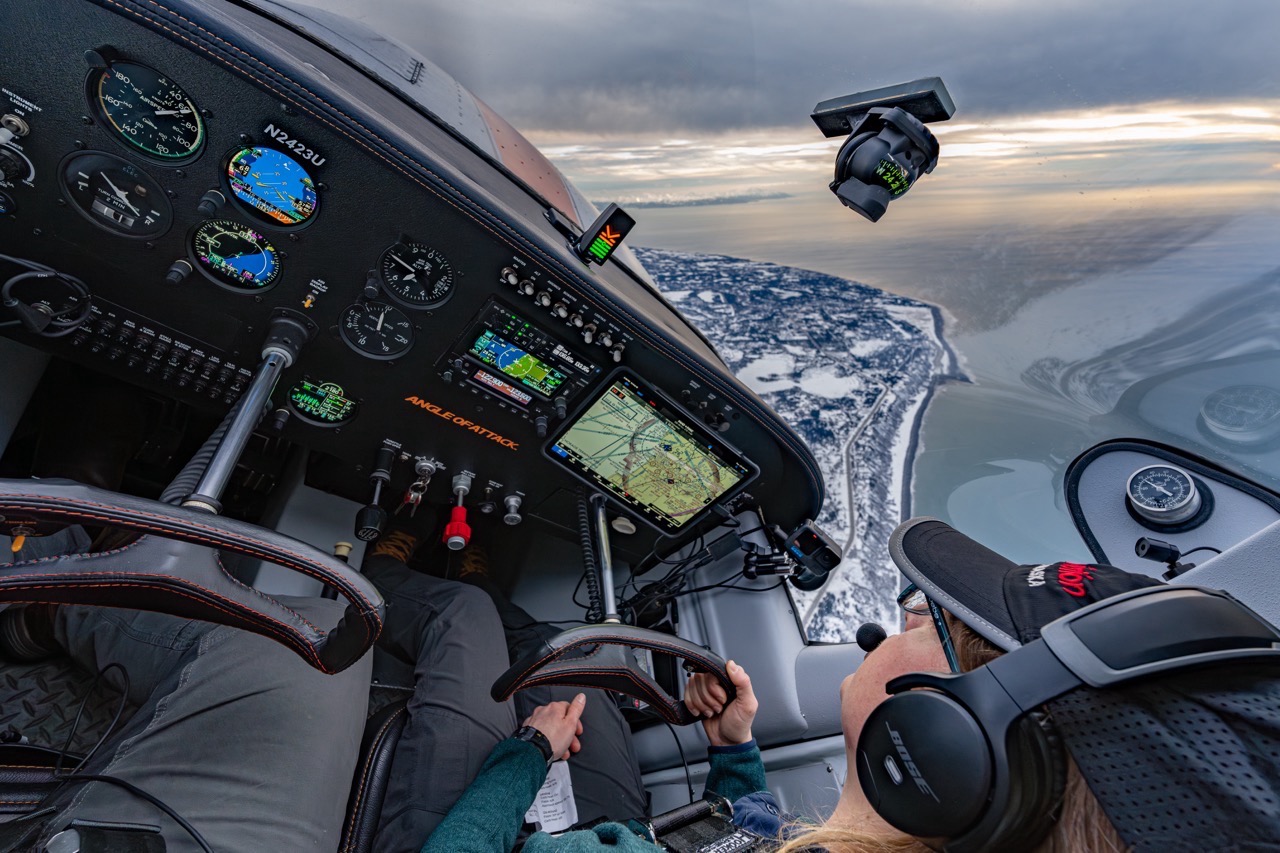
A power-on stall, what the FAA calls a “departure stall,” is a stall practiced with takeoff power applied, high pitch attitude, and a clean configuration, simulating the moment a pilot stalls on initial climb after rotation. It lives in the CFI ACS as Task X.D and in the Private Pilot ACS as Task VII.C.