CFI vs CFII vs MEI: Which Should You Get First? (A Master CFI’s Honest Take for 2026)

The CFI is your initial flight instructor certificate — it lets you teach in single-engine airplanes. The CFII is an add-on rating that adds instrument instruction. The MEI is an add-on rating that adds multi-engine instruction. Per 14 CFR 61.183, you must earn the initial CFI before either add-on.
I’m Chris Palmer, two-time Master Aviation Educator and Gold Seal CFI, founder of Angle of Attack. I’ve spent 20 years in aviation education watching CFI candidates pick the wrong order for the wrong reasons. The harder question — the one nobody answers honestly — isn’t what each rating is. It’s the order you stack them in. Here’s the decision frame, three comparison tables, and the order I’d choose if I were doing it again today.
Walking into your first lesson with a 50-page binder won't help you.
Get my Anti-Binder One-Page Lesson Plan Template free — the lesson plan tool I built for CFI candidates who want to be ready Day 1.
Get the Anti-Binder Template Free
- CFI is the certificate. CFII and MEI are ratings added to it. You hold one flight instructor certificate with one or more ratings — not three separate certificates.
- Initial CFI first is the practical answer for almost everyone. Per 14 CFR 61.183, the add-ons skip FOI re-test and the spin endorsement. Getting the heaviest checkride out of the way first is the cheapest path through the system.
- CFII is the cheapest, fastest add-on. $1,500–$4,500 typical, 1–3 weeks, no spin endorsement, and the 61.187(b)(7) scope is structurally shorter than multi-engine.
- MEI has no knowledge test at all — but it’s the most expensive add-on at $5,000–$12,000 because multi-engine aircraft rental runs $300+/hr and you still need 15 hours PIC in class.
- The real fork is identity, not technical. Career teacher or hour-builder? The order you choose follows from the kind of CFI you’re actually becoming.
WHAT'S IN THIS GUIDE
- 1What’s the Difference Between CFI, CFII, and MEI?
- 2Which Should You Get First?
- 3The Career-Identity Fork
- 4Why CFII Is the Easiest Add-On
- 5Why MEI Is the Heavier Add-On (And When It’s Worth It)
- 6What Can a CFI Teach Without a CFII or MEI?
- 7How Long and How Much Does Each Take?
- 8The Order I’d Recommend (And Why)
- 9When MEI First Actually Makes Sense
- 10Frequently Asked Questions
What’s the Difference Between CFI, CFII, and MEI?

One certificate, multiple ratings, three privileges.
The CFI is the base certificate — single-engine airplane instruction, primary through commercial. The CFII is an add-on rating authorizing instrument flight instruction. The MEI is also an add-on rating; it authorizes multi-engine instruction.
That legal distinction matters more than most candidates realize. You don’t hold three separate certificates — you hold one flight instructor certificate with one or more ratings printed on it. That’s why some rules treat add-ons more leniently than the initial. The spin endorsement at 14 CFR 61.183(i) is operationally treated by the FAA’s Flight Instructor PTS/ACS guidance as a certificate-issuance requirement — an add-on rating doesn’t trigger it again.
| Feature | CFI (initial, ASEL) | CFII (add-on) | MEI (add-on) |
|---|---|---|---|
| What it is | Flight instructor certificate | Rating added to existing CFI | Rating added to existing CFI |
| What you can teach | Single-engine, all certificate levels through commercial | Instrument rating in airplanes | Multi-engine, all certificate levels |
| Pilot prerequisite | Commercial or ATP + instrument rating | Already hold CFI certificate | Already hold CFI + multi-engine pilot rating |
| Knowledge tests | FOI + FIA (2 tests) | FII only (1 test) | None |
| Spin endorsement (61.183(i)) | Required | Not required | Not required |
| Areas of operation (61.187) | 14 areas (b)(1) | 10 areas (b)(7) — narrower | 15 areas (b)(2) |
| Logbook PIC requirement (61.183(j)) | 15 hr PIC ASEL | 15 hr PIC in instrument-rated airplane | 15 hr PIC multi-engine |
| Make/model rule (61.195(f)) | N/A | N/A | 5 hr PIC in M/M before teaching |
| Endorses for | Solo, cross-country, Class B, PPL/Commercial practical test | Instrument rating practical test | Multi-engine class rating practical test |
That table is a spec sheet. Useful, but not a decision. The decision is downstream of what kind of CFI you’re going to be.
Which Should You Get First?

The 60-second answer: initial CFI first. Then for most candidates, CFII second. And MEI third — if the local market needs it.
That order isn’t a rule the FAA writes down. Technically 14 CFR 61.183 lets you make any flight instructor rating your initial — but whichever you choose gets the heavy treatment: full FOI test, full FIA-equivalent, spin endorsement, longest checkride scope. Initial in single-engine airplane is cheapest and most flexible. For the eligibility walkthrough, see the CFI requirements guide and how to become a CFI.
The deeper question is which order you stack the add-ons in. That’s where the spec sheet stops helping.
The Career-Identity Fork

Here’s the wedge nobody else writes. The order is an identity question, not a procurement one.
Path A — The Career Teacher. Some CFIs are teachers who happen to fly. Right seat for ten years. Not building time — building students. Order: CFI → CFII → MEI (optional). CFII doubles your student base. MEI only if the local market has multi-engine demand.
Path B — The Hour-Builder. Other CFIs are airline-bound. The right seat is a 1,500-hour transit lounge. Order can invert to CFI → MEI → CFII. Per 14 CFR 61.159, the multi-engine ATP requires 50 hours in class of airplane. Flight instruction given in a twin counts. An MEI plugged into a school with twin students racks those hours faster than waiting for the airlines. (For the dollar-side of that hour-building math, see the CFI salary breakdown by rating.)
Path C — Full-Stack Flight School Hire. A third group wants every door open. Get all three. Order same as Path A but accelerated — CFI → CFII → MEI in 90 days at one program. About $15,000–$20,000 all-in. Convenience tax.
A Path A career teacher who skips CFII to chase MEI for “more money” leaves the largest student base behind for a market that may not exist. A Path B hour-builder who insists on CFII first because “it’s cheaper” loses six months of multi-engine PIC time. The order isn’t theoretical — it costs people money when they pick wrong. Professionalism is not a certificate — it’s behavior. The behavior here is being honest with yourself about which CFI you’re actually becoming.
Why CFII Is the Easiest Add-On
For most CFIs, the CFII is the cheapest, fastest, lowest-friction add-on. The structural reasons line up:
- No FOI re-test. Per 14 CFR 61.183(e)(1), if you already hold a flight instructor (or ground instructor) certificate, the FOI knowledge test is waived. You took it for the initial. The FAA doesn’t make you take it again.
- No spin endorsement. Per 14 CFR 61.183(i) and the FAA’s Flight Instructor PTS/ACS guidance, spin training endorsement is associated with the certificate issuance — when you’re adding a rating to an existing flight instructor certificate, it doesn’t apply again.
- One narrower knowledge test. The FIA is replaced by the FII (Flight Instructor Instrument) — instrument-only scope, vendor-reported around $175 at PSI in 2026 (verify current fee at PSI Exams).
- Structurally shorter checkride. 14 CFR 61.187(b)(7) lists 10 areas of operation, all instrument-focused. No takeoffs. No landings. No stalls.
Typical 2026 numbers: $1,500–$4,500 all-in, $3,000 median. Time: 1–3 weeks full-time, 4–8 weeks part-time. Most candidates need 10–20 hours of dual from the right seat — much of it under the hood or in IMC.
Why most career CFIs do this second: every instrument student in your training fleet just doubled. Primary students transitioning to instrument training stay with the same instructor. Hire-ability at any flight school jumps. The only reason not to do CFII second is the Path B hour-builder argument — and that’s about logging multi-engine PIC time, not about CFII being a bad investment.
Why MEI Is the Heavier Add-On (And When It’s Worth It)
The MEI is the only flight instructor rating you can earn without a single new FAA knowledge test. No FOI. No FIA. No FII. None.
That sounds like the easiest path. It isn’t.
The MEI’s friction lives in the airplane and the logbook:
- 15 hours PIC in multi-engine class under 14 CFR 61.183(j) — required before the checkride. This is the rate-limiter. Most candidates need to buy those hours.
- 5 hours PIC in the specific make and model under 14 CFR 61.195(f). Separate rule, not about the checkride — about teaching in that aircraft. Can’t teach in a Seminole until you have five hours PIC in a Seminole. Switch to a DA-42 and the clock resets.
- Full 15-area checkride scope under 14 CFR 61.187(b)(2) — takeoffs, landings, slow flight, stalls, engine-out work, emergencies. As heavy as a primary CFI checkride, from the right seat of a twin.
Then the airplane. A Piper Seminole or Diamond DA-42 rents $300–$400/hr wet in 2026 — roughly double a single-engine IFR airplane.
Typical 2026 numbers: $5,000–$12,000 all-in, $8,000 median. Time: 2–4 weeks full-time, 6–12 weeks part-time.
So when is it worth it anyway?
For Path B hour-builders, the math is straightforward. Per 14 CFR 61.159, the multi-engine ATP requires 50 hours in class of airplane. Flight instruction given in a twin counts. For an airline-bound CFI heading to a regional, MEI is often the fastest 50-hour multi-engine path that exists.
For Path A career teachers, MEI is worth it only if the local market has multi-engine demand. Rural towns with single-engine-only schools — skip or defer it. Bigger metros with charter operators and twin training programs — add it once you’ve stabilized as a primary instructor.
What Can a CFI Teach Without a CFII or MEI?

A CFI without any add-on can teach more than most candidates think. Per 14 CFR 61.193, instructor privileges are bounded by the ratings printed on your certificate. With a bare CFI in airplane single-engine, you can:
- Teach primary students all the way through their PPL.
- Endorse for solo, cross-country, Class B, and the PPL practical test.
- Train and endorse for the commercial pilot certificate (single-engine).
- Sign off flight reviews and currency requirements.
What you cannot do:
- Give instrument flight instruction. 14 CFR 61.195 blocks it unless your certificate has an instrument rating. A plain CFI cannot endorse an instrument practical test.
- Give multi-engine instruction toward a rating. 14 CFR 61.195(f) blocks training in a multi-engine airplane required for a certificate or rating unless you hold MEI and have 5 hours PIC in that make and model.
That video is what a bare-CFI’s workday actually looks like. Primary students. Pattern work. Pre-solo readiness. The work doesn’t get less valuable without the add-ons — it just gets narrower.
How Long and How Much Does Each Take?
The honest 2026 numbers. Variance is real — accelerated programs at one end, pay-as-you-go at the other. (For the deeper breakdown of initial CFI cost, see the full CFI cost guide.)
| Initial CFI (ASEL) | CFII (add-on) | MEI (add-on) | |
|---|---|---|---|
| Typical cost | $5,000–$15,000 | $1,500–$4,500 | $5,000–$12,000 |
| Median cost | ~$8,000 | ~$3,000 | ~$8,000 |
| Time | 2–3 mo full-time; 6+ mo part-time | 1–3 weeks full-time; 4–8 weeks part-time | 2–4 weeks full-time; 6–12 weeks part-time |
| Flight hours of training | 25–40 dual | 10–20 dual right-seat | 5–8 dual right-seat (plus 15 hr PIC) |
| Aircraft cost driver | C-172 at $150–$200/hr | C-172 IFR at $150–$200/hr | Light twin at $300–$400/hr |
| Pass rate (FAA, 2023) | ~76% initial | ~85%+ add-on | ~85%+ add-on |
| Relative difficulty | Highest — full FOI, full FIA, spin, longest checkride | Lowest — narrowest scope, no FOI, no spin | Medium — no written but expensive aircraft, full 15-area scope |
A few patterns worth pulling out. The median CFII costs about a third of the median MEI. That’s the cheapest-add-on argument made numeric. Twin time at $300–$400/hr means 15 PIC hours alone runs $4,500–$6,000 before you’ve taken a right-seat dual. Pass rates favor add-ons by ~10 points — narrower scope and more experienced candidates. For the deeper context on the 2025 initial-CFI fail rate, see the CFI checkride pass rate breakdown.
Real-world note: most candidates spread these out. Stacking all three back-to-back at one program is faster but front-loads $15,000–$20,000 in 90 days. Adding CFII three months after the initial, and MEI a year later when the market demands it, is the path I see most working CFIs actually take.
The Order I’d Recommend (And Why)
For most CFI candidates:
1. Initial CFI in airplane single-engine. Most flexible — largest student base, cheapest airplane, broadest hireability. Take FOI, take FIA, do the spin endorsement, sit the checkride.
2. CFII within 60 days of your initial. Biggest-bang add-on, cheapest while your FOI, FIA, and right-seat skills are still fresh. $1,500–$4,500. One to three weeks. The FII test is narrow enough that two weekends of study is realistic.
3. MEI only when the local market demands it. If you’re at a school with twin students or you’re hour-building toward the regionals — get it. If you’re at a rural one-airplane operation, defer it. No shame in skipping a rating that doesn’t fit your market.
The reason most career CFIs converge on this order: it minimizes total dollars per unit of teaching capability. CFII roughly doubles your student base for a third of MEI’s cost.
The framework underneath all three ratings — how to actually teach the maneuvers, build student confidence, write the briefings, debrief the misses — that’s where most CFI programs leave you to figure it out alone. The certificate is the license to learn. TotalCFI is the framework for the teaching itself — the foundation that makes any add-on rating effective.
A first solo is what every rating, every checkride, every endorsement is eventually for. Whichever order you pick, the goal is to be the CFI a student needs on the day they’re ready for that moment.
For the endorsement reference you’ll need as you stack ratings, see the full CFI endorsements guide. For the written-test side, the FOI and FIA tests guide covers what the FII looks like in context.
When MEI First Actually Makes Sense

A small percentage of candidates flip the second-and-third order — MEI before CFII. Three scenarios make that defensible.
| If you want to... | Recommended order | Why |
|---|---|---|
| Teach as a career | CFI → CFII → MEI (optional) | CFII doubles your student base. MEI only if local market has multi-engine demand. |
| Build hours for the regionals | CFI → MEI → CFII | MEI lets you log dual given in a twin = ATP-qualifying multi-engine time (need 50 hr per 61.159). |
| Maximize flight-school hireability | CFI → CFII → MEI | All three is the full-stack instructor. CFII first because it's cheapest and fastest. |
| Most teaching depth per dollar | CFI → CFII (stop there) | CFII costs roughly 1/3 of MEI and serves the largest student base. |
| Stack everything fast at one school | CFI → CFII → MEI in 90 days | Accelerated path. CFI Academy / Accelerated Aviation-style programs. ~$15,000–$20,000 total. |
Three scenarios where MEI-first actually pays:
Scenario 1 — You already have multi-engine PIC time and twin access. If your commercial training included multi-engine time and you have an airplane or owner who’ll let you build the 15 PIC hours affordably, the MEI add-on gets much cheaper than the $8,000 median.
Scenario 2 — You’re on the airline track and need 50 multi-engine hours fast. Per 14 CFR 61.159, the multi-engine ATP demands 50 hours in class. If you’re 200 hours short of ATP minimums and have a flight school with twin students lined up, MEI gets you teaching in a twin sooner. Every dual hour counts toward your students’ goals and your own ATP eligibility.
Scenario 3 — You’re at a school that pays MEI rates but has few instrument students. Rare but real. Some charter and Part 135 operators pay MEI hours at premium rates with few instrument students cycling through.
Honest take: in twenty years of aviation education, MEI-first is the path I’ve seen least often work cleanly for new CFIs. Most candidates who think they want it discover their market doesn’t have the multi-engine students or airplane access to make it work. The default for almost everyone is still CFI → CFII → MEI, even on the airline track.
If the CFI checkride is keeping you up at night, you're prepping for the wrong thing.
TotalCFI teaches you to walk into the oral as a teacher, not a test-taker — the reframe most candidates only figure out after they've already failed once.
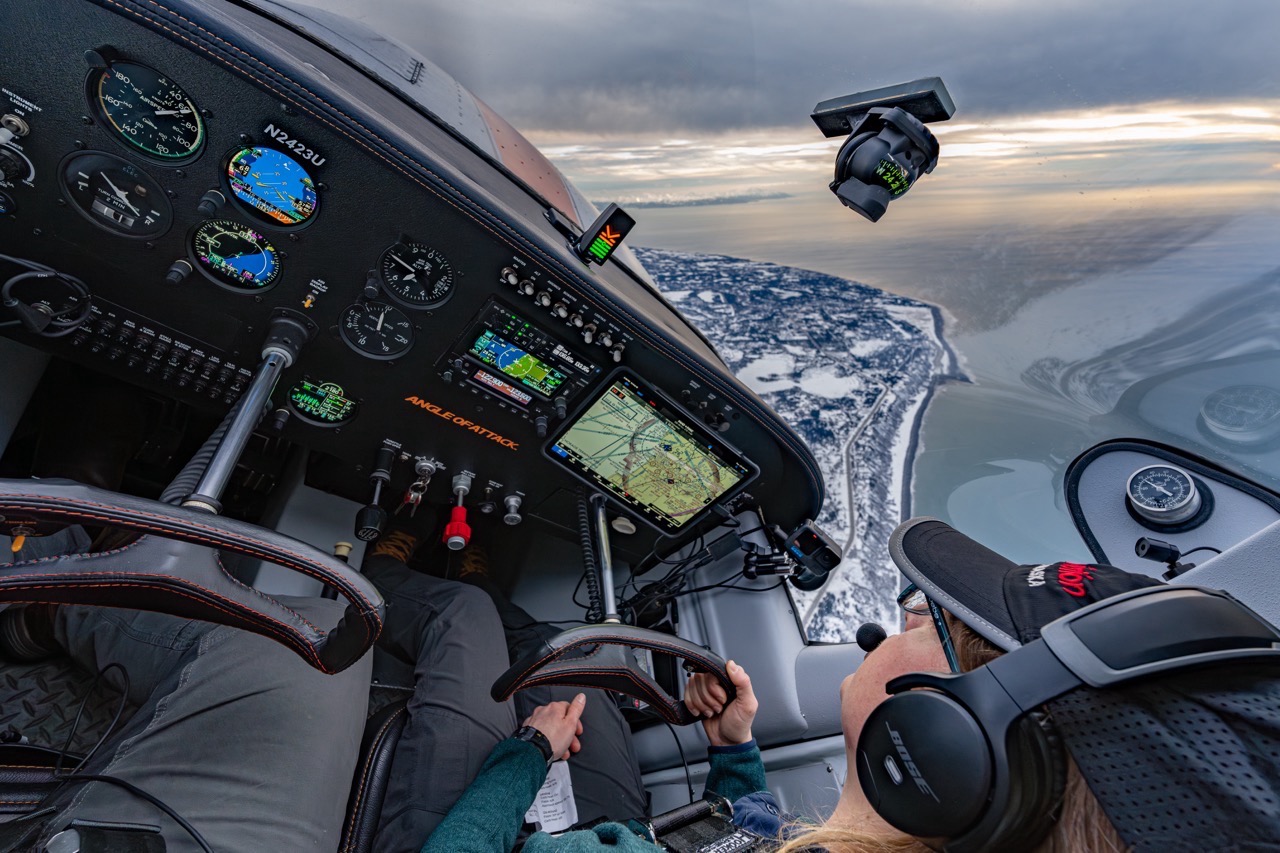
Which should you get first: CFI, CFII, or MEI? Initial CFI first. Then for most candidates, CFII before MEI — cheapest add-on, fastest, largest hireability bump. MEI later, only if your local market or airline-track timeline demands it.