Emergency Procedures Flight Training: How to Teach Engine-Out, Electrical Fire, and Lost Comms
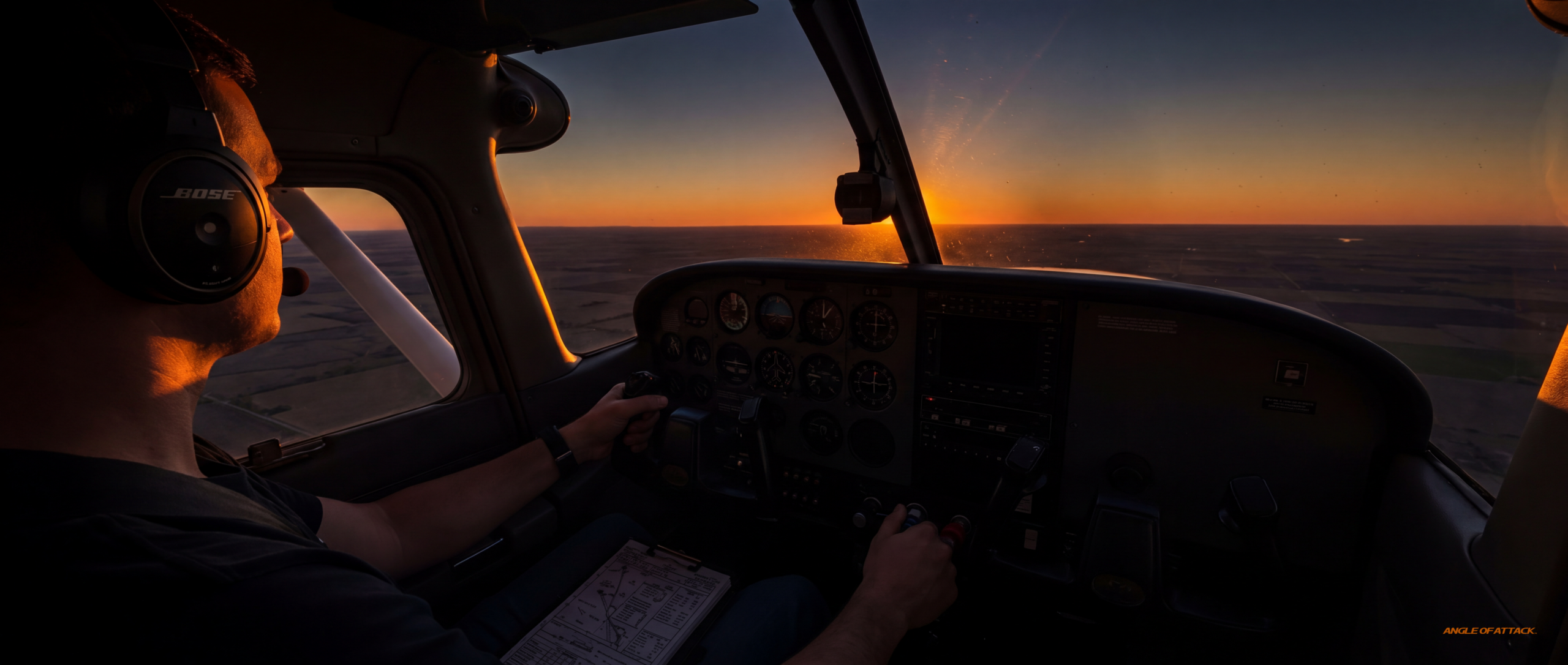
Emergency procedures flight training is the structured teaching of engine failures, fires, electrical malfunctions, and lost communications in a way that builds both the technical immediate-action flow — best known by the ABCDE mnemonic (Airspeed, Best place to land, Checklist, Declare, Execute) — and the emotional composure to execute it under stress. It’s required by 14 CFR 91.3 (the pilot-in-command’s emergency authority) and tested under CFI Airplane ACS Area of Operation XII. I’m Chris Palmer — two-time Master Aviation Educator, Gold Seal CFI, founder of Angle of Attack — and the first emergency-procedures lesson I taught as a new CFI was a textbook engine-out demo over a textbook field. It was also a textbook missed opportunity. Most CFIs only teach half of this. Here’s how to teach both halves.
- An engine failure runs on the ABCDE memory flow — Airspeed (best glide first, every time), Best place to land, Checklist, Declare an emergency, Execute the landing. Some shops still teach the older 3- or 4-letter form; the 5-letter version is the current industry consensus and the one AOPA, Flight Training Central, and FAA Safety Briefing all publish.
- Your CFI checkride task list is FAA-S-ACS-25 Area of Operation XII — Emergency Operations: A. Emergency Descent / B. Emergency Approach and Landing (Simulated) / C. Systems and Equipment Malfunctions / D. Emergency Equipment and Survival Gear. Area XII, not XI — Area XI is Basic Instrument Maneuvers. Cite it wrong and any DPE will catch it before you finish the sentence.
- The handbook chapter is FAA-H-8083-3C Chapter 18 — Emergency Procedures. Chapter 17 is Transition to Multiengine. The 3C edition renumbered it.
- AC 61-83K (October 30, 2024) is the current revision and carries forward the turnback-policy reversal first introduced in the J revision (now cancelled). CFIs are expected to demonstrate and teach a safe 180° turnback when the altitude and the airplane allow it — and the pre-takeoff briefing must include the expected altitude loss in a turnback for the specific make and model. This is the single most important policy shift for CFIs teaching this topic in the last decade.
- Never simulate engine failures by cutting the mixture below 3,000 feet AGL. Throttle-only below 3,000 AGL. Many fatal training accidents happened because a “simulated” engine-out became a real one the airplane wouldn’t restart. The regulatory floor for any simulated engine work is 14 CFR 91.119 (500 AGL non-congested), but the practical CFI standard is 2,000–3,000 AGL minimum.
- Your job is to train both layers in parallel from the first emergency drill: the technical flow (ABCDE, the POH memory items, the make-and-model specifics) and the emotional regulation (calm as a skill, anchored in startle-response research). Most CFIs only teach the first. The ones who teach both produce pilots who fly the airplane all the way to the ground on the day it counts.
The CFI Toolkit Every New Instructor Wishes They Had on Day One
Most new CFIs build their emergency-procedures lesson from scratch — a borrowed PDF, a half-remembered field-selection mnemonic, an ACS task they haven’t reread in months. The Anti-Binder Template is the one-page lesson framework I use to plan every lesson, including emergency procedures. Scenario-first. Day-One ready.
Grab the Anti-Binder Template — Free →
Walking into your first lesson with a 50-page binder won't help you.
Get my Anti-Binder One-Page Lesson Plan Template free — the lesson plan tool I built for CFI candidates who want to be ready Day 1.
Get the Anti-Binder Template Free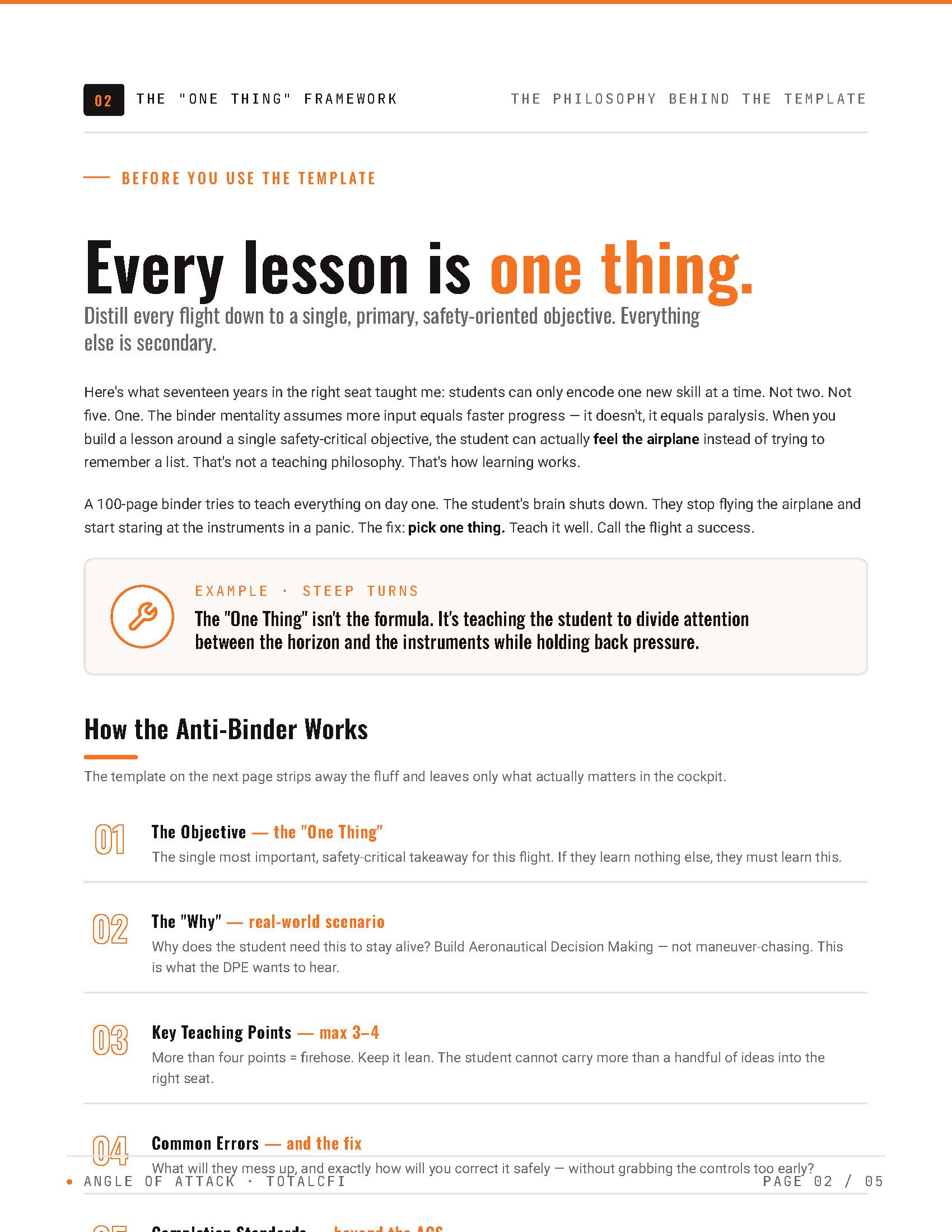
WHAT'S IN THIS GUIDE
- 1What Is Emergency Procedures Flight Training? (And Why Most CFIs Only Do Half of It)
- 2What Are the ABCDE of an Engine Failure?
- 3How to Teach Engine Failures (Without Killing the Engine)
- 4How to Teach Lost Comms Procedures
- 5How to Teach Electrical and Fire Emergencies
- 6What Is the ACS Standard for Emergency Operations?
- 7How to Build Your Student’s Startle Response (Calm as a Skill)
- 8The Four Common Emergency Procedures Errors (Ranked)
- 9How to Debrief an Emergency Procedures Lesson
- 10Frequently Asked Questions
What Is Emergency Procedures Flight Training? (And Why Most CFIs Only Do Half of It)
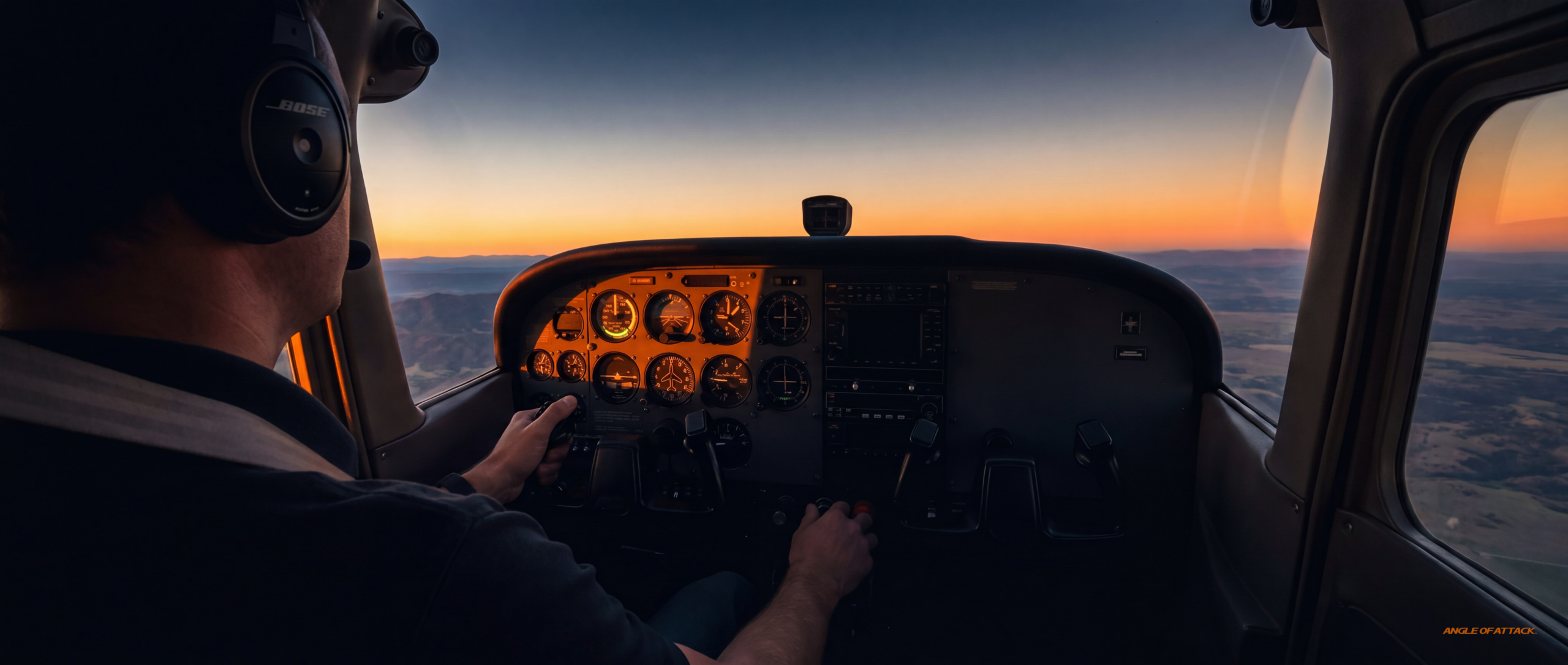
Emergency procedures flight training is structured teaching that builds two parallel curricula at once: the technical flow — the ABCDE memory sequence, the POH memory items, the make-and-model specifics — and the emotional regulation that lets a student execute that flow when their hands are shaking and their throat is dry. The first is mechanical. The second is human. Most CFIs only teach the first.
The teaching layer is what separates training from simulation. Simulation is what you did with your last instructor: a familiar field, a predictable altitude, a throttle pull at the same point every flight. Your student picks the same field, runs the same checklist, recovers when you call “go around.” That’s a rehearsal. Training is what happens when the simulation is over — and the real emergency arrives unannounced, in unfamiliar terrain, with a stimulus the student wasn’t prepared for. The job is to take the most unpredictable category of flying and turn it into a trainable, debriefable, repeatable skill set.
The regulatory hook is short and unambiguous. 14 CFR 91.3 says: “In an in-flight emergency requiring immediate action, the pilot in command may deviate from any rule of this part to the extent required to meet that emergency.” The FAA hands the PIC broad authority. If the PIC has the judgment to use it. Judgment is what we train.
The data hook is shorter still. Loss of control in-flight (LOC-I) is the leading cause of fatal general aviation accidents — nearly half of all GA fatals per the NTSB’s most recent counts. About a quarter to forty percent of those involve inadequate airspeed leading to an inadvertent stall. And in pilot surveys, roughly a quarter of respondents say their instructor did not adequately prepare them to recover from LOC-I. The emergency you didn’t train is the one your former student flies into on the day it happens.
I learned this in California in 2014, working on my commercial. We were over an unfamiliar valley I hadn’t flown before — high-desert scrub on one side, a ranch road on the other, no airports visible. My instructor pulled the throttle to idle without a word. The first three seconds were not graceful. My eyes locked on the airspeed indicator instead of going outside. I started running the wrong checklist in my head — the in-flight engine restart from my private-pilot training instead of the emergency-approach flow we were supposed to be working on. He didn’t say anything. He let me sort it. About six seconds in, I caught myself, pitched for best glide, looked outside, and picked the ranch road. We climbed out at 800 feet and debriefed on the ground for thirty minutes — not on the field selection, but on the six seconds I spent inside the panel instead of outside the airplane. That was the lesson. The flow was fine. The startle response was where the training had to happen.
If you’re new to CFI work, the first-day-as-a-CFI guide is the calm-as-a-skill sibling to this article — same framing, applied to the broader stance you bring into the right seat. And the umbrella for teaching maneuver-and-recovery awareness sits in the how to teach a stall playbook — stall awareness feeds directly into the engine-out glide, because best glide and minimum-controllable airspeed are neighbors on the airspeed tape.
What Are the ABCDE of an Engine Failure?

The ABCDE mnemonic is the canonical 5-letter engine-failure flow taught by AOPA, the FAA Safety Briefing, and every major training center. Some older lesson plans teach a 3-letter “ABC” (Aviate, Best, Checklists) or a 4-letter “ABCD.” The 5-letter version is current. Burn it in this way:
A — Airspeed (best glide first, every time). When the engine quits, the airplane is now a glider. Pitch immediately for the best glide speed in your POH. For a Cessna 172S that’s about 68 KIAS clean. Don’t think about fields, don’t reach for the checklist, don’t key the mic. Pitch first. Trim. Lock it in. Everything else costs altitude you don’t have.
B — Best place to land. Eyes outside. Scan first for airports (yours, or any nearby). Then fields — and run the five S’s: size, surface, surroundings, slope, situation. Then roads, with the caveat that powerlines are the silent killer along most rural routes. Then everything else. Decide fast. Pick the spot and commit. A mediocre field flown all the way down beats a perfect field you can’t reach.
C — Checklist. Memory items first. Most POHs box or bold the time-critical steps — fuel selector, mixture, primer, ignition, master, fuel pump (on fuel-injected engines). Run them from memory. Then pull the printed checklist to confirm. If you’re below about 800 AGL after takeoff, skip the checklist and fly the airplane to the landing. There’s no time. The handbook chapter behind all of this is FAA-H-8083-3C Chapter 18 — and yes, Chapter 18, not 17. The 3C edition renumbered it.
D — Declare an emergency. Squawk 7700. Mayday-mayday-mayday on 121.5 or the working frequency. Aircraft type, location, souls on board, intentions. Don’t be embarrassed. The radio call costs you nothing and buys you ATC’s full attention, search-and-rescue activation, and emergency-vehicle staging at any airport you reach.
E — Execute the landing. Fly the airplane all the way to the ground. Don’t stall it in. Don’t try to stretch the glide. Hold your best glide, configure for the landing as you get close (flaps as appropriate, mixture/fuel/ignition/master off near touchdown to reduce post-impact fire risk), pick the spot, commit, and land the airplane. If you froze at A, you don’t get to E.
Order matters. Students reverse it under stress — they reach for the checklist before pitching for glide, they fixate on the restart attempt instead of picking a field, they forget to declare. Drilling the order is the lesson. Not the letters. Anybody can memorize five letters. Flying them in order, under startle, with the engine genuinely silent — that’s the trainable.
How to Teach Engine Failures (Without Killing the Engine)
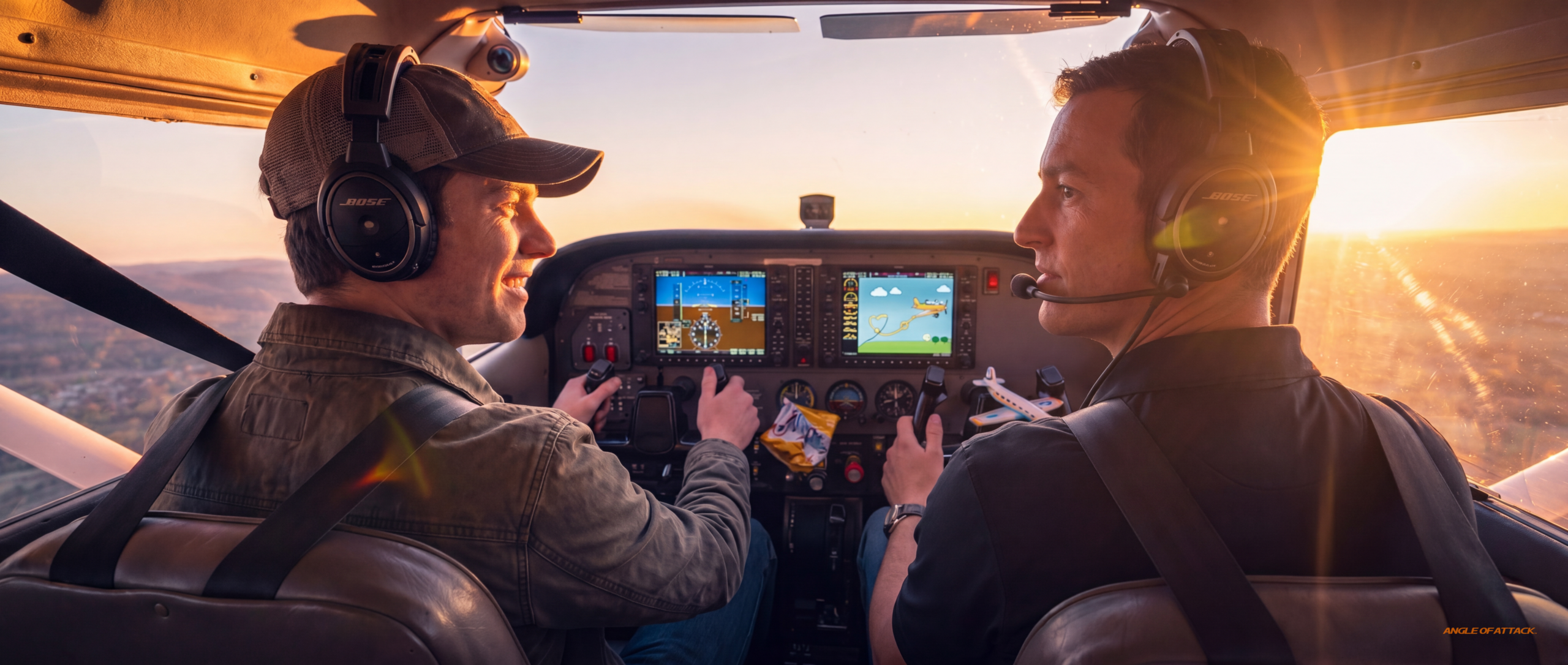
Two non-negotiable rules before we get to the method:
- Throttle only below 3,000 feet AGL. Never mixture. A mixture cut is a real engine stop — the engine actually quits running. If the next attempted restart doesn’t catch (and they sometimes don’t), you have a real emergency from a “simulated” one. NTSB has investigated more than one fatal training accident that began with a CFI cutting the mixture on a student. Don’t be the next one. Throttle to idle is enough; the airplane glides the same.
- Minimum altitude for simulated engine work is 2,000–3,000 feet AGL. The regulatory floor per 14 CFR 91.119 is 500 AGL over non-congested areas, but the practical CFI standard is 2,000–3,000 AGL minimum to leave room for the student to mismanage the glide, you to take over, and the airplane to climb away. Start high.
With those locked, here’s the 5-step teaching sequence. It’s HowTo-schema-eligible — write it as a numbered list and the markup carries through:
- Brief on the ground. Whiteboard the ABCDE flow. Walk through the make-and-model specifics — best glide, memory items, expected altitude loss in a turnback for the specific airplane. Discuss field selection criteria using the five S’s. The student should be able to recite the flow before you start the engine.
- Demonstrate, narrating every step. You fly. You pull the throttle to idle. You verbalize as you go: “Airspeed first — pitch for best glide. Eyes outside — there’s a field at two o’clock. Memory items — fuel selector, mixture, primer, mags, master. Mayday call. Configuring for landing.” The student watches and hears the flow at the same time. They are not flying yet. They are watching what thinking out loud under emergency sounds like.
- Predictable student attempt. Same field. Same altitude. You announce: “In ten seconds I’m going to pull the throttle. Show me ABCDE.” The student knows it’s coming. They run the flow. You coach in real time. The point of step 3 is to build the muscle memory of the order, not the surprise.
- Surprise injection. Different terrain. Different altitude (still above 2,000 AGL). No announcement. You pull the throttle at a non-obvious moment — mid-conversation, mid-clearing-turn, on a leg with no obvious field below. The student handles it without the framing. This is the training. Their startle window opens. They have to fly through it.
- Debrief. On the ground, with notebooks open. The opening question: “Walk me through your decision tree, second by second.” You listen for what was automatic, what was effortful, what was skipped. You note it. You build the next lesson around what was skipped.
The hierarchy is non-negotiable: ground brief → demonstration → predictable practice → surprise injection → debrief. Skip any step and the lesson breaks. Skip the demonstration and the student has no model. Skip the surprise injection and you’ve only trained a rehearsal. Skip the debrief and the lesson never crystallizes.
The Make-and-Model Block (Cessna 172S, as the canonical example)
For a Cessna 172S student, these are the memory items. Verify against the specific tail number’s POH — equipment differs.
- Best glide: 68 KIAS clean (POH Section 3, also marked by a placard on the panel).
- Engine failure during takeoff run: throttle idle, brakes apply, wing flaps retract, mixture idle cutoff, ignition off, master off.
- Engine failure immediately after takeoff (insufficient runway): airspeed 65 KIAS, mixture idle cutoff, fuel selector off, ignition off, wing flaps as required, master off — land mostly straight ahead.
- Engine fire in flight: mixture idle cutoff, fuel selector off, master off, cabin heat and air off, airspeed 100 KIAS until fire is out.
- Electrical fire in flight: master off, avionics off, all switches off (except ignition), vents/cabin air/heat closed, fire extinguisher activated, vent the cabin once the fire is out.
The shape of the lesson — what the student does, what you do, how you debrief — is universal. The numbers are airplane-specific. The CFI’s job is to teach the shape well enough that a student can pick up a Cherokee POH next year and find the memory items in the same place. (For the broader teaching scaffold that this lesson sits inside of, the CFI lesson plan template is the parent.)
The Turnback After Engine Failure on Takeoff (AC 61-83K)
In October 2024 the FAA published AC 61-83K, the current revision of the Flight Instructor Refresher Course AC. It carries forward the turnback-policy guidance first introduced in the J revision (since cancelled) and reversed a decades-old training orthodoxy. The old rule was simple: never turn back after an engine failure on takeoff. Land straight ahead. The new rule is more demanding: flight instructors should demonstrate and teach trainees when and how to make a safe 180-degree turnback to the field after an engine failure. The pre-takeoff briefing must include the expected altitude loss in a turnback for the specific make and model, and the altitude at which a turnback can safely be conducted.
Translation: teach it both ways. Below a make-and-model-specific altitude, land straight ahead. Above it, a turnback may be the right answer. The CFI’s job is to walk the student through the math for their airplane, demonstrate the maneuver at safe altitude (the practice version — never below 1,500 AGL of usable maneuvering altitude), and bake the decision into every pre-takeoff briefing. AOA’s own The Impossible Turn article carries the full altitude framework — below 400 AGL hit straight, 500–1,000 AGL deviate up to 60° either side, 1,000+ AGL judgment call. Link to that piece from the lesson; it’s the canonical AOA stance.
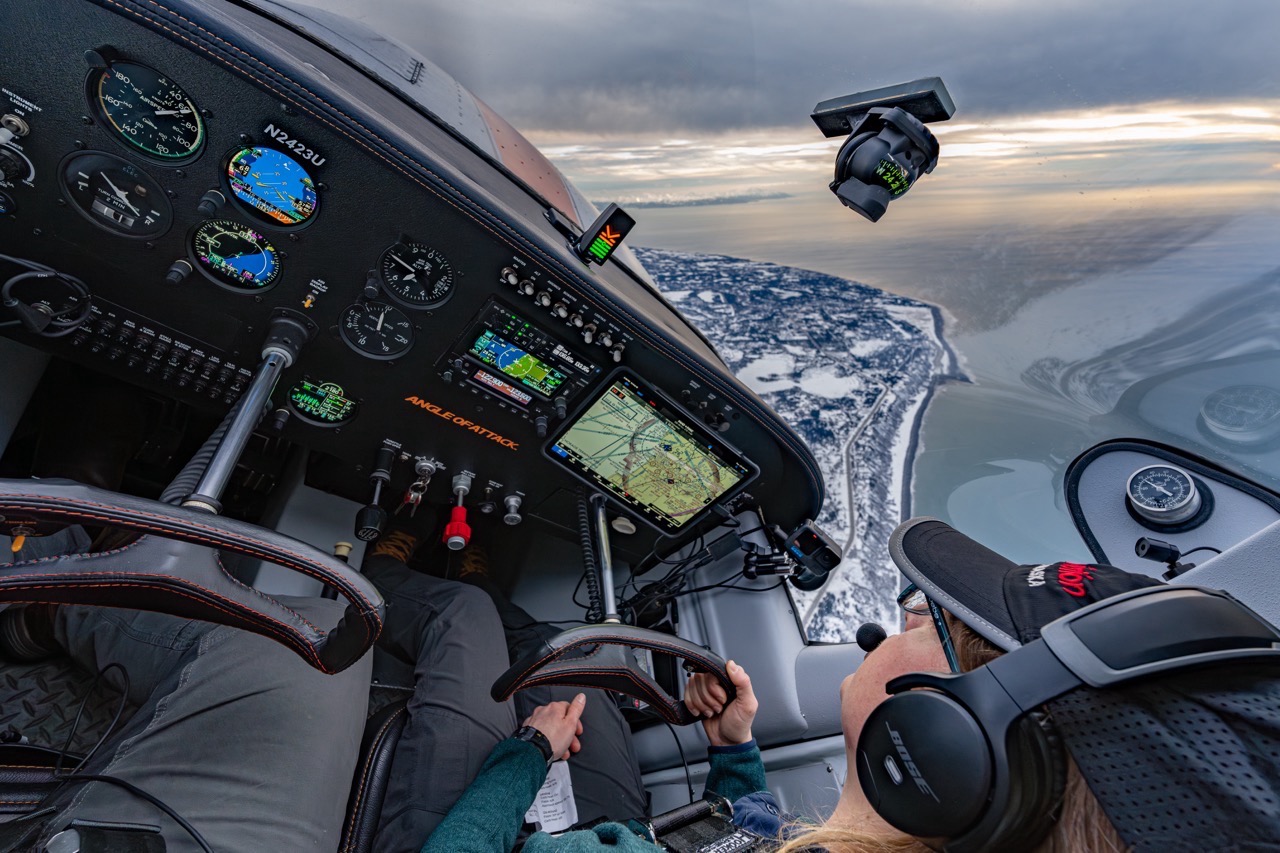
Two years into the CFI ticket I had a student in N2423U at Homer, Alaska — the same 172 I still fly. We were practicing engine-outs in the bluffs along the coast, a region where the terrain doesn’t politely supply a “perfect field.” Glaciers on one side, ocean on the other, scrub between. I pulled the throttle on a downwind leg over a stretch where the only realistic option was a beach the tide was still on. He pitched cleanly for best glide. He scanned — and froze for what felt like a long time. Then he made a decision out loud: “I’m not going to make the beach. I’m going for the gravel bar.” He flew the gravel bar all the way to the simulated touchdown, configured the flaps late, slipped to lose altitude over the last quarter mile. Was it the textbook field? No. Was it a flyable field he committed to and flew well? Yes. The Alaska terrain made the field-selection lesson visceral in a way Wisconsin never did. He learned that field selection is a one-decision skill, not a search. That’s the lesson the surprise injection teaches when the terrain backs you up.
For the maneuver-class siblings on the stall side of this same airspeed-discipline conversation, see How to Teach Power-Off Stalls and How to Teach Power-On Stalls. Best glide and minimum-controllable airspeed are neighbors; the student who owns one usually starts to own the other.
How to Teach Lost Comms Procedures
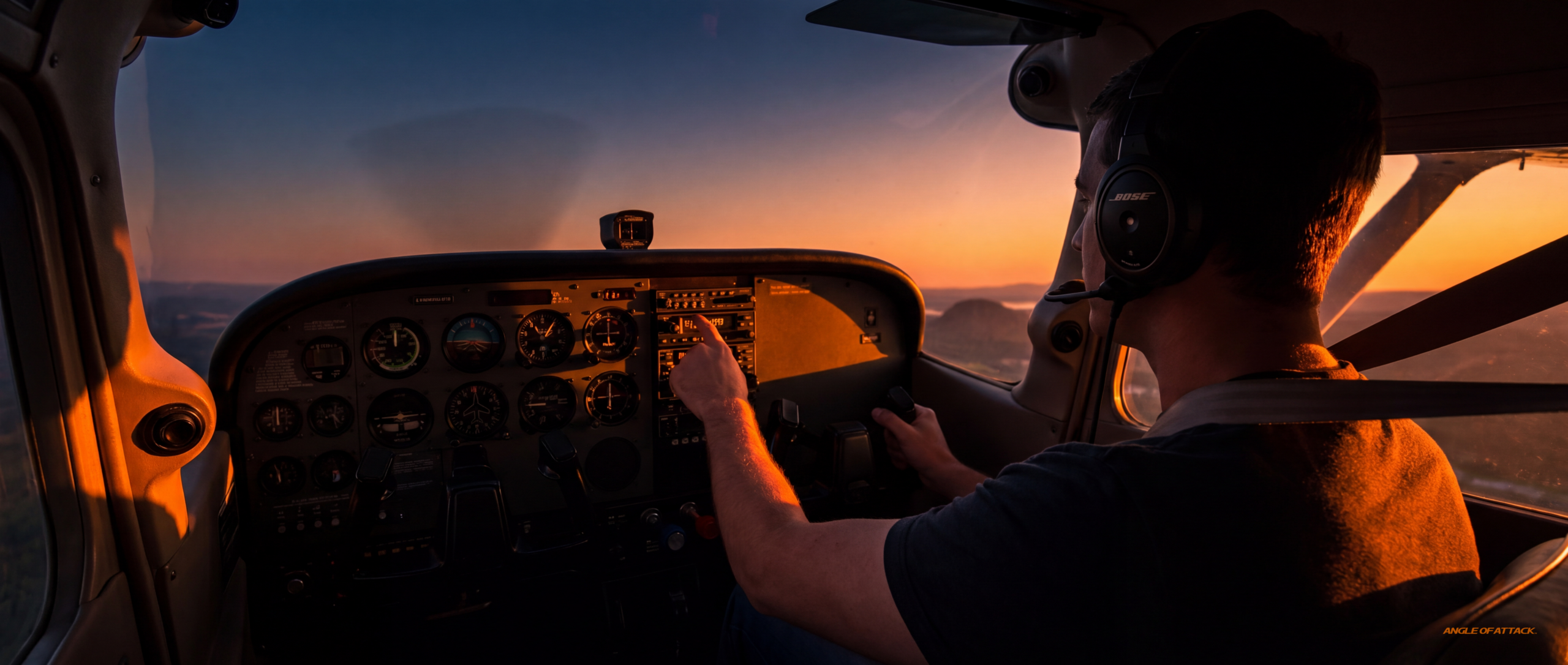
Lost comms is two different lessons depending on the rating in the left seat. Teach them separately, then teach the student to recognize which one they’re flying.
VFR Lost Comms
The flow is short. Squawk 7600. Try 121.5 (guard) on the second radio if you have one. Watch for light gun signals from any controlled tower — yes, the FAA still tests these on the private oral, because they still work and they remain the only universal recovery protocol when the radio is dead. The basic VFR rule per 14 CFR 91.185(b) is: if VFR conditions are encountered or were already present, continue VFR and land as soon as practicable. You don’t have to land at the airport you were going to. You just have to land somewhere safe.
The radio-troubleshoot flow before you commit to “lost comms” is worth drilling: switch radios, switch headsets, switch frequencies, check breakers, ident. Most “lost comms” calls in training are actually a stuck mic, a bad headset jack, or a pulled breaker. Teach the student to rule those out first.
IFR Lost Comms
The IFR side is more structured because you’re in a system that has expectations about you. The route hierarchy is AVE F — fly the route per (in priority order) Assigned (your last cleared route), Vectored (the heading the controller last gave you), Expected (the route you were told to expect in a further-clearance instruction), then Filed (the route on your flight plan). The altitude hierarchy is the highest of: last assigned, the minimum IFR altitude for the segment, or the expected altitude in a further-clearance. The full text lives at 14 CFR 91.185; read it once in full before the next time you teach this — the subsection structure is the part students miss.
The Teaching Tip
The cleanest way to simulate lost comms in a training flight is the cold-mic drill. The student is at the controls. You tell them up front: “Sometime in the next ten minutes I’m going to stop responding on the intercom. You won’t hear me. Your job is to run the lost-comms flow as if I’m ATC and I’ve gone silent.” Then you stop responding for thirty seconds. They go through it. You watch. You debrief.
That drill builds the cognitive muscle — the thinking of running through the troubleshoot flow before declaring lost comms — without burning a real radio call. It’s the kind of progressive-complexity exposure the first-day-as-a-CFI framing is built on.
How to Teach Electrical and Fire Emergencies
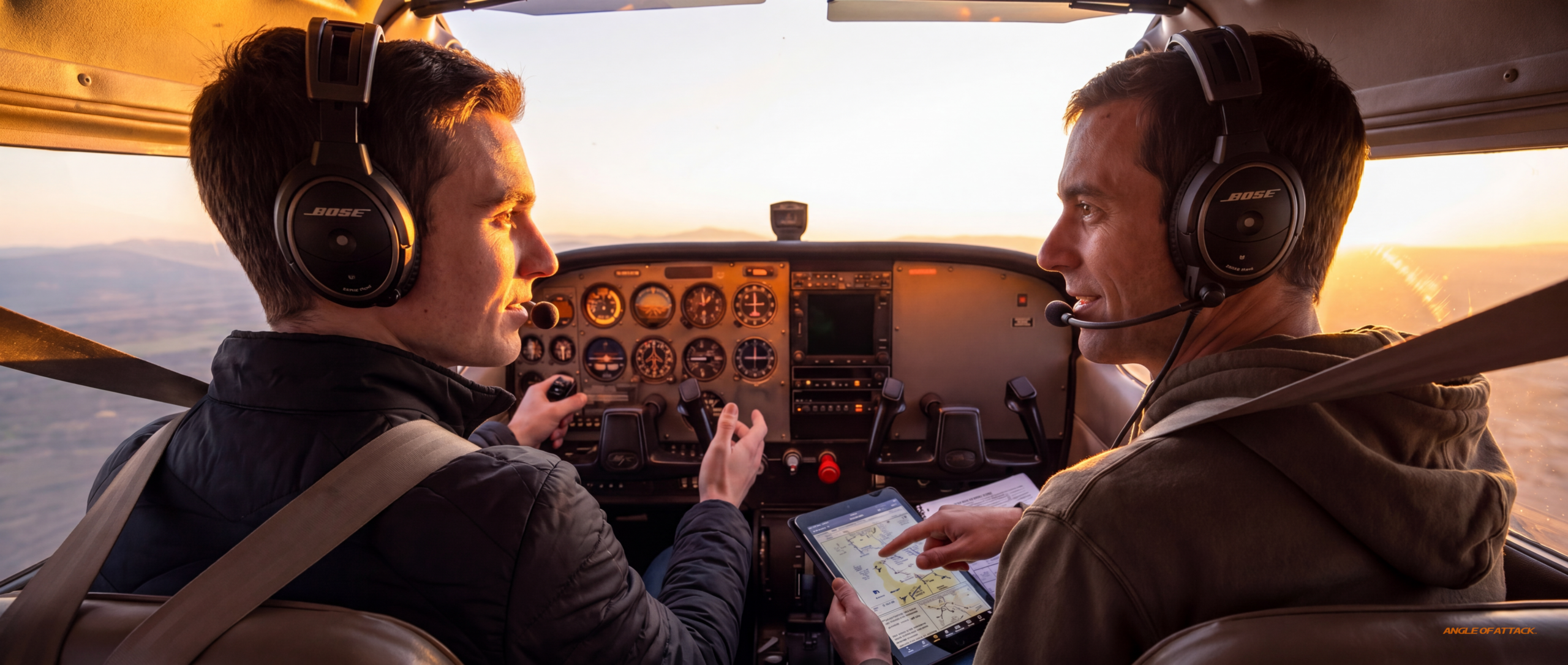
Fire emergencies are rare. The cost of getting one wrong is total. That’s why we train them — not because they happen often, but because the failure mode is unrecoverable. Ground-brief them thoroughly. Never simulate a fire in flight.
Engine Fire in Flight
The order matters. Mixture idle cutoff comes first because it removes the fuel. Fuel selector off comes second because it removes the fuel path. Master off removes electrical ignition sources. Then cabin heat and air off to avoid pulling smoke into the cabin. Then airspeed 100 KIAS (or the POH-specified dive speed) until the fire extinguishes — the airflow blows the fire out. Then immediate descent and divert.
Teach the why of the order. Students who memorize the steps without the rationale reverse them under stress.
Electrical Fire in Flight
Different problem, different flow. Master off removes the source. Avionics off, all switches off (except ignition — the magnetos don’t run on the electrical bus, the engine keeps running without electrical power). Vents, cabin air, cabin heat closed to starve the fire. Fire extinguisher activated if needed. Then vent the cabin once the fire is out and the smoke needs to clear.
For a fuller pilot-side walk-through of the electrical-fire scenario in a 172, Boldmethod’s article is the cleanest reference on the SERP — it makes the point that the engine keeps running fine without electrical, which is the part students don’t believe until they’ve seen it.
Cabin Fire
Vent. Smoke evac. Immediate divert. There is no “isolate the system” step in a cabin fire — by the time you smell it the smoke is the emergency.
Why Train What’s Rare
Fire is the example, but the principle is broader: train what’s rare when the cost of failure is total. Engine failures are also rare on any given flight; we train them obsessively because the cost of getting one wrong is high. Same logic applies to fires. The way to teach the rare-but-fatal is on the ground — the whiteboard, the POH, the verbal-flow drill — and never with a real stimulus in the airplane. The student who can recite the engine-fire flow on the ground in fifteen seconds, eyes closed, has the memory item where it needs to be.
What Is the ACS Standard for Emergency Operations?

The student-pilot side lives at FAA-S-ACS-6 (Private Pilot ACS) — Area of Operation IX (Emergency Operations). The tasks include emergency descent, emergency approach and landing (simulated), systems and equipment malfunctions, and emergency equipment and survival gear. Your private student must be able to do these things on their checkride. They must also be able to talk about them — the oral portion is where the field-selection logic and the AC 61-83K turnback decision will surface.
The CFI candidate side is FAA-S-ACS-25 (Flight Instructor Airplane ACS) — Area of Operation XII (Emergency Operations). Area XII, not XI. Area XI is Basic Instrument Maneuvers — a completely different topic. Cite Area XI on your CFI oral and you’ll watch the DPE’s pen come out before the sentence is finished. The single-engine tasks under Area XII are:
- Task A — Emergency Descent
- Task B — Emergency Approach and Landing (Simulated)
- Task C — Systems and Equipment Malfunctions
- Task D — Emergency Equipment and Survival Gear
(Multi-engine candidates also have tasks E, F, and G — out of scope for the single-engine teaching frame here.)
The pedagogical layer under all of this is in the Aviation Instructor’s Handbook (FAA-H-8083-9B), Chapter 2 — Human Behavior. Stress, anxiety, and the way both degrade performance are doctrine, not opinion. Read it before your CFI oral. The DPE expects you to be able to talk about how stress affects performance, not just that it does.
This is the section where the TotalCFI Course earns its keep. TotalCFI Lesson 4.3 — Managing Students as People is the lesson that takes a procedure-trained CFI candidate and gives them the emotional-regulation vocabulary the ACS doesn’t spell out but DPEs and real students expect. The technical flow is half the job. The other half is sitting in the right seat of a student who is genuinely afraid — and being the calm in the cockpit until the lesson can land. That’s not a personality trait. That’s a trained skill. Be the CFI your student trusts when the engine quits.
For the full Area XII context as it shows up on your CFI ride — and how the oral and flight portions interlock — the CFI checkride pillar guide is the parent piece.
How to Build Your Student’s Startle Response (Calm as a Skill)
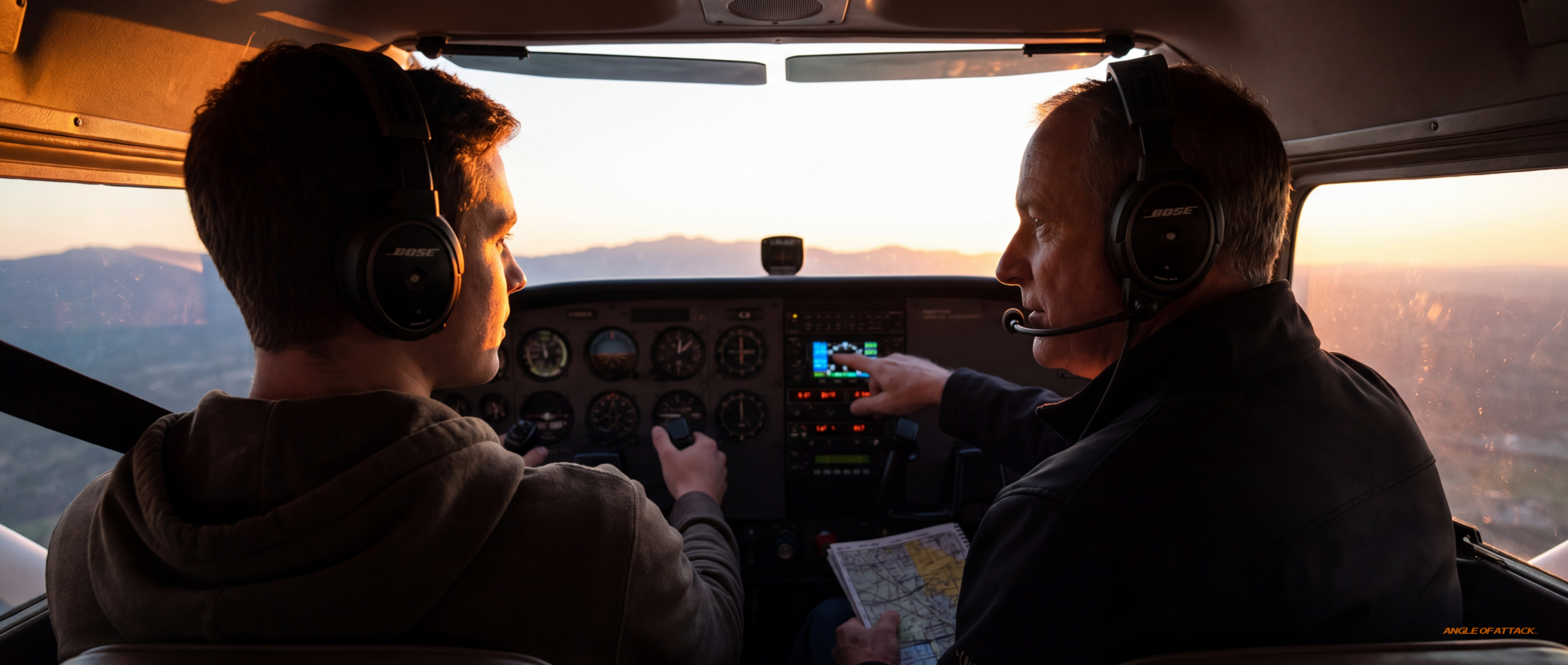
The startle response is not a personality trait. It’s a quantifiable physiological window. Research from EASA’s Startle Effect Management (2015), Frontiers in Neuroergonomics (2023), and the FAA Safety Briefing’s coverage of the topic converges on the same number: the startle response is a 4 to 10 second window in which fine motor control, working memory, and decision-making are degraded. The amygdala fires before the cortex catches up. The body acts before the pilot decides. That’s the biological basis for “calm as a skill.”
The FAA’s own training methodology for this lives in AC 120-111 (Upset Prevention and Recovery Training). The AC is written for Part 121 carriers, but the methodology translates directly to GA. The principle is simple and counterintuitive: the way to train calm is to train startle. Not the technique — the exposure. You produce the surprise condition; you watch the student fly through it; you debrief specifically on the startle window itself.
The 4-stage progressive complexity sequence is the practical version of that doctrine:
- Predictable. Same scenario, same altitude, same field, announced ahead of time. The student builds the flow without surprise. Goal: muscle memory of ABCDE.
- Unannounced. Same scenario, but no countdown. The throttle moves when you decide. Goal: introduce the first surprise window.
- Mid-task. The student is doing something else — clearing turns, navigating, mid-radio-call — when the throttle comes back. Goal: train task-switching under startle.
- Realistic stimulus. Unfamiliar terrain, ambiguous fields, an actual decision the student has to make under time pressure with no obvious right answer. Goal: train the decision under startle, not just the procedure.
You don’t do all four in one lesson. You build them over a syllabus. A first-time student might spend three flights at stage 1 before you go to stage 2. A CFI candidate might be at stage 4 inside a single afternoon. Read the room. The point is to intentionally raise the surprise factor over time, not to spring stage 4 on stage 1.
A student I trained outside of Homer froze the first three times I simulated an engine failure on him. Not a “took too long” freeze — a genuine, hands-locked, eyes-on-panel, didn’t-pitch freeze. After the third one we got on the ground and I asked him a question I’d been working up to: “What are you actually afraid of when I pull the throttle?” He thought for a long moment. He said he kept seeing his dad’s face in the right seat — his dad had been a pilot, had stopped flying after a friend died in a forced landing, and had told my student he was “too smart” to fly. The fear in the cockpit wasn’t about the engine. It was about whether he was going to be the one in the story. We talked about that for an hour. We didn’t fly that day. The next flight, attempt 4, I pulled the throttle without warning and he ran ABCDE clean — pitched, picked the field, ran the memory items, made the call, configured for landing. No freeze. Same airplane, same student, same maneuver. What changed was inside him, and what made the change possible was the conversation between attempts 3 and 4.
That conversation is the lesson AC 120-111 is pointing at and most CFIs walk past. Calm is trained, not innate. The training is half technical and half conversational. If your debrief never gets to “what were you carrying into the cockpit when the throttle came back,” you’re only training the technical half. The how to teach a stall playbook frames this same principle for stall recognition — the emotional layer is the same regardless of which maneuver triggers it.
The ATC audio in that video is the entire teaching point of calm-as-a-skill. Listen to the pilot’s voice. Real engines stop. The voice didn’t. That voice is the trained product of a thousand small startle exposures, debriefed.
The Four Common Emergency Procedures Errors (Ranked)
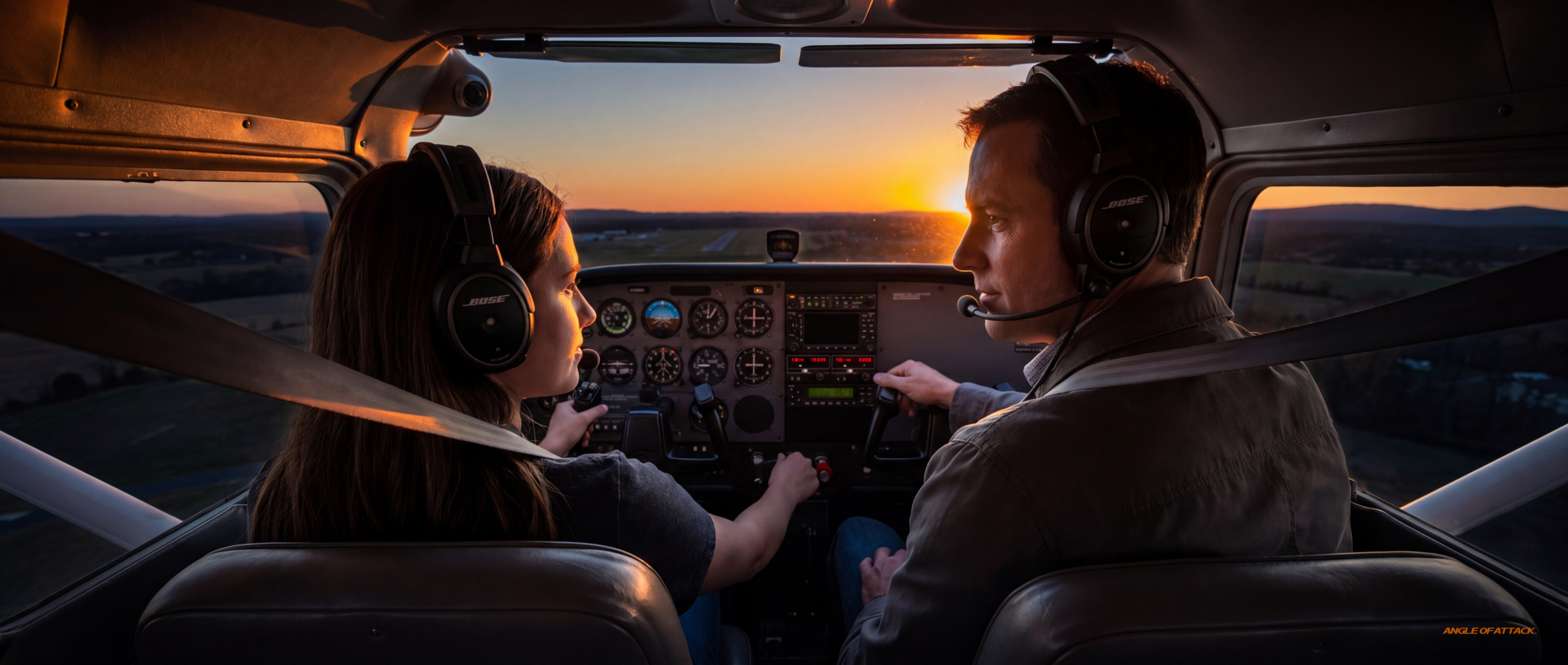
Four errors account for most of what goes wrong in emergency procedures training. The CFI causes three of the four — only the first is unambiguously a student error, and even there the CFI is responsible for the drill that should have eliminated it.
- Reaching for the checklist before pitching for best glide. The #1 student error and the one that costs the most altitude. Right-seat cue: “Airspeed first.” (Said calmly. Not yelled.) Diagnostic question on the ground: “What was the airspeed indicator doing when you reached for the checklist?” The student usually doesn’t know. That’s the lesson.
- Fixating on the restart attempt instead of committing to a field. The student keeps cycling through the in-flight restart checklist while altitude drains. The CFI causes this by always practicing engine-outs in places where a field is obvious and the restart attempt is “free.” Right-seat cue: “Fly the airplane.” Diagnostic question: “At what altitude did you commit to the field? Did you commit before or after the restart attempt?”
- Skipping the passenger brief and the radio call. These aren’t on the ACS so they get dropped from practice. They’re the legal/insurance protection in a real emergency. Right-seat cue: “Brief your passenger.” (Use a verbal-tag drill — the student says one sentence to the empty right seat about brace position.) Diagnostic question: “If this had been real, what would your passenger have heard from you?”
- Cutting the mixture below 3,000 AGL during simulated engine failures. Pure CFI error. Never the student’s fault. There is no scenario in which mixture-out below 3,000 is the right call. Use throttle. The airplane glides the same. Many fatal training accidents happen the moment the engine doesn’t restart on the next attempt.
Each error is a teachable moment if you have the diagnostic question ready before the debrief. Without it you’ll say “you skipped the radio call” and the student will say “right” and nothing will change.
How to Debrief an Emergency Procedures Lesson
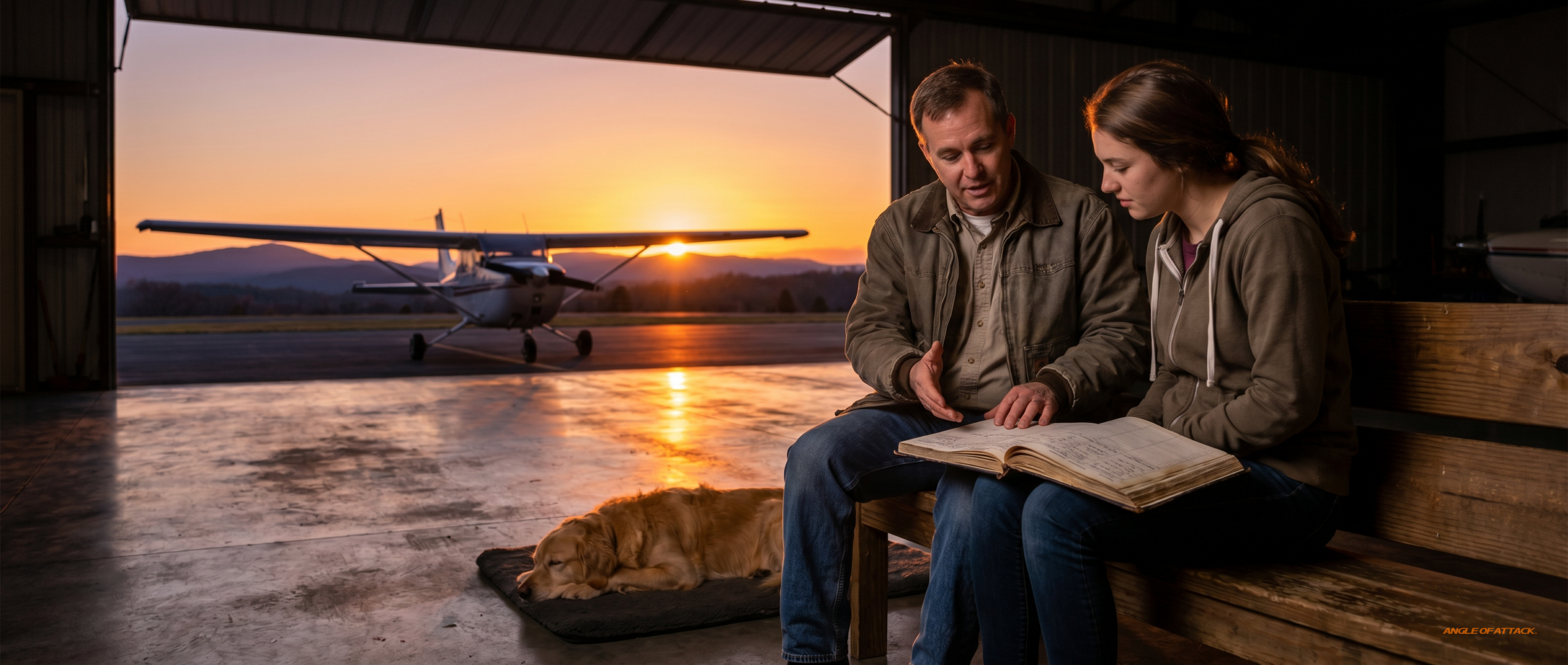
The debrief is where the lesson lives. Skip it or rush it and the flight was a rehearsal, not a training event. Two questions carry most of the load.
The big question: “Walk me through your decision tree, second by second.”
Let the student narrate. Don’t correct yet. Listen for the gaps — the place where they say “and then I…” and you noticed they actually did something else, or the place where they skip a step entirely. Note it. Don’t interrupt. Let them tell the whole arc first.
The follow-up: “Where did you feel the startle? What did your body do?”
This is the question most CFIs never ask. It makes the emotional/physical experience explicit. The student will tell you their hands shook, or their throat tightened, or their eyes locked on the airspeed indicator, or they couldn’t remember what came after B. Good. That’s the conversation the lesson needs. Once they’ve named it, you can train it.
The wrong debrief is a binary: “You did/didn’t follow the checklist. Pass/fail. Onward.” That debrief teaches the student to perform for the checklist next time. It doesn’t teach airmanship.
The Aviation Instructor’s Handbook (FAA-H-8083-9B) Chapter 5 — Assessment — frames this as learner-centered grading. The student does most of the talking; the CFI listens, asks targeted follow-ups, and surfaces the gaps without filling them in for the student. The student who debriefs their own flight integrates the lesson three times deeper than the student who is told what they did wrong.
End every debrief with one specific behavior change for the next flight. Not a list. One. “Next flight, the first thing I want you to say out loud when the throttle moves is the airspeed.” That’s it. One behavior. Build them up across the syllabus.
What are the ABCDE of an engine failure?
ABCDE is the canonical 5-letter engine-failure flow: Airspeed (pitch for best glide first), Best place to land (eyes outside — airports, then fields, then roads), Checklist (memory items first, then the printed checklist), Declare an emergency (squawk 7700, Mayday on 121.5), and Execute the landing (fly the airplane all the way to the ground). The order matters — students reverse it under stress.
How do you simulate an engine failure safely?
Throttle to idle, never mixture cut below 3,000 feet AGL. The regulatory floor per 14 CFR 91.119 is 500 AGL non-congested, but the practical CFI standard is 2,000–3,000 AGL minimum to leave room for the student to mismanage the glide and the airplane to climb away. Use a familiar scenario for the first attempt; introduce surprise and unfamiliar terrain progressively over the syllabus.
What is the ACS standard for emergency operations?
For private students: FAA-S-ACS-6 Area of Operation IX (Emergency Operations). For CFI candidates: FAA-S-ACS-25 Area of Operation XII (Emergency Operations) — Area XII, not XI. The four single-engine tasks under Area XII are emergency descent, emergency approach and landing (simulated), systems and equipment malfunctions, and emergency equipment and survival gear.
Can you turn back to the runway after an engine failure on takeoff?
Sometimes. AC 61-83K (October 30, 2024) is the current revision of the FIRC AC and carries forward the turnback-policy reversal first introduced in the J revision (now cancelled). It requires CFIs to demonstrate and teach a safe 180° turnback when altitude and airplane allow. The pre-takeoff briefing must include expected altitude loss in a turnback for the specific make and model. The Angle of Attack framework: below 400 AGL hit straight, 500–1,000 AGL deviate up to 60°, 1,000+ AGL judgment call. See The Impossible Turn for the full altitude framework.
What does ABCDE stand for in flying?
Airspeed, Best place to land, Checklist, Declare, Execute. It’s the 5-letter engine-failure flow. Some older lesson plans teach a 3-letter “ABC” (Aviate, Best, Checklists) or a 4-letter “ABCD”; the 5-letter version is the current industry consensus and the one AOPA, the FAA Safety Briefing, and most major training centers publish.
How do you teach lost comms procedures?
Teach VFR and IFR separately. VFR: squawk 7600, try 121.5, watch for light gun signals, continue VFR and land as soon as practicable per 14 CFR 91.185(b). IFR: route hierarchy AVE F (Assigned, Vectored, Expected, Filed), altitude hierarchy highest of last assigned / minimum IFR / expected. Simulate with a cold-mic drill — stop responding on the intercom for 30 seconds while the student runs the flow.
How long should an emergency procedures lesson last?
A first scenario-based engine-out block runs about 1.5–2 hours total: 20–30 minutes of ground brief (whiteboard ABCDE, make-and-model specifics, the AC 61-83K turnback math for the airplane), 0.7–1.0 hours of flight (demo, predictable attempt, surprise injection — three good handoffs beat eight rushed ones), and 25–30 minutes of debrief. Don’t stack three different emergency types in one flight — the student needs time to integrate each one.
What is the startle response in pilots?
A 4 to 10 second physiological window after an unexpected stimulus in which fine motor control, working memory, and decision-making are degraded. Documented in EASA’s Startle Effect Management (2015), Frontiers in Neuroergonomics (2023), and FAA AC 120-111. It’s trainable through progressive-complexity exposure — predictable, then unannounced, then mid-task, then realistic-stimulus.
If the CFI checkride is keeping you up at night, you're prepping for the wrong thing.
TotalCFI teaches you to walk into the oral as a teacher, not a test-taker — the reframe most candidates only figure out after they've already failed once.
What’s the toughest thing you’ve run into teaching emergency procedures? The student who reached for the checklist before pitching for glide? The CFI candidate who didn’t know the AC 61-83K turnback policy? The first time a “simulated” emergency turned into something closer to real? Drop a comment below — I read every one.