
How to Recover From a Spin: The PARE Procedure Every Pilot Must Know Cold
To recover from a spin, use the PARE procedure: pull the Power to idle, neutralize the Ailerons, apply full opposite Rudder against the rotation, then briskly move the Elevator forward to break the stall. Once rotation stops, neutralize the rudder and smoothly recover from the dive. That single sequence — Power, Ailerons, Rudder, Elevator — is the backbone of nearly every light-airplane spin recovery, and it works because a spin is just an aggravated stall with rotation. Break the stall, stop the yaw, fly out of the dive. Below, we’ll unpack each step, why the order matters, and the mistakes that turn a recoverable spin into a fatal one.
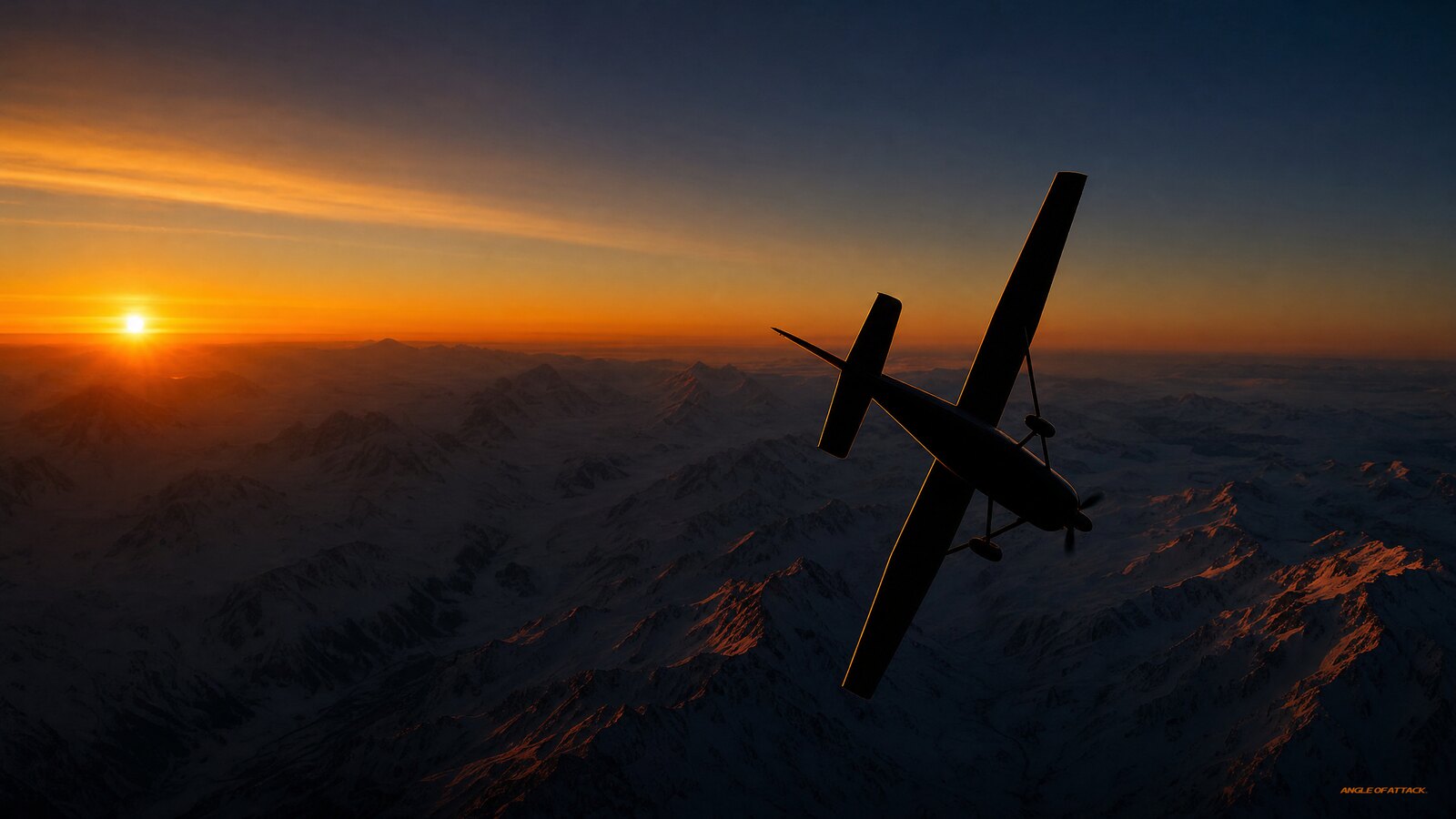
- A spin is a stall plus yaw. Both wings are stalled, but one is more deeply stalled than the other, which drives the autorotation. You cannot stop a spin without first breaking the stall.
- PARE is the universal light-airplane recovery: Power idle, Ailerons neutral, Rudder full opposite, Elevator forward. Do the steps in order — rudder before elevator.
- Ailerons are a trap. Holding aileron against the spin can flatten it and make recovery harder. Neutralize them.
- The most dangerous spin happens low and slow — an uncoordinated, cross-controlled stall in the base-to-final turn. There’s no altitude to recover, so prevention is everything.
- Always confirm the recovery procedure in your airplane’s POH/AFM. Some airplanes specify a slightly different technique, and the manufacturer’s certified method wins.
- Spin avoidance lives in the rudder. Coordinated flight at low airspeed — the ball centered — keeps a stall from becoming a spin in the first place.
- You must be able to recognize, prevent, and recover from spins per the Airman Certification Standards, even though the private pilot checkride no longer requires a demonstrated spin.
WHAT’S IN THIS GUIDE
- 1What exactly is a spin?
- 2How do you recover from a spin step by step?
- 3Why does the order of the PARE steps matter?
- 4What causes an airplane to enter a spin?
- 5What are the phases of a spin?
- 6What’s the difference between a spin and a spiral dive?
- 7How much altitude does a spin recovery take?
- 8Why are ailerons dangerous during a spin?
- 9How does engine power make a spin worse?
- 10What does CG have to do with spin recovery?
- 11How do you avoid an unintentional spin entirely?
- 12Do private pilots have to demonstrate spins on the checkride?
- 13PLT Study Guide
- 14Frequently Asked Questions
What exactly is a spin?
A spin is an aggravated stall that results in autorotation — the airplane descends in a corkscrew path while rotating about a vertical axis. Both wings are stalled, but one wing is stalled more deeply than the other. The Airplane Flying Handbook (AFH FAA-H-8083-3C, Chapter 5) describes a spin as having a high angle of attack on both wings with continuous, self-sustaining rotation.
Here’s the part students miss: a spin requires two ingredients at once — a stall and yaw. Stall the wings without yaw and the airplane simply pitches down and recovers. Add yaw (a skid or slip, often from uncoordinated rudder) at the moment of stall, and the two wings now meet the air at different angles of attack. The more-stalled wing makes less lift and more drag, so it drops and drags backward; the less-stalled wing keeps flying and pulls forward. That difference rolls and yaws the airplane into the spin, and it keeps feeding itself.
That self-feeding loop is called autorotation, and it’s why you can’t count on a spin fixing itself just because you let go of the controls. You have to actively unstall the wings and stop the yaw.
One more thing worth understanding: the stall that triggers a spin isn’t always obvious from airspeed alone. A wing stalls based on its angle of attack — not airspeed, not pitch attitude. You can stall at cruise speed with an abrupt pull-up, and you can fly slowly without stalling at all if AOA stays below critical. In a steep turn in the pattern, load factor is already elevated and the real stall speed is meaningfully higher than the POH number — the formula is: actual stall speed ≈ POH stall speed × √(load factor). At 45° of bank (1.5G), that’s your published speed multiplied by 1.22. A pilot who’s relying on the published stall speed as a “safe floor” in a steep pattern turn is already in a tighter spot than they realize. Spin entry is exceeding critical AOA while yawing — period.
Understanding “stall + yaw = spin” is the single most useful mental model you can carry into any conversation about spin recovery.
How do you recover from a spin step by step?
Recover from a spin using the PARE procedure, performed in this exact order: Power to idle, Ailerons to neutral, full opposite Rudder against the direction of rotation, then Elevator forward to break the stall. When rotation stops, neutralize the rudder and recover smoothly from the resulting dive without exceeding the airplane’s limits. PARE is the standard light-airplane technique taught in the Airplane Flying Handbook (AFH FAA-H-8083-3C), and it’s been validated through decades of NASA spin testing.
Let’s walk each letter:
P — Power to idle. Reducing the throttle removes the propeller’s slipstream, torque, p-factor, and gyroscopic effects — all of which are pro-spin forces at full power. Idle power gives you the cleanest, most nose-down attitude to recover from. (The full explanation of why power is so dangerous in a spin is below in the propeller-effects section.)
A — Ailerons neutral. Take your hands off the aileron input entirely. As we’ll cover below, aileron deflection during a spin can deepen the stall on the down-going wing and flatten the spin — exactly the wrong direction.
R — Rudder full opposite. Apply full rudder against the rotation. If the airplane is spinning to the left, that’s full right rudder. This is the step that stops the yaw, and it must come before the elevator. To determine spin direction, look at the turn coordinator — not the attitude indicator, which can tumble in a spin and show garbage. The turn coordinator’s gyro is mounted differently and stays reliable. Check which way the miniature airplane’s wing is dropping and apply rudder to oppose it.
E — Elevator briskly forward. Move the control wheel/stick positively forward to reduce the angle of attack and break the stall. In many trainers you won’t need full forward, but you must move it far enough to unstall the wings. This is what ends the autorotation.
Recover from the dive. Once rotation stops, neutralize the rudder (leaving it in would start a spin the other way) and ease out of the dive with smooth back-pressure — no abrupt pull, which could secondary-stall or overstress the airframe. Then add power and climb back to safety.
The table below shows exactly what each step does and where pilots go wrong:
| Step | Input | Aerodynamic Purpose | Common Error |
|---|---|---|---|
| P — Power | Throttle to idle | Removes torque, p-factor, slipstream, gyroscopic precession — all pro-spin forces | Leaving power on; power flattens and worsens the spin |
| A — Ailerons | Both to neutral | Equalizes AOA on both wings; prevents deepening the low-wing stall; prevents flat spin acceleration | “Picking up” the low wing with opposite aileron — deepens the stall |
| R — Rudder | Full opposite rotation | Stops yaw — the ingredient that drives autorotation | Applying elevator before rudder; half-input instead of full |
| E — Elevator | Briskly forward | Reduces AOA below critical angle; breaks the stall; ends autorotation | Too little input; too late; abrupt pull during dive recovery (secondary stall) |
| Recovery | Neutralize rudder; smooth back-pressure | Prevents yaw into a new spin; exits dive without overstress | Holding opposite rudder into dive; abrupt pull that exceeds structural limits |
One non-negotiable: the recovery procedure in your airplane’s POH/AFM always takes precedence. The FAA’s PARE technique is the general standard, but if your manufacturer specifies something different, that method is the certified one for your airplane. You’ll also occasionally hear about the Beggs-Mueller technique — power off, hands off, opposite rudder — developed for high-performance aerobatic aircraft where erect-vs-inverted ambiguity is a real concern. It is not the standard for light GA trainers, where PARE is the tested and certified method. When in doubt, follow your POH.
Why does the order of the PARE steps matter?
The order matters because you must stop the yaw before you break the stall, or you can convert the spin into a worse problem. Apply opposite rudder first to arrest the rotation; then push the elevator forward to unstall the wings. Reversing those two steps — pushing forward while still rotating — can accelerate the rotation and, in some airplanes, transition into a steeper or even inverted spin.
Think about the physics. The rudder authority is what fights the autorotation. If you break the stall first while the airplane is still yawing hard, you’ve removed the stall (good) but you may have momentarily increased the rotation rate as the airplane “winds up.” Applying rudder first sets the airplane up so that when the elevator breaks the stall, both wings start flying again roughly together and the rotation cleanly stops.
The other reason order matters is at the end. Pilots forget to neutralize the rudder once rotation stops. If you hold full opposite rudder into the dive recovery, you’ve now got a big uncoordinated yaw input in a fast dive — a fine way to start a spin in the other direction or overstress the rudder. Stop the spin, center the rudder, then fly out of the dive.
What causes an airplane to enter a spin?
An airplane enters a spin when it stalls while yawing — that is, a stall combined with uncoordinated flight. The classic culprit is a cross-controlled, skidding turn at low airspeed where the pilot uses excessive rudder to tighten the turn while holding opposite aileron. At the stall, the airplane snaps into a spin in the direction of the rudder input. The AFH identifies this base-to-final skidding stall as the most lethal real-world spin scenario.
Several common setups lead here. A pilot overshoots the final approach course, doesn’t want to bank steeply so close to the ground, and instead “rudders” the nose around — adding bottom rudder and top aileron. Now the airplane is skidding, the wings are at different angles of attack, and airspeed is low. One sloppy pull on the yoke and the inside wing stalls first. Spin.
The operational prescription for this situation isn’t a spin recovery — it’s a behavior change before the spin starts. If you overshoot final, do not fight it. Don’t try to force the nose around with rudder. Fly the airplane. Keep it coordinated. Make a slightly steeper coordinated turn if you have altitude for it, or go around and do it right. Adding bottom rudder to “kick” the nose back on course is the instinct that kills pilots — and it kills experienced pilots, not just students.
Other entries include a botched go-around with full power and a nose-high, left-yawing attitude (torque, p-factor, and slipstream all push left); a stall during a steep, uncoordinated turn; or simply ignoring the stall warning while distracted. The common thread is always the same: the ball wasn’t centered when the wing stalled. Keep coordinated flight near the stall and a spin essentially cannot start.
What are the phases of a spin?
A spin progresses through four phases: entry, incipient, developed, and recovery. The entry phase is when the conditions are set up. The incipient phase covers the first roughly two to four turns where the spin is developing and aerodynamic forces haven’t stabilized — this is the easiest point to recover and the only phase that matters in a real low-altitude scenario. The developed phase is when rotation rate, airspeed, and vertical descent have all stabilized. Recovery begins the moment correct anti-spin control inputs are applied.
| Phase | What’s happening | Duration | Altitude cost | Survival relevance |
|---|---|---|---|---|
| Entry | Pilot creates stall-plus-yaw conditions; spin not yet started | — | — | Where prevention lives |
| Incipient | Stall has broken into rotation; attitude and rates not yet stabilized | ~2–4 turns typical | ~500 ft/turn (rough estimate) | The survival window in a real low-altitude event — recover here or not at all |
| Developed | Rotation rate, airspeed, and descent rate stabilized from turn to turn; flight path nearly vertical | Until recovery inputs applied | ~500 ft/turn (rough estimate) | Requires full, deliberate PARE; more altitude consumed |
| Recovery | Anti-spin inputs applied; rotation slows then stops; dive recovery follows | ¼ to several turns after inputs | 200–500 ft typical dive recovery | Secondary stall risk if back-pressure is abrupt |
For real-world flying, the incipient phase is where your life gets saved. An unintentional spin at 400 feet AGL in the pattern — which is squarely in the zone where AOPA research shows stall/spin fatality rates around 75% — gives you a second or two in the incipient phase at best. You recover in those first turns or you don’t recover. That’s why instructors hammer recognition: the instant a stall starts to roll off uncommanded, your feet and hands already know what to do.
What’s the difference between a spin and a spiral dive?
The critical difference is the wing: in a spin the wings are stalled, while in a spiral dive the wings are not stalled and the airplane is flying. A spin shows a low, slowly-fluctuating airspeed near stall and a high rate of rotation; a spiral dive shows rapidly increasing airspeed, increasing G-load, and a tightening turn. Confusing the two is dangerous because the recovery techniques are nearly opposite.
In a spin, airspeed stays low and roughly constant because the stalled wings aren’t accelerating the airplane — you recover by unstalling (elevator forward). In a spiral dive, the airplane is overbanked and diving with airspeed building fast; pulling the spin recovery (pushing forward) would only steepen the dive and pile on speed. Instead you reduce power, roll the wings level with coordinated aileron and rudder, then gently raise the nose.
| Spin | Spiral Dive | |
|---|---|---|
| Wings | Stalled | Not stalled (flying) |
| Airspeed | Low, fairly constant near stall | Rapidly increasing toward yellow/red arc |
| G-load | Low | High and increasing |
| Controls | Ailerons ineffective | Controls heavy but responsive |
| Attitude indicator | May be tumbled — showing garbage | Shows bank angle reliably |
| Turn coordinator | Pegged showing high rotation rate | Shows steep, increasing turn |
| Recovery | PARE — break the stall | Power back, level wings, ease nose up |
| Danger if confused | Overspeed/structural failure in dive | Aggravate stall into spin |
Here’s the field test: glance at the airspeed indicator. Pinned near stall with the world spinning slowly? Spin. Airspeed winding up toward the yellow arc with the G’s building? Spiral. That one instrument tells you which procedure to use.
One instrument to treat with caution during a spin is the attitude indicator. The AI gyro can tumble when the airplane goes outside normal flight parameters, and in a developed spin it may be showing you a meaningless or misleading picture. The turn coordinator uses a differently-mounted gyro (often electrically-driven) that stays more reliable through unusual attitudes. When you need to determine spin direction, look at the turn coordinator — which way is it showing rotation — and apply opposite rudder. Don’t try to read the artificial horizon in a spin.
How much altitude does a spin recovery take?
NASA testing of a Piper Arrow by test pilots averaged 1,160 feet from spin entry through completed recovery. Transport Canada guidance (TP 13747) cites roughly 500 feet per three-second turn for most small aircraft in a developed spin. AOPA Air Safety Institute uses approximately 1,200 feet as its standard planning figure. The exact number varies by airplane, loading, and how promptly you apply correct inputs — but the practical teaching rule is to treat 1,000–1,200 feet as the minimum altitude budget for any spin entry through complete recovery.
Because of that, the hard rule for intentional spin work is 14 CFR § 91.303 — aerobatic flight (which includes intentional spins) is prohibited below 1,500 feet AGL, as well as over congested areas, in certain airspace, and near airways. Treat the 1,500-foot regulatory floor as an absolute minimum, not a target. Experienced CFIs who teach spin training work well above 3,000–4,000 feet AGL so there’s real margin below the recovery.
The data gets grimmer when you look at where real-world spin accidents actually happen. AOPA’s 15-year study of 2,015 stall accidents found:
- ~80% of stall/spin accidents occur below 1,000 feet AGL
- ~40% occur below 250 feet AGL
- At 200–500 feet AGL: ~75% fatality rate
- At 50–100 feet AGL: ~50% fatality rate (too low to recover; survivable only by immediately landing)
The traffic pattern puts you at 400–800 feet AGL — squarely in the worst zone. The practical takeaway isn’t a memorized number — it’s a principle: a spin at pattern altitude is unsurvivable. There is no altitude bank to draw from. Your only real defense is prevention.
Why are ailerons dangerous during a spin?
Ailerons are dangerous in a spin because deflecting them can deepen the stall and flatten the spin, making recovery harder or, in some airplanes, impossible. Instinct tells a panicking pilot to “pick up” the dropping wing with opposite aileron — but lowering the aileron on the down wing increases its angle of attack, stalling it even more deeply and accelerating the autorotation. That’s why the “A” in PARE is neutral ailerons.
This is one of the most counterintuitive facts in basic aerodynamics, and it’s worth sitting with. On a normally-flying wing, aileron does what you expect. But near and beyond the stall, the rules invert. Pulling the stick toward the high wing (to raise the low wing) sends the low wing’s aileron down, adds angle of attack to an already-stalled wing, and digs the spin deeper. Some airplanes will go from a recoverable spin into a flat spin — high rotation, nose more level — partly through mishandled aileron and power.
The fix is discipline. The moment a stall starts to roll, your hands go neutral on the ailerons and your feet do the work with rudder. Roll control near the stall belongs to the rudder, not the aileron. Train that until it’s reflex, because under stress you’ll do what you trained, not what you intended.
How does engine power make a spin worse?
Power makes a spin significantly worse because the running engine contributes four distinct pro-spin forces — and one of them specifically flattens the nose into a harder-to-recover attitude. That’s why “P — Power to idle” is the first step of PARE, not an afterthought.
Here’s what full power does in a spin:
- Torque — engine torque reaction rolls the airplane to the left, adding to rotation in a left spin
- P-factor — the descending propeller blade (right side, on a standard US-rotation propeller) produces more thrust, yawing the nose left
- Spiraling slipstream — the corkscrew airflow off the prop strikes the left side of the vertical stabilizer, yawing the nose left
- Gyroscopic precession — the spinning propeller disk acts as a gyroscope; pitching forces precess 90° in the direction of rotation. In a left spin, power application can flatten the spin attitude — moving the nose toward level and moving the rotation axis closer to the CG. A flatter spin is harder to recover from because rudder and elevator are now traveling more sideways through the air than forward, making them less effective.
Net result: power in a spin generally aggravates the rotation and works against the nose-down attitude you need for recovery. Power to idle removes all four of these forces at once, letting the nose drop into a cleaner attitude where your control inputs can actually work.
What does CG have to do with spin recovery?
Center of gravity position directly affects how easy or hard a spin recovery is — and whether it’s possible at all. This is the variable that most training discussions skip entirely, but it matters every time you load the airplane.
Forward CG (within limits) is your friend in a spin. The elevator has a longer moment arm to push the nose down, stall speeds are lower, and the airplane is naturally less inclined toward deep stalls. Forward CG equals easier spin recovery.
Aft CG (still within limits) is less forgiving. Stall speeds are higher, the elevator has reduced authority, and the airplane is more prone to entering deeper stalls. Recovery requires more deliberate and complete PARE inputs.
Aft of CG limits is where PARE can stop working. When the CG moves behind the aft limit, the elevator may lack the authority to push the nose down decisively enough to break the stall — which is exactly what the “E” step requires. The rotation axis moves closer to the CG, the spin flattens, and rudder and elevator become less effective because they’re traveling more sideways than forward through the airflow. Some airplanes in this configuration cannot recover from a spin using any combination of pilot inputs.
| CG Position | Stall Speed | Spin Tendency | Recovery Difficulty | Flat Spin Risk |
|---|---|---|---|---|
| Forward of CG range | Lower | Less prone | Easier — nose wants to drop | Low |
| Aft within limits | Higher | More prone | Harder — less elevator authority | Moderate |
| Aft of limits | High | Very prone | Very hard to impossible | High |
The practical rule: check your weight and balance before any spin-approved flight, not just because the FAA requires it, but because the loading you computed tells you whether the PARE procedure you’ve practiced will actually work. A Cessna 152 with a 200-pound student and full fuel and baggage can approach the aft CG limit. Load the airplane right, or the certified recovery technique may not be valid for your configuration.
A flat spin — where the nose is near level rather than steeply pointed down — is the worst-case outcome of aft CG combined with power mismanagement and aileron errors. In non-aerobatic trainers, a developed flat spin is extremely difficult or impossible to recover from using standard PARE inputs. The best strategy is prevention: load within approved limits, power to idle immediately, ailerons neutral.
How do you avoid an unintentional spin entirely?
You avoid an unintentional spin by maintaining coordinated flight — keeping the ball centered — whenever you’re slow, and by respecting the stall warning. A spin needs a stall plus yaw; remove either ingredient and the spin can’t form. In practice that means coordinated rudder in every turn, proper airspeed on approach, and never trying to fix an overshoot on final by skidding the nose around with bottom rudder.
The most important place to apply this is the base-to-final turn. A useful personal minimum for primary students: don’t bank past 30° in the traffic pattern. At 30° of bank you’re pulling 1.15G — manageable, close to the stall margin you had straight-and-level. At 45° you’re at 1.5G, and your real stall speed is 22% higher than the number you memorized. The steeper the bank in the pattern, the thinner the margin between where you are and where the spin starts.
If you overshoot final, the correct fixes are: make a slightly steeper coordinated turn if you have altitude for it, or go around and do the approach right. The one thing you do not do is feed in bottom rudder to “kick” the nose back on course while holding top aileron to limit the bank. That cross-controlled, skidding configuration at low airspeed is the textbook fatal-spin setup. It kills experienced pilots — not just students.
Build these habits as muscle memory:
- Feet alive. Keep the ball centered with rudder in every turn, especially slow ones.
- Respect the airspeed. Carry the right approach speed; don’t get slow and try to stretch a glide.
- Heed the stall warning. When it chirps, lower the angle of attack — push, don’t pull.
- Fix overshoots with coordination or a go-around, never with rudder.
- At the first uncommanded roll, neutralize ailerons and step on the rudder opposite the roll.
- Don’t bank past 30° in the pattern as a personal discipline until you’re proficient and current.
Spin avoidance is the real curriculum. Recovery is your backup parachute; coordinated flight is the airplane you actually want to fly.
Do private pilots have to demonstrate spins on the checkride?
No — private pilot applicants are not required to demonstrate spins on the practical test, but they must understand spin awareness, recognition, and recovery. Per 14 CFR § 61.105(b), ground training must include stall awareness, spin entry, spins, and spin recovery techniques. Per 14 CFR § 61.107(b)(1)(viii), slow flight and stalls are a required area of flight proficiency. The Private Pilot – Airplane Airman Certification Standards (FAA-S-ACS-6C, Task PA.VII.D) requires knowledge of spin aerodynamics, phases, entry factors, and recovery procedures — but the practical test skill requirement is oral demonstration only, not an actual spin.
Spin demonstration is required for flight instructor (CFI) applicants under 14 CFR § 61.183(i), who must show competency and receive a logbook endorsement for spin training. For private and commercial pilots, the FAA decided that emphasizing stall/spin awareness and prevention saved more lives than requiring every student to perform spins, since most fatal spins happen too low to recover anyway.
That said, getting actual spin training — even though it’s not required — is some of the most valuable instruction you can buy. Feeling a real spin entry and executing a real recovery with a qualified instructor in a spin-approved airplane turns an abstract procedure into a reflex. It’s optional, it’s worth it, and it changes how seriously you take coordination for the rest of your flying.
There’s another dimension to this that the textbook can’t teach: what happens to a pilot who knows the procedure but panics when it actually happens. In a documented 2006 accident near Phoenix, a CFI candidate and his instructor were killed during intentional spin training when the student froze on the controls — what flight safety researchers call the “death grip.” The 230-pound student locked up; the 100-pound instructor couldn’t physically overcome the inputs. The airplane descended 2,100 feet in 20 seconds, spinning throughout. The aircraft had no mechanical defects. It was a 100% human factors accident.
Technical knowledge is not enough. The spin recovery procedure executed with full physical panic-freeze on the controls equals the same outcome as not knowing it. Emotional composure under stress must be trained alongside the procedure itself. That’s not something you get from reading — it comes from doing it, under supervision, with altitude underneath you.
From the cockpit: Here’s the pattern instructors see again and again. A student reads about cross-controlled stalls a dozen times, nods along, and can recite the theory cold — then the first time a wing actually drops uncommanded with the ball off-center, instinct takes over and the hands grab for it. The yoke cranks toward the high wing to “pick it up,” and that aileron input digs the spin deeper. That gap between knowing it and reflexively doing the right thing is exactly why feeling a real stall break with the ball off-center — under supervision, with altitude underneath you — teaches more than any chapter ever can. The lesson that sticks is simple: when a wing drops near the stall, the feet do the work, not the hands. Train that until “feet first” beats “hands first” every single time, and you’ve built the reflex that the textbook can’t give you.
If you want spin avoidance and stall/spin aerodynamics broken down the way we teach it in the airplane — with the visuals that make autorotation finally click — our Private Pilot Ground School walks through the whole stall-to-spin progression step by step so you’re day-one ready, not just checkride ready.
PLT Study Guide
The FAA tags knowledge-test questions with PLT (Pilot Learning Statement) codes. For spin recovery, these are the codes whose official FAA wording actually matches this topic. (Note: a common hint list pairs this subject with PLT220 — night and high altitude operations — which is not relevant to spins; ignore it.)
| PLT Code | Official FAA Learning Statement | What to study |
|---|---|---|
| PLT245 | Recall forces acting on aircraft — stalls / spins | The aerodynamics of how a stall plus yaw produces autorotation; why both wings are stalled; spin entry and the role of coordination. |
| PLT477 | Recall stalls — characteristics / factors / recovery / precautions | Stall recognition, the factors that aggravate a stall into a spin, and the recovery sequence (PARE); precautions like neutral ailerons and POH precedence. |
PLT245 — Recall forces acting on aircraft – stalls / spins. Study the “stall + yaw = spin” model: both wings stalled, one more deeply than the other, producing self-sustaining autorotation. Know that the spin direction matches the yaw, that uncoordinated flight is the trigger, and that power and ailerons can affect spin character. Know the four phases (entry, incipient, developed, recovery) and the role CG plays. This is the aerodynamic why behind recovery.
PLT477 — Recall stalls – characteristics / factors / recovery / precautions. Study stall recognition (buffet, warning horn, mushy controls), the factors that turn a stall into a spin (yaw/skid, low airspeed, aft CG, power, distraction), and the recovery technique. Know the precautions: neutralize ailerons, reduce angle of attack to break the stall, recover from the dive without secondary-stalling or overstressing, and always defer to your POH/AFM. Know that the attitude indicator may tumble in a spin — use the turn coordinator for spin direction.
Frequently Asked Questions
What is the PARE acronym for spin recovery?
PARE stands for Power idle, Ailerons neutral, Rudder full opposite to the rotation, and Elevator briskly forward to break the stall. It’s the standard NASA-validated light-airplane spin recovery sequence from the Airplane Flying Handbook (AFH FAA-H-8083-3C). Perform the steps in order — rudder before elevator — then neutralize the rudder and recover from the dive smoothly.
Why do you push the elevator forward to recover from a spin?
You push the elevator forward to reduce the angle of attack and break the stall. A spin is a stalled condition, so the wings must be unstalled before rotation can fully stop. Applying opposite rudder first arrests the yaw; then moving the elevator forward lowers the nose and reduces AOA — the wings start flying again and the autorotation ends.
Why does the order of PARE steps matter?
Applying rudder before elevator is critical. If you push forward on the elevator while still in full autorotation, you may accelerate rotation or transition to a worse spin mode in some airplanes. Rudder stops the yaw first; elevator then breaks the stall cleanly. At the end, neutralize the rudder before pulling out of the dive — leaving it in during the dive recovery can start a spin in the other direction or overstress the airframe.
Will an airplane recover from a spin on its own if I let go?
Not reliably. Some airplanes are designed to recover hands-off, but you should never count on it — especially with aft loading or in a developed spin. Always actively apply the recovery procedure. Letting go can also leave pro-spin power and control inputs in place. Use PARE, then confirm your specific airplane’s POH.
What is the most dangerous type of spin for new pilots?
The base-to-final skidding spin is the deadliest. It happens low and slow when a pilot overshoots final and uses bottom rudder with opposite aileron to tighten the turn. The inside wing stalls first and the airplane snaps toward the ground with no recovery altitude. AOPA’s accident research shows fatality rates around 75% at the 200–500 foot AGL range where this scenario typically plays out. Prevention through coordination is the only real defense.
What’s the difference between a spin and a spiral dive?
In a spin the wings are stalled and airspeed stays low and stable; in a spiral dive the wings are flying and airspeed is increasing rapidly toward the yellow arc. G-load is low in a spin and high/increasing in a spiral. Recoveries are nearly opposite: spin = PARE (break the stall), spiral = power back, wings level, ease nose up. The field test: glance at the airspeed indicator — low and steady means spin, winding up means spiral.
Why shouldn’t I use ailerons during a spin?
Because near the stall, aileron deflection on the down-going wing increases its angle of attack, deepening the stall on an already-more-stalled wing. This accelerates autorotation and can flatten the spin, making standard recovery inputs less effective. “Pick up the wing” is the natural instinct — but it makes things worse. Keep ailerons neutral and use rudder for direction near the stall.
How much altitude does a spin recovery take?
NASA testing of a Piper Arrow by test pilots averaged 1,160 feet from spin entry through completed recovery. Transport Canada guidance cites roughly 500 feet per three-second turn for most small aircraft. AOPA Air Safety Institute uses approximately 1,200 feet as its standard planning figure. Exact numbers vary by aircraft, loading, and how quickly you apply correct inputs. The practical rule: treat 1,000–1,200 feet as your minimum altitude budget, and begin intentional spin work well above that floor.
How many turns does it take to recover from a spin?
In the incipient phase (first roughly two to four turns), recovery is fastest and uses the least altitude — prompt, full rudder and elevator can stop rotation in under one additional turn. A fully developed spin requires full PARE and may take additional rotation before stopping, plus dive recovery. The key variable is how quickly you recognize and act. Every turn you spend hesitating costs hundreds of feet you may not have.
Do I have to spin an airplane to get my private pilot certificate?
No. Private pilot applicants must receive ground training in spin awareness — what causes a spin, spin entry, phases, and recovery technique, per 14 CFR § 61.105(b) — and must demonstrate stall recognition and recovery in flight. The ACS (FAA-S-ACS-6C, Task PA.VII.D) requires spin knowledge on the oral exam but no spin demonstration. Only flight instructor applicants are required to demonstrate spins and receive a logbook endorsement under 14 CFR § 61.183(i). Optional spin training in a spin-approved aircraft with a qualified instructor is among the most valuable instruction a new pilot can get.
What is a flat spin and is it recoverable?
A flat spin has a near-horizontal pitch attitude rather than the steep nose-down of a normal spin — the rotation axis moves close to the CG, and the airplane mostly yaws rather than rolls. Rudder and elevator are less effective because they’re traveling sideways through the air instead of forward. Caused primarily by aft CG, improper power application during a spin, or aileron misuse. In non-aerobatic GA trainers, a flat spin is very difficult or impossible to recover from. Prevention: load within approved limits, power to idle immediately, ailerons neutral.
Does reducing power really help stop a spin?
Yes — significantly. Engine power adds four pro-spin forces: torque (rolls left), p-factor (yaws left), spiraling slipstream (yaws left), and gyroscopic precession. In a left spin specifically, gyroscopic precession from the spinning propeller actually flattens the spin attitude — moving the nose toward level and making the rudder and elevator less effective. Power idle removes all four of these forces at once, lets the nose drop into a cleaner attitude, and gives your control inputs a real chance to work.
What do the instruments look like in a spin?
Airspeed indicator: low, near stall, fluctuating slightly but not increasing. Turn coordinator: pegged toward the spin direction at or beyond the standard-rate mark — use this to determine spin direction and apply opposite rudder. Altimeter: unwinding at the spin descent rate. VSI: showing descent. Attitude indicator: treat with suspicion — the gyro can tumble in a spin and may show a meaningless or misleading picture. The turn coordinator is the reliable instrument for spin direction; the AI is not.
A spin looks terrifying, but it’s governed by simple, learnable physics: stall plus yaw, broken by stall recovery plus opposite rudder. Learn the PARE sequence until it’s reflex, respect the airspeed and the ball, and treat the base-to-final turn with the caution it deserves. Know the recovery cold so you’re ready if you ever need it — and fly coordinated so you never do.
Master every system on your checkride — and on day one.
The Private Pilot Ground School breaks down every FAA subject area in the same plain-English, real-world way you just read — with quizzes, scenarios, and the explanations that finally make it click.
Keep your feet honest, keep that ball centered, and the spin you never enter is the easiest one you’ll ever recover from.


ON THE SAME TOPIC
How to Become a Pilot: The Step-by-Step Path From Discovery Flight to Certificate
How to Become a Pilot: The Step-by-Step Path From Discovery Flight to Certificate 17 min read Last updated June 2026 · Chris Palmer To become a pilot, you choose a certificate goal, find a flight school or instructor, get a student pilot certificate and an FAA medical, then complete the required ground and flight training […]
 Read more
How High Can a Plane Fly? Altitude Limits From Cessnas to Jets
How High Can a Plane Fly? Altitude Limits From Cessnas to Jets 17 min read Last updated June 2026 · Chris Palmer How high a plane can fly depends on the airplane: a typical Cessna 172 tops out near 13,000–14,000 feet, jet airliners cruise at 35,000–42,000 feet, and the highest a civil jet is certified […]
Read more 
How Fast Do Airplanes Fly? Speeds by Aircraft Category Explained
How Fast Do Airplanes Fly? Speeds by Aircraft Category Explained 14 min read Last updated June 2026 · Chris Palmer Most airplanes cruise somewhere between 100 and 575 mph depending on their category: small training planes like the Cessna 172 fly around 120–140 mph, regional turboprops 300–400 mph, and jet airliners 500–575 mph at cruise. […]
Read more 
How Does a Magnetic Compass Work? Errors Every Pilot Must Know
How Does a Magnetic Compass Work? Errors Every Pilot Must Know 16 min read Last updated June 2026 · Chris Palmer A magnetic compass works by suspending a magnetized float in fluid so it freely aligns with Earth’s magnetic field, pointing the magnets toward magnetic north. A painted card on that float shows your heading […]
Read more 
Stay Connected
Be the very first to get notified when we publish new flying videos, free lessons, and special offers on our courses.
