MEI Privileges and Limitations Explained: What a Multi-Engine Instructor Can Teach (2026 Guide)
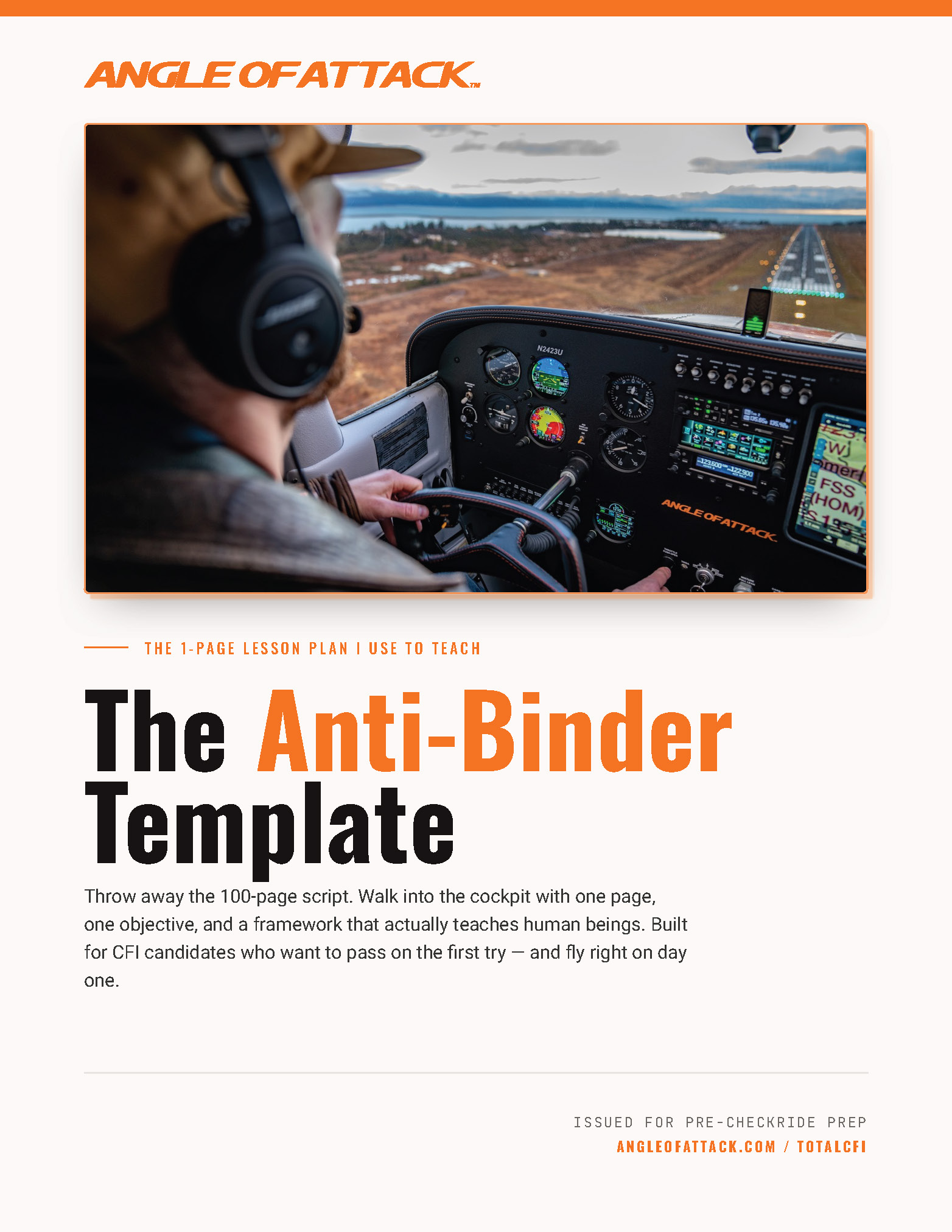
 airplane on a flight school ramp at sunset — Angle of Attack MEI privileges and limitations" />
A Multi-Engine Instructor (MEI) is a flight instructor with an airplane multi-engine class rating added to their CFI certificate, authorized under 14 CFR 61.193 to provide flight and ground instruction for certificates and ratings in multi-engine airplanes. The MEI is the highest-paying CFI specialty per hour, and is governed by 14 CFR 61.195, including the 5-hour make-and-model PIC rule in §61.195(f).
The MEI add-on is sold as the fastest way to build multi-engine time toward an airline pathway. That’s accurate. It’s also the rating where the regulation that protects you and the maneuver that defines you can both kill the deal if you treat them as checkboxes. I’m Chris Palmer, Founder and Chief CFI at Angle of Attack, two-time Master Aviation Educator (NAFI), Gold Seal CFI, and I’ve been in aviation education since 2006 and instructing since 2017. I’ve trained instructors through the MEI add-on and seen the moment it clicks for them. It usually happens during their first Vmc demonstration as the teacher, not the student.
This guide walks the regulation, the math, and the discipline. The privileges of §61.193. The limitations of §61.195, especially subsection (f), which is the 5-hour make-and-model rule that almost everyone misunderstands. The career economics. The Vmc reality. And the honest “should you” question with the rental math laid out the way most program pages don’t.
Walking into your first lesson with a 50-page binder won't help you.
Get my Anti-Binder One-Page Lesson Plan Template free — the lesson plan tool I built for CFI candidates who want to be ready Day 1.
Get the Anti-Binder Template Free
- An MEI is your CFI certificate with an airplane multi-engine class rating added. It is not a separate certificate. Most pilots earn it as an add-on after the initial CFI and CFII.
- MEI privileges flow from 14 CFR 61.193: multi-engine flight and ground instruction, endorsements, and practical-test sign-offs in airplane multi-engine.
- The load-bearing limitation is §61.195(f), the 5-hour rule. You need 5 hours of PIC in the specific make and model before you can give training required for a certificate or rating in that twin.
- The MEI add-on does not require a new spin demonstration on the checkride. §61.183(i) applies to all airplane CFI applicants (single-engine and multi-engine), but the spin endorsement you earned for your initial CFI–ASE carries over and the examiner may accept it under §61.183(i)(2). An MEI-initial applicant still needs the endorsement. No new knowledge test for the add-on either.
- Typical MEI add-on cost is $4,000 to $8,000 with 5 to 10 hours of multi-engine flight training. Hourly instruction rates run $50 to $85 at flight schools and up to $150 for independents.
- The Vmc demonstration is the most consequential maneuver in the rating. Recover at the first sign of directional control loss, not past it. Vmc rollovers during training are a documented fatal-accident pattern.
WHAT'S IN THIS GUIDE
- 1What Is an MEI? (And Why Pilots Add It)
- 2What Are the Privileges of an MEI?
- 3What Are the Limitations of an MEI?
- 4MEI vs. CFII: What Each Lets You Teach
- 5Can an MEI Log Multi-Engine PIC While Instructing?
- 6How Do You Add the MEI Rating?
- 7What Does the MEI Checkride Include?
- 8Why the Vmc Demonstration Is the Maneuver Every MEI Applicant Fears
- 9Should You Get Your MEI?
- 10What Endorsements Can an MEI Sign?
- 11Frequently Asked Questions
What Is an MEI? (And Why Pilots Add It)

Start with the vocabulary because this is where pilots get tripped up. The FAA does not issue a separate “MEI certificate.” The MEI is a class rating added to your existing flight instructor certificate, specifically Flight Instructor, Airplane Multi-Engine. If you already hold Flight Instructor, Airplane Single-Engine, adding the MEI gives you both privileges on one certificate. If you’re new to the CFI world entirely, the how to become a CFI pillar walks the upstream certificate sequence.
Two paths exist under §61.183.
The add-on path is what almost everyone does. You’re already a CFI in airplane single-engine, you’ve built some dual given, and you want to teach in twins. You add the multi-engine class to your existing certificate. No new knowledge test. No new spin demonstration on the checkride. Your §61.183(i) spin endorsement from your initial CFI carries over, and the examiner may accept it under §61.183(i)(2). Spins also aren’t on the multi-engine area-of-operation list at §61.187(b)(2), so they’re not flight-tested in the MEI checkride.
The initial path is rare. A commercial multi-engine pilot with an instrument rating skips the single-engine CFI entirely and earns the MEI as their first instructor rating. They still need the §61.183(i) spin endorsement, because the regulation says “airplane or glider” — it does not exempt initial-MEI applicants. That training has to happen in a single-engine airplane certificated for spins. The FOI knowledge test is required unless the applicant qualifies for an exemption.
So why do pilots add it? Two reasons, and one of them rarely makes the marketing copy.
The first reason is what the schools advertise: career acceleration. The 1,500-hour ATP requirement is the gate to the regional airlines, and within that gate most regionals want to see 25 to 50 hours of multi-engine time. An MEI logs multi-engine PIC every time they teach in a twin. That’s not a loophole. That’s §61.51(e)(3) operating as designed.
The second reason is the one I push harder with my own students. The MEI is the rating that forces you to respect asymmetry. Single-engine flying is forgiving. The airplane wants to fly. In a twin with one engine out, the airplane wants to roll. Becoming the instructor for that environment changes how you think about every other aircraft you teach in. Day-one ready isn’t just a phrase for the single-engine cockpit. It scales straight into the twin.
What Are the Privileges of an MEI?

§61.193 is the privileges regulation. It applies to every flight instructor: single-engine, multi-engine, instrument, glider, helicopter, all of them. What changes with the MEI is the class scope, not the privilege list.
Here’s the regulation in plain English. A flight instructor with the multi-engine class rating is authorized to:
- Provide ground training required for a pilot certificate, rating, flight review, or recency of experience in airplane multi-engine.
- Provide flight training required for the same.
- Endorse student pilots and applicants for practical tests, knowledge tests, and the various proficiency events the FAA requires.
- Issue the endorsements that go in a pilot’s logbook for solo flight, additional class ratings, complex airplane, high-altitude, and so on. The full endorsement universe lives in AC 61-65K, the November 2025 revision.
- Accept applications for student pilot certificates and verify identity and eligibility.
What §61.193 specifically does not authorize is anything requiring an air carrier or operating certificate, or specific FAA authorization. You can’t teach Part 135 currency just because you’re an MEI. You can’t teach an ATP add-on under Part 121 standards from your CFI seat. The privilege is teaching toward certificates and ratings in the multi-engine class. Broad, but bounded.
One distinction matters when pilots are sequencing their ratings. The MEI privilege is class-specific. If you hold Flight Instructor, Airplane Multi-Engine but not the single-engine CFI, you can’t teach in single-engine airplanes. That sounds obvious. I’ve still seen MEI-first applicants assume their multi-engine certificate “covers” single-engine since they already fly singles for fun. It doesn’t. Class privileges are walled off by class. If you want both, hold both.
For the side-by-side on what the CFI, CFII, and MEI each let you teach, the master privileges and limitations breakdown walks every flavor, and the what can a CFI teach article covers the single-engine privilege scope specifically. The CFII privileges and limitations article covers the instrument layer.
What Are the Limitations of an MEI?

§61.195 is the limitations regulation. It applies to every flight instructor, with one subsection that exists almost entirely for multi-engine teaching. Read the whole regulation if you haven’t. The most consequential parts for an MEI are:
- §61.195(a). No more than 8 hours of flight training in any 24 consecutive hours. This is the hard ceiling, and it includes ground-in-aircraft time if you log it as instruction.
- §61.195(b). You must hold the ratings appropriate to the training you give. Teaching multi-engine flight requires the multi-engine class rating on your CFI certificate.
- §61.195(c). Instrument flight training requires an instrument rating on your flight instructor certificate. If you don’t have the CFII, you cannot teach instrument procedures in a twin, even if you hold the MEI. Multi-engine VFR training only.
- §61.195(f). The 5-hour rule. Discussed below in its own section because this is the rule most often misunderstood.
- §61.195(i). You can’t endorse yourself for anything. No instructor signs their own flight review.
Then there’s currency under §61.57. To act as PIC carrying passengers, you need three takeoffs and three landings in the same category and class within the preceding 90 days. Instructing a student isn’t “carrying passengers” in the strict sense, but if you’re acting as PIC of the twin during instruction (which you typically are), the regulation effectively requires you to stay current in the class. Most MEIs keep current in the specific aircraft they teach in, not just the class, because the school’s insurance often demands it.
The 5-Hour Rule (§61.195(f)): The Most-Misunderstood MEI Limitation
Here’s the verbatim text of §61.195(f):
A flight instructor may not give training required for the issuance of a certificate or rating in a multiengine airplane, a helicopter, or a powered-lift unless that flight instructor has at least 5 flight hours of pilot-in-command time in the specific make and model of multiengine airplane, helicopter, or powered-lift, as appropriate.
Read that twice. There are two traps inside it.
Trap one: “make and model.” The rule isn’t “5 hours of multi-engine time.” It’s 5 hours in the specific make and model. A PA-44 (Piper Seminole) MEI does not automatically meet §61.195(f) in a PA-34 (Piper Seneca). They’re both Pipers. They’re both light piston twins. They are different make-and-models, and the rule resets when you switch. The same MEI who has 200 hours teaching in a Seminole still needs 5 hours of PIC in the Seneca before giving training for a certificate or rating in it.
Trap two: “required for a certificate or rating.” The 5-hour rule applies to training required for the issuance of a certificate or rating. Initial multi-engine class rating training. The multi-engine add-on for an MEI applicant. Multi-engine commercial. It does not apply to flight reviews, recurrent training, transition training for an already-rated pilot, or insurance checkouts. Most MEIs don’t know this. They assume the rule covers every twin lesson they give. It doesn’t. The rule has a narrow but load-bearing scope.
When you take a job teaching at a school with two twins on the line, you need to calendar your make-and-model PIC hours separately for each airframe. That’s the discipline I mentioned at the top. Professionalism is not a certificate — it’s behavior, and tracking your §61.195(f) compliance per airframe is one of the behaviors that separate the casual MEI from the safe one.
MEI vs. CFII: What Each Lets You Teach
This is the side-by-side most pilots want when they’re sequencing their add-ons. The CFI vs. CFII article walks the upstream comparison. Here’s the MEI-vs-CFII layer.
| Dimension | MEI | CFII |
|---|---|---|
| Class / instrument scope | Airplane multi-engine | Instrument, Airplane (single and/or multi) |
| Teaches | Multi-engine add-on, multi-engine commercial, multi-engine ATP-prep | Instrument rating training, IFR proficiency, instrument competency checks |
| Required prereq | CFI + commercial multi + instrument rating | CFI + commercial + instrument rating |
| New knowledge test? | No | Yes (Flight Instructor Instrument knowledge test) |
| Hour-logging | Logs PIC during multi-engine instruction (§61.51(e)(3)) | Logs PIC during instrument instruction (§61.51(e)(3)) |
| Career-path fit | Airline pathway, twin time toward regional minimums | Instrument-heavy customer market, IR candidates and IPCs |
| Aircraft cost reality | Twin rental $285 to $580/hour | Single-engine instrument rental usually under $200/hour |
| Common progression | CFI → CFII → MEI | CFI → CFII |
The most common progression is CFI → CFII → MEI. The reason is economic. CFII is the cheapest add-on (single-engine instrument aircraft, no new aerodynamic curriculum, just an instrument knowledge test and a checkride). It opens a deep customer market: every private pilot considering the instrument rating. MEI comes last because it’s the most expensive to earn and the most lucrative to use.
Some pilots flip the order. They go CFI → MEI first because they’re chasing airline minimums and twin time matters more than IFR customers in their market. That’s a defensible call. The regulation doesn’t care about the order. The math does, and the math is a function of your local market.
Can an MEI Log Multi-Engine PIC While Instructing?
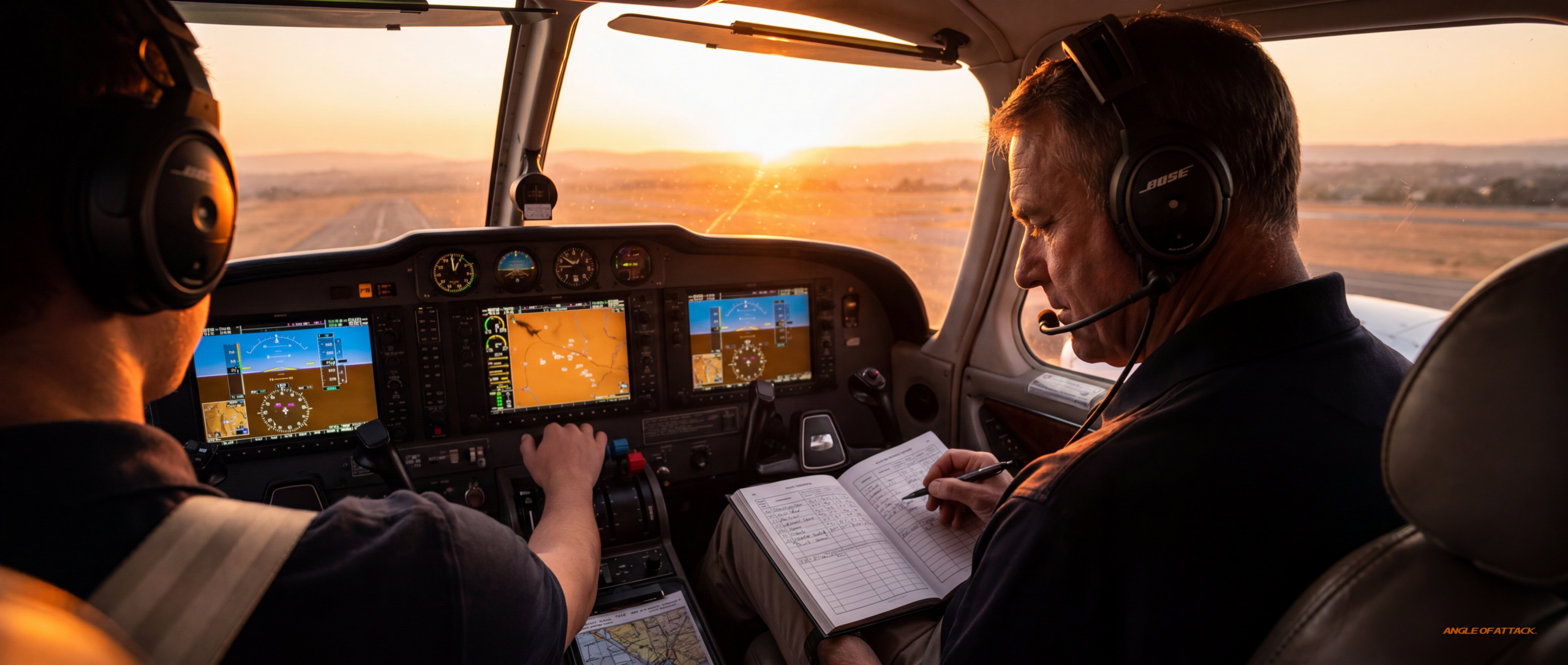
Yes. This is the regulation that makes the MEI economically interesting. Here’s §61.51(e)(3), verbatim:
A certificated flight instructor may log pilot in command flight time for all flight time while serving as the authorized instructor in an operation if the instructor is rated to act as pilot in command of that aircraft.
Plain English: when you’re teaching in a twin you’re rated to act as PIC of, every hour you instruct is both dual given and multi-engine PIC. They are simultaneous log entries. You’re not double-dipping. The FAA wrote it this way on purpose. The instructor is the legal PIC of the operation. The hours count.
The math, then, looks like this. If you teach 200 hours of multi-engine instruction in a year, you log 200 hours of dual given and 200 hours of multi-engine PIC. Toward the 1,500-hour ATP minimum, you’re logging total time at the rate of one-for-one. Toward the regional minimums of 25 to 50 multi-engine hours, you’re hitting that band quickly.
Now the part the program pages don’t always show.
A Piper Seminole rents wet for $490 to $580 an hour. A Seneca runs $350 to $500. Even on the cheap end at a Beech Duchess for $285 to $400, the twin rental is two to three times the cost of a single-engine trainer. The MEI hourly rate is $50 to $85 at most flight schools, with independents pulling $75 to $150 in strong markets. Run the math on a one-hour lesson: the school bills the student maybe $620 (Seminole rental + instructor), pays you $75, and pockets the rest. Your “free hour-building” hour just cost the student $620 and you got paid $75.
The math works for the instructor in one specific case. When the school owns the aircraft, pays you a flat hourly rate to teach in it, and lets you log the time without paying for the airplane. That’s the deal you want. That’s the math that justifies the MEI add-on as an hour-building accelerator. Without it, you’re a hired hand watching expensive Hobbs time roll by.
The CFI-to-airlines pathway article unpacks the timeline math in more depth. For now, file the honest version. MEI is the fastest way to log multi-engine time toward your ATP. It is rarely the cheapest. The structure of your employment determines whether the math works for you or for the school.
How Do You Add the MEI Rating?
Six steps, in order.
- Hold a current Flight Instructor Certificate with airplane category rating. If you don’t already have your CFI, the MEI initial path is theoretically open, but almost no one takes it.
- Hold a current commercial or ATP certificate with airplane multi-engine class and instrument rating. You need to be rated to fly the airplane before you can teach in it.
- Receive ground and flight training in the 15 areas of operation under §61.187(b)(2). These are the multi-engine CFI training areas: fundamentals of instructing, technical subjects, preflight, multi-engine operations, emergency operations, and so on. Spins are not on the list.
- Receive a logbook endorsement from your training CFI verifying you’re ready for the practical test. Use the language in AC 61-65K paragraph §A.13 (proficiency to act as flight instructor for an additional class rating).
- Schedule and pass the MEI practical test with a Designated Pilot Examiner under FAA-S-ACS-25 (the May 2024 standard that replaced the older 8081-6DS and 8081-6DM). Oral plus flight, typically 4 to 6 hours total.
- Receive the new flight instructor certificate with the multi-engine class rating added.
No new aeronautical knowledge test for the class rating add-on. The CFI knowledge requirements were established when you earned your initial CFI. Adding a class doesn’t reset them. Adding an instrument category (the CFII) does require a new instrument knowledge test, but that’s not what we’re doing here.
Cost, time, and flight-hour reality for the MEI add-on:
| Component | Typical cost | Notes |
|---|---|---|
| Ground training | $500 to $1,500 | 10 to 20 hours of dual ground typical |
| Flight training (5 to 10 hours twin) | $2,500 to $5,800 | At $490 to $580/hour for a Seminole; less in a Duchess |
| DPE checkride fee | $1,000 to $1,500 | Varies by region |
| Books, charts, supplies | $100 to $300 | ACS-25, lesson plans |
| Total typical range | $4,000 to $8,000 | Accelerated programs can run $9,000 to $12,000 |
Most programs run 3 days to 3 weeks. The fast end is an accelerated camp where you fly twice a day. The slow end is a CFI flying nights and weekends around their existing schedule.
What Does the MEI Checkride Include?

The current standard is FAA-S-ACS-25 (effective May 2024), which combined the old CFI-single-engine PTS, the MEI PTS, and the seaplane variants into one document. No separate “MEI addendum.” The multi-engine tasks are integrated. The teaching standard in the twin is the same as the teaching standard in the single — the CFI checkride pillar walks the initial standard, and the MEI inherits its discipline.
The oral covers:
- Multi-engine aerodynamics. Vmc factors, critical engine identification, single-engine performance degradation (an engine failure can reduce climb performance 80 percent or more in a light twin — counterintuitive, since you have one of two engines but lose far more than half the climb), drag in asymmetric flight.
- V-speeds. Vmc, Vyse (blue line), Vxse, Vsse. What each means, where it’s marked, and how it’s used.
- Systems. Engines, propellers, fuel, hydraulics, electrical, environmental. Failure modes for each. How to teach them.
- Single-engine flight. Drift-down, climb performance, accelerate-stop, accelerate-go, the decision to land versus continue.
- Emergency procedures. Engine failure during takeoff (below Vmc, between Vmc and Vyse, at altitude, on approach), in-flight engine fire, propeller overspeed, gear malfunctions.
- Fundamentals of instructing. The FOI material doesn’t go away just because you’re already a CFI. Examiners ask.
The flight portion covers the standard multi-engine maneuvers: steep turns, stalls, slow flight, takeoffs and landings, emergency descent, plus the multi-engine-specific tasks. The cornerstone is the Vmc demonstration, alongside engine failure on takeoff, in-flight engine failure, single-engine approach, and single-engine go-around.
The most common failure points on an MEI checkride aren’t surprising once you’ve sat in the examiner’s seat:
- Weak Vmc conceptual knowledge. Knowing the four CAR 3 / FAR 23 certification factors but not the operational factors that move Vmc in real flight.
- Poor emergency procedure recall under stress. Memorized flows that break down when the examiner introduces a complication.
- Weak teaching narration. Flying the maneuver correctly but unable to explain what’s happening or why, in real time, to a hypothetical student.
- Lesson plans that aren’t lesson plans. Bullet-pointed notes instead of structured ground-school documents.
The teaching standard in the twin is the same as the teaching standard in the single. Clear objectives, manageable scope, the why before the what. The framework I lay out in Lesson 4.4 of TotalCFI, Starting Strong as a New CFI, scales straight from the single-engine cockpit into the twin. Same standard, more variables. Day-one ready in the Cessna 172, day-one ready in the Seminole.
Why the Vmc Demonstration Is the Maneuver Every MEI Applicant Fears

Vmc, minimum control speed with the critical engine inoperative, is the airspeed below which you can’t maintain directional control if the critical engine fails. It’s marked as a red radial on the airspeed indicator. The number is established by the manufacturer under FAR 23 (or the older CAR 3) certification standards, and the test conditions are tight: maximum takeoff power on the operating engine, propellers in takeoff position, gear up, flaps in the takeoff position, takeoff weight, aft CG, and the test pilot must stop the resulting turn within 20° of the original heading using no more than maximum rudder and no more than 5° of bank into the operating engine.
That published Vmc number isn’t a constant in your airplane. It moves. Five operational factors push it around:
- Density altitude. Higher density altitude reduces engine power, which reduces yawing moment, which lowers Vmc. Counterintuitive, but real.
- Bank angle. 5° of bank into the operating engine lowers Vmc significantly. Wings-level, Vmc is much higher.
- Center of gravity. Aft CG raises Vmc by reducing the rudder’s moment arm.
- Gross weight. Heavier airplane means lower Vmc, because more weight resists the yawing tendency.
- Propeller condition. A windmilling prop on the dead engine produces drag that raises Vmc. A feathered prop reduces that drag and lowers Vmc.
The critical engine on a conventional twin (both propellers rotating clockwise viewed from the cockpit) is the left engine. P-factor on the descending blade of the right engine is farther from the centerline, producing a longer yawing moment arm when the right engine is operating alone. Losing the left engine, the critical one, leaves you with the engine that produces the most adverse yaw. That’s why “critical.”
The Vmc demonstration procedure under ACS-25 is straightforward to describe and unforgiving to execute. Power on the critical engine is reduced to idle for the Vmc demonstration itself (ACS-25 standard — idle is required so airspeed actually reaches Vmc without real feathering). For other engine-out training — drag demos, single-engine maneuvers, single-engine approaches — the standard practice is zero thrust on the simulated-failed engine. Zero thrust approximates the drag of a feathered prop without actually shutting an engine down. Configure per Vmc certification criteria: gear up, flaps takeoff, props takeoff, max power on the operating engine, slight bank into the operating engine. Pitch attitude is increased gradually to reduce airspeed. As airspeed bleeds off, rudder authority diminishes. At the first sign of loss of directional control (yaw beginning, rudder reaching the stop, slight roll), you initiate recovery: reduce power on the operating engine, lower the nose, accelerate, level the wings.
The phrase that matters is “at the first sign.” Not “wait and see.” Not “let the student watch it develop.” First sign. Recover.
Here’s the part I want every new MEI to internalize before they ever fly the demonstration. The Vmc rollover is a documented fatal-accident pattern in MEI training. NTSB and industry safety publications have catalogued multiple cases over the years where instructors let the demonstration go past the first sign of directional control loss to “show the student” what it looks like, and the airplane departed controlled flight before recovery could be initiated. The airplane reaches a point where asymmetric power produces a roll that exceeds normal recovery bank, and depending on altitude, that roll becomes a spin.
Treat the Vmc demo as a respect, not a maneuver. The Airplane Flying Handbook chapter on multi-engine flight (FAA-H-8083-3C Chapter 13) lays out the procedure. AOPA’s multi-engine training page reinforces it. Both sources agree on the recovery point: first indication of directional control loss, not after.
Should You Get Your MEI?

Run the case for, the case against, and the decision frame I use with my own students.
For: airline-pathway acceleration. If your goal is the regionals, the multi-engine logging math is real. Every hour of instruction in a twin you’re rated to act as PIC of logs as both dual given and multi-engine PIC. Over a year of moderate utilization (150 to 250 multi-engine instruction hours), the MEI accelerates your ATP-and-regional-minimums timeline by hundreds of hours of multi-engine time you would otherwise have to pay for.
For: customer retention. A CFI who is also CFII and MEI keeps students from private all the way through commercial multi-engine. Without the MEI, your commercial multi-engine students hand off to another instructor for the AMEL add-on. With the MEI, they stay with you. Customer lifetime value matters.
For: rate premium. MEI rates run $50 to $85 at flight schools and $75 to $150 for independents — a 25 to 40% premium over single-engine CFI work at the same school. See the CFI salary breakdown by rating for the full pay-range data.
Against: the rental math. Already covered above. If you’re paying for the twin yourself to teach in it, you’re losing money on every lesson. The MEI is a worthwhile career move only when the school owns the aircraft and pays you per hour to instruct.
Against: the 5-hour rule limits portability. Every time you change aircraft, §61.195(f) resets. If you change schools and the new school flies a different twin, you need 5 hours of PIC in that make and model before you can give training required for a certificate or rating. That’s a real cost. Five hours of self-funded twin time at $400+ per hour to unlock teaching privileges.
The decision frame I use with my own students:
- Are you committed to flight instruction for at least the next 12 months? If no, the MEI add-on probably doesn’t return its investment.
- Does your current school (or your most likely next school) have a twin on the line you can teach in regularly? If no, the $4,000 to $8,000 spend doesn’t earn back.
- Is your goal regional or airline within 18 months? If yes, the multi-engine hours alone are worth the add-on.
If you answer yes to all three, get your MEI. If you answer no to any of them, wait.
What Endorsements Can an MEI Sign?

The full endorsement universe lives in AC 61-65K, the November 2025 revision. For an MEI, the most-used endorsements are:
- Multi-engine class rating proficiency (AC 61-65K paragraph A.13). The endorsement that certifies a pilot is proficient to take the AMEL practical test.
- Multi-engine practical test endorsement (A.14). Recommends the pilot for the practical test.
- Solo flight in a multi-engine airplane (§61.31(d)(2)). Required before a pilot solos in a class they’re not yet rated for.
- Complex airplane endorsement (§61.31(e)). Many twin trainers are complex (retractable gear, flaps, controllable-pitch props). MEIs frequently sign this during multi-engine training.
- High-altitude / pressurized aircraft (§61.31(g)). Limited to pressurized twin operations above 25,000 MSL. Rare for piston-twin instruction, more common in turboprop transition.
- Standard flight review and recency endorsements for multi-engine pilots: §61.56 flight reviews and §61.57 currency events.
Two endorsement situations come up enough to flag.
Centerline thrust limitation removal. Pilots who earned their multi-engine class rating in a centerline-thrust airplane (Cessna 337 Skymaster, for example) had a limitation on their certificate restricting them to centerline-thrust twins. Since August 2018, the FAA simplified the removal process. Now it’s handled through a FSDO visit or a military-competency DPE, not a separate full checkride. An MEI’s training prepares the pilot for limitation removal, but the MEI doesn’t directly issue the limitation removal itself.
The complex/high-altitude overlap. A twin trainer like the Seminole is complex (retractable gear, controllable-pitch props). If you’re checking out a pilot in the Seminole and they don’t already have the complex endorsement, you’ll need to sign that as part of the multi-engine training. Document it cleanly. Use the AC 61-65K language verbatim.
For the full endorsement reference, the CFI endorsements and CFI endorsements list articles walk every endorsement an instructor can issue, with the regulatory citation and AC 61-65K paragraph for each.
If the CFI checkride is keeping you up at night, you're prepping for the wrong thing.
TotalCFI teaches you to walk into the oral as a teacher, not a test-taker — the reframe most candidates only figure out after they've already failed once.
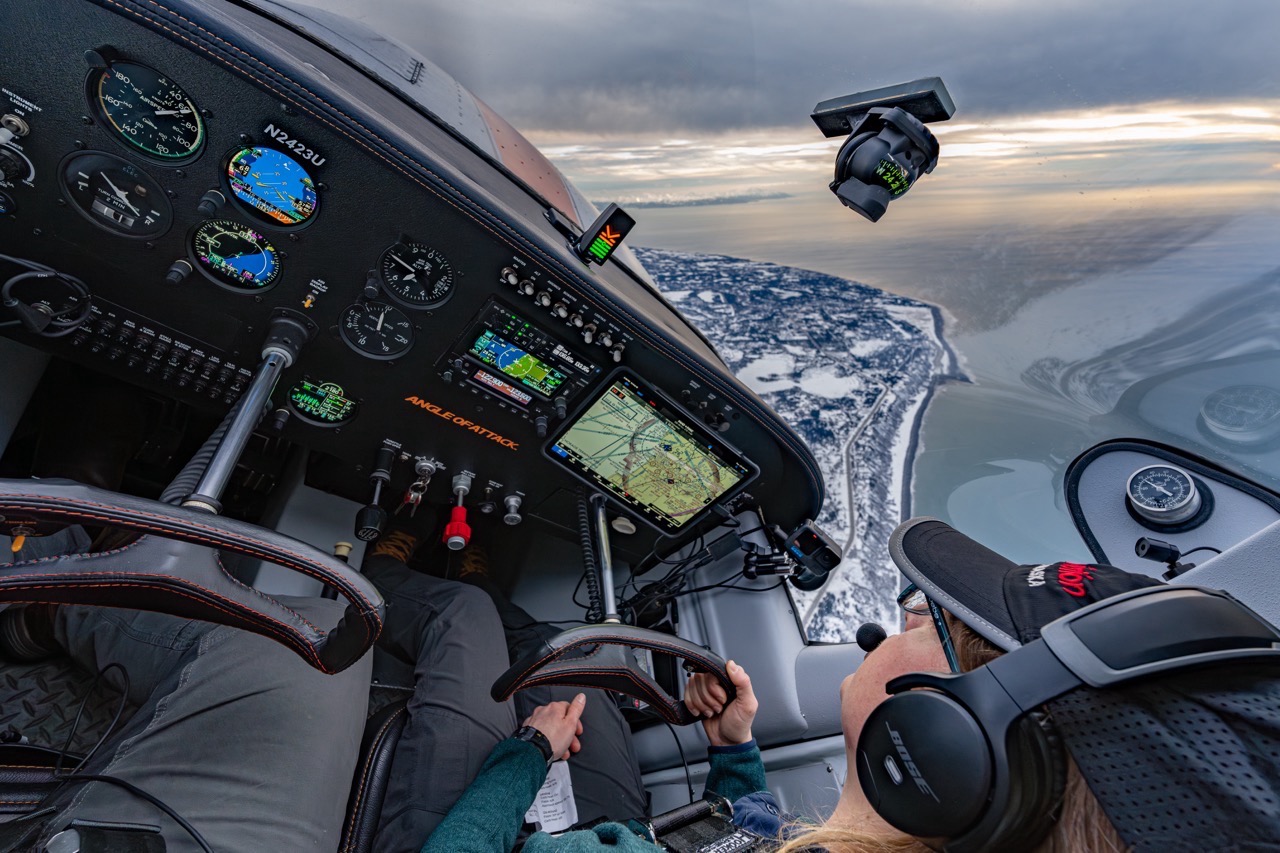
is the Founder and Chief CFI at Angle of Attack. Two-time Master Aviation Educator (NAFI). Gold Seal CFI. In aviation education since 2006. Commercial pilot, seaplane-rated, flies the Cessna 172 N2423U out of Homer, Alaska.